Concept and calculation of time on site
Time on Site represents the total amount of time a user spends on a website during a single session, calculated from the moment they land on the first page until they leave the site or the session expires. According to guidelines from Google Analytics, this metric is determined based on the time a visit begins until the last recorded interaction on the site. The basic formula is:
Time on Site = Total time of all sessions / Number of sessions
An important distinction to understand:
- Time on Site: measures the total time a user spends on the entire website during a session.
- Time on Page: measures the time spent on a specific page only and often cannot track the final page duration if no interaction event occurs.
- Session Duration: essentially similar to Time on Site, but it may vary slightly across analytics systems depending on how events are measured.
The role of time on site in digital marketing strategy
Time on Site clearly reflects the level of user interest, satisfaction, and genuine engagement when visiting a website. For businesses in marketing and media industries, this metric is more than just a number—it is an indicator of content quality, user experience (UX/UI), and the effectiveness of brand communication.
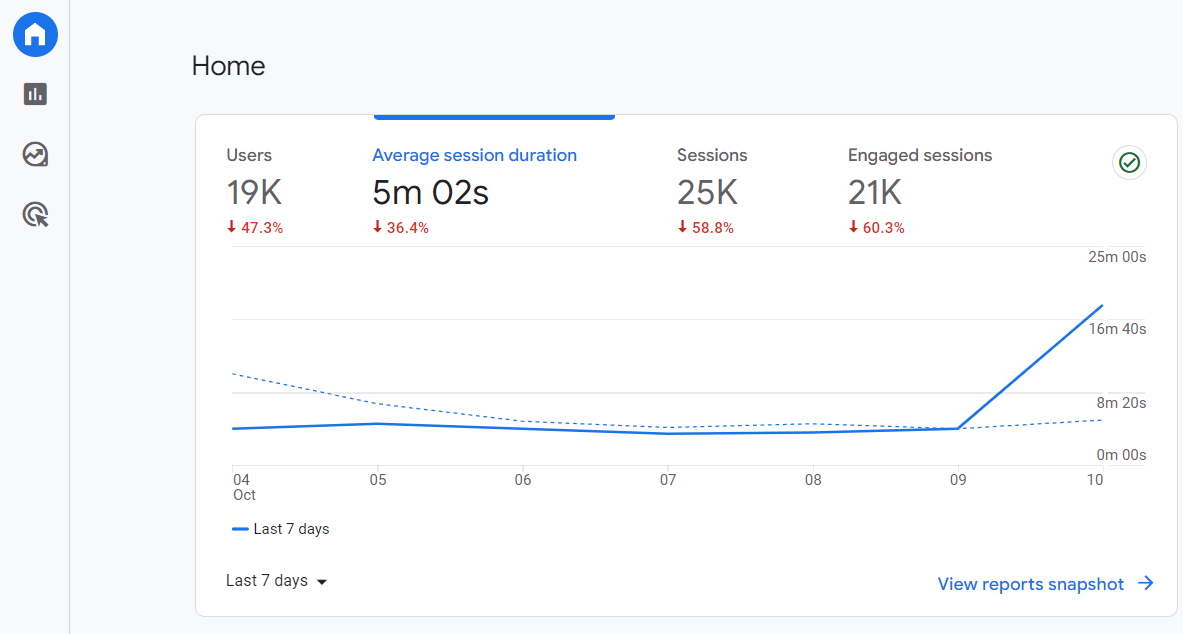
According to experts from Google, websites with a high Time on Site tend to retain visitors more effectively, increase conversion potential, and send positive engagement signals to Google’s ranking algorithms.
Benefits of increasing time on site for business websites
Better SEO rankings and higher conversions
Google prioritizes websites with strong engagement metrics, especially Time on Site and interaction rates. When visitors stay longer, it signals high-quality content, logical navigation, and an engaging user experience—all of which contribute to improved rankings on search engine results pages.
At the same time, businesses with a higher Time on Site often achieve stronger conversion rates (CVR) thanks to increased user interest and growing trust during the browsing journey.
Lower bounce rate and stronger brand credibility
In practice, Time on Site and Bounce Rate are two metrics that move in opposite directions. As Time on Site increases, Bounce Rate decreases, indicating that users are not leaving immediately but are genuinely interested in exploring more about the brand.
- Performance measurement checklist:
- Bounce Rate below 55% is considered good
- A higher Returning Visitors rate indicates stable audience engagement
- Session Duration grows steadily over time
Optimizing marketing data analysis
Closely monitoring Time on Site through platforms like Google Analytics helps marketers identify high-performing content, detect drop-off points, and adjust content strategies in real time. This creates a strong competitive advantage, enabling businesses to remain flexible and responsive to market changes.
Key factors influencing time on site
Content quality and diverse content formats
The core reason users stay longer on a website lies in both content depth and presentation. To increase this metric effectively, businesses should:
- Invest in researching customer needs and search intent
- Deploy content in multiple formats: in-depth articles, video case studies, infographics, and emotionally engaging visuals
- Ensure SEO-friendly structure with logical topic connections from headline to conclusion
- Create compelling and authentic headlines
- Use bullet points, tables, videos, and visuals to support readability and engagement
Website design and page loading speed
A mobile-first interface, optimized UX structure, and fast page loading speed play an extremely important role in improving Time on Site and overall website engagement.
Optimized navigation experience and calls to action
Help visitors find relevant content and explore deeper into topics through logical navigation, clear menus, and engaging CTA buttons.
Checklist for effective website navigation:
- Logical internal linking structure
- Breadcrumb navigation
- Related post suggestions at the end of each article
How to increase time on site effectively
Develop high-quality content and internal linking
Always ask: “What does the audience truly need?” before writing each article. Build topic clusters around core themes and connect content strategically through a system of internal links following the “pillar page” model. This is a proven strategy used by many digital marketing and advertising businesses to increase Time on Site.
Apply multimedia formats and native ads
Research shows that users tend to stay longer on pages that integrate tutorial videos, real-world reviews, or engaging infographics. In addition, Native ads on online newspapers allow advertising to blend naturally into editorial content without disrupting the user experience, helping retain visitors more effectively.
Optimize website speed and cross-device compatibility
Optimize images, use lightweight HTML/CSS/JS code, and test responsiveness across devices. Maintain a speed testing checklist for different devices and browsers to avoid missing opportunities to increase Time on Site.
Measure, analyze, and continuously optimize
Set quarterly performance goals, track Time on Site through Google Analytics, run A/B tests to evaluate layout and new content performance, and continuously refine your optimization roadmap.