Global Digital Overview 2026
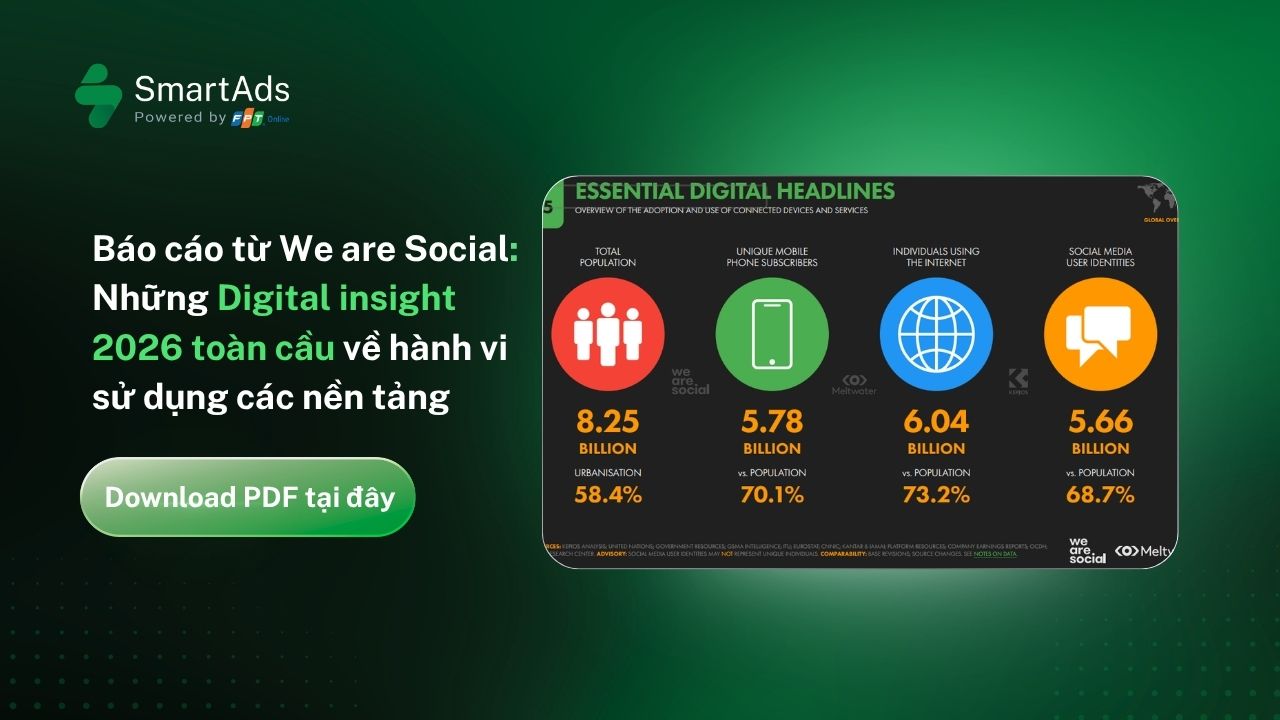
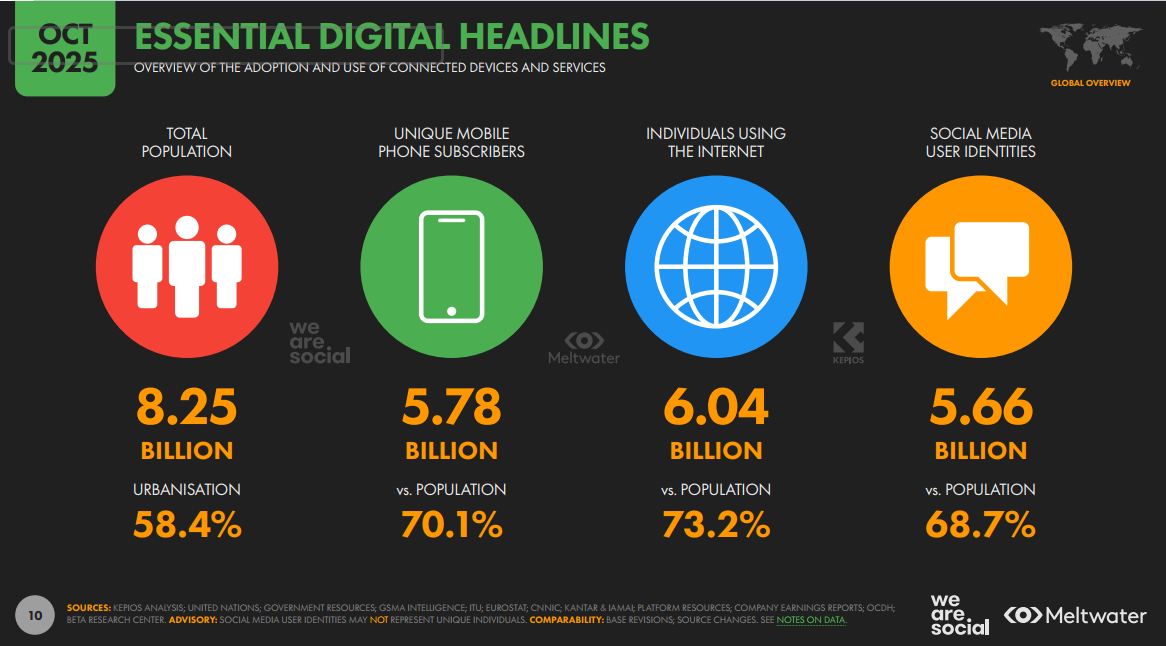
According to the Digital 2026 Global Overview Report, the world has now surpassed several historic digital milestones:
-
More than 6 billion people are now using the Internet.
-
Approximately two-thirds of the global population use social media every month.
-
More than 1 billion people have used Generative AI platforms and Large Language Models (LLMs).
-
TikTok has accumulated hundreds of trillions of content views.
-
Global digital advertising spending has reached the trillion-dollar scale.
-
ChatGPT processes billions of conversations every day.
These figures demonstrate that the digital economy has never been more vibrant. However, the report's authors emphasize that the most important takeaway is not the scale of technology itself, but the fact that behind every technological advancement remain fundamentally human behaviors. In reality, people still go online primarily to:
-
Search for information.
-
Learn new skills and knowledge.
-
Be entertained.
-
Connect with friends and family.
-
Research products before making a purchase.
In other words, AI is not changing what people need. Instead, it is changing how they fulfill those needs. This is a critical insight that many businesses overlook when chasing the latest technology trends.
Consumer Behavior Is Changing More Slowly Than We Think
Over the past few years, the industry has frequently claimed that TikTok would replace Facebook, AI would replace Google, or Social Search would replace traditional search engines. However, the 2026 data paints a far more nuanced picture.
TikTok has not replaced YouTube, and ChatGPT has not replaced Google.
Digital transformation does not happen through dramatic revolutions. Instead, it evolves through thousands of incremental changes occurring every day. New platforms are simply adding another layer of behavior to consumers' digital journeys.
For example, someone looking for a cooking recipe may no longer rely solely on Google. Today, they might ask ChatGPT, watch a TikTok video, browse a blog, or combine all of these sources before making dinner.
Rather than disappearing, platforms are becoming complementary. Consumers simply have more choices than ever before. This incremental evolution, rather than outright replacement, is one of the report's most significant findings.
AI Is Becoming a Life Assistant, Not Just a Productivity Tool
One of the most interesting findings in the Digital 2026 report is how people are integrating AI into their daily lives. While AI was previously associated with coding, content creation, and data analysis, today's most common use cases reflect everyday human needs.
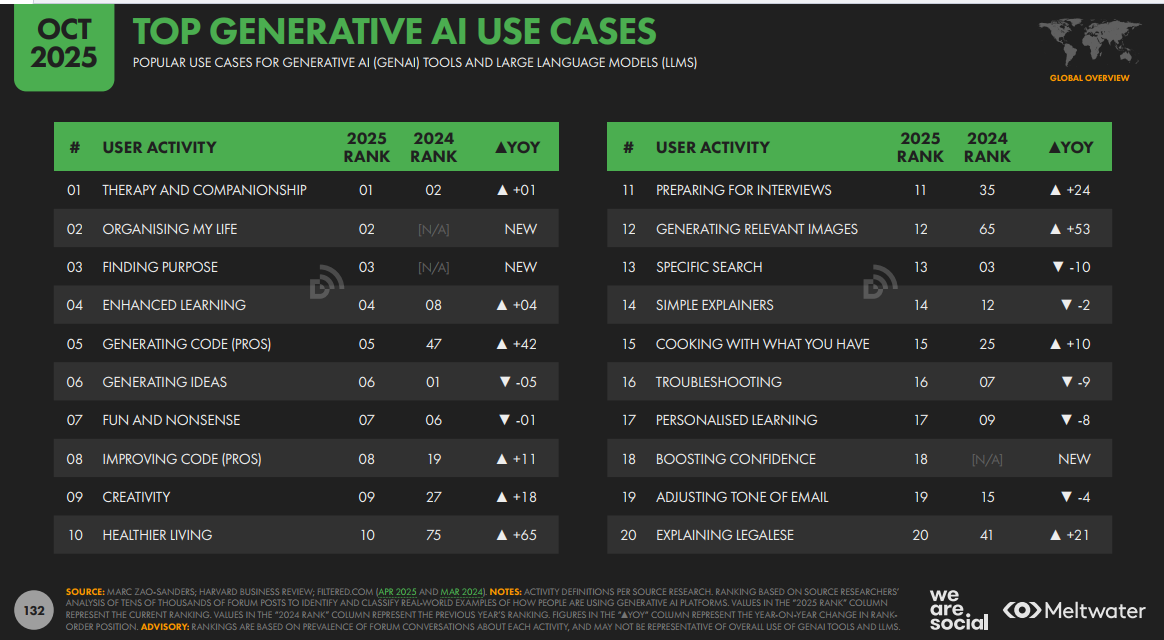
According to the Digital 2026 Global Overview Report, "Therapy & Companionship" remains the most popular AI use case. More notably, "Organising My Life" and "Finding Purpose" entered the rankings for the first time and quickly climbed to second and third place.
AI is also becoming an increasingly valuable learning and creativity companion. Enhanced Learning ranks fourth, while Generating Code jumped 42 positions compared to last year to reach fifth place. Meanwhile, Creativity climbed 18 places, while Healthier Living experienced the fastest growth, rising 65 positions in just one year.
Conversely, more traditional AI use cases such as Specific Search fell 10 positions, while Troubleshooting dropped 9 positions. These changes suggest that people are increasingly treating AI as a personal copilot for decision-making, learning, and self-improvement, rather than simply a question-and-answer tool.
Practical Value Still Drives Online Purchasing Decisions
While AI and social media continue to reshape how consumers discover products, the factors influencing purchase decisions have remained remarkably consistent.
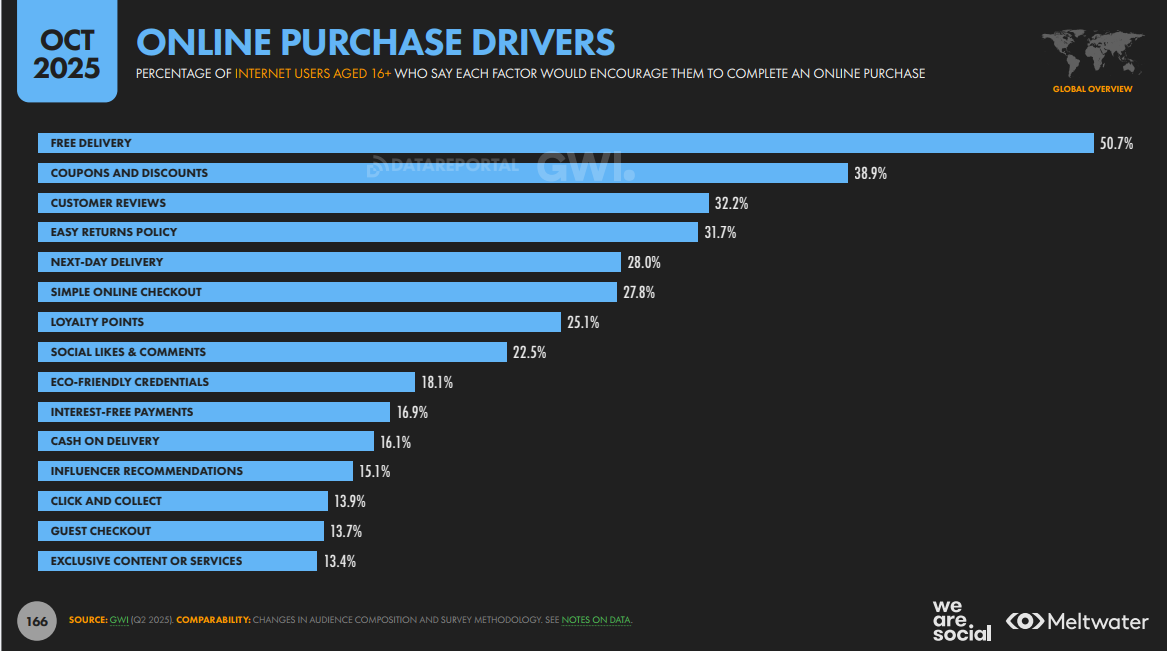
According to the Digital 2026 survey, 50.7% of Internet users say that free shipping is the single most influential factor when completing an online purchase. It is followed by discounts and coupons (38.9%), customer reviews (32.2%), and easy return policies (31.7%).
Interestingly, customer experience factors continue to outperform marketing tactics. For example, next-day delivery (28.0%), simple checkout processes (27.8%), and loyalty programs (25.1%) all rank higher than influencer recommendations, which influence only 15.1% of online shoppers.
Similarly, social media likes and comments affect only 22.5% of purchase decisions. While social engagement helps establish initial trust, it is rarely the final trigger for conversion. In today's digital landscape, successful marketing is no longer just about communication. It is about optimizing the entire customer journey, from advertising and website experience to fulfillment and after-sales service.
>>> Read the Vietnam Digital Insight 2025 Report.
Key Takeaways: How Businesses Should Prepare for Digital Marketing in 2026
The Digital 2026 Global Overview Report highlights a digital marketing landscape that is becoming increasingly complex, yet full of opportunities for businesses that truly understand consumer behavior. Here are six key recommendations for marketers.
1. Track New Behaviors, Not Just New Platforms
AI, TikTok, and emerging platforms are merely tools. The real competitive advantage comes from understanding how consumers discover information, learn, and make decisions across multiple touchpoints.
2. Prioritize Educational Content Over Pure Advertising
As AI becomes a trusted source for learning and decision support, in-depth, educational, and problem-solving content will outperform purely promotional messaging.
3. Combine Brand Building with Performance Marketing
Consumers interact with brands across multiple channels before converting. Businesses should integrate long-term brand awareness with short-term performance objectives rather than focusing exclusively on one or the other.
4. Optimize the Post-Click Experience
Advertising may attract visitors, but free shipping, positive reviews, flexible return policies, and seamless checkout experiences ultimately determine whether visitors become customers. Campaign performance should therefore be evaluated across the entire customer journey, not solely through CTR or CPC.
5. Measure the Customer Journey, Not Just Clicks
As consumers increasingly move between AI assistants, search engines, social platforms, and websites, relying exclusively on last-click attribution no longer provides a complete picture. Businesses should combine branding, engagement, and conversion metrics for more comprehensive performance analysis.
6. Use AI as a Business Copilot
Rather than viewing AI as a replacement for human expertise, organizations should leverage it as a copilot to automate repetitive marketing tasks such as data analysis, campaign optimization, A/B testing, customer service chatbots, and lead qualification. When combined with strategic human oversight, AI can significantly improve operational efficiency while maintaining high-quality customer experiences.
About SmartAds, formerly known as eClick, is developed by FPT Online, one of Vietnam's pioneering digital technology and media companies. Through continuous innovation and a strong partnership network of leading premium publishers, SmartAds has established itself as a pioneer in elevating native advertising standards in Vietnam. The platform aims to become a trusted partner for brands seeking to maximize both brand awareness and campaign performance. If you're looking for a brandformance advertising solution that balances branding with measurable business outcomes, create your SmartAds account and launch your first campaign here.