I. Fundamental Concepts Related to Leads
1. What is Lead Generation?
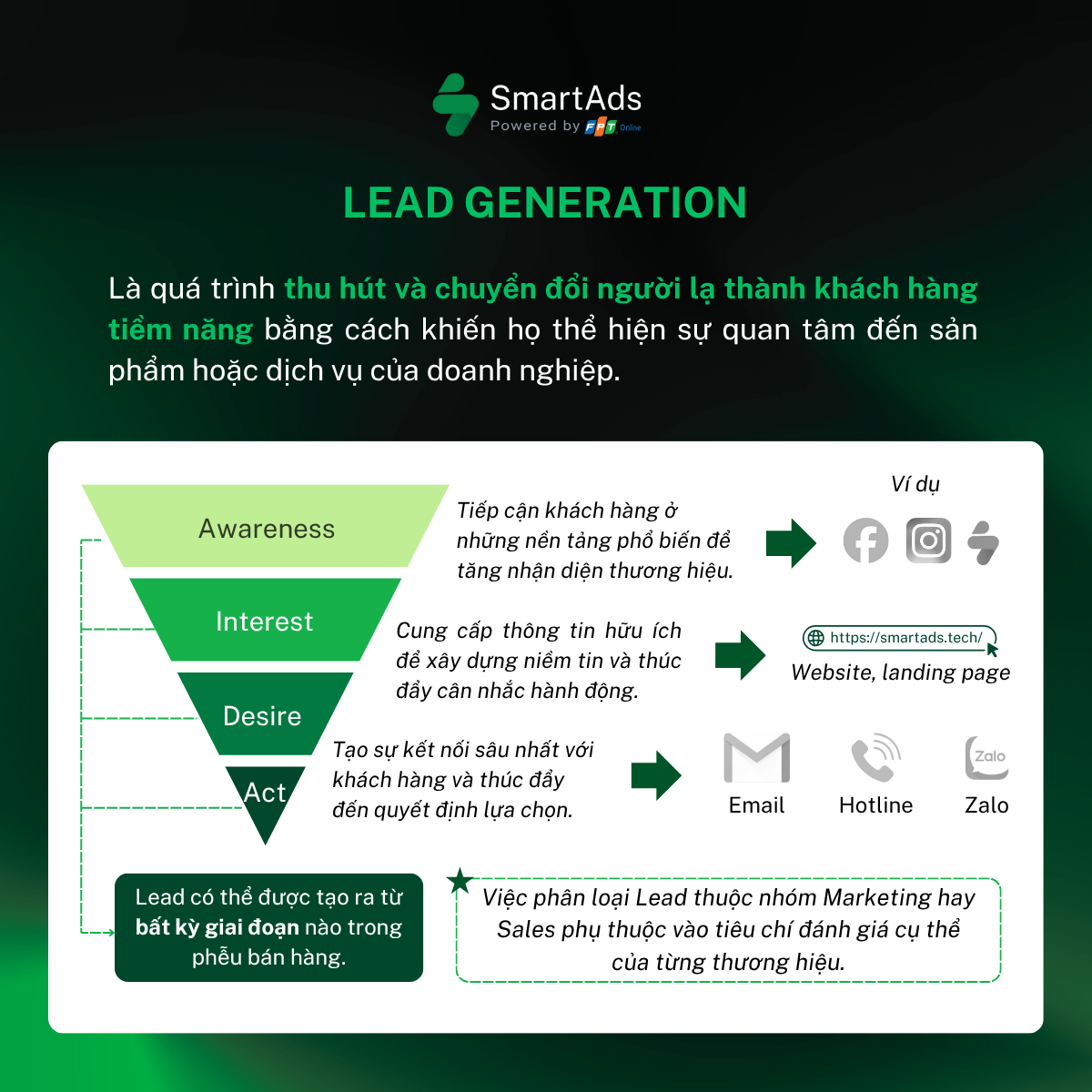
Lead Generation is the process of attracting and converting strangers into individuals who express interest in a company’s products or services. The core objective is to build a high-quality pool of potential customers — the foundation for future sales and marketing activities.
>>> Explore the 4 fundamental lead types in marketing here.
2. What is Lead Nurturing?
Lead Nurturing is the process of maintaining and strengthening relationships with leads through valuable content, information, and personalized experiences. The goal is to guide leads along the customer journey — from “awareness” to “trust” and eventually to “purchase.”
Quick comparison:
-
Lead Generation → Attract potential customers.
-
Lead Nurturing → Nurture leads and convert them into sales.
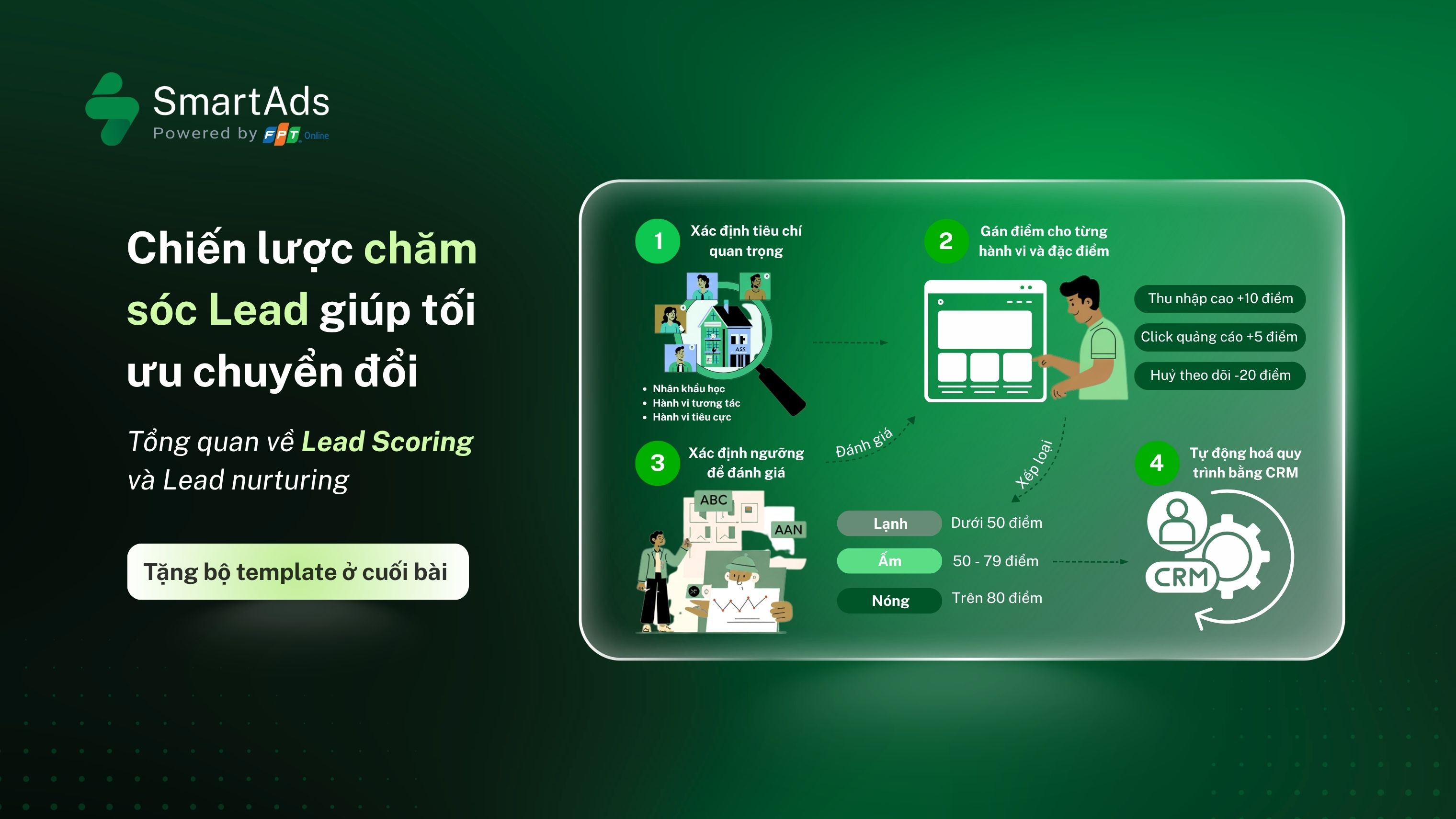
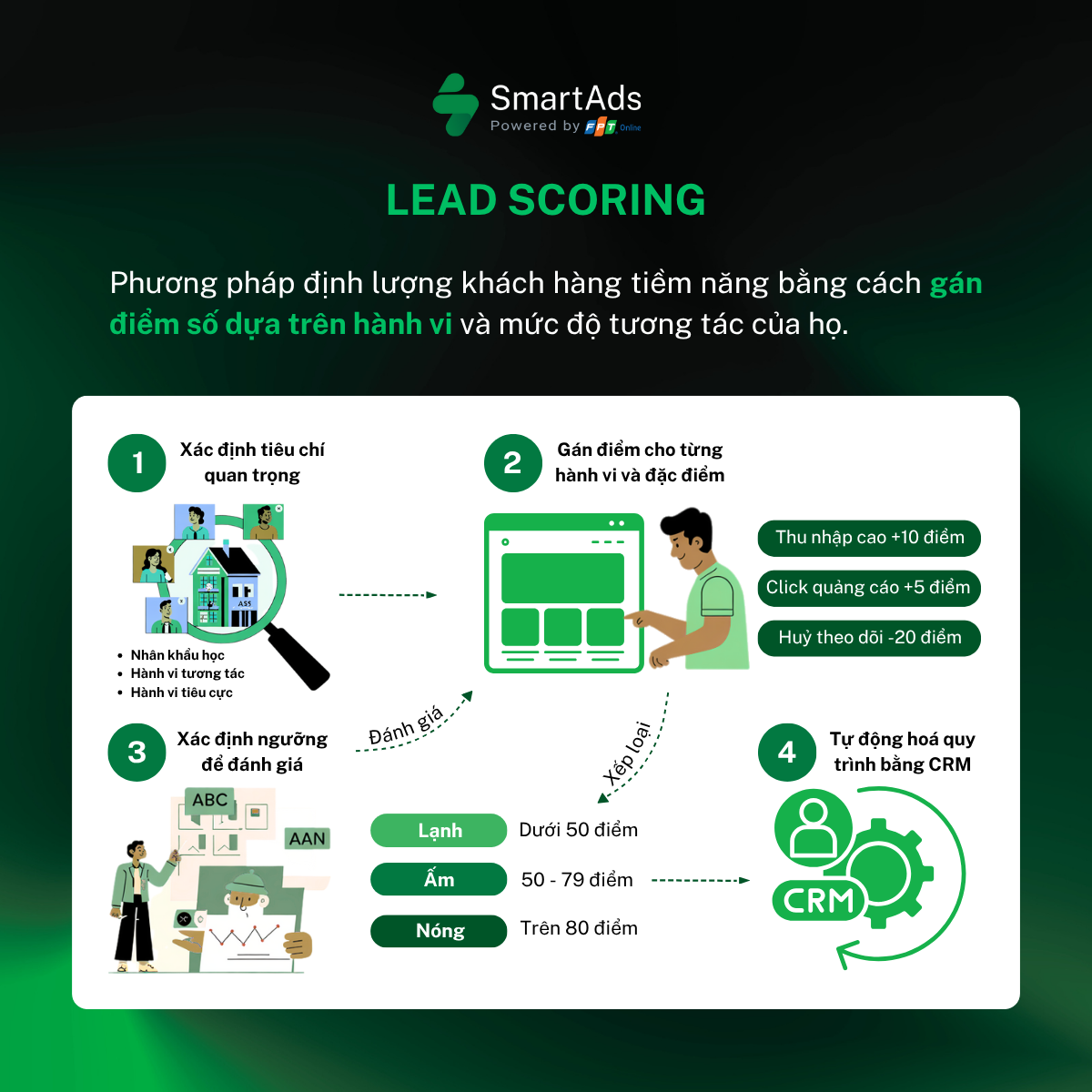
Once a business has successfully attracted leads (Lead Generation) and begun nurturing them (Lead Nurturing), a new challenge appears: not all leads hold the same value, nor are they equally ready to buy. This is why Lead Scoring is essential — a method for ranking and prioritizing leads based on behavior, interest level, and demographic fit.
II. Why lead nurturing matters more than constantly running new ads
1. Warm Leads with brand awareness convert more easily
In reality, acquiring a new customer can cost 5–25 times more than retaining and nurturing an existing one (Source: HBR). When properly segmented and nurtured, warm leads have already moved through the stages of “seeing – knowing – remembering” your brand, leaving only “trust – purchase” ahead. This highlights why nurturing existing leads not only saves marketing budget but also drives higher conversion rates compared to targeting completely cold audiences.
>>> How to eliminate low-quality leads and improve conversion rates?
2. Boost marketing ROI more effectively
Focusing on leads who have previously interacted with your brand helps maximize media budget and increase conversion per dollar spent. Instead of investing heavily to reach cold audiences unfamiliar with your brand, prioritizing “warm” or “hot” leads (those who have shown intent or taken action) shortens sales consultation time, reduces costs, and improves close rates.
Moreover, retargeting campaigns based on historical interactions allow brands to personalize messaging aligned with each lead’s needs and context. This typically results in significantly higher CTR and CVR compared to broad, non-personalized advertising.
3. Maximize customer lifetime value (CLV)
Properly nurturing existing leads not only increases the likelihood of a sale but also builds long-term customer relationships. This creates opportunities for repeat purchases and cross-sell / up-sell in the future. Loyal customers originating from nurtured leads tend to stay longer and generate more sustainable revenue for the brand.
4. Strengthen brand credibility through positive customer experiences
Customers who receive consistent, valuable care across multiple channels often develop more positive perceptions of a brand. They are also more likely to leave reviews or refer your business to others. These organic referrals act as earned media — boosting brand visibility without increasing ad spend.
III. The 5-Step lead nurturing process to Drive Sales
Step 1: Lead Qualification
To prioritize and tailor approaches for different lead types, businesses should leverage behavioral data, Lead Scoring, and customized criteria to classify leads into Cold / Warm / Hot categories.
Step 2: Build nurturing scenarios for each segment
Based on the classification in Step 1, develop nurturing scenarios tailored to each lead group (Cold / Warm / Hot). Specifically:
- Cold Leads: require light-touch approaches that introduce the brand and highlight product value to build initial awareness.
- Warm Leads: should be nurtured with helpful, relevant content that addresses their specific problems.
- Hot Leads: require strong calls-to-action, personalized offers, and incentives that encourage immediate purchase decisions.
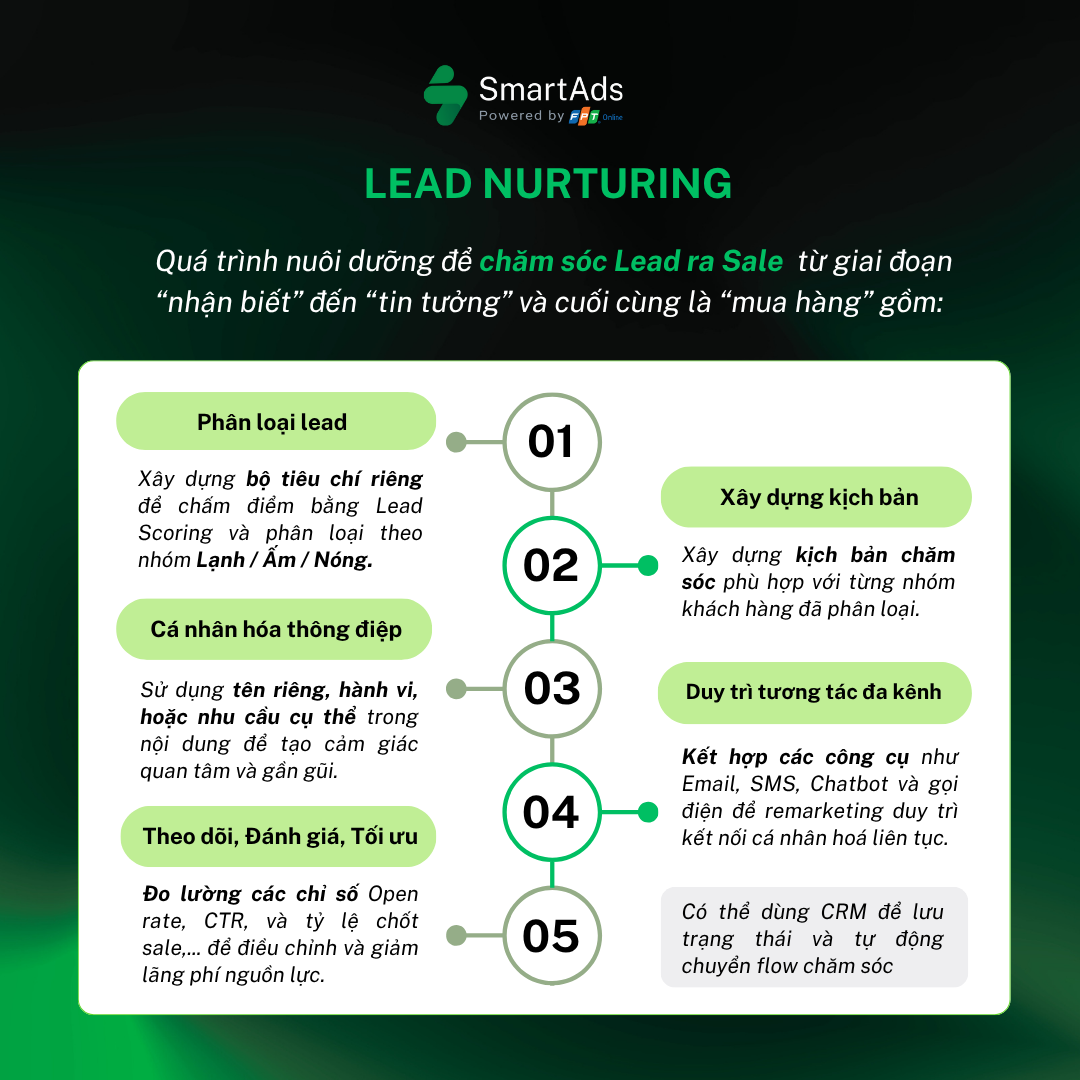
Step 3: Personalize the Messaging
Incorporate names, behaviors, or specific needs into your communication to create relevance and connection. Well-executed personalization significantly increases response rates and boosts sales performance.
Step 4: Maintain multi-channel engagement
Combine Email, SMS, Chatbots, and phone calls to maintain continuous, personalized touchpoints. The goal is to keep leads “warm” and ensure your brand appears at the moment they need you.
Step 5: Track – Evaluate – Optimize
Measure key metrics such as email open rates, CTR, appointments booked, and sales conversion rates. Based on the data, refine scripts, content, and frequency to improve efficiency and reduce resource waste.
Additionally, brands can use CRM systems to track customer status — each segment can automatically be assigned to an appropriate nurturing flow. For advertising, integrating tracking pixels enables behavior-based retargeting with more relevant messaging.
IV. Case Study: Suggested lead nurturing framework for a premium buffet restaurant model
Restaurant X is a premium buffet brand whose target customers are individuals who…
Step 1: Lead Classification (Lead Qualification)
Based on user behavior such as website visits, fanpage interactions, or form submissions:
-
Cold Leads: Only browsed the menu, have not checked the price list, and have not left any contact information.
-
Warm Leads: Viewed the price list, opened promotional emails, or asked about combo offers.
-
Hot Leads: Started booking but did not complete payment (abandoned booking) or contacted the restaurant directly via inbox.
Step 2 & Step 3: Build nurturing scenarios by segment and personalize messaging
- Cold Leads: Have not left any information or only follow the fanpage. → Send soft-sell content to increase awareness:
Example: Retargeting ads with messaging such as: “Have you tried our premium seafood buffet with lobster, grilled oysters with cheese, and fresh sashimi? Discover the elevated dining experience at Restaurant X – the perfect destination for true food lovers.”
- Warm Leads: Viewed the price list, downloaded the PDF menu, or registered for offers. → Need motivation-driven messages to convert.
Example: Offer a 20% discount voucher for bookings within 48 hours, or incentives for group bookings of four or more.
- Hot Leads: Have called to inquire, added vouchers to cart but abandoned mid-way, or have not completed the booking. → Sales should engage immediately:
Example: Send a personalized message or call to remind them about expiring offers: “Hi Ms. Lan, we still have 2 seats left with a 30% discount during our golden hour from 6–8 PM. Would you like to secure your spot?”
Step 4: Maintain multichannel engagement
At this stage, brands need to maintain a consistent presence across multiple touchpoints to keep the relationship warm and nudge leads toward conversion. Use a mix of email, SMS, chatbots, retargeting ads, and social media to gently remind them about offers or recommend dishes based on their preferences.
Examples:
-
Send emails featuring best-seller dishes with appealing visuals.
-
Send Zalo/SMS updates: “Restaurant X still has special lobster buffet deals this weekend. Reserve now to secure your offer!”
-
Run retargeting ads highlighting the dishes the lead viewed previously.
Step 5: Monitor – Evaluate – Optimize
After implementing lead nurturing activities, track the performance of each channel and message to assess conversion potential. Monitor metrics such as Open Rate, CTR, Booking Rate, and CPL. From there, refine content, frequency, and channel mix.
Example: If retargeting ads featuring lobster images produce over 30% higher CTR than other dishes among warm leads, consider increasing the budget or creating similar variations to maximize performance.
V. How to respond when leads decline?
A lead declining doesn’t mean the opportunity is gone. How your brand responds will shape the final impression and your future conversion chances.
-
Stay positive and respectful: Avoid negative reactions or pushing too hard. Thank them for their time and gently leave space for future engagement.
-
Identify the reason for declining: Ask light questions such as “What made you hesitate to proceed at this time?” to uncover obstacles—price, timing, or lack of information.
-
Provide value instead of pushing a sale: Send helpful content (e.g., tips, guides, special offers) to maintain connection and build trust.
-
Tag and reclassify the lead: Move them to a “not ready yet” segment in your CRM or automation system to continue nurturing with relevant content.
-
Follow up at the right time: Reach out again later with updated offers or improved solutions — conversion chances will be higher.
VI. Common mistakes when nurturing leads
Despite having tools and processes in place, many brands struggle to convert leads due to common pitfalls:
-
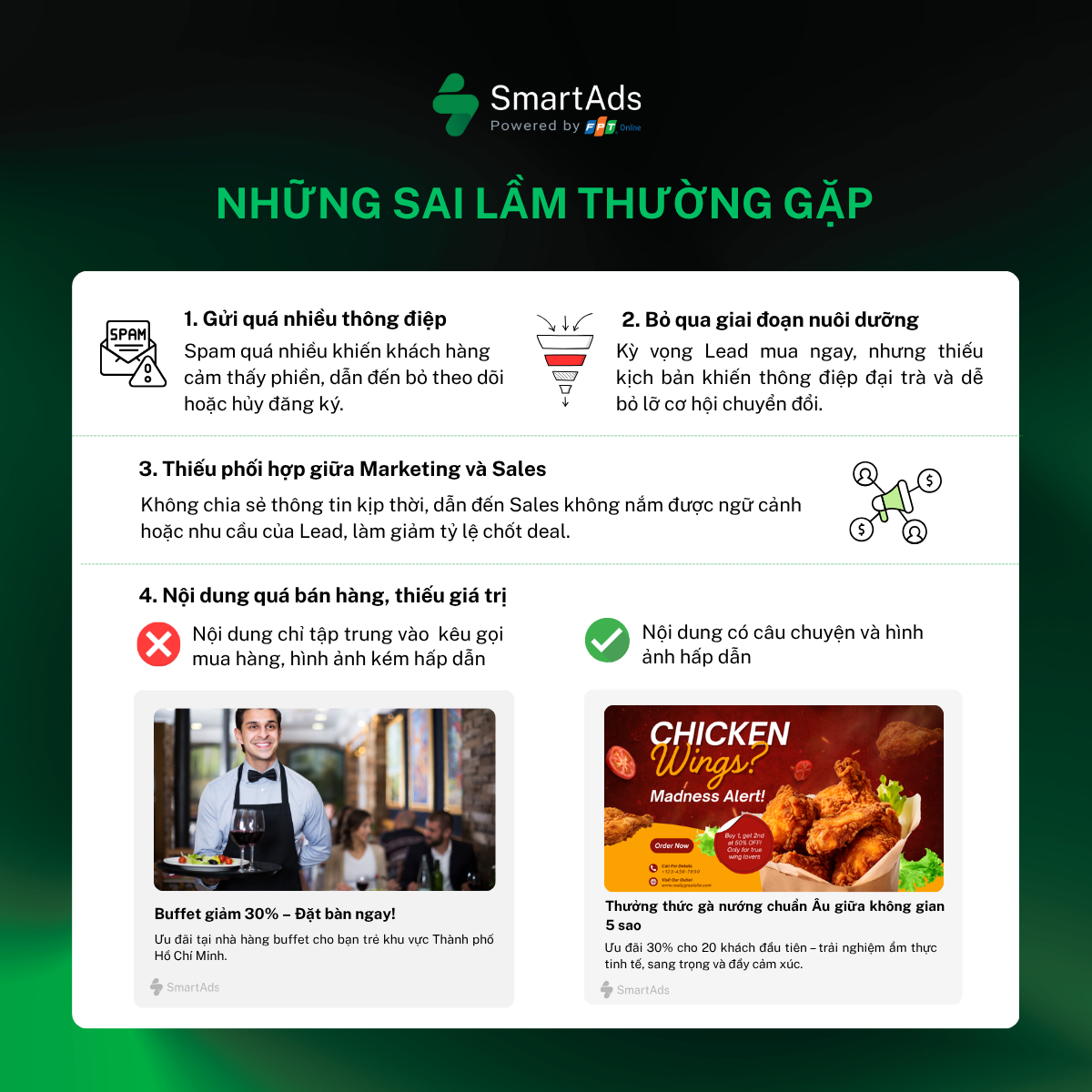
Sending too many messages: Excessive emails, messages, or ads can annoy leads, causing unsubscribes or disengagement.
-
Overly sales-driven, low-value content: Focusing only on selling without offering value erodes trust. For example, an ad with just “30% Off Buffet – Book Now!” is easy to ignore. Meanwhile, an ad with a compelling story or visuals like “Experience premium roast chicken in a 5-star ambiance – 30% off for the first 20 guests” triggers emotion and drives clearer conversion intent.
-
Skipping the nurturing stage: Many businesses expect leads to buy immediately, but most need time and information. Without a structured nurturing flow or proper segmentation, sending the same message to every lead makes the content bland and ineffective — losing conversion opportunities.
-
Poor alignment between Marketing and Sales: Lack of real-time information sharing causes Sales to miss context, reducing the chance of closing the deal.
VI. Conclusion
The Formula: Quality Leads + Proper Nurturing = Sustainable Revenue Growth.
Lead nurturing is not about blasting messages — it’s a relationship-building journey. When every lead feels understood and engaged the right way, they become not just customers but long-term brand advocates.
Want to increase both the quality and quantity of your leads from the very first touchpoint? Let SmartAds accompany you in attracting and nurturing leads more effectively.
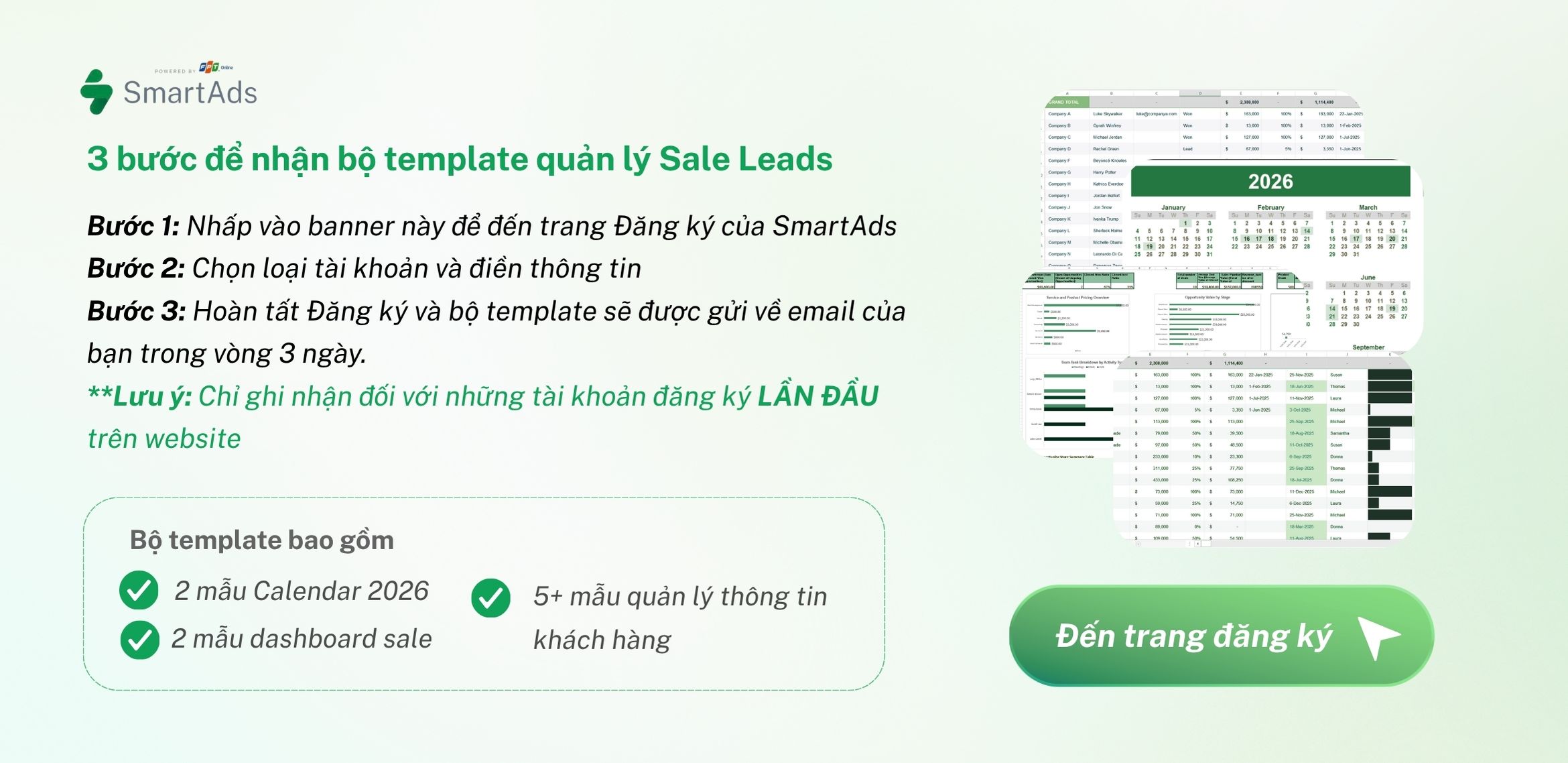
>>> Click the banner below to create an account and receive our Lead Classification & CRM Management Templates — plus expert tips on handling objections to maximize your conversion journey: