I. Nội dung và trải nghiệm hậu click
Không ít chiến dịch thu được lượng lớn lead nhưng tỷ lệ chuyển đổi thực tế lại rất thấp. Việc này không chỉ đến từ việc targeting chưa chính xác, mà còn xuất phát từ sự thiếu nhất quán trong thông điệp và trải nghiệm mà người dùng nhận được.
Một số nguyên nhân dẫn đến lead rác phổ biến:
-
Thông điệp quảng cáo giật tít, tạo kỳ vọng sai lệch khiến người xem click vào vì tò mò chứ không thật sự quan tâm.
-
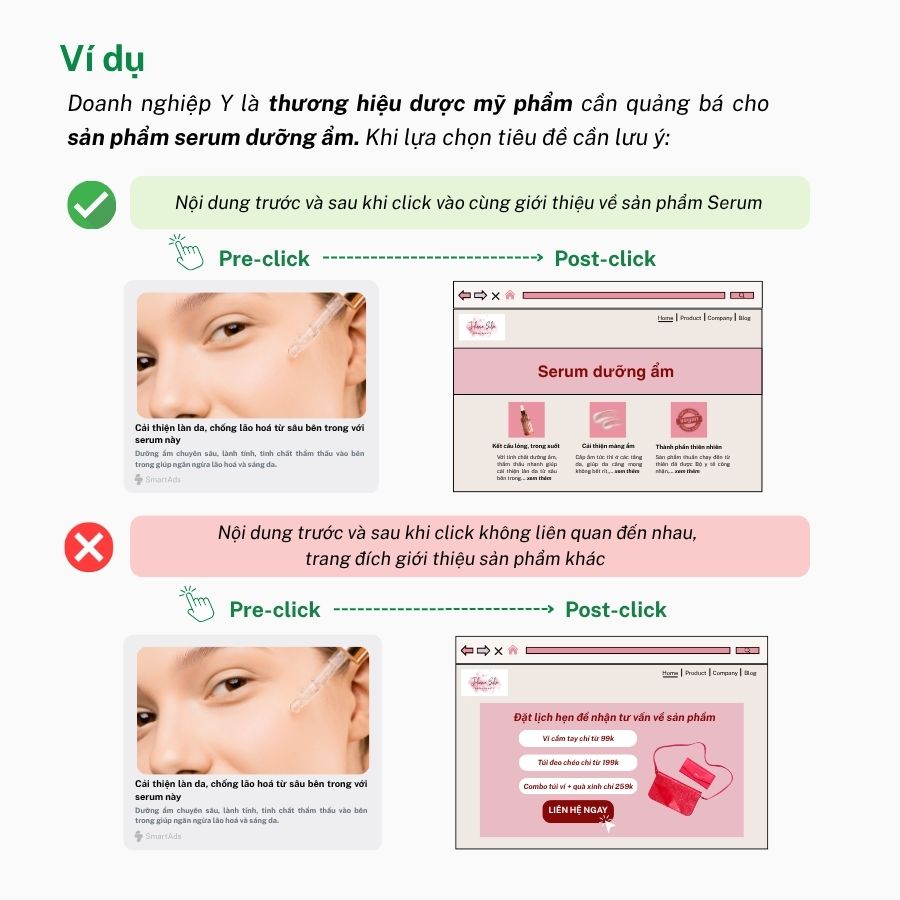
Quảng cáo và landing page không đồng bộ, nội dung hậu click làm người dùng cảm thấy bị “lừa”, dẫn đến điền thông tin sai hoặc thoát ngay giữa chừng.
Một số giải pháp cải thiện:
-
Phối hợp chặt giữa Performance và Content: Đảm bảo thông điệp quảng cáo phản ánh đúng đối tượng mục tiêu, không vì "đánh rộng" mà làm mờ tiêu chí chọn lọc vì suy cho cùng, nội dũng là 1 dạng filter chủ động lọc tệp khách hàng. Ngoài ra thông điệp chính (ưu đãi, lợi ích...) nên được lặp lại và nhấn mạnh rõ ràng trên trang đích.
-
Tránh “giật tít” hoặc clickbait quá đà: Càng trung thực, rõ ràng, quảng cáo càng giữ được sự tin tưởng của người dùng. Giật tít có thể tăng click, nhưng lại giảm sâu chất lượng lead.
-
Tối ưu giao diện và trải nghiệm trang đích (UX/UI): Giao diện cần đơn giản, dễ hiểu, form đặt ở vị trí nổi bật, điều hướng mạch lạc. Tránh chèn quá nhiều yếu tố gây nhiễu khiến người dùng bỏ giữa chừng hoặc điền sai.
-
Xây chiến dịch đa tầng: Kết hợp awareness – consideration – remarketing và có thể chạy song song đồng thời để sàng lọc người dùng dựa trên hành vi tương tác thực tế, thay vì chỉ nhìn lượt click hoặc lead.
II. Cơ chế sàng lọc lead tại phễu
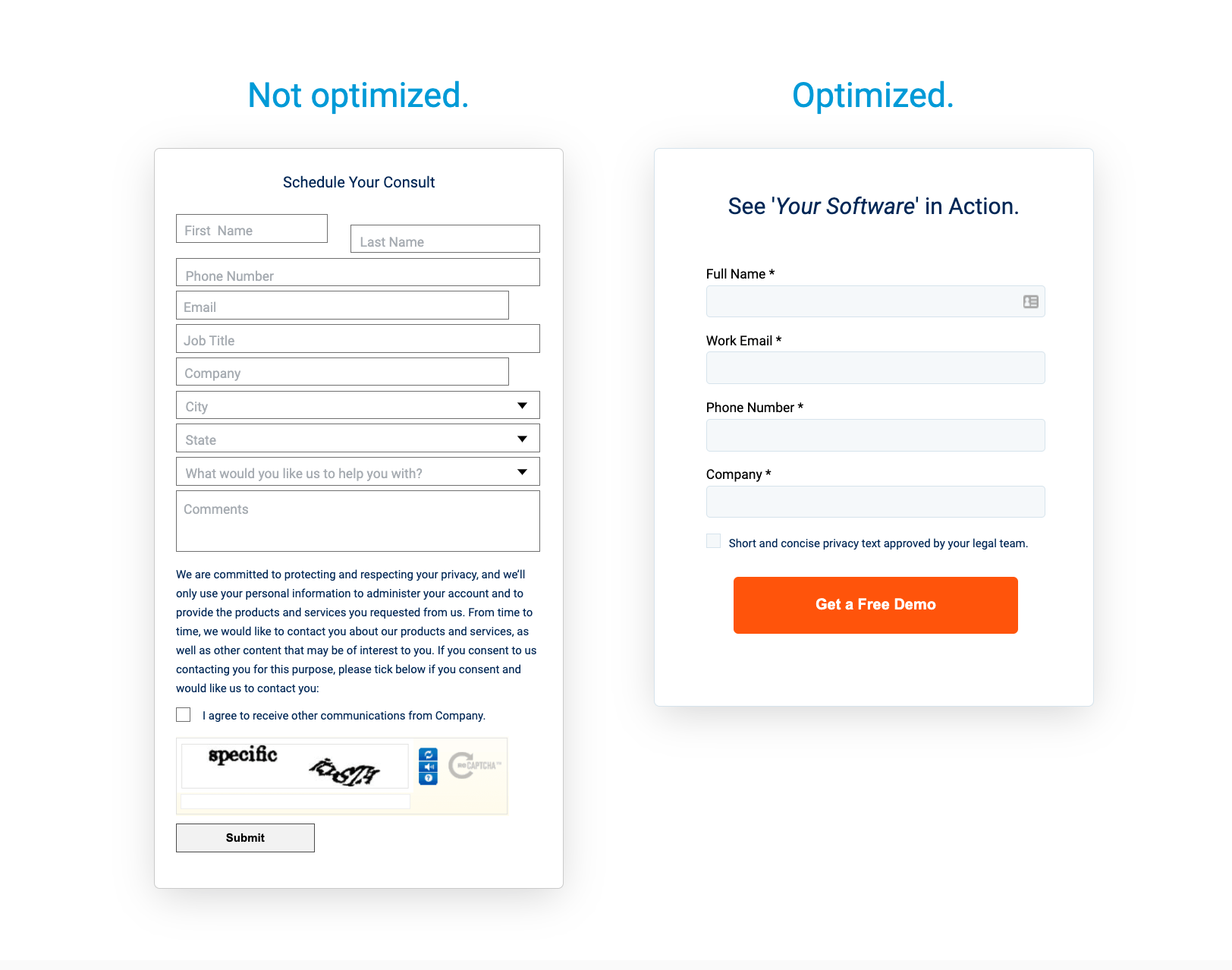
Targeting rộng có thể giúp giảm CPM/CPC, tuy nhiên lại dễ rơi vào nhóm người dùng không đủ nhu cầu hoặc ngoài khu vực phục vụ. Một mẫu đăng ký đơn giản có thể giúp thu về số lượng lớn lead, nhưng đồng thời cũng trở thành “cửa ngõ” cho lead ảo, sai thông tin hoặc không đủ điều kiện chuyển đổi. Ngược lại, nếu siết quá chặt bằng một mẫu đăng ký dài với nhiều thông tin, phễu sẽ trở nên kén người điền và làm tăng chi phí cho mỗi lead chất lượng. Vì vậy, điều quan trọng là cần tìm được điểm cân bằng giữa trải nghiệm người dùng và khả năng sàng lọc đầu vào. Một số giải pháp tối ưu giúp giảm lead rác ngay từ đầu phễu:
-
Tối ưu form đăng ký: Thay vì giữ form quá ngắn, hãy thêm các trường thông tin mang tính phân loại nhưng vẫn vừa đủ – ví dụ như: khu vực đang sinh sống, ngân sách dự kiến, thời gian có nhu cầu... như vậy sẽ giúp hệ thống nhận diện được lead có tiềm năng thật sự mà không gây cảm giác quá rườm rà.
-
Ứng dụng câu hỏi phân loại (qualifying question): Ví dụ: “Bạn đang có kế hoạch mua xe trong vòng bao lâu?” – Đây là câu hỏi đơn giản nhưng khéo léo gán điểm chất lượng lead ngay từ đầu, đồng thời phân chia nhóm để xử lý linh hoạt sau này.
-
Có thể thêm bước xác thực đơn giản – thân thiện với người dùng: Hạn chế spam bot bằng các yếu tố xác thực nhẹ như tick box xác nhận thông tin. Tránh lạm dụng reCAPTCHA vì dễ gây phiền toái cho người dùng (đặc biệt trên thiết bị di động). Việc gửi email/OTP có thể cân nhắc ở giai đoạn chăm sóc sau, thay vì đặt ngay tại form đầu tiên.
-
Tận dụng hành vi tương tác thay cho xác nhận chủ đích: Thay vì đưa ngay form đăng ký ở bước đầu, có thể dùng nút CTA như “Tìm hiểu thêm” hoặc “Tính toán chi phí” để lọc trước những người thật sự quan tâm. Tuy nhiên, cần áp dụng linh hoạt theo ngữ cảnh, tránh làm đứt mạch hành động nếu người dùng đang sẵn sàng điền form.
III. Dữ liệu hành vi
Một trong những trở ngại lớn nhất trong việc đánh giá chất lượng lead là thiếu dữ liệu về hành vi sau khi người dùng nhấp vào quảng cáo. Trong khi khả năng theo dõi người dùng ngày càng bị giới hạn, marketer không thể chỉ dựa vào dữ liệu bên thứ ba mà cần chủ động xây dựng hệ thống đo lường nội bộ để hiểu rõ nguồn lead, hành vi và chất lượng thực tế. Cụ thể:
-
Tích hợp CRM với hệ thống phân tích hành vi (analytics): Khi đồng bộ giữa CRM và công cụ analytics giúp theo dõi lead sau khi thu về: nguồn nào tạo ra lead chất lượng, trạng thái sau gọi điện, tỷ lệ phản hồi hay khả năng chốt đơn.
-
Gắn UTM rõ ràng cho từng nhóm chiến dịch/quảng cáo: Thiết lập UTM nhất quán theo từng kênh, nhóm quảng cáo và content giúp truy xuất hiệu quả chi tiết đến từng touchpoint và xác định chính xác yếu tố tạo ra chuyển đổi.
IV. Tiêu chí giữa Marketing và Sales
Tình trạng phổ biến ở nhiều doanh nghiệp là Sales phản hồi: “Marketing đưa toàn lead không quan tâm”, trong khi Marketing cũng cho rằng họ đã tối ưu ngân sách và chọn đúng tệp. Mâu thuẫn này thường xuất phát từ việc thiếu giao tiếp, thiếu tiêu chí chung và thiếu dữ liệu xuyên suốt giữa hai bộ phận. Thay vì đổ lỗi, điều cần thiết là xây dựng cơ chế phối hợp chặt chẽ và minh bạch hóa tiêu chí đánh giá lead. Có thể xây dựng quy trình phối hợp như sau:
-
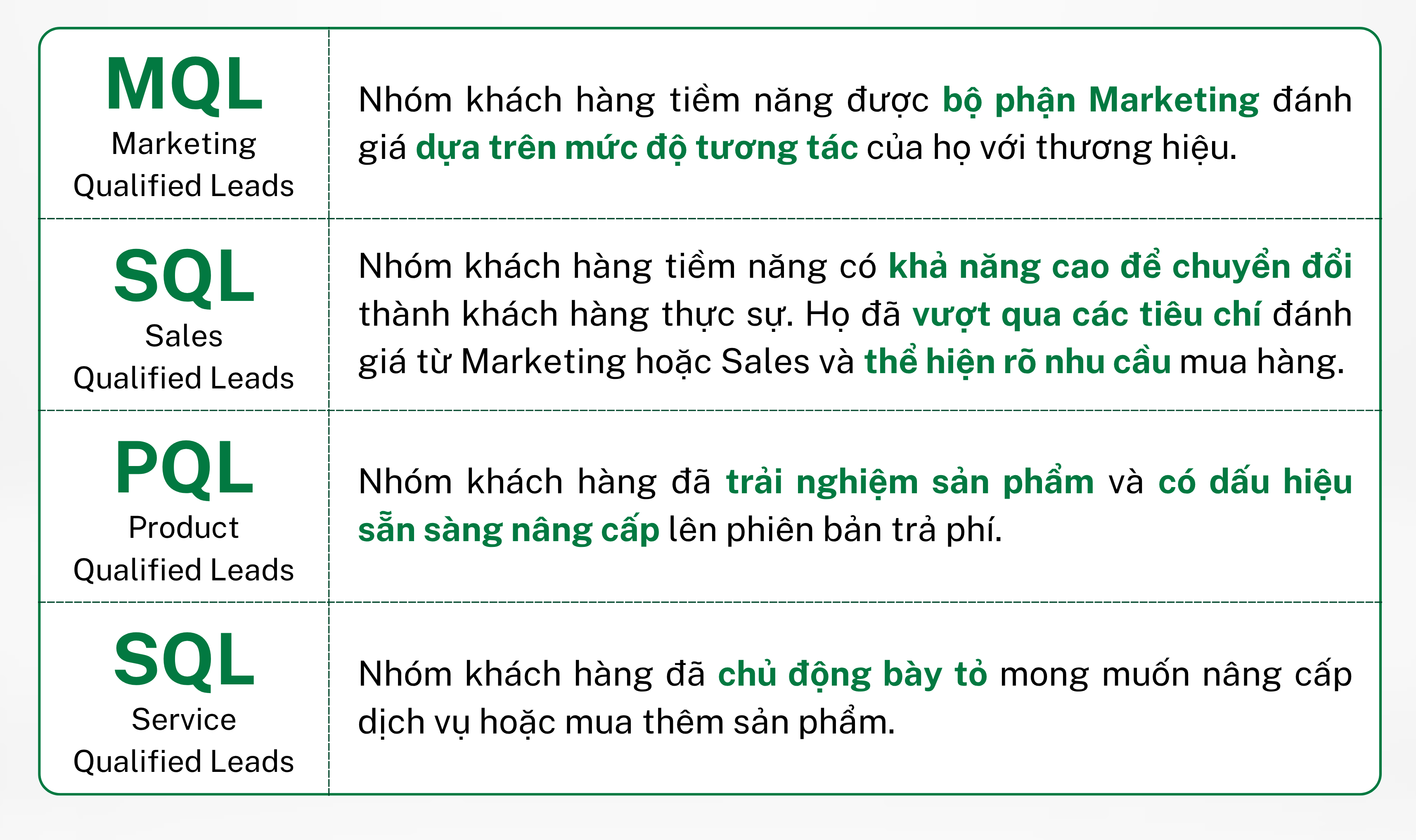
Thống nhất định nghĩa “lead chất lượng” (Qualified Lead): Hai bên cần đồng thuận rõ. thế nào là một lead đủ điều kiện để tiếp cận và chuyển đổi? Ví dụ bộ tiêu chí phổ thông: số điện thoại đúng + liên lạc được + khách xác nhận đang quan tâm sản phẩm/dịch vụ = Qualified Lead
-
Kiểm tra lại chiến lược targeting nếu phản hồi từ Sales không khớp: Những phản hồi rằng “khách ở ngoài khu vực phục vụ” hoặc “khách không hề biết đến sản phẩm” xuất hiện thường xuyên, cho thấy marketer có thể đang gặp vấn đề trong cách chọn tệp chạy quảng cáo.
=> Cần siết lại các điều kiện về độ tuổi, hành vi, khu vực địa lý, nghề nghiệp, mối quan tâm.
=> Loại trừ những tệp đã tiếp cận quá nhiều lần nhưng không tương tác
-
Rà soát lại thông điệp quảng cáo để tránh gây hiểu nhầm: Nếu khách hàng phản hồi như: “Tưởng đây là đăng ký nhận quà”, “Không biết là có tính phí”, hoặc “Không biết đây là form tư vấn”, thì nhiều khả năng thông điệp quảng cáo đang gây hiểu sai.
=> Cần soát lại headline, mô tả, hình ảnh, CTA.
=> Chỉnh sửa nội dung rõ ràng, đúng với giá trị thật sự, và đảm bảo đồng nhất với nội dung trên landing page. -
Phân loại lead theo từng chiến dịch và kênh để dễ tối ưu: Gắn thẻ (tag) hoặc phân nhóm theo nguồn – ví dụ: quảng cáo sản phẩm A, nhóm Zalo OA, remarketing… để theo dõi hiệu quả riêng từng nhóm.
-
Sử dụng hệ thống CRM chung để đo lường đồng bộ dữ liệu và theo dõi tiến trình chăm sóc: Hệ thống CRM giúp hai bộ phận cùng nhìn thấy trạng thái lead: đã gọi, chưa kết nối, cần chăm sóc lại, chuyển đổi thành khách hàng...Điều này giúp thuận tiện cho hoạt động remarketing và đánh giá hiệu suất theo thời gian thực. Đồng thời, cần quan tâm các chỉ số cuối phễu khác để đánh giá chất lượng lead, không chỉ là CPL. Cụ thể, cần kết hợp các chỉ số như:
-
Tỷ lệ kết nối thành công với lead
-
Thời gian phản hồi của Sales
-
Tỷ lệ chuyển đổi từ MQL (Marketing Qualified Lead) sang SQL (Sales Qualified Lead) để đánh giá thực chất giá trị mà mỗi chiến dịch mang lại.
-
-
Thiết lập cơ chế phản hồi nhanh từ Sales về kết quả xử lý lead: Sales nên cập nhật tình trạng sau mỗi cuộc gọi: khách phản hồi ra sao, lý do không quan tâm (nếu có), phản hồi tích cực ở nhóm nào...Team Marketing từ đó có dữ liệu để điều chỉnh targeting, nội dung, và phân phối phù hợp hơn.
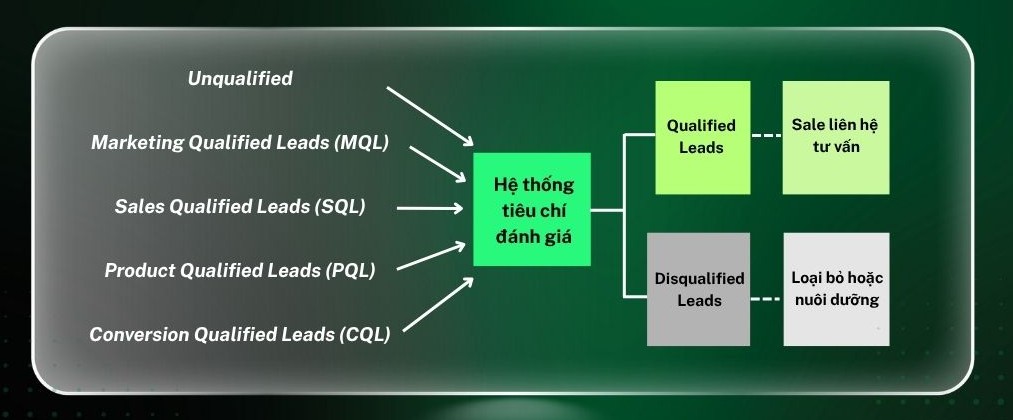
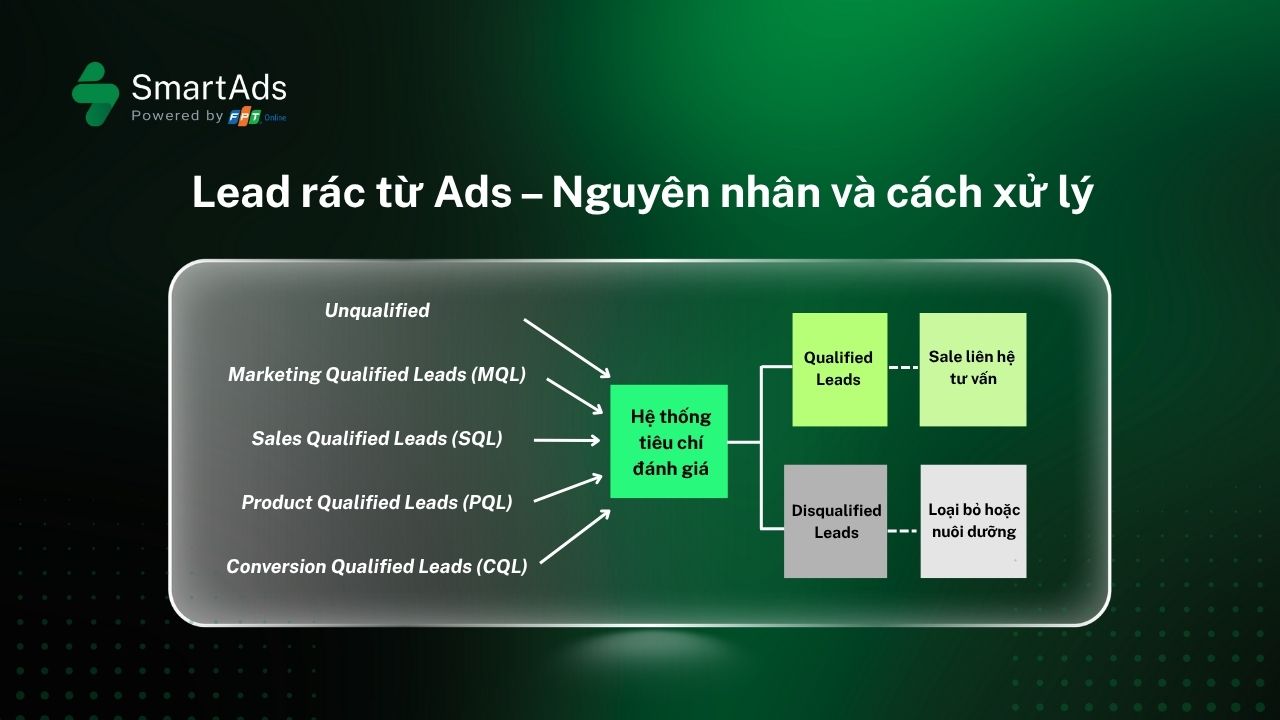
Hình trên là một mẫu về quy trình phân loại lead (Lead Qualification Process). Nguồn đầu vào có thể bao gồm nhiều loại lead như sau:
-
Unqualified: chưa đủ tiêu chuẩn hoặc thông tin.
-
MQLs (Marketing Qualified Leads): lead tiềm năng theo tiêu chí marketing.
-
SQLs (Sales Qualified Leads): lead đã sẵn sàng cho sales tiếp cận.
-
PQLs (Product Qualified Leads): lead đã trải nghiệm hoặc quan tâm sản phẩm.
-
CQLs (Conversion Qualified Leads): lead có hành động cho thấy khả năng chuyển đổi cao.
Tất cả được đưa qua Lead Qualification Framework (hệ thống tiêu chí đánh giá). Tại đây, hệ thống sẽ lọc và chia thành hai nhóm: Qualified Leads - đủ tiêu chuẩn để chuyển sang quy trình bán hàng của Sale và Disqualified Leads để loại bỏ hoặc đưa vào quy trình nuôi dưỡng để khai thác trong tương lai. Cách tiếp cận này giúp doanh nghiệp vừa tiết kiệm chi phí, vừa tập trung nguồn lực vào những khách hàng thật sự tiềm năng.
Kết
Khi khả năng theo dõi hành vi người dùng ngày càng bị siết chặt bởi các chính sách bảo mật và công nghệ chặn cookie, marketer buộc phải tìm hướng đi mới để duy trì độ chính xác trong phân loại và lọc lead. Thay vì phụ thuộc vào hành vi quá khứ, các thương hiệu cần chuyển sang cách tiếp cận hiện tại và mang tính ngữ cảnh: tận dụng dữ liệu nội bộ (first-party data), đồng thời cá nhân hóa thông điệp theo nội dung người dùng đang đọc dựa vào dữ liệu hành vi và ngữ cảnh, giúp tập trung vào "ý định" thực sự tại thời điểm tương tác. Tuy nhiên, chất lượng lead không chỉ nằm ở traffic hay targeting, mà là kết quả của cả một hệ thống phối hợp – từ chiến lược phân phối, thông điệp, trải nghiệm landing page đến khả năng kết nối giữa Marketing và Sales.
Hiện, SmartAds đang hướng đến giải pháp toàn diện cho bài toán này: kết hợp quảng cáo ngữ cảnh (contextual) và đo lường giúp thương hiệu tiếp cận đúng người, đúng thời điểm, dễ dàng theo dõi hành vi hậu click. Nhờ vậy, doanh nghiệp có thể tối ưu hiệu quả thật sự, xây dựng tệp khách hàng chất lượng ngay từ đầu, thay vì chỉ chạy theo số lượng và xử lý hậu quả sau mỗi chiến dịch.