1. Vị trí quảng cáo ảnh hưởng đến hiệu suất như thế nào?
Ad placement hay vị trí quảng cáo không chỉ quyết định tỷ lệ nhấp chuột (CTR) mà còn ảnh hưởng đến mức độ tương tác của người dùng. Một quảng cáo được đặt ở vị trí nổi bật, phù hợp với nội dung trang sẽ thu hút sự chú ý nhiều hơn so với những quảng cáo bị "chôn vùi" (ad blindness) ở góc dưới cùng của trang.
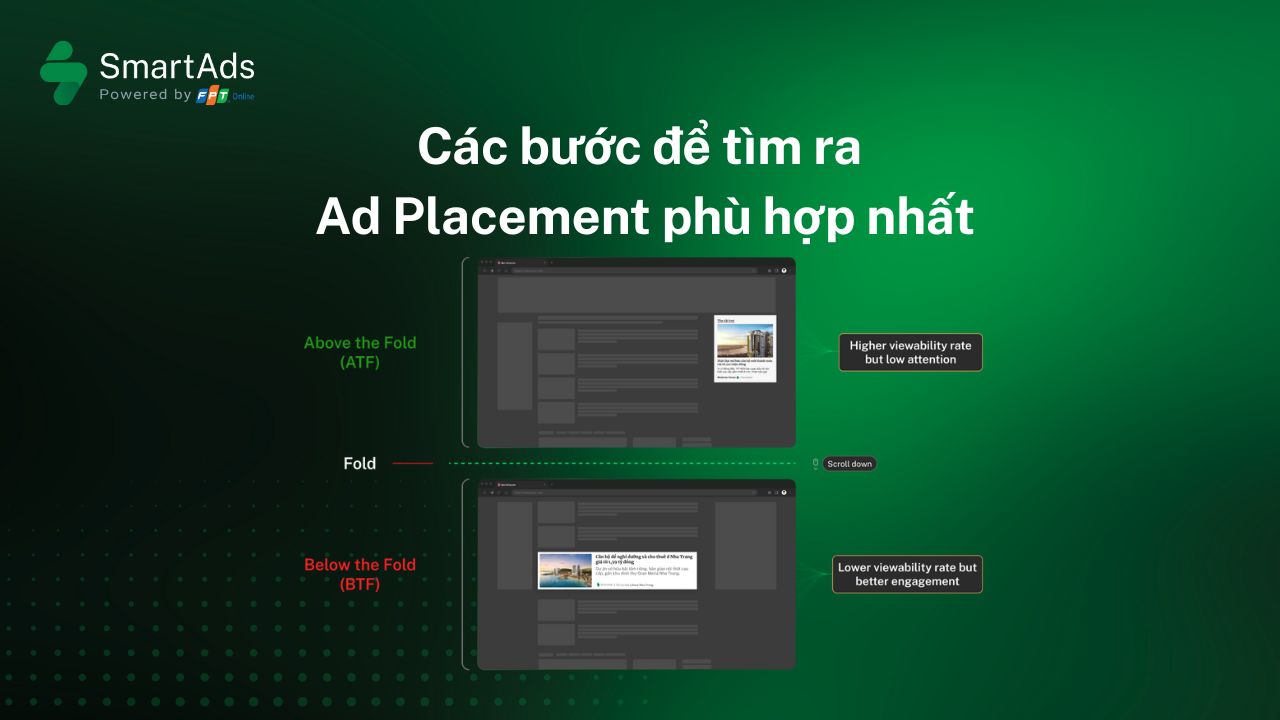
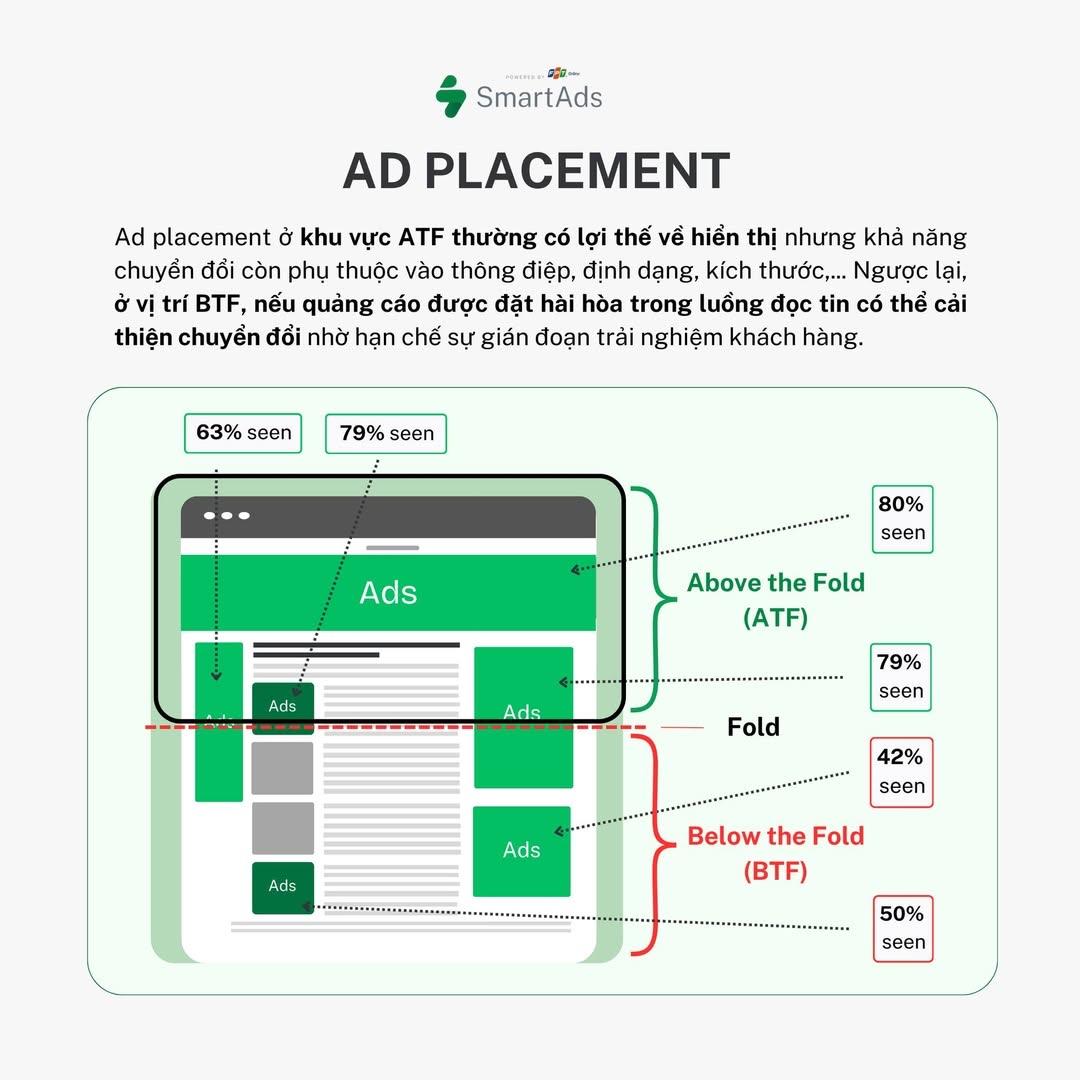
- Above the Fold (ATF, Tạm dịch là Nửa trên): Đây là khu vực người dùng nhìn thấy ngay khi truy cập trang mà không cần cuộn xuống. Quảng cáo đặt ở vị trí này thường có CTR cao hơn.
- Below the Fold (BTF, Tạm dịch là Nửa dưới): Đây là khu vực người dùng chỉ nhìn thấy khi cuộn trang xuống. Mặc dù không nổi bật như Above the Fold, quảng cáo đặt ở vị trí này vẫn có thể mang lại hiệu quả cao nếu được tối ưu hóa phù hợp.
- In-content (Trong nội dung): Quảng cáo được đặt giữa các đoạn văn bản hoặc trong bài viết thường mang lại hiệu quả cao vì chúng xuất hiện tự nhiên và không làm gián đoạn trải nghiệm người dùng.
- Sidebar (Thanh bên): Mặc dù không nổi bật bằng các vị trí trên, sidebar vẫn là lựa chọn tốt cho các quảng cáo dạng banner hoặc text.
2. Các bước để tìm ra Ad Placement (vị trí đặt quảng cáo) phù hợp nhất
Chọn đúng vị trí đặt quảng cáo (Ad Placement) là yếu tố then chốt để tối ưu hiệu quả chiến dịch và cải thiện trải nghiệm người dùng. Dù bạn là nhà quảng cáo (advertiser) hay người xuất bản (publisher), việc phân tích đối tượng, thử nghiệm A/B và điều chỉnh vị trí quảng cáo sẽ giúp tăng tương tác, chuyển đổi và doanh thu. Dưới đây là từng bước cụ thể để tìm ra Ad Placement phù hợp nhất cho từng đối tượng.
a. Đối với advertiser
Bước 1: Thử nghiệm A/B
Dành một phần ngân sách nhỏ để chạy thử nghiệm A/B bằng cách đặt cùng một mẫu quảng cáo native trên hai trang báo A và B. Mục tiêu là so sánh các chỉ số như số lần hiển thị (impression), số lượt click (click), và tỷ lệ click-through (CTR) giữa hai trang. Ví dụ, nếu trang A có CTR cao hơn trang B, điều này có thể cho thấy trang A thu hút đúng đối tượng khách hàng tiềm năng hơn. Có thể cân nhắc sử dụng định dạng video để thu hút lượng engagement tốt hơn.
Bước 2: Phân tích hành vi người dùng và tối ưu hóa
Từ kết quả thử nghiệm A/B, hãy phân tích sâu hơn để hiểu hành vi người dùng. Ví dụ:
-
Nếu trang A có CTR cao nhưng impression thấp, điều này có thể cho thấy trang A có lượng truy cập ít hơn nhưng người dùng chất lượng hơn.
-
Nếu trang B có impression cao nhưng CTR thấp, có thể do quảng cáo không phù hợp với đối tượng người dùng trên trang này, hoặc vị trí đặt quảng cáo (Ad placement) chưa tối ưu dẫn đến ad blindness.
Dựa trên phân tích này, bạn có thể điều chỉnh chiến lược quảng cáo. Ví dụ:
-
Tập trung ngân sách vào trang A nếu nó mang lại hiệu quả cao hơn.
-
Tối ưu hóa quảng cáo trên trang B bằng cách thay đổi vị trí đặt quảng cáo (ví dụ: off các vị trí có CTR thấp) hoặc điều chỉnh nội dung quảng cáo để phù hợp hơn với đối tượng người dùng.
-
Theo dõi các chỉ số khác như thời gian tương tác, tỷ lệ chuyển đổi (conversion rate), và bounce rate để có cái nhìn toàn diện hơn về hiệu quả quảng cáo.
b. Đối với publisher
Bước 1: Phân tích hành vi người dùng
Sử dụng công cụ phân tích như Google Analytics để hiểu rõ hành vi người dùng trên trang của doanh nghiệp. Xác định các khu vực mà người dùng dành nhiều thời gian nhất và đặt quảng cáo ở những vị trí đó. Cụ thể:
- Heatmap Tools (ví dụ: Hotjar): Phân tích hành vi người dùng thông qua bản đồ nhiệt, từ đó xác định vị trí quảng cáo tối ưu. Có thể tiến hành lựa chọn những vị trí có điểm chú ý cao để đặt quảng cáo.
- Theo dõi tỷ lệ thoát (Bounce rate): Để tránh đặt quảng cáo ở những nơi khiến người dùng rời đi nhanh chóng. Ví dụ, nếu một trang có tỷ lệ thoát cao, có thể nội dung hoặc quảng cáo ở đó không phù hợp với người dùng.
- Mức độ cuộn trang (Scroll depth): Giúp bạn biết được người dùng cuộn xuống bao nhiêu phần trăm trang. Nếu phần lớn người dùng chỉ cuộn đến 50% trang, đặt quảng cáo ở vị trí Above the Fold (ATF) sẽ hiệu quả hơn. Ngược lại, nếu họ cuộn sâu đến 80-90%, bạn có thể tận dụng Below the Fold (BTF) để đặt quảng cáo.
- Tương tác với nút CTA (Call-to-Action): Theo dõi số lần nhấp vào các nút CTA như "Đăng ký ngay", "Tìm hiểu thêm", hoặc "Mua hàng". Nếu một nút CTA có tỷ lệ nhấp cao, đặt quảng cáo gần đó có thể tăng khả năng tương tác.
- Số lần xem trang (Page views): Xác định trang nào được xem nhiều nhất. Đây là những trang lý tưởng để đặt quảng cáo, vì chúng thu hút nhiều lưu lượng truy cập và sự quan tâm của người dùng.
- Sự kiện (Events): Theo dõi các sự kiện như xem video, tải tài liệu, hoặc tương tác với biểu mẫu. Những khu vực có nhiều sự kiện xảy ra thường là nơi người dùng dành nhiều thời gian và sự chú ý, từ đó có thể tối ưu vị trí quảng cáo.
Bước 2: Thử nghiệm A/B
Thử nghiệm các các định dạng và kích thước cho các vị trí quảng cáo khác nhau để xem vị trí nào mang lại doanh thu và tỉ lệ lấp đầy inventory cao nhất. Ví dụ, so sánh hiệu quả giữa quảng cáo đặt tại ATF và BTF, hoặc trong cùng zone ATF (như vị trí masthead và skyscraper),... Sau đó publisher có thể tiến hành điều chỉnh kích thước và định dạng quảng cáo để phù hợp với từng vị trí cụ thể.
Bước 3: Cân bằng giữa doanh thu và trải nghiệm người dùng
Ad placement (vị trí đặt quảng cáo) đóng vai trò quan trọng trong việc cân bằng giữa doanh thu và trải nghiệm người dùng. Đừng quá tập trung vào doanh thu mà bỏ qua yếu tố này, vì quảng cáo xuất hiện quá nhiều hoặc đặt ở vị trí gây khó chịu có thể khiến người dùng rời bỏ trang. Để tối ưu hóa Ad placement, có thể tham khảo một số tips sau:
-
Đa dạng hóa kích thước và định dạng quảng cáo: Sử dụng nhiều loại quảng cáo (video, hình ảnh, native ads) để phù hợp với nhu cầu đa dạng và thu hút sự chú ý của người dùng.
-
Sử dụng quảng cáo cố định (Sticky Ads): Giúp quảng cáo luôn hiển thị khi người dùng cuộn trang, tăng khả năng nhận diện và tương tác.
-
Làm mới quảng cáo tự động (Ad Refresh): Tự động làm mới quảng cáo khi có tương tác, tăng số lần hiển thị và cơ hội tương tác.
-
Tải quảng cáo theo yêu cầu (Lazy Loading): Chỉ tải quảng cáo khi người dùng cuộn đến vị trí cụ thể, cải thiện tốc độ tải trang và trải nghiệm người dùng.
Một Ad placement hợp lý không chỉ giúp tăng hiệu quả quảng cáo mà còn duy trì sự hài lòng của người dùng, đặc biệt trong bối cảnh tỷ lệ truy cập qua thiết bị di động ngày càng tăng.
Tối ưu hóa vị trí quảng cáo không chỉ là nghệ thuật sắp đặt tinh tế mà còn là một quy trình khoa học đòi hỏi sự phân tích kỹ lưỡng và chiến lược bài bản. Không phải lúc nào quảng cáo được đặt ở khu vực ATF (Above The Fold) phía trên cũng mang lại hiệu quả tối ưu, bởi dù có lợi thế về khả năng hiển thị cao, khả năng chuyển đổi còn bị ảnh hưởng bởi các yếu tố khác như thông điệp, định dạng, kích thước quảng cáo,.... Ngược lại, quảng cáo ở khu vực BTF (Below The Fold), nếu được sử dụng một cách khéo léo và hòa hợp vào luồng đọc tin của khách hàng, tỷ lệ chuyển đổi sẽ có xu hướng cải thiện vì không làm gián đoạn hành trình trải nghiệm nội dung số của khách hàng.
Do đó, bằng cách kết hợp phân tích hành vi người dùng, thử nghiệm A/B để so sánh hiệu quả giữa các vị trí khác nhau và tận dụng các công cụ đo lường, doanh nghiệp có thể xác định được Ad placement lý tưởng ở từng khu vực ATF, BTF – nơi quảng cáo không chỉ thu hút sự chú ý mà còn tạo ra giá trị thực sự.
Hiện, SmartAds đang cung cấp giải pháp quảng cáo trên các trang điện điện tử. Với hệ thống phân bổ thông minh và khả năng tối ưu theo thời gian thực, SmartAds giúp quảng cáo hiển thị đúng thời điểm, đúng đối tượng, mang lại kết quả tối ưu cho chiến dịch.