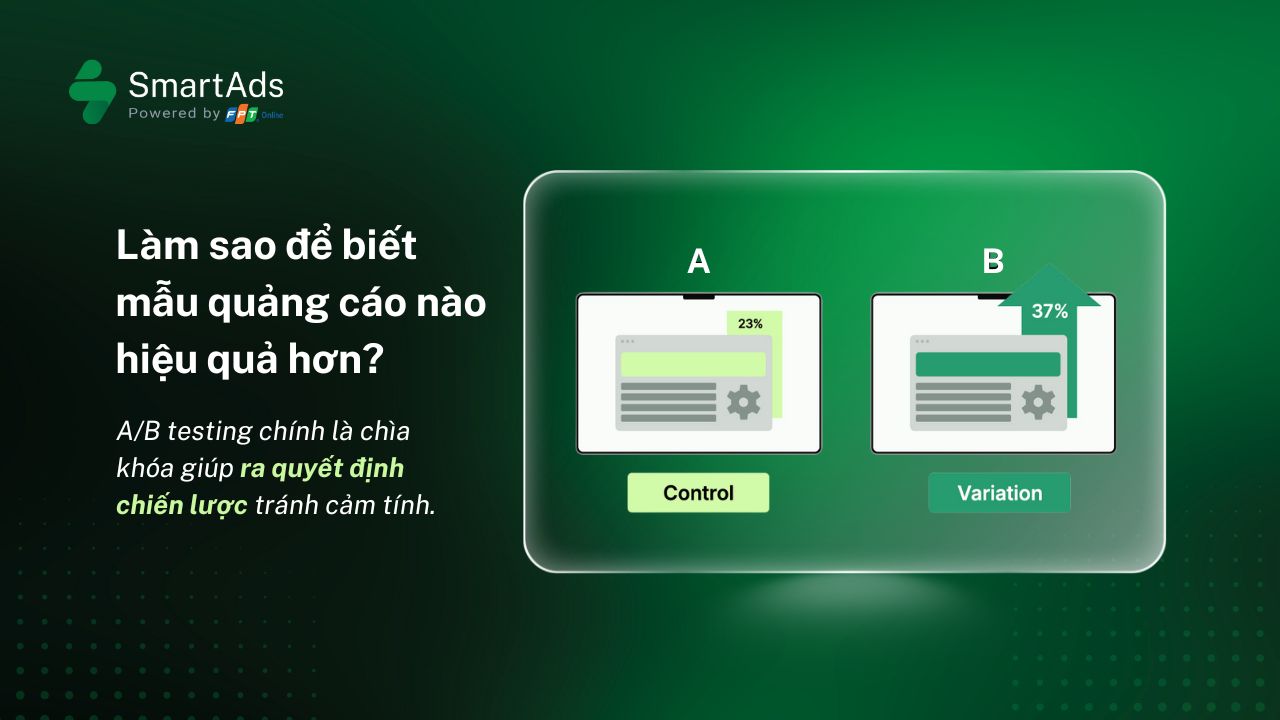
A/B Testing là gì? Khái niệm và nguyên lý hoạt động
A/B testing hay thử nghiệm A/B là quá trình so sánh hai phiên bản quảng cáo (A và B) bằng cách chia đối tượng thành hai nhóm ngẫu nhiên. Nhóm A xem phiên bản gốc, nhóm B xem phiên bản đã thay đổi một yếu tố duy nhất, như tiêu đề hoặc ảnh minh họa. Sau một thời gian nhất định, marketer sẽ phân tích số liệu để xác định phiên bản nào tạo nhiều chuyển đổi hoặc nhấp chuột hơn.
Trong A/B testing truyền thống, chỉ một yếu tố được thay đổi mỗi lần để đảm bảo kết quả khách quan. Nếu muốn thử nghiệm nhiều yếu tố cùng lúc, doanh nghiệp có thể áp dụng thử nghiệm đa biến (multivariate testing). Tuy nhiên, lúc này việc phân tích sẽ phức tạp hơn, đòi hỏi cỡ mẫu lớn.
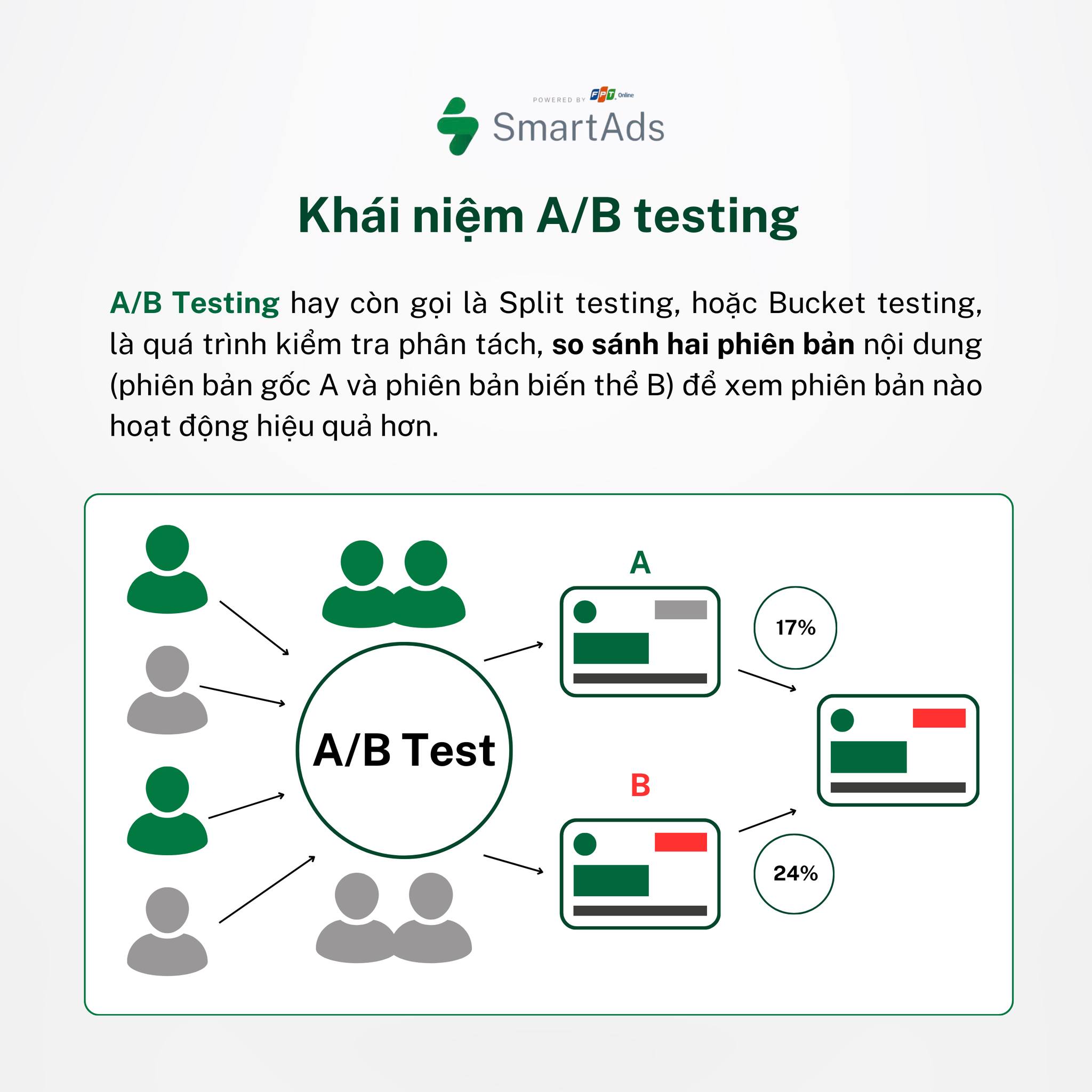
Lợi ích thực tiễn khi áp dụng A/B Testing trong quảng cáo
Nhìn một cách tổng quát, áp dụng A/B testing đem lại nhiều giá trị thiết thực cho doanh nghiệp khi đánh giá hiệu quả thử nghiệm quảng cáo:
Tối ưu tỷ lệ chuyển đổi (CTR, CR) & ROI
Vai trò then chốt của A/B testing là giúp marketer đo đếm chính xác hành vi khách hàng, tăng tỷ lệ chuyển đổi (CTR, CR), giảm chi phí cho mỗi chuyển đổi (CPA) hoặc nhấp chuột (CPC).
Cải thiện trải nghiệm người dùng/khách hàng
Nhờ A/B testing, các phiên bản giao diện, thông điệp hay layout được tối ưu theo hành vi thực tiễn, giúp giảm tỷ lệ rời trang và nâng cao mức độ tương tác.
>>> Xem thêm cách tối ưu Time-on-site nhờ A/B testing tại đây
Quyết định dựa trên dữ liệu thực tế
Ưu điểm lớn của A/B testing là loại bỏ hoàn toàn yếu tố cảm tính trong thiết kế quảng cáo. Thay vào đó, marketer dựa vào số liệu trực tiếp các nền tảng, từ đó ra quyết định tối ưu theo đúng insight hành vi khách hàng.
Các bước thực hiện A/B testing thử nghiệm quảng cáo
1. Xác định mục tiêu test
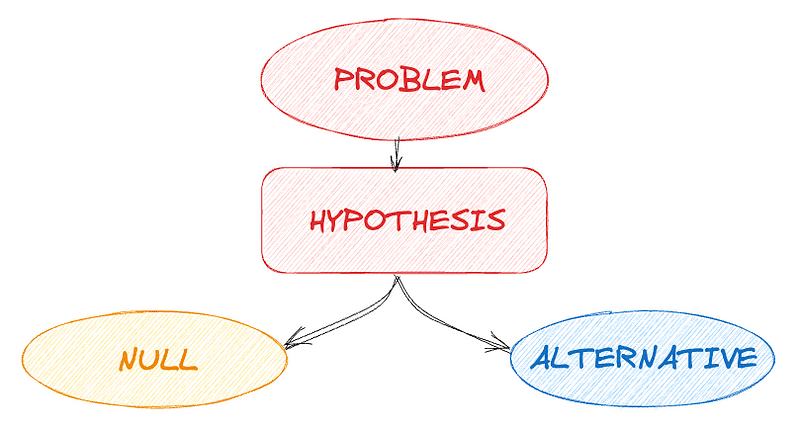
Trước khi bắt đầu, bạn cần dựa vào dữ liệu cơ sở về thực trạng hoặc thị trường để xác định mục tiêu chính của việc test là gì. Điều này sẽ định hướng cho bạn nên thử nghiệm yếu tố nào của quảng cáo và đo lường bằng chỉ số gì. Đây là cơ sở để đưa ra giả thuyết nghiên cứu.
Một số mục tiêu thường gặp:
-
Tăng tỷ lệ nhấp (CTR) cho mẫu quảng cáo
-
Tăng tỷ lệ chuyển đổi (CVR) tại landing page
-
Giảm chi phí cho mỗi lần nhấp (CPC) hoặc cho mỗi chuyển đổi (CPA)
-
Kiểm tra hiệu quả thông điệp, visual, CTA, hoặc targeting
2. Xác định biến số cần thử nghiệm
Nguyên tắc quan trọng: chỉ thay đổi một yếu tố mỗi lần test để xác định chính xác nguyên nhân tạo nên sự khác biệt.
Các yếu tố có thể A/B test:
-
Tiêu đề (headline): Ví dụ: “Ưu đãi 30% hôm nay” vs “Tặng quà cho 100 khách đầu tiên”
-
Hình ảnh hoặc video: Người thật sử dụng sản phẩm vs ảnh chụp sản phẩm
-
Nội dung mô tả (body copy)
-
CTA (call-to-action): Ví dụ: “Mua ngay” vs “Tìm hiểu thêm”
-
Đối tượng mục tiêu: Ví dụ: Mass audience, Remarketing hoặc Lookalike
-
Kênh phân phối hoặc vị trí: Ví dụ: khu vực inread vs outstream
-
Thời điểm chạy quảng cáo
3. Thiết lập chiến dịch A/B thử nghiệm quảng cáo
Sau khi xác định yếu tố cần test, bạn cần thiết lập 2 nhóm quảng cáo độc lập:
-
Nhóm A: phiên bản hiện tại hoặc baseline
-
Nhóm B: phiên bản có thay đổi
Lưu ý: Hãy đảm bảo mọi yếu tố khác giữ nguyên, chia ngân sách đều và sử dụng công cụ hỗ trợ test nếu có.
Lưu ý & Checklist khi thực hiện A/B Testing quảng cáo
Để triển khai a/b testing hiệu quả, marketer cần lưu ý những điểm sau:
- Đảm bảo đủ cỡ mẫu, thời gian test tối thiểu 7 ngày để giảm sai lệch số liệu (outlier).
- Chỉ thay đổi một yếu tố mỗi lần để xác định nguyên nhân thay đổi hiệu quả.
- Lựa chọn công cụ phù hợp để ghi nhận dữ liệu và so sánh. Sau đó, lập bảng kiểm kết quả từng chỉ số và đối chiếu chênh lệch có ý nghĩa thống kê, không thiên lệch do lời khuyên chủ quan.
- Không nên thử nghiệm quá nhiều lần khi chưa kiểm soát biến độc lập, tránh mất dữ liệu chuẩn xác.
- Thử nghiệm cùng lúc nhiều yếu tố, khó xác định nguyên nhân thành công.
- Không xác định rõ hypothesis trước khi bắt đầu.
- Chọn sai thời điểm test, làm kết quả mất khách quan.
>>> Xem thêm các loại sai số phổ biến khi thực hiện A/B testing tại đây.
Kết
Áp dụng đúng quy trình a/b testing quảng cáo không chỉ giúp bạn tiết kiệm chi phí, đầu tư hợp lý cho từng chiến dịch mà còn tạo ra nền tảng vững chắc để tăng trưởng chuyển đổi liên tục. Đừng ngại bắt đầu từ những thử nghiệm nhỏ và ghi nhận giá trị lớn – đó chính là con đường mà mọi marketer xuất sắc đều lựa chọn.
Về SmartAds
SmartAds, tiền thân là Eclick, được phát triển bởi FPT Online – một trong những đơn vị tiên phong trong lĩnh vực công nghệ và truyền thông số tại Việt Nam. Trải qua quá trình đổi mới và phát triển, với mạng lưới hợp tác cùng các premium publisher hàng đầu, SmartAds khẳng định vị thế tiên phong trong việc nâng cao chuẩn mực quảng cáo native tại thị trường Việt Nam, đồng thời kỳ vọng trở thành đối tác đáng tin cậy cùng thương hiệu trong hành trình chinh phục khách hàng.
Nếu bạn đang tìm kiếm một giải pháp quảng cáo tối ưu nhận diện và hiệu suất, đừng ngần ngại tạo tài khoản và trải nghiệm setup chiến dịch trên SmartAds tại đây.