1. Các chỉ số về lượt xem video
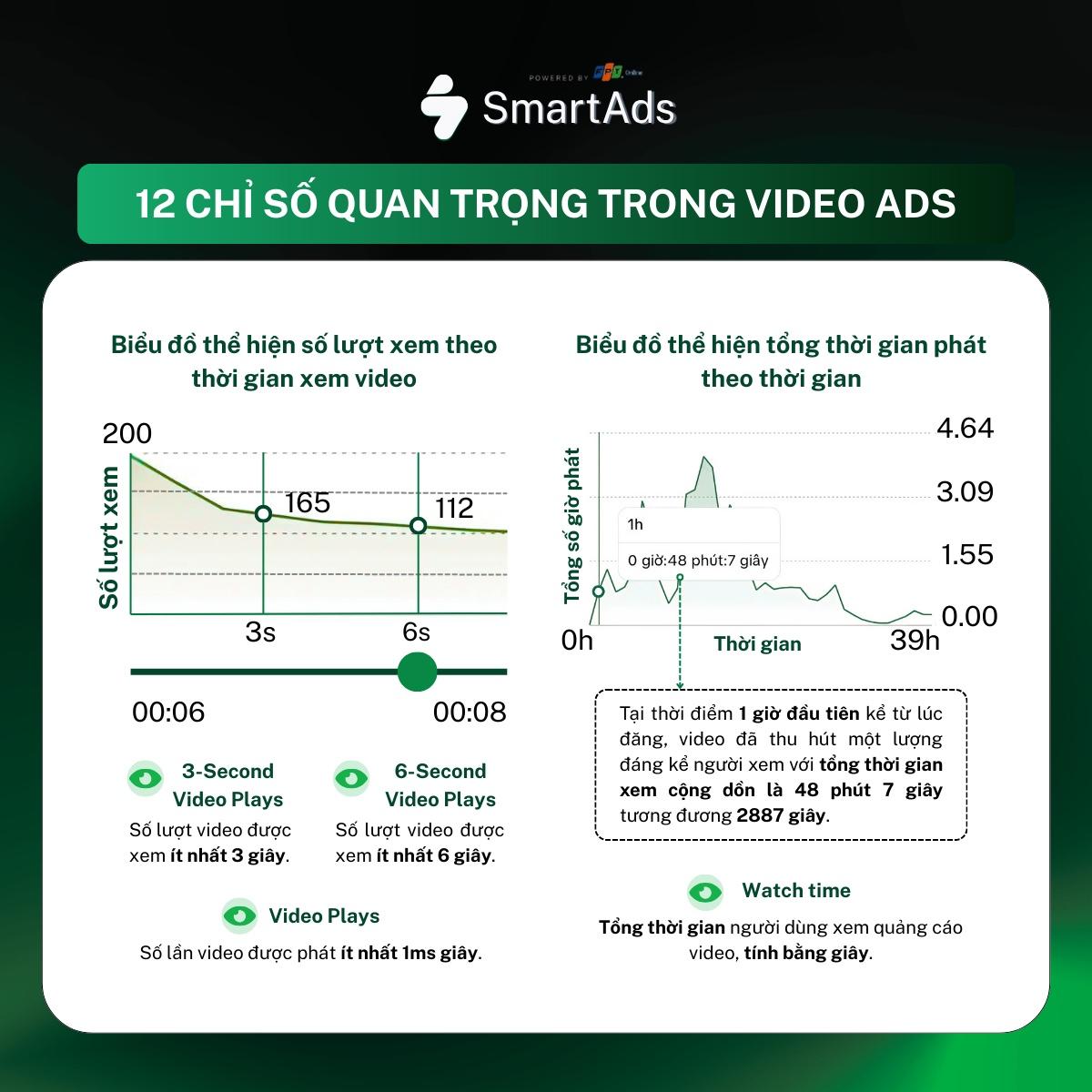
- Video Plays – Số lần video được phát ít nhất 1ms giây, không bao gồm lượt phát lại (replay).
- 3-Second Video Plays – Số lượt video được xem ít nhất 3 giây, không bao gồm lượt phát lại (replay).
- 6-Second Video Plays – Số lượt video được xem ít nhất 6 giây hoặc toàn bộ nếu video có thời lượng tối đa 6 giây, không bao gồm lượt phát lại (replay).
Ba chỉ số này phản ánh mức độ thu hút của video trong những giây đầu tiên. Nếu tỷ lệ 3-Second Video Plays hoặc 6-Second Video Plays thấp, doanh nghiệp cần tối ưu phần mở đầu để tạo ấn tượng mạnh mẽ hơn với người xem.
2. Các chỉ số về thời gian xem
- Watch Time – Tổng thời gian người dùng xem quảng cáo video, tính bằng giây, không bao gồm thời gian phát lại (replay).
Chỉ số này cho thấy mức độ quan tâm của người dùng đối với nội dung video. Ví dụ, nếu có 1.000 lượt xem với thời gian trung bình 12 giây/lượt, tổng Watch Time sẽ là 12.000 giây.
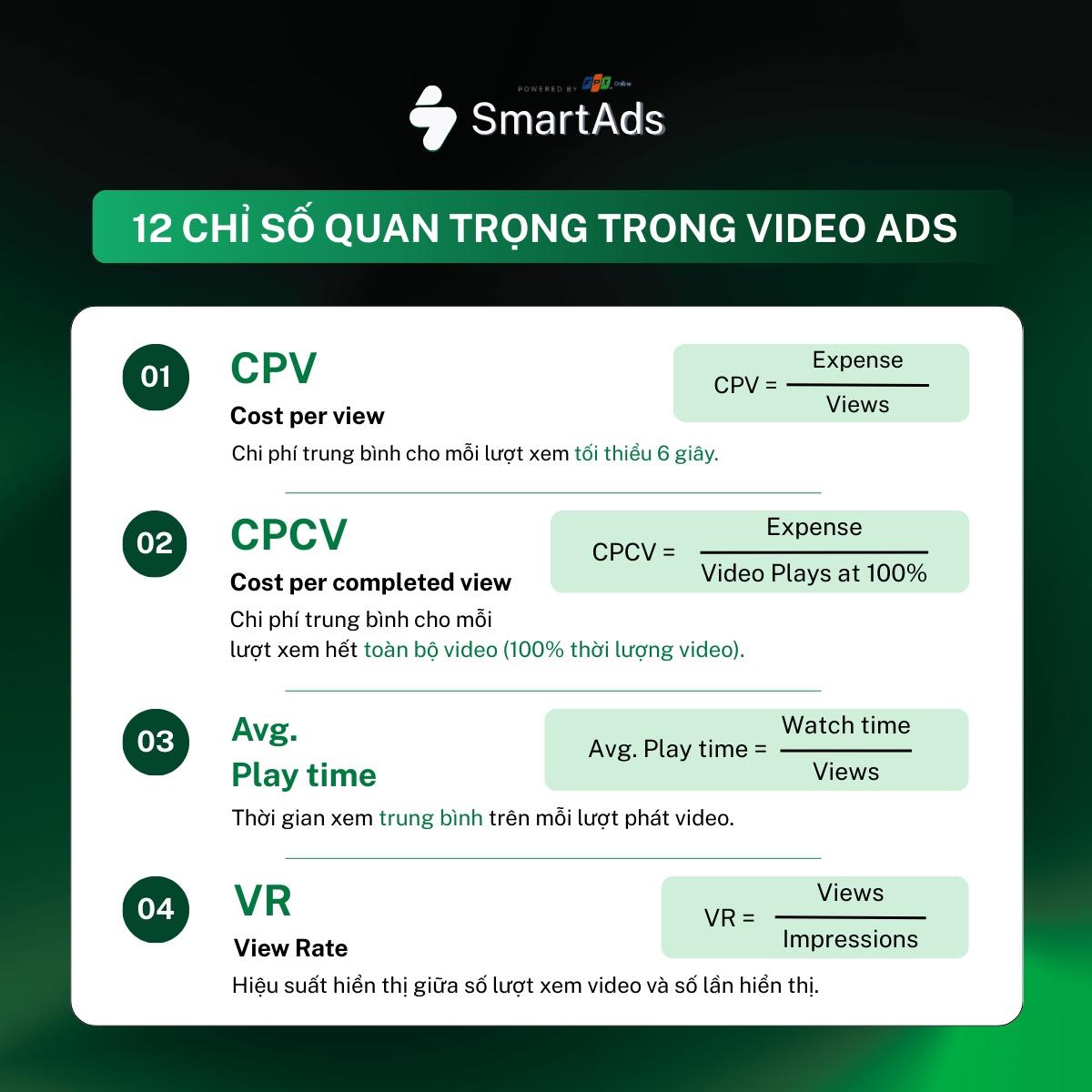
- Avg. Play Time – Thời gian xem trung bình trên mỗi lượt phát video.
Công thức tính:
Avg. Play Time = Tổng thời gian xem / Tổng số lượt xem video (Views).
Nếu chỉ số này quá thấp so với độ dài video, có thể nội dung chưa đủ hấp dẫn hoặc thời lượng video chưa phù hợp.
3. Các chỉ số về chi phí quảng cáo video
- CPV (Cost Per View) – Chi phí trung bình cho mỗi lượt xem tối thiểu 6 giây.
Công thức tính:
CPV = Tổng chi phí quảng cáo / tổng số lượt xem video (Views).
- CPCV (Cost Per Completed View) – Chi phí trung bình cho mỗi lượt xem hết toàn bộ video (100% thời lượng video).
Công thức tính:
CPCV = Tổng chi phí quảng cáo / tổng lượt xem hoàn chỉnh.
Hai chỉ số này giúp doanh nghiệp đánh giá hiệu quả tài chính của chiến dịch quảng cáo:
-
Nếu CPV thấp nhưng CPCV cao: Video có khả năng thu hút người xem ngay từ những giây đầu tiên nhưng không giữ chân họ đến cuối. Cần cải thiện nội dung ở phần giữa và cuối video để duy trì sự quan tâm.
-
Nếu CPV cao nhưng CPCV thấp: Nội dung chưa đủ hấp dẫn, khiến người xem không muốn tiếp tục theo dõi. Cần tối ưu thông điệp, hình ảnh và thời lượng video để tạo sự thu hút ngay từ đầu.
-
Nếu CPV và CPCV đều thấp: Video có hiệu quả tốt, tối ưu hóa chi phí và đạt được mục tiêu chiến dịch.
-
Nếu CPV và CPCV đều cao: Chiến lược quảng cáo có thể chưa tối ưu. Cần xem xét lại toàn bộ cách tiếp cận, bao gồm nội dung, tệp khách hàng mục tiêu và phương thức phân phối quảng cáo.
4. Các chỉ số về mức độ hoàn thành video
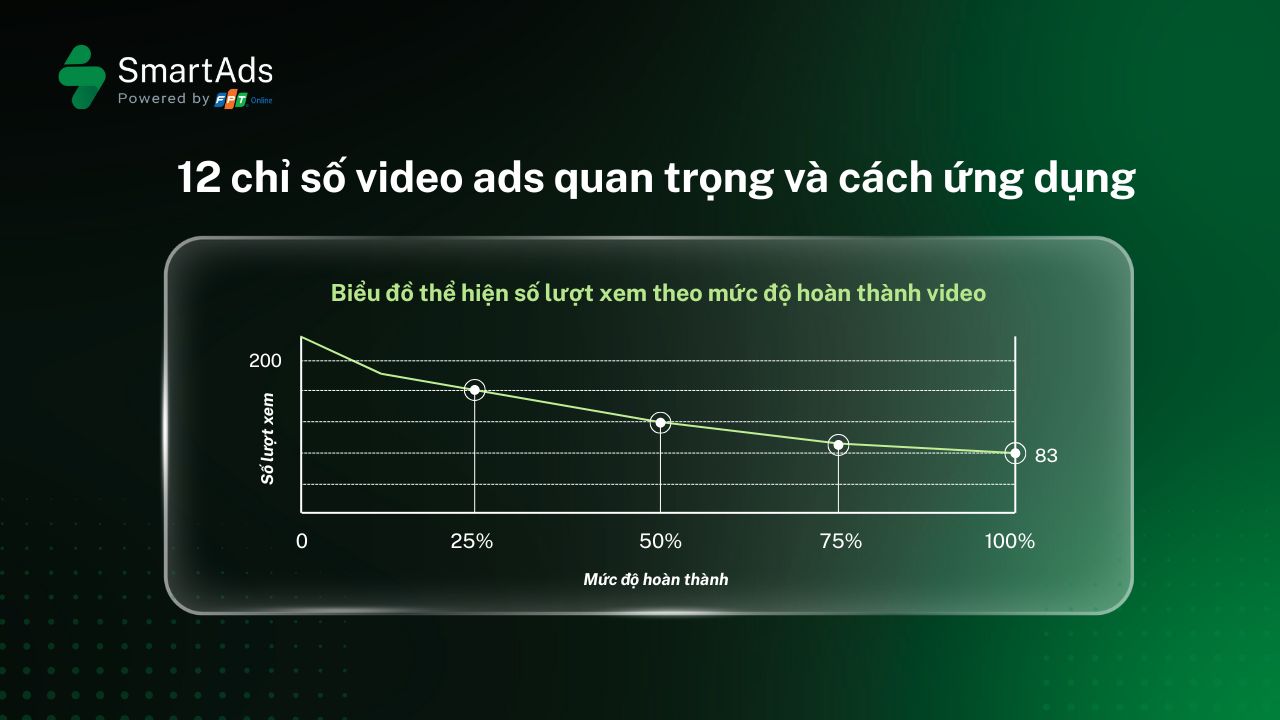
- Video Plays at 100% – Số lượt xem đạt 100% thời lượng video.
- Video Plays at 25% – Số lượt xem đạt 25% thời lượng video, giúp đánh giá tỷ lệ người xem tiếp tục theo dõi sau phần đầu video.
- Video Plays at 50% – Số lượt xem đạt 50% thời lượng video, phản ánh khả năng giữ chân người xem trong suốt quá trình phát video.
- Video Plays at 75% – Số lượt xem đạt 75% thời lượng video, thể hiện mức độ hấp dẫn và tính phù hợp của nội dung.
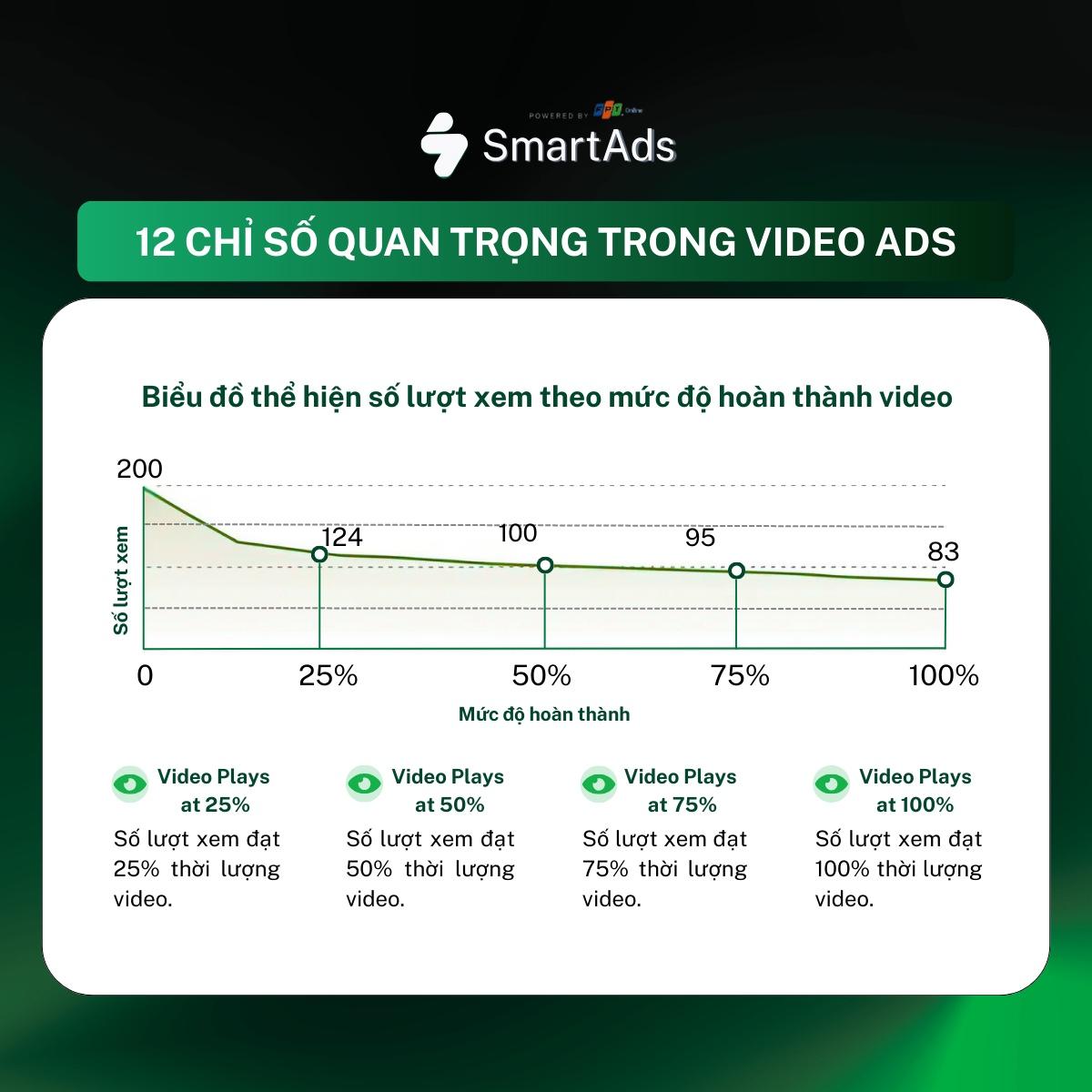
Việc theo dõi các chỉ số này giúp doanh nghiệp đánh giá chất lượng nội dung cũng như khả năng duy trì sự quan tâm của người xem:
-
Nếu tỷ lệ người xem chỉ đạt 25%, có thể phần mở đầu chưa đủ hấp dẫn, khiến người xem không tiếp tục theo dõi. Doanh nghiệp nên cải thiện đoạn mở đầu bằng cách sử dụng tiêu đề thu hút, hình ảnh bắt mắt hoặc thông điệp mạnh mẽ ngay từ những giây đầu tiên để giữ chân người xem.
-
Nếu số lượt xem giảm mạnh ở mốc 50%, điều này cho thấy nội dung giữa video chưa đủ thú vị hoặc không đáp ứng được kỳ vọng của khán giả. Cần tối ưu cấu trúc nội dung, tránh kéo dài thời lượng một cách không cần thiết và đảm bảo duy trì yếu tố hấp dẫn xuyên suốt.
-
Nếu tỷ lệ người xem giảm đáng kể ở mức 75%, điều đó cho thấy nội dung hấp dẫn và đáp ứng đúng nhu cầu của đối tượng mục tiêu. Để tối ưu hơn nữa, có thể cải thiện phần cuối video nhằm duy trì sự quan tâm và đạt tỷ lệ xem trọn vẹn cao hơn.
-
Nếu lượt xem đạt 100% cao, chứng tỏ video có nội dung hấp dẫn và phù hợp với người xem mục tiêu. Doanh nghiệp có thể tận dụng điểm mạnh này để tối ưu thêm yếu tố kêu gọi hành động cuối video, đảm bảo chuyển đổi hiệu quả từ người xem thành khách hàng tiềm năng.
5. Chỉ số đo lường hiệu suất hiển thị
View Rate – Tỷ lệ giữa số lượt xem video và số lần hiển thị (Impressions).
- Công thức tính: View Rate = View / Impressions.
Chỉ số này giúp đánh giá mức độ hiệu quả trong việc phân phối quảng cáo. Nếu View Rate thấp, nguyên nhân có thể đến từ:
-
Đối tượng mục tiêu chưa được xác định chính xác.
-
Nội dung video chưa đủ hấp dẫn ngay từ những giây đầu tiên.
-
Định dạng quảng cáo chưa được tối ưu.
Việc hiểu và phân tích các chỉ số trên là bước quan trọng để doanh nghiệp tối ưu hóa chiến dịch quảng cáo Video Ads. Bằng cách theo dõi chặt chẽ từng chỉ số, doanh nghiệp có thể điều chỉnh chiến lược nội dung, cải thiện hiệu suất quảng cáo và nâng cao hiệu quả đầu tư.
Hiện tại, SmartAds đang cung cấp giải pháp Native Video giúp thương hiệu tiếp cận khách hàng một cách tự nhiên và cải thiện hiệu quả. Không chỉ đảm bảo trải nghiệm liền mạch, SmartAds còn cung cấp hệ thống đo lường bằng Dashboard chính xác dựa trên các chỉ số quan trọng dành cho các chiến dịch quảng cáo, tư đó, doanh nghiệp có thể đánh giá chi tiết và tối ưu chiến dịch theo thời gian thực.