1. Top 3 reasons why advertising costs rise faster than expected at year end
1.1. The dominance of large-budget brands
The end of the year is when major e-commerce platforms and large-scale brands aggressively increase their advertising presence to hit annual targets. Unlike small and mid-sized businesses, these players do not optimize around individual costs, but instead prioritize reach, frequency (frequency), and continuous brand visibility in users’ minds.
As a result:
-
Competition for standard ad placements increases sharply
-
Smaller-budget campaigns are forced to compete directly with high-spending advertisers
-
CPM and CPC rise, causing marketing budgets to be depleted more quickly
In this context, broad and unfocused user acquisition strategies often lead to declining budget efficiency.
1.2. Scarcity of user attention
Toward the end of the year, users spend less time on each piece of content. User attention becomes more fragmented due to information overload, shopping activities, and social events, specifically:
-
Overall engagement rates tend to decline
-
Weaker intent signals, especially for long-consideration products such as real estate, vehicles, or financial services
This directly impacts ad delivery performance. When ad content no longer aligns with user context, advertising costs increase while effectiveness fails to keep pace.
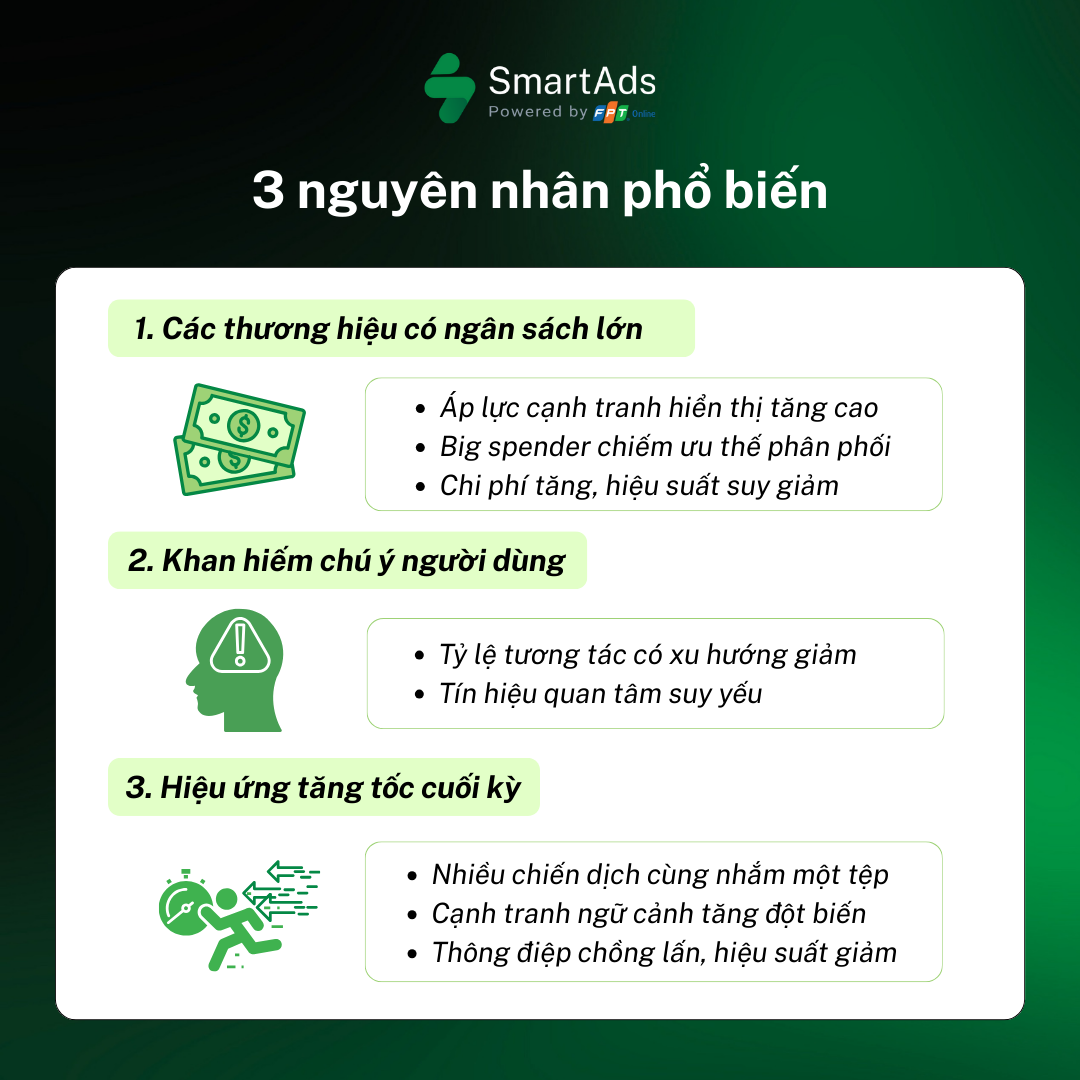
1.3. The market’s “end-of-year budget surge” effect
The year-end period also sees many businesses accelerating spending with the same mindset: maximizing results in a short timeframe. This trend applies not only to large brands but also to small and mid-sized businesses increasing their marketing budgets to meet annual KPIs.
As multiple campaigns target similar audiences at the same time, competition within identical contexts and behaviors intensifies. Message overlap among the same user groups makes it increasingly difficult for campaigns to maintain stable performance.
2. What is an effective approach in this scenario?
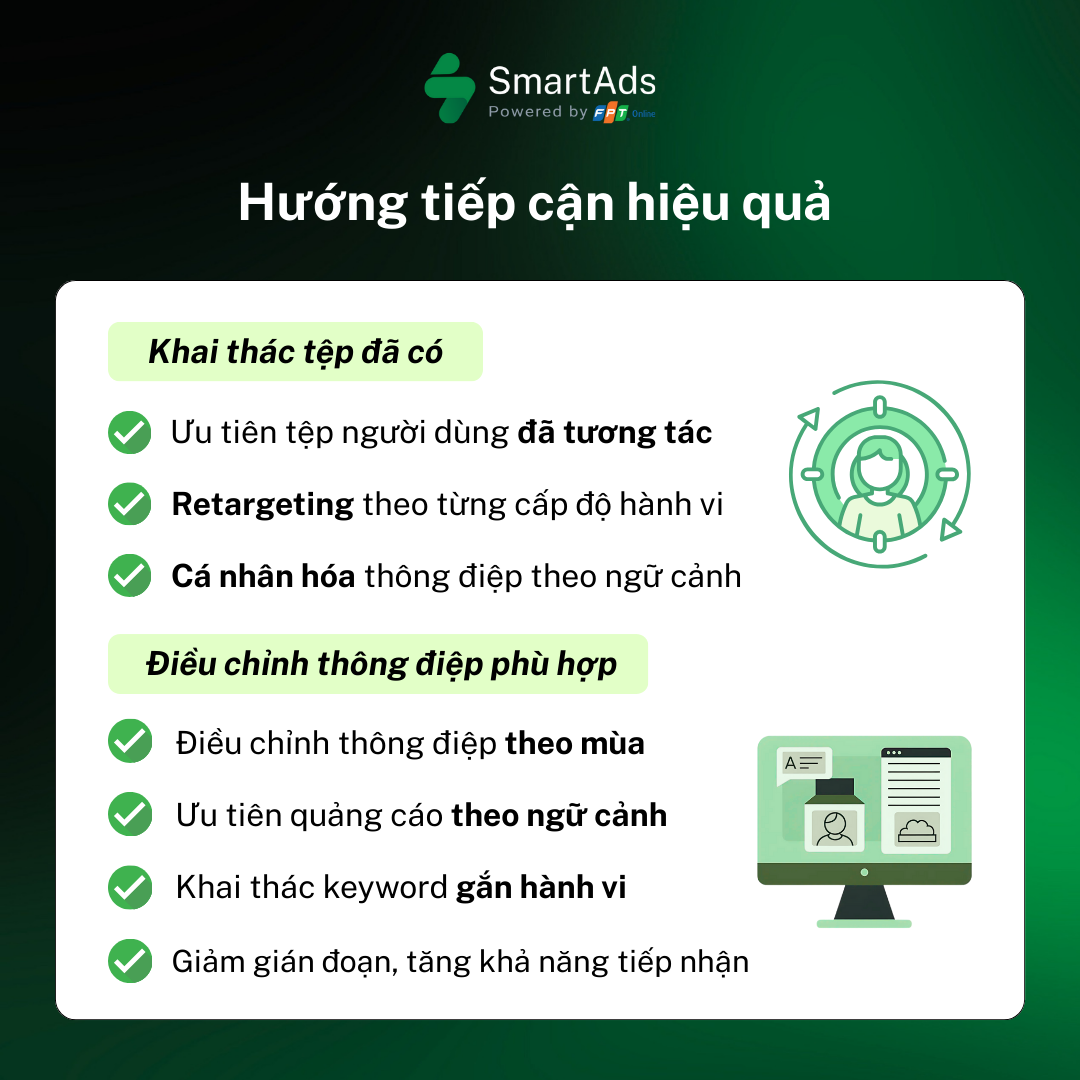
2.1. Optimize from the “inner circle”: activating existing audiences
Instead of aggressively expanding into entirely new user segments during this period, brands should focus on audiences with existing awareness or interaction history. This is when remarketing and retargeting ads are most effective, as ad delivery systems prioritize users who already show intent signals. Brands can:
-
Prioritize users who have previously engaged with ads, viewed content, or visited product pages recently
-
Deploy retargeting ads by behavioral stages (viewing – interaction – consideration – return visits) instead of using a single generic message
-
Personalize
Latest posts

Ready to transform your advertising?
-
200 Advertisersare launching campaigns right now