1. What is “Automated Optimization”?
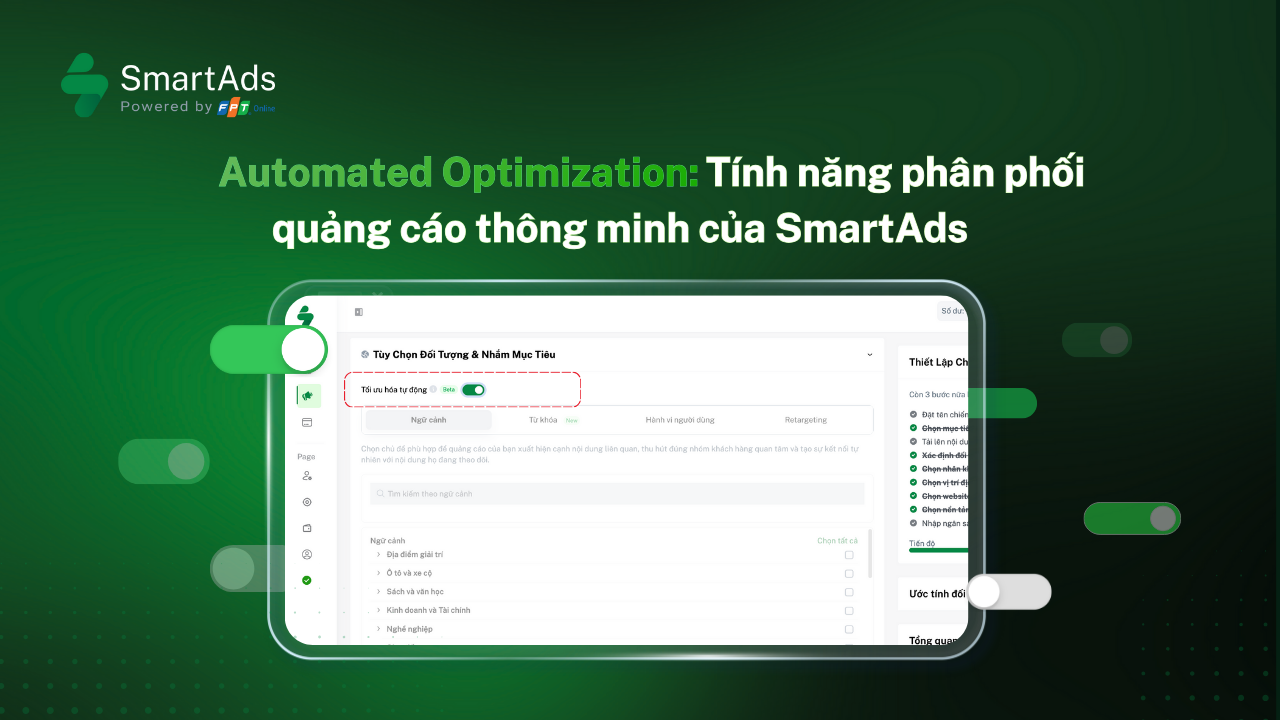
“Automated optimization” is an algorithm-driven ad distribution mechanism that enables the SmartAds system to automatically determine target audiences, ad placements, and delivery frequency—without requiring manual intervention from advertisers. By continuously analyzing user behavior data, content context, and real-time campaign performance, the system dynamically adjusts ad distribution to maximize advertising efficiency based on predefined objectives.
Note: This feature is currently in the testing phase. On SmartAds, advertisers can still define baseline conditions such as age, geographic location, or publisher websites. However, the system leverages machine learning to aggregate data across multiple campaigns and real user behaviors, forecasting the most effective sites, placements, and time slots - rather than rigidly distributing ads based on initial manual settings.
2. How automated optimization works
This feature operates based on three core data layers:
-
User data: reading behavior, engagement levels, device types, and access timeframes.
-
Contextual data: content categories, article topics, and display timing.
-
Performance data: CTR, effective impression rates, and engagement signals during campaign delivery.
Based on these data inputs, the SmartAds machine learning algorithm continuously learns and reallocates budget toward touchpoints with higher performance potential - rather than distributing ads evenly or relying on fixed placements as in traditional ad distribution models.
3. Key benefits for advertisers
Unlike traditional approaches that heavily depend on initial setup assumptions, automated optimization focuses on end results and real-time data adaptability. Specifically, this mechanism helps advertisers:
-
Reach high-intent user segments with greater interaction or conversion probability by identifying and prioritizing the most effective touchpoints across the digital publishing network.
-
Continuously learn and optimize throughout the campaign lifecycle instead of making adjustments only after post-campaign reports.
-
Respond quickly to real-world performance fluctuations such as CTR, CPC, or CPA, enabling flexible and data-driven reallocation.
-
Reduce risks caused by initial assumptions as distribution decisions are continuously updated based on real-time data.
-
Save operational resources allowing advertisers to focus on content strategy and business goals instead of manual technical optimization.
As a result, campaigns can self-adjust based on live data and performance signals during execution, rather than being constrained by assumptions made at the outset.
4. When should you use Automated Optimization?
This feature is particularly well-suited for:
-
Performance-driven campaigns focused on outcomes such as CTR, CPC, or conversions.
-
Market testing phases, including message testing or ad format experimentation.
-
Advertisers looking to scale reach while maintaining stable advertising efficiency.