I. Definition of lead and CPL
1.1. What is a lead in marketing?
A lead is a potential customer who has demonstrated clear interest in a company’s product or service through a specific action, such as leaving contact information (full name, phone number, email), registering for consultation, downloading materials, or proactively reaching out via online and offline channels. This audience segment has moved beyond the “just browsing” stage and entered the conversion funnel, laying the groundwork for subsequent sales consultation, nurturing, and closing activities.
Particularly across digital news platforms, leads can also emerge from a conversion journey that evolves from low intent to high intent after users engage with content. This process can be illustrated through a three-layer funnel model as follows:
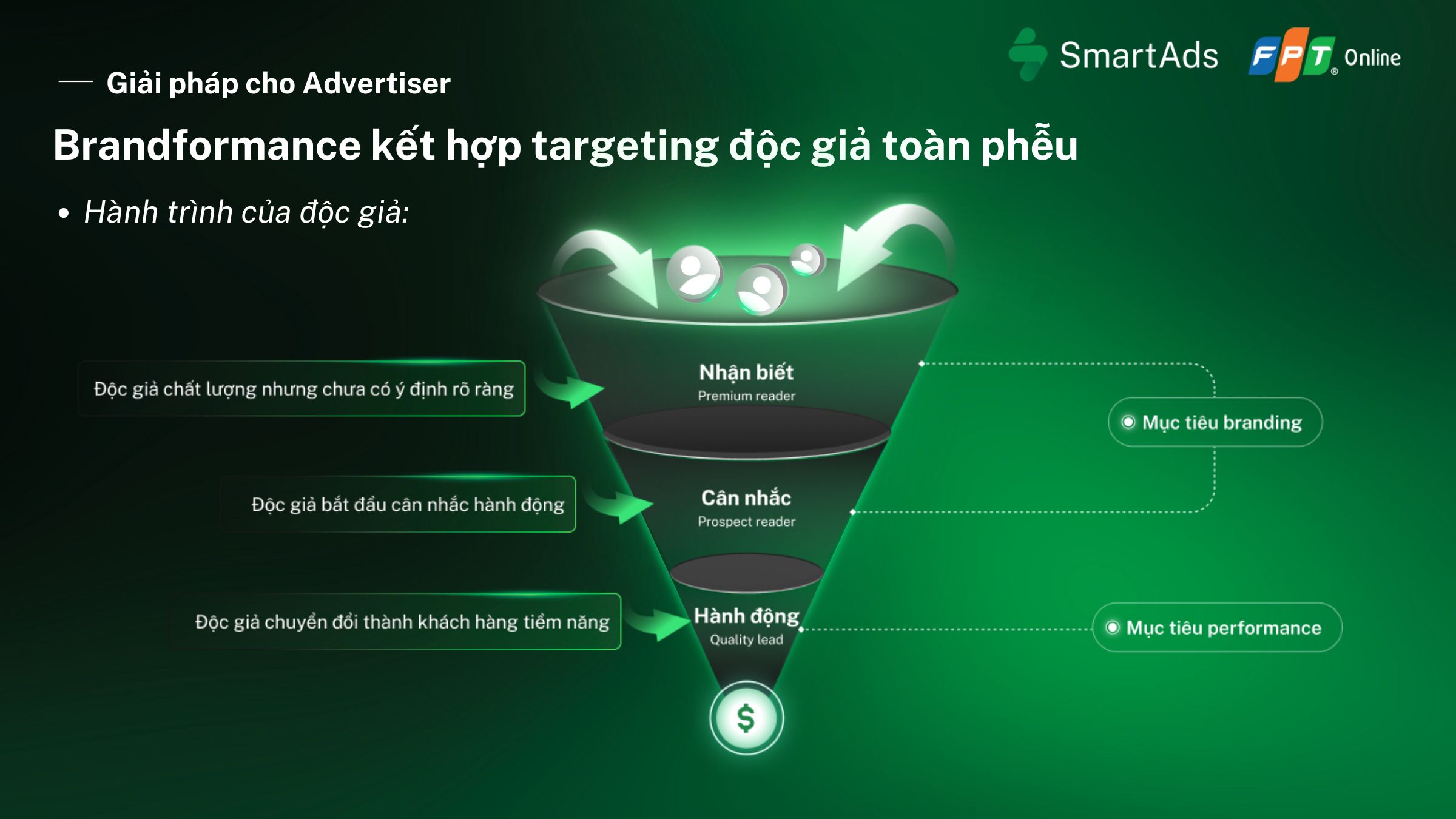
• Awareness (Branding objective): In reality, across most platforms, this stage includes Mass Visitors, comprising both quality readers (Premium Readers) who are genuinely interested in editorial content and casual visitors who leave quickly, potentially including bot traffic (Undefined Readers). At this stage, their primary behavior is content consumption without a clear next action. Therefore, the role of digital news media is to build brand awareness with credibility and professional positioning, while establishing a psychological foundation for future decision-making.
• Consideration (Intersection of branding and performance): At this stage, readers become Prospect Readers who show serious interest and begin considering action. Here, digital news media acts as a trusted reference channel before users proceed with conversion behaviors.
• Action (Performance objective): Readers convert into actual leads by completing specific actions such as filling out registration forms or submitting consultation requests. These leads have been filtered through the entire content funnel, demonstrating higher trust and stronger conversion potential, especially in industries such as real estate, finance, education, and B2B.
This funnel-based approach demonstrates that digital news media does not only serve branding purposes but also naturally guides user behavior, transforming readers into high-quality leads while optimizing CPL performance for businesses.
1.2. What is CPL?
CPL (Cost Per Lead) is a performance marketing metric that measures the total cost a business incurs to acquire one qualified lead through actions such as form submissions, phone calls, consultation registrations, or content downloads. CPL is one of the most critical KPIs for evaluating lead generation campaigns, particularly in B2B sectors or industries with complex sales cycles.
CPL formula: CPL = Total advertising cost / Number of qualified leads.
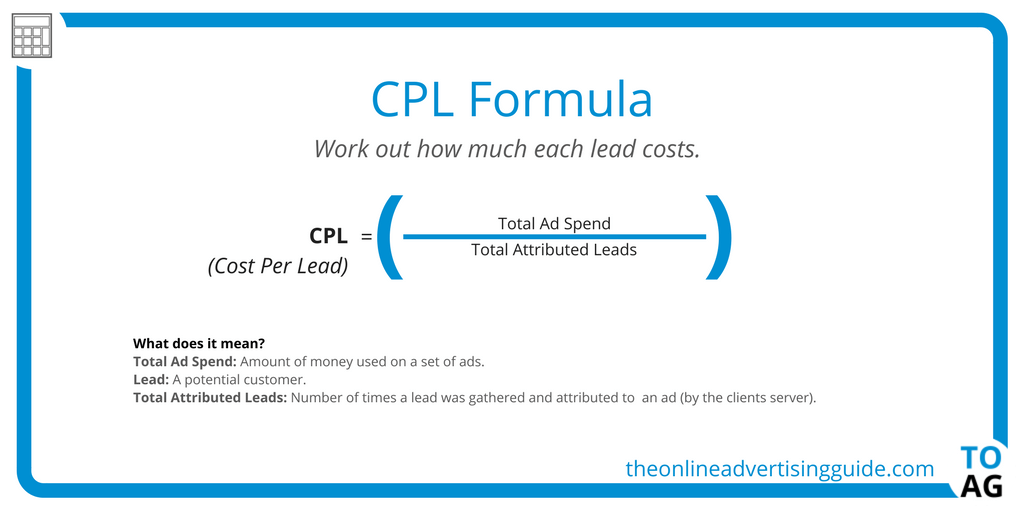
Example: An advertiser runs a campaign with a total budget of 50,000,000 VND and generates 500 leads. The CPL is calculated as: CPL = 50,000,000 / 500 = 100,000 VND.
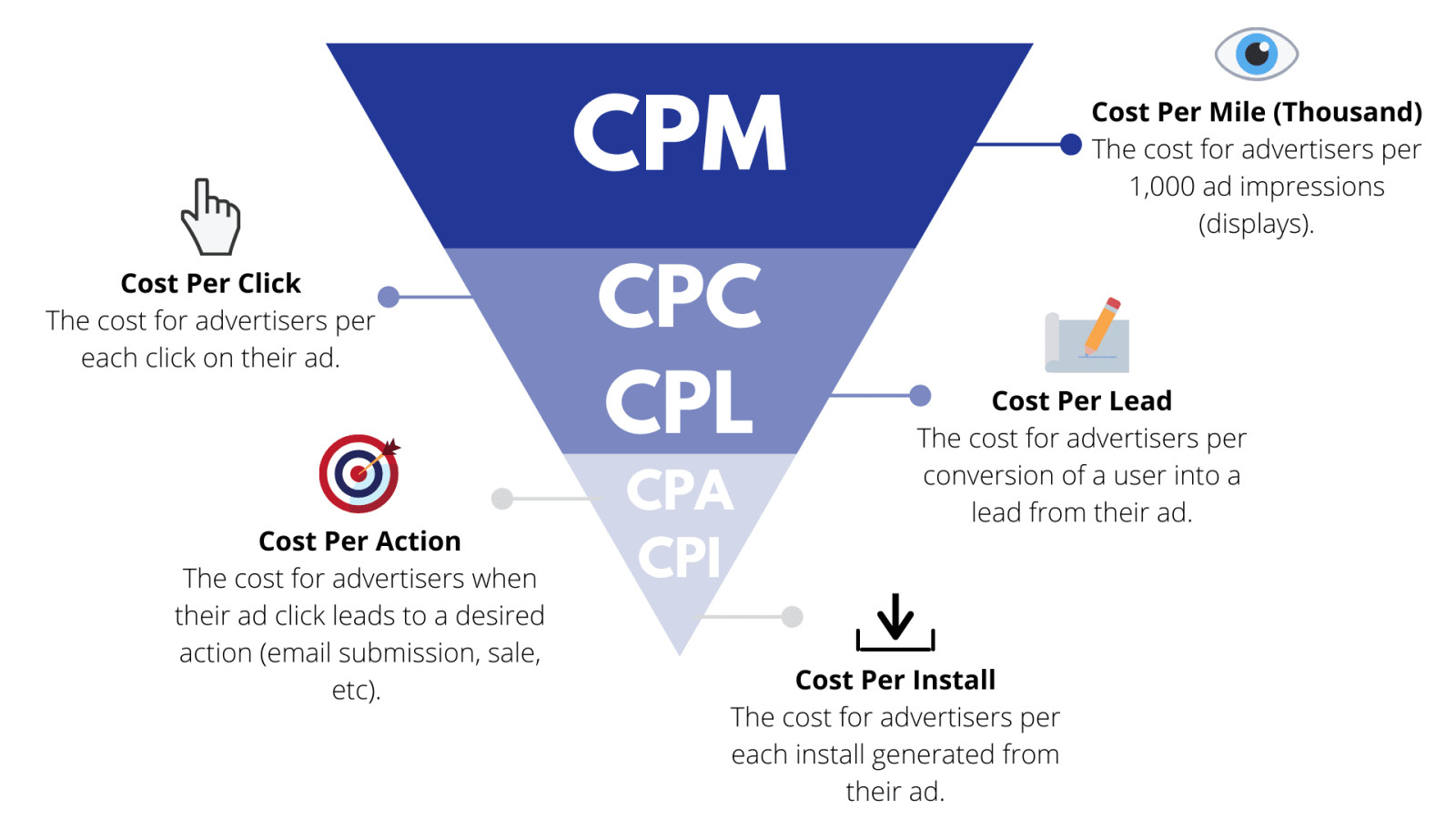
How is CPL different from CPM and CPC? CPL, CPM, and CPC are all familiar metrics in digital advertising, but each measures a different touchpoint within the marketing funnel. CPM pays for 1,000 impressions, CPC pays per click, while CPL measures the cost of acquiring an actual potential customer. In short, CPM buys attention, CPC buys curiosity, and CPL buys commitment. Depending on whether the goal is branding or performance marketing, businesses can choose the appropriate metric or combine all three to optimize the entire conversion funnel.
>>> Beyond CPL, CPM, and CPC, explore additional pricing models such as CPE, CPI, and CPA here.
II. Benefits and value of optimizing CPL
Overall, CPL enables marketers to optimize lead acquisition costs while focusing on long-term value instead of merely impressions or clicks. Specifically:
2.1. Optimize marketing budget allocation
Optimizing CPL helps businesses concentrate resources on truly effective channels and campaigns, reduce wasted spend, and maximize high-quality lead volume. SmartAds’ 2025 report indicates that businesses reduced CPL by 30% after reallocating budget from traditional CPC channels to native advertising formats that better align with their target audience.
- Save budget for subsequent nurturing and conversion activities.
- Enhance advertising efficiency and minimize spend leakage across underperforming channels.
2.2. Improve ROI and conversion rates
CPL is closely linked to ROI and campaign conversion rates. When the cost to acquire a lead decreases, businesses can reinvest more effectively in lead nurturing strategies to increase final conversion outcomes.
2.3. Strengthen strategy and customer behavior insights
Analyzing CPL data helps marketers identify bottlenecks where costs spike or conversion rates decline. This enables faster strategic adjustments tailored to specific audience segments or media channels.
III. Factors affecting CPL and key considerations
3.1. Lead quality and channel selection
Not all leads deliver equal value. High-quality leads align with buyer personas, demonstrate genuine interest, and possess strong conversion potential. When selecting channels to generate leads, marketers should:
- Clearly define target customer personas.
- Evaluate historical CPL performance by channel.
- Assess lead quality through metrics such as response rates and downstream conversion rates.
3.2. Marketing content, landing page, and CTA
Investing in compelling content, minimalist landing page design, focused messaging, and clear call-to-action (CTA) elements can significantly reduce CPL.
Five principles for building an effective CTA:
- Keep it clear and focused on a single objective.
- Ensure strong visual prominence on the landing page.
- Provide specific value to motivate action.
- Use strong, action-oriented verbs.
- Continuously conduct A/B testing on headlines, copy, visuals, and form structure to identify the highest-converting version.
3.3. Tracking and CPL data analysis
A standardized and continuous tracking process allows marketers to monitor CPL fluctuations and respond proactively to performance changes.
- Combine supporting metrics such as conversion rate, bounce rate, and time on site.
- Leverage Google Analytics and SmartAds Dashboard for proactive monitoring and automated reporting.
To set up event tracking on your website with Google Analytics 4, refer to the detailed guide via the link above.
3.4. Define objectives and select appropriate metrics
Establish clear goals, then build tailored KPIs for each product group. Regularly benchmark performance metrics to avoid chasing volume at the expense of lead quality.
IV. Six effective ways to reduce CPL for advertisers
Based on practical campaign execution and proven CPL optimization models, there are six core solution groups that help businesses lower cost per lead while maintaining input quality.
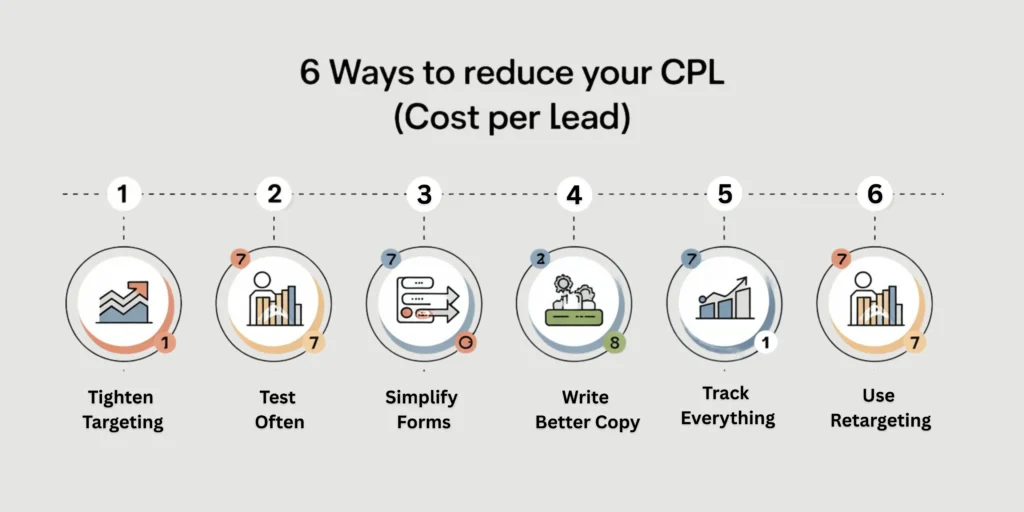
4.1. Tighten targeting – Refine and deepen audience precision
Overly broad targeting is a leading cause of rising CPL and low-quality leads. Tightening targeting does not mean reducing scale, but rather increasing precision.
Marketers should:
- Exclude audience segments with historically low conversion rates.
- Prioritize intent-based targeting signals such as deep content consumption, solution-oriented searches, and repeated engagement.
- Segment audiences by purchase readiness instead of relying solely on demographics.
Targeting the right users minimizes wasted impressions and clicks, naturally lowering CPL.
4.2. Test often – Continuously experiment to find optimization points
There is no fixed CPL formula for every campaign. Ongoing testing enables marketers to quickly identify elements that inflate CPL.
Elements to test in parallel:
- Ad headlines.
- Visuals and content formats.
- Value proposition messaging.
- CTA and form length.
Small but continuous experiments reduce risk and optimize costs more effectively than allocating the entire budget to a single version.
4.3. Simplify forms – Streamline lead capture forms
The longer the form, the higher the drop-off rate, which increases CPL even if traffic remains stable. The general rule is to ask only for essential information at the initial stage.
Form optimization suggestions:
- Reduce the number of required fields.
- Avoid pressure-inducing questions (budget, immediate purchase decisions).
- Collect additional information gradually through the nurturing funnel.
Simplifying forms increases conversion rates, thereby reducing CPL without increasing budget.
4.4. Write better copy – Align messaging with insights and context
Ad copy and landing page content directly impact CPL. The more accurately content addresses user pain points, the more likely users are to submit their information.
Effective copy should:
- Target specific pain points.
- Clearly communicate immediate value upon submission.
- Avoid overly sales-driven language and prioritize value and solutions.
Strong copy not only boosts conversion rates but also naturally filters leads, reducing CPL while improving lead quality.
4.5. Track everything – Identify cost leakage points
If marketers only review overall CPL without analyzing individual touchpoints, optimization efforts may be misdirected. Comprehensive tracking helps pinpoint exact cost leakage sources.
Monitor:
- CPL by channel and ad group.
- CPL by landing page.
- Post-lead conversion rates (SQL, MQL, sales-qualified).
- Percentage of unqualified leads within total leads generated.
When data is fully connected, optimization decisions are grounded in actual performance rather than intuition.
4.6. Retargeting – Leverage retargeting ads to lower lead costs
Users rarely convert at the first touchpoint. Retargeting leverages audiences who have already shown interest, often at a significantly lower cost than acquiring new prospects.
Effective retargeting strategies include:
- Retarget users who visited the landing page but did not complete the form.
- Personalize messaging based on previous behavior.
- Combine valuable content (ebook, checklist, case study) to nurture colder leads.
Properly executed retargeting can deliver CPL up to 50% lower than pure prospecting campaigns (Source: World Metrics). This format becomes a budget-saving lever during peak seasons when advertising competition intensifies and CPM rises due to major brand spending. Instead of allocating large budgets to reach entirely new audiences, retargeting focuses on users with prior awareness or engagement, shortening the decision journey, reducing impression waste, and optimizing every advertising dollar. In high-demand periods, this strategy helps SMEs maintain stable CPL, protect ROI, and sustain consistent conversion momentum.
>>> Explore additional factors that drive advertising costs higher toward year-end.
Conclusion
To maximize the value of CPL, marketers must adopt a strategic mindset, leverage appropriate technologies, and continuously test and measure performance. The journey of CPL optimization not only reduces costs but also enhances lead quality and builds a solid foundation for sustainable growth in the digital ecosystem. Start with a clear understanding, then apply selectively based on your business context.