I. Google analytics và vai trò trong phân tích hành vi
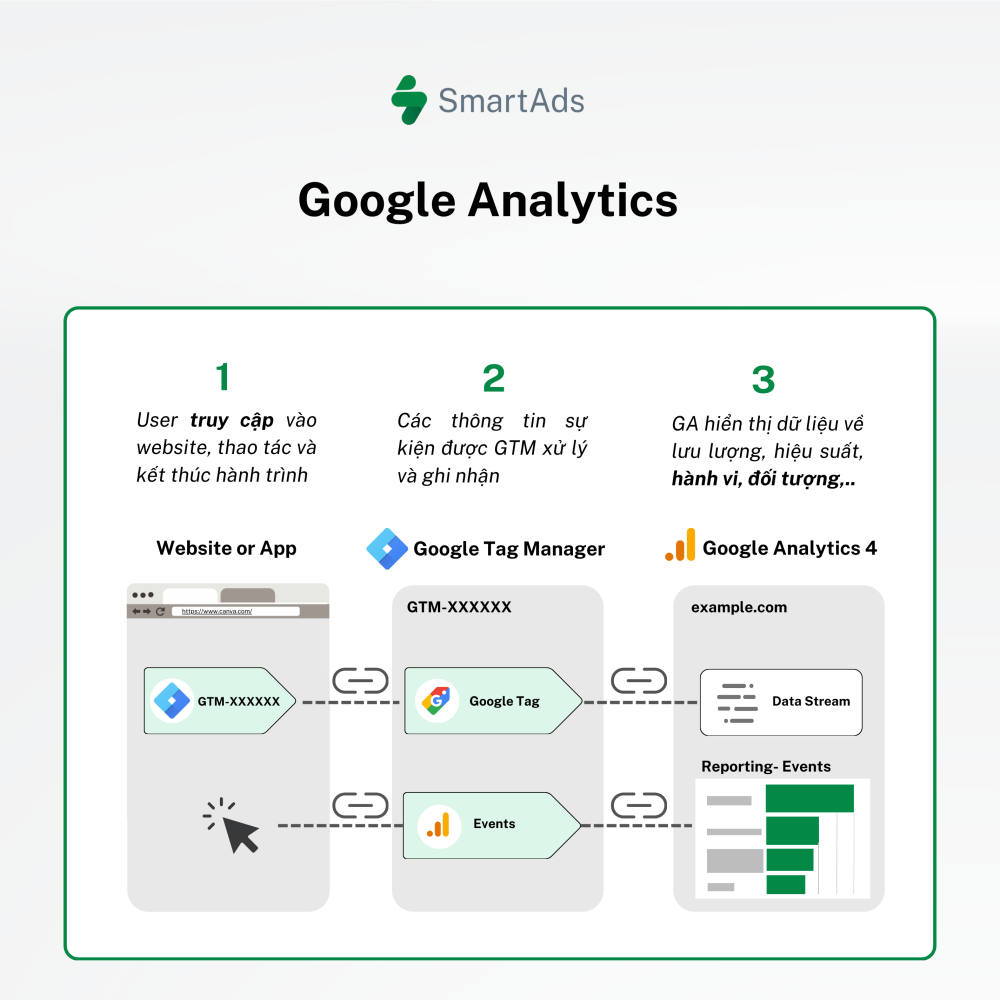
Google Analytics là một nền tảng của Google, cho phép bạn theo dõi và phân tích lưu lượng truy cập website. Từ số lượng người dùng, thời gian họ ở lại trang, đến các hành động cụ thể như click vào nút nào, mua hàng hay điền form, GA cung cấp một bức tranh toàn diện về cách người dùng tương tác với website của bạn.
GA không chỉ cung cấp dữ liệu thô mà còn giúp bạn hiểu rõ hành vi người dùng dựa trên sự kiện, từ đó đưa ra các quyết định dựa trên dữ liệu để cải thiện và tối ưu hiệu suất website. Đây là công cụ không thể thiếu cho bất kỳ marketer, chủ doanh nghiệp, hoặc chuyên gia SEO nào.
II. Phân loại sự kiện (event) trong google analytics
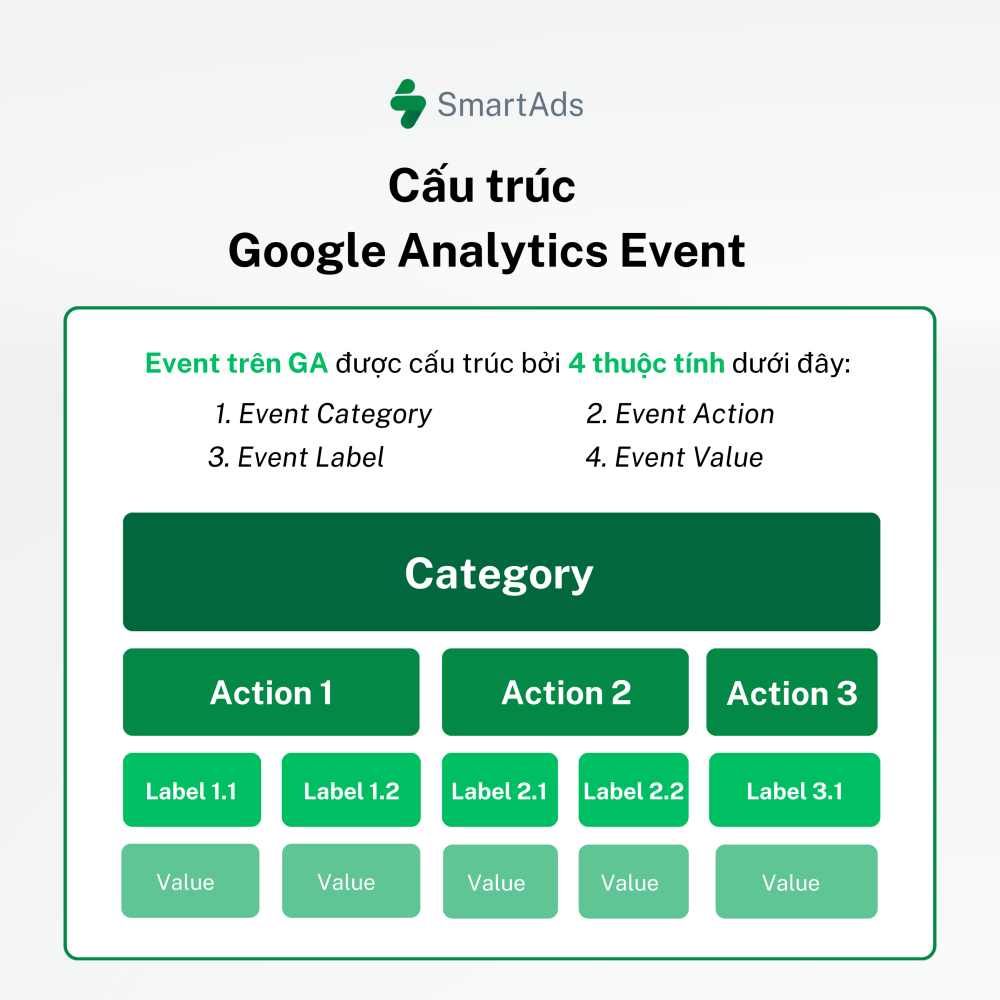
Trong GA, Event (sự kiện) là các hành động cụ thể mà người dùng thực hiện trên website của bạn. Các sự kiện này được phân loại thành 4 thành phần chính:
1. Category (Danh mục):
Event Category (danh mục sự kiện) là thuộc tính quan trọng giúp nhóm và phân loại sự kiện cần theo dõi có liên quan với nhau. Thuộc tính này hỗ trợ theo dõi cũng như phân tích các tương tác của người dùng trên website hoặc ứng dụng một cách hiệu quả thông qua việc so sánh các nhóm sự kiện với nhau.
Ví dụ: có thể đặt "Video" làm Event Category để nhóm tất cả sự kiện liên quan đến video như “play”, “pause”, hoặc “fullscreen”,...
2. Action (Hành động):
Event Action cũng là một thuộc tính trong Google Analytics (GA) dùng để mô tả hành động cụ thể mà người dùng thực hiện đối với website hoặc app. Nó giúp phân biệt các loại tương tác khác nhau trong cùng một Event Category, cung cấp thông tin chi tiết hơn về hành vi của người dùng.
Ví dụ: tương ứng với ví dụ ở mục 1, “play”, “pause”, “fullscreen”,... là các sự kiện hành động cấp nhỏ hơn của nhóm sự kiện liên quan đến “video”.
3. Label (Nhãn):
Event Label là một thuộc tính tùy chọn trong Google Analytics (GA), giúp bổ sung thông tin chi tiết hơn cho một sự kiện (event). Nó thường được dùng để mô tả nội dung hoặc đặc điểm cụ thể của sự kiện mà người dùng đã tương tác.
Ví dụ: trong nhóm “Video”, phân loại action “Play” ghi nhận các label nhỏ hơn tương ứng là “Play video A”, “Play video B”, “Play video C”,...
4. Value (Giá trị):
Event Value là một thuộc tính tùy chọn trong Google Analytics (GA), được sử dụng để gán một giá trị số cho một sự kiện (event). Giá trị định lượng này có thể đại diện cho thời gian, số tiền, điểm số, hoặc bất kỳ đơn vị đo lường nào có ý nghĩa đối với doanh nghiệp.
Ví dụ: nhãn “Play video A” đã được kích hoạt với value 30 lần, thời gian xem trung bình là 60s.
III. Cách các định event cần theo dõi
Để tối ưu hóa việc sử dụng Event Tracking, bạn cần xác định các sự kiện quan trọng trên website của mình. Dưới đây là một số bước giúp bạn làm điều đó:
1. Xác định mục tiêu kinh doanh: Bắt đầu bằng việc xác định rõ mục tiêu kinh doanh của bạn.
Ví dụ: tăng doanh số bán hàng, cải thiện tỷ lệ chuyển đổi, tăng lượt đăng ký nhận bản tin, hoặc tăng lượt tải xuống tài liệu.
2. Liệt kê các hành động quan trọng: Dựa trên mục tiêu kinh doanh, liệt kê các hành động của người dùng mà bạn muốn theo dõi. Các hành động này nên phản ánh được sự tương tác quan trọng của người dùng với website của bạn. Có thể cân nhắc các sự kiện dưới đây:
- Nhấp vào liên kết
- Tải xuống nội dung
- Thêm sản phẩm vào giỏ hàng
- Mua hàng
- Đăng ký nhận bản tin
Tuy nhiên cũng cần lưu ý rằng, việc gắn quá nhiều Event tracking tag có thể làm chậm website, gây nhiễu dữ liệu, vượt giới hạn theo dõi của Google Analytics và tăng chi phí vận hành. Điều này ảnh hưởng đến trải nghiệm người dùng và làm khó phân tích hiệu quả. Do đó, doanh nghiệp chỉ nên tập trung theo dõi các sự kiện quan trọng gắn liền với nhóm mục tiêu đã xác định.
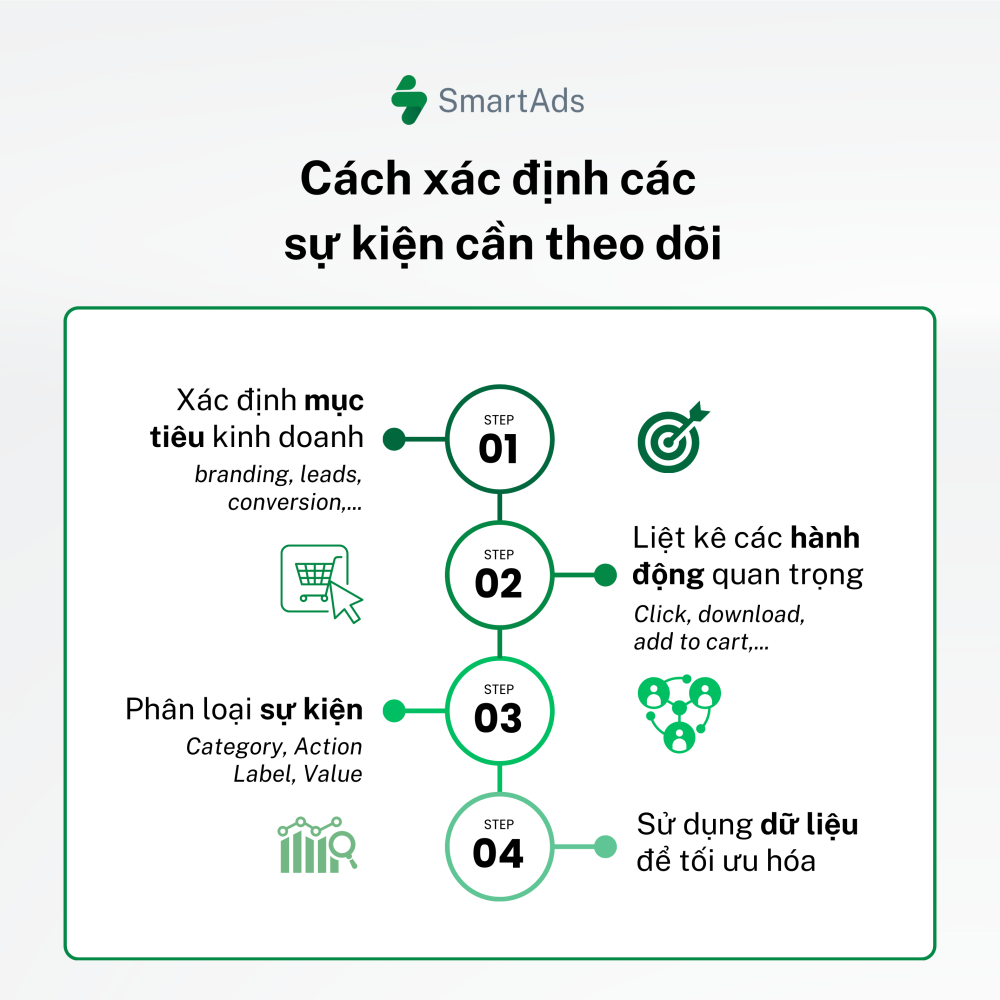
3. Phân loại sự kiện: Tiến hành phân loại sự kiện theo nhóm chung, hành vi chi tiết, thông tin và giá trị định lượng cần đo lường, chẳng hạn như:
- Event Category: "Ebook"
- Event Action: "Download", “Preview”
- Event Label: "Download Ebook A", “Download Ebook B”, “Preview Ebook A”,...
- Event Value: "0"
4. Sử dụng dữ liệu để tối ưu hóa:
Phân tích dữ liệu từ các sự kiện để hiểu rõ hơn về hành vi người dùng và tìm ra các điểm cần cải thiện, song song với đó liên tục theo dõi, đánh giá để đảm bảo các sự kiện vẫn phù hợp với mục tiêu kinh doanh hiện tại.
Ví dụ: dựa trên sự kiện “Thêm vào giỏ hàng” gắn label của sản phẩm A, nếu lượt thêm sản phẩm A vào giỏ cao nhưng tỷ lệ mua hàng thấp, bạn có thể cần xem xét lại quy trình thanh toán hoặc các yếu tố khác ảnh hưởng đến quyết định mua hàng của sản phẩm này.
IV. Cơ chế hoạt động của Server-Side Tagging (SST) trong Google Tag Manager
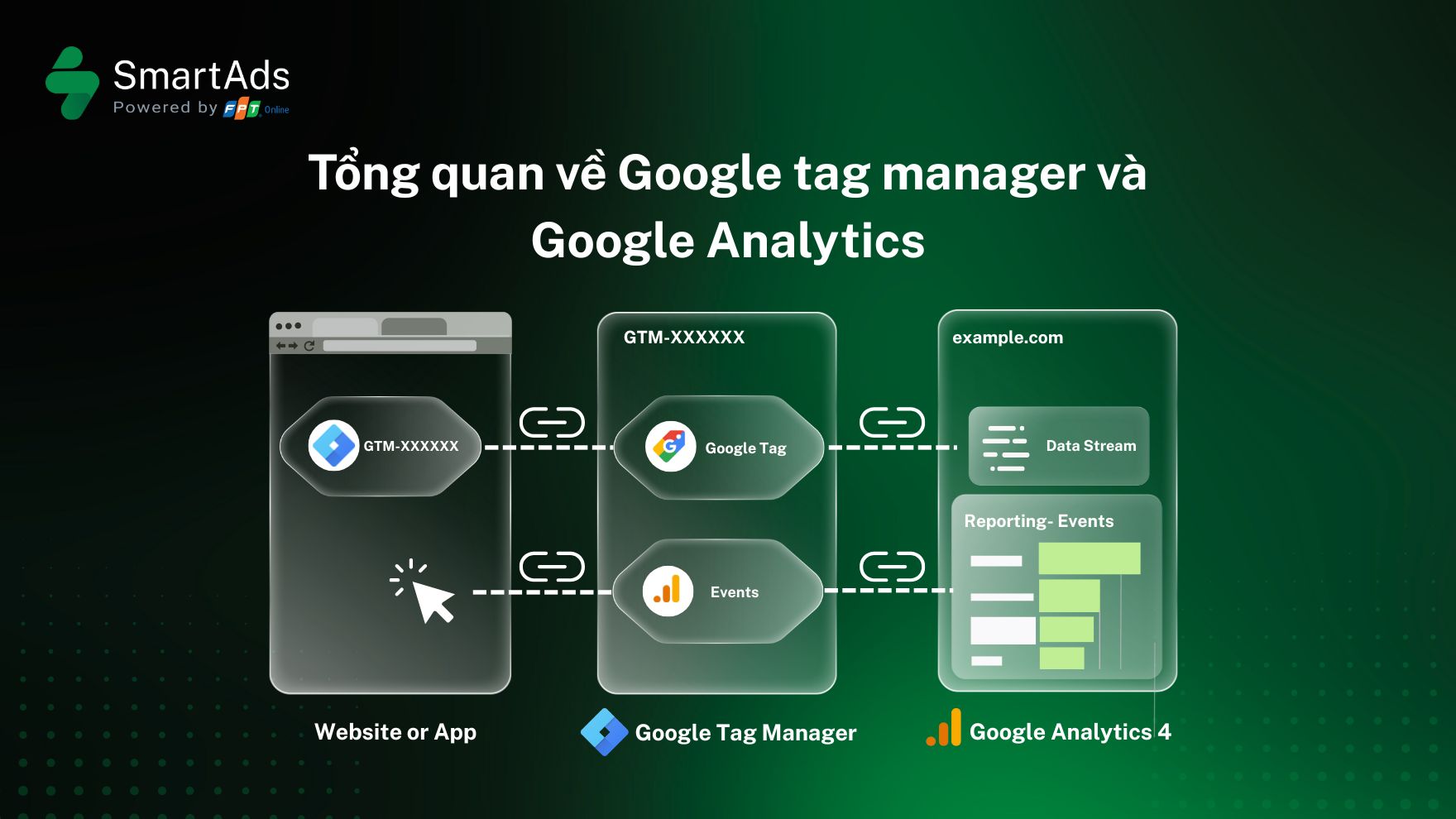
Google Tag Manager (GTM) là công cụ giúp bạn quản lý và triển khai các đoạn mã theo dõi (tracking code) trên website mà không cần can thiệp vào code.
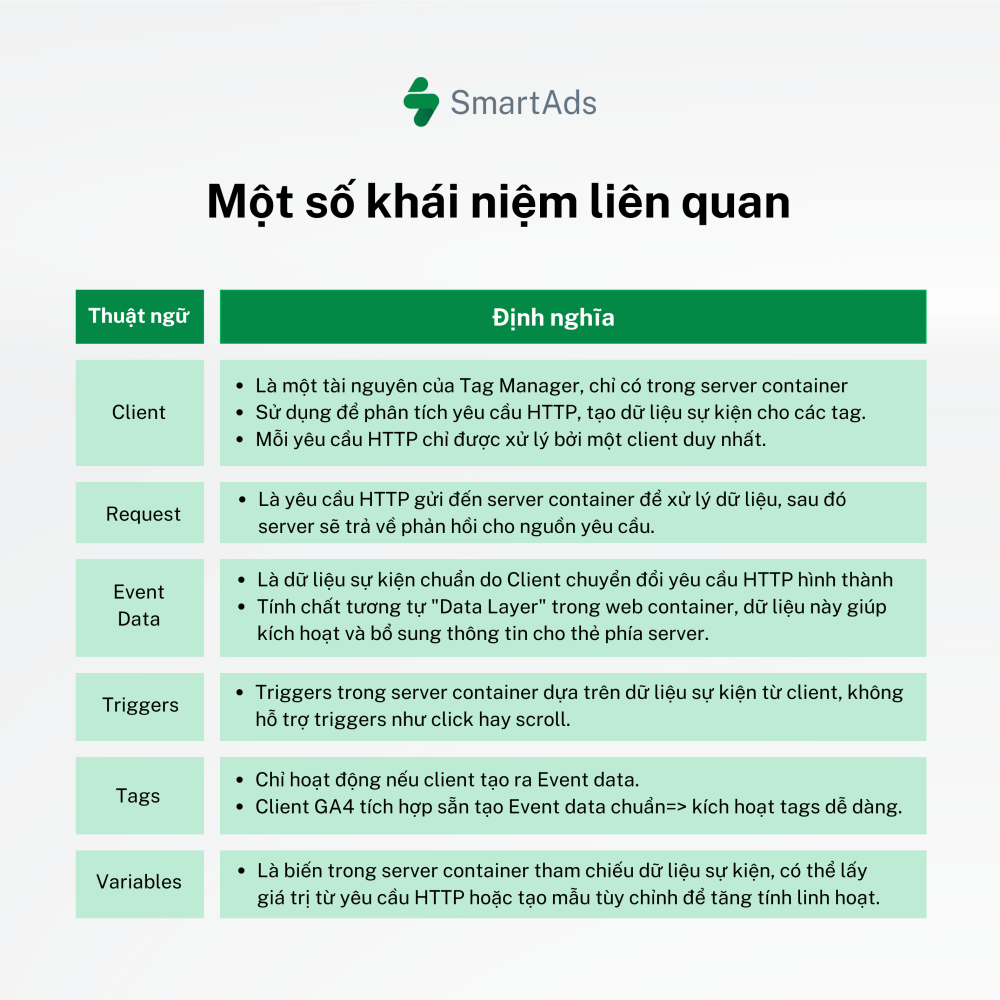
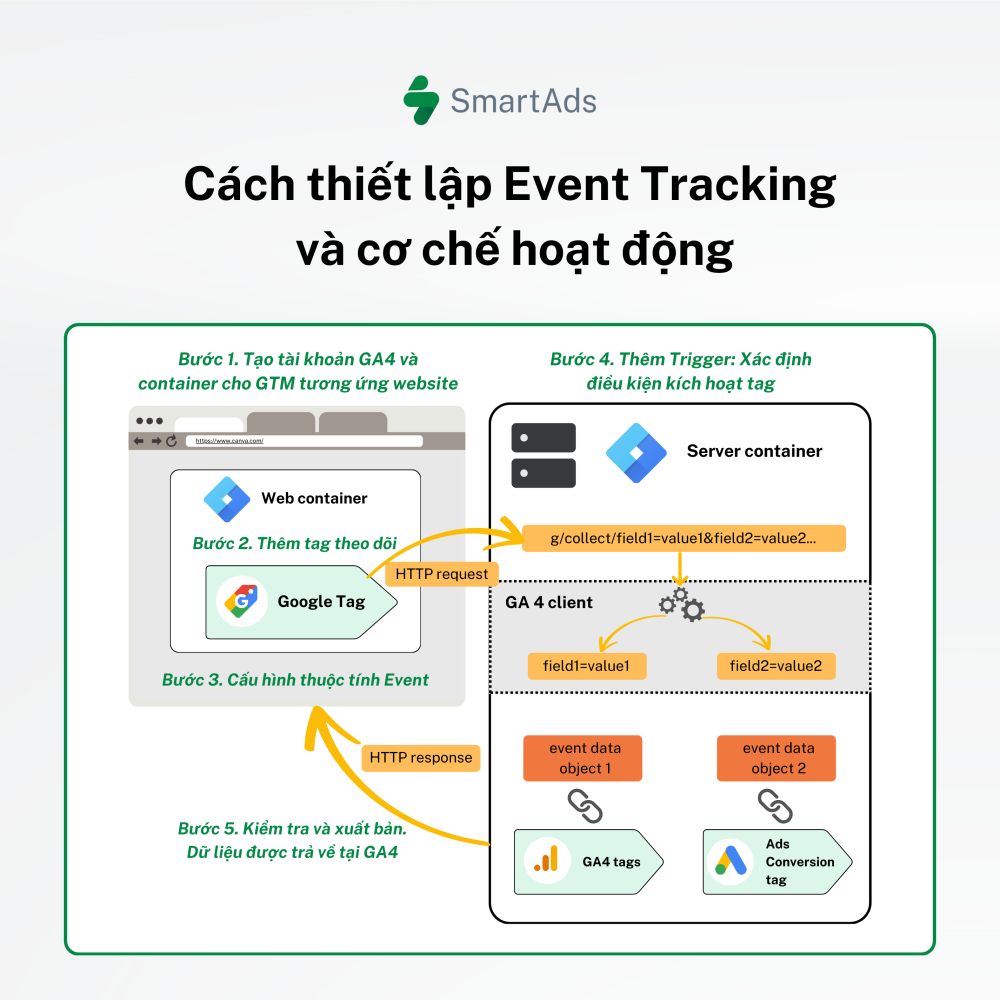
- Web container (trình duyệt phía client) có chứa Google Tag được tạo, hoạt động trên trình duyệt của người dùng. Khi có sự kiện trên website, Google Tag gửi một HTTP request chứa dữ liệu (ví dụ: field1=value1&field2=value2) đến Server container (máy chủ xử lý dữ liệu).
- Server container Nhận dữ liệu từ Web container thông qua HTTP request.
- GA4 client trong Server container phân tích request, tách dữ liệu thành các đối tượng sự kiện riêng biệt (event data object 1, event data object 2).
- Server container gửi dữ liệu đến GA4 tags (Google Analytics 4) và gửi dữ liệu đến Ads Conversion tag (Google Ads).
- Cuối cùng, Server container có thể gửi HTTP response trở lại trình duyệt trong trường hợp cần đo lường thêm.
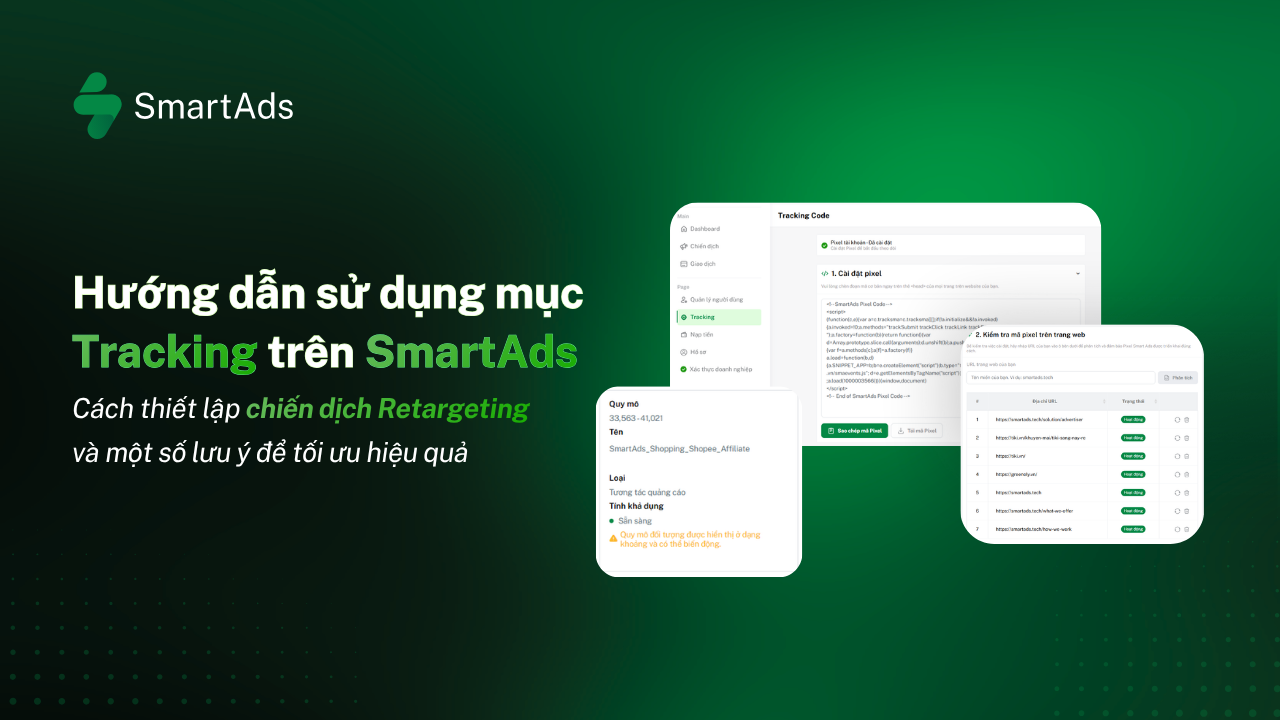
>>> Hướng dẫn thiết lập UTM tracking và SmartAds Pixel tại đây.
V. Hướng dẫn sử dụng Google Tag Manager
Dưới đây là các bước thiết lập Event Tracking với GTM:
Bước 1. Tạo tài khoản GA4 và tạo container cho GTM tương ứng với website cần đo lường.
Bước 2. Thêm tag theo dõi: Tạo tag mới và chọn loại tag là "Google Analytics: GA4 Event".
Bước 3. Cấu hình thuộc tính Event: Nhập thông tin sự kiện (Category, Action, Label, Value) vào tag.
Bước 4. Thêm Trigger: Xác định điều kiện kích hoạt tag, ví dụ: khi người dùng click vào nút cụ thể.
Bước 5. Kiểm tra và xuất bản: Sử dụng chế độ Preview để kiểm tra và xuất bản container.
Kết
Google Analytics và Event Tracking là những công cụ hữu ích giúp bạn hiểu rõ hành vi người dùng và tối ưu hóa hiệu suất website. Bằng cách phân loại sự kiện, xác định event cần theo dõi, và thiết lập Event Tracking với Google Tag Manager, bạn có thể biến dữ liệu thành insights hành động, từ đó đạt được mục tiêu kinh doanh của mình.
Hiện tại SmartAds cung cấp nền tảng quảng cáo trên các báo điện tử, giúp thương hiệu thu hút đúng đối tượng và tăng lưu lượng truy cập chất lượng về website. Để tối ưu hiệu quả toàn diện, việc kết hợp triển khai chiến dịch quảng cáo trên nền tảng SmartAds với hệ thống đo lường hành vi người dùng bằng Google Analytics là một điều cần thiết đối với các thương hiệu cần đo lường chuyển đổi trên trang. Việc này không chỉ giúp theo dõi chính xác hiệu suất quảng cáo, mà còn cung cấp dữ liệu chi tiết cho các quyết định marketing chiến lược.