I. Tối ưu nội dung CTA
CTA là viết tắt của Call to Action (lời kêu gọi hành động) trong lĩnh vực marketing, là một chỉ dẫn ngắn gọn, thường dưới dạng nút bấm, văn bản hoặc hình ảnh, nhằm khuyến khích người dùng thực hiện một hành động cụ thể. CTA đóng vai trò quan trọng trong việc dẫn dắt khách hàng và đo lường hiệu quả của các chiến dịch marketing.
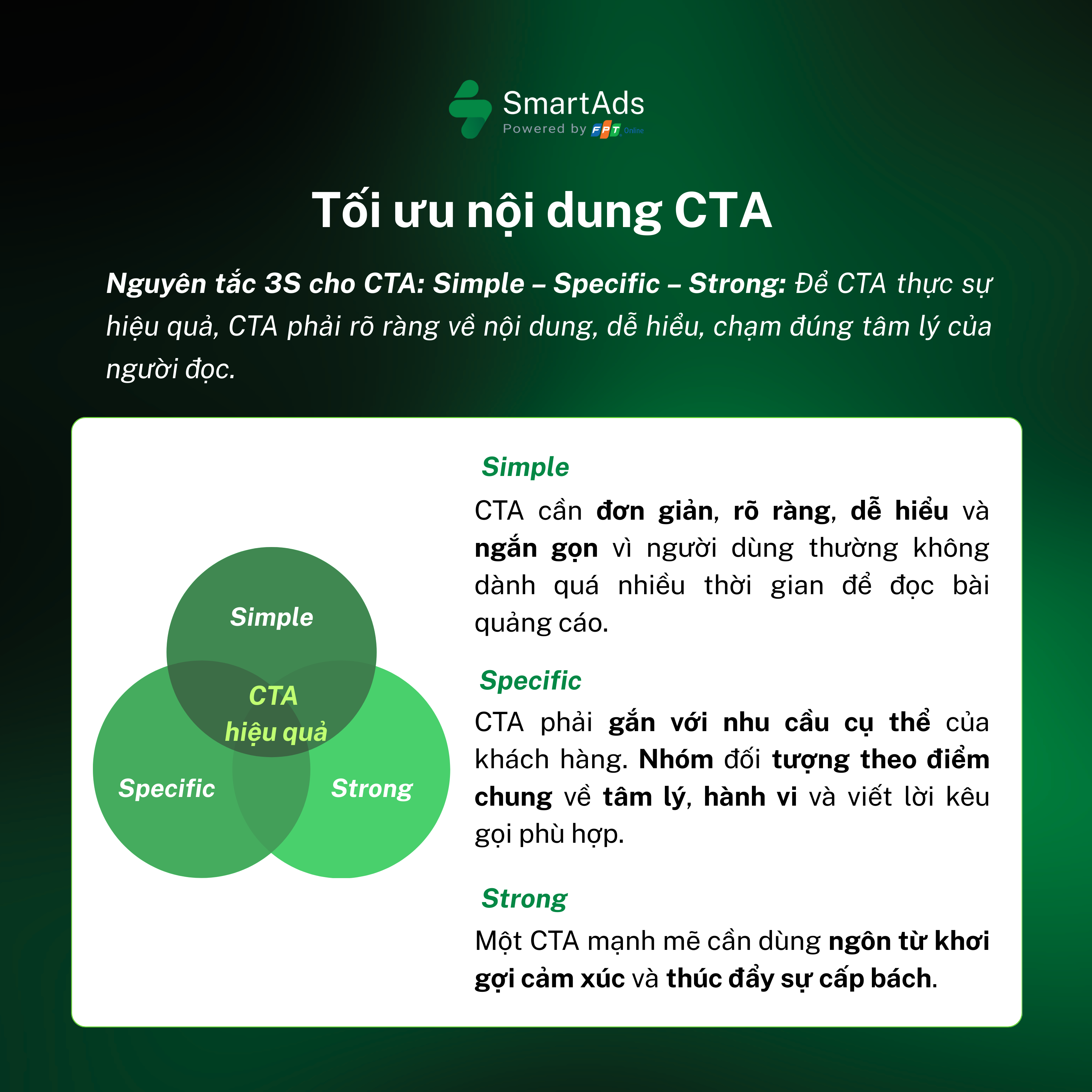
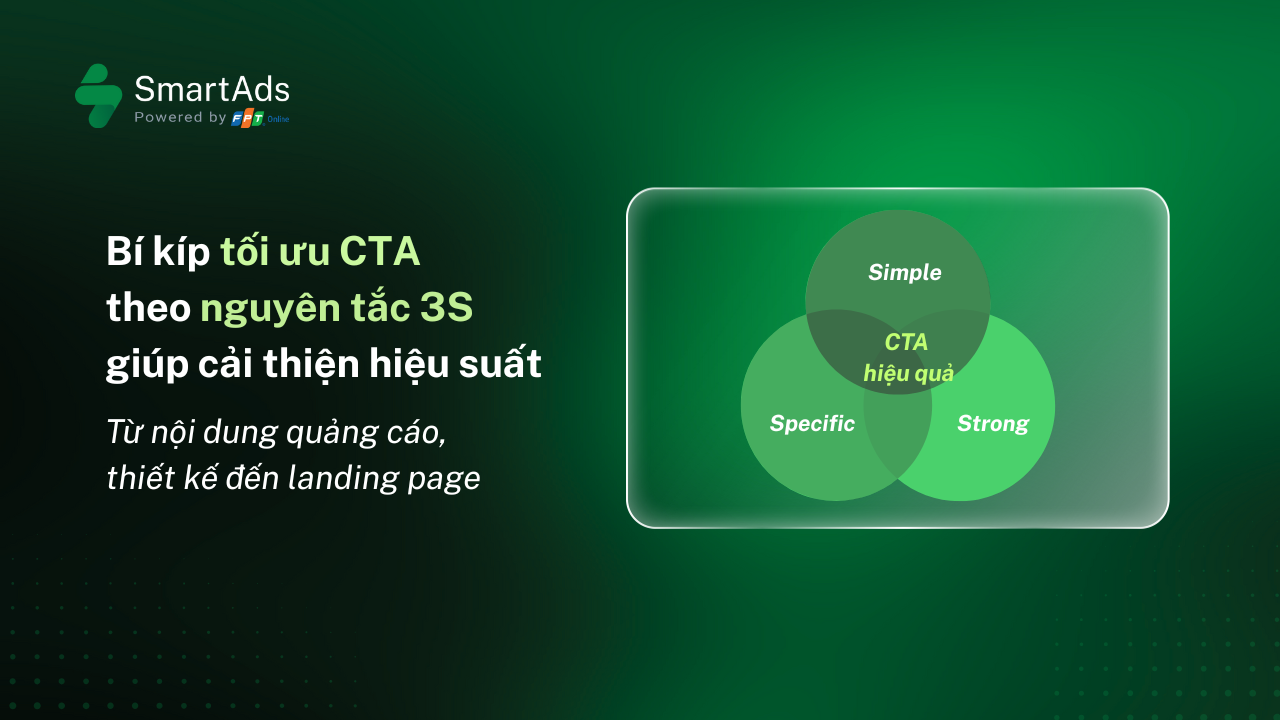
Nguyên tắc 3S cho CTA: Để CTA thực sự hiệu quả, CTA phải rõ ràng về nội dung, dễ hiểu và chạm đúng tâm lý của người đọc. Có nhiều cách viết CTA, nhưng nguyên tắc cơ bản và dễ áp dụng nhất là 3S: Simple – Specific – Strong.
-
Simple: CTA cần đơn giản, rõ ràng, dễ hiểu và ngắn gọn vì người dùng thường không dành quá nhiều thời gian để đọc bài quảng cáo.
-
Specific: CTA phải gắn với nhu cầu cụ thể của khách hàng. Cách tốt nhất là nhóm đối tượng theo điểm chung về tâm lý, hành vi và viết lời kêu gọi phù hợp. Khi CTA giải quyết đúng “nỗi đau” hoặc mong muốn, người dùng sẽ dễ dàng hành động.
-
Strong: Một CTA mạnh mẽ cần dùng ngôn từ khơi gợi cảm xúc và thúc đẩy sự cấp bách.
Ví dụ: Những cụm từ quen thuộc như “Click tại đây” hay “Gửi ngay” không sai, và trong nhiều ngữ cảnh chúng vẫn phát huy hiệu quả. Tuy nhiên, nếu đặt trong một bối cảnh mà giá trị chưa đủ rõ ràng, thường là ở banner đầu trang landing page để gợi mở bấm vào để xem chi tiết thông tin bên trong, những CTA này có thể khiến khách hàng chần chừ vài giây để suy nghĩ xem mình sẽ nhận được gì. Do đó, cần cân nhắc kết hợp lời kêu gọi ngắn gọn với lợi ích cụ thể, phù hợp với ngữ cảnh hiển thị. Cụ thể:
- “Tải bản báo giá miễn phí” - Khi khách hàng vừa xem trang thông tin chung dịch vụ mà chưa rõ về chi phí cần để lại thông tin để được nhận báo giá cá nhân hóa qua email.
- “Nhận ưu đãi 30% ngay hôm nay” - Khi khách hàng vừa vào trang chủ của landing page, thương hiệu cần thuyết phục khách hàng ra quyết định lập tức để vào trang tiếp theo tìm hiểu thêm về chương trình.
Ngoài ra, yếu tố khẩn cấp hay FOMO (Fear of Missing Out) cũng cực kỳ quan trọng để thôi thúc hành động. Những câu như “Chỉ còn hôm nay”, “Sắp hết hàng” hay “Giới hạn 50 suất” sẽ tạo cảm giác rằng nếu khách hàng không nhanh tay, họ sẽ bỏ lỡ cơ hội.
>>> Nội dung thế nào sẽ khiến quảng cáo bị từ chối hoặc chậm duyệt?
Nhìn chung, một nút CTA nhỏ nhưng được tối ưu nội dung đúng cách có thể trở thành đòn bẩy biến sự quan tâm thành hành động ngay lập tức.
II. Thiết kế CTA nổi bật
Nút Call to Action (CTA) không chỉ cần lời kêu gọi thuyết phục, mà còn phải thiết kế đủ nổi bật để khách hàng khó có thể bỏ qua.
1. Màu sắc tương phản
CTA cần có sự tương phản rõ với nền để thu hút ánh nhìn ngay lập tức, ví dụ: nền trắng – nút đỏ, hay nền đen – nút vàng. Ngược lại, nếu dùng màu sắc giống các yếu tố khác trên trang, "Call to Action" sẽ dễ bị “chìm” và mất đi hiệu quả.
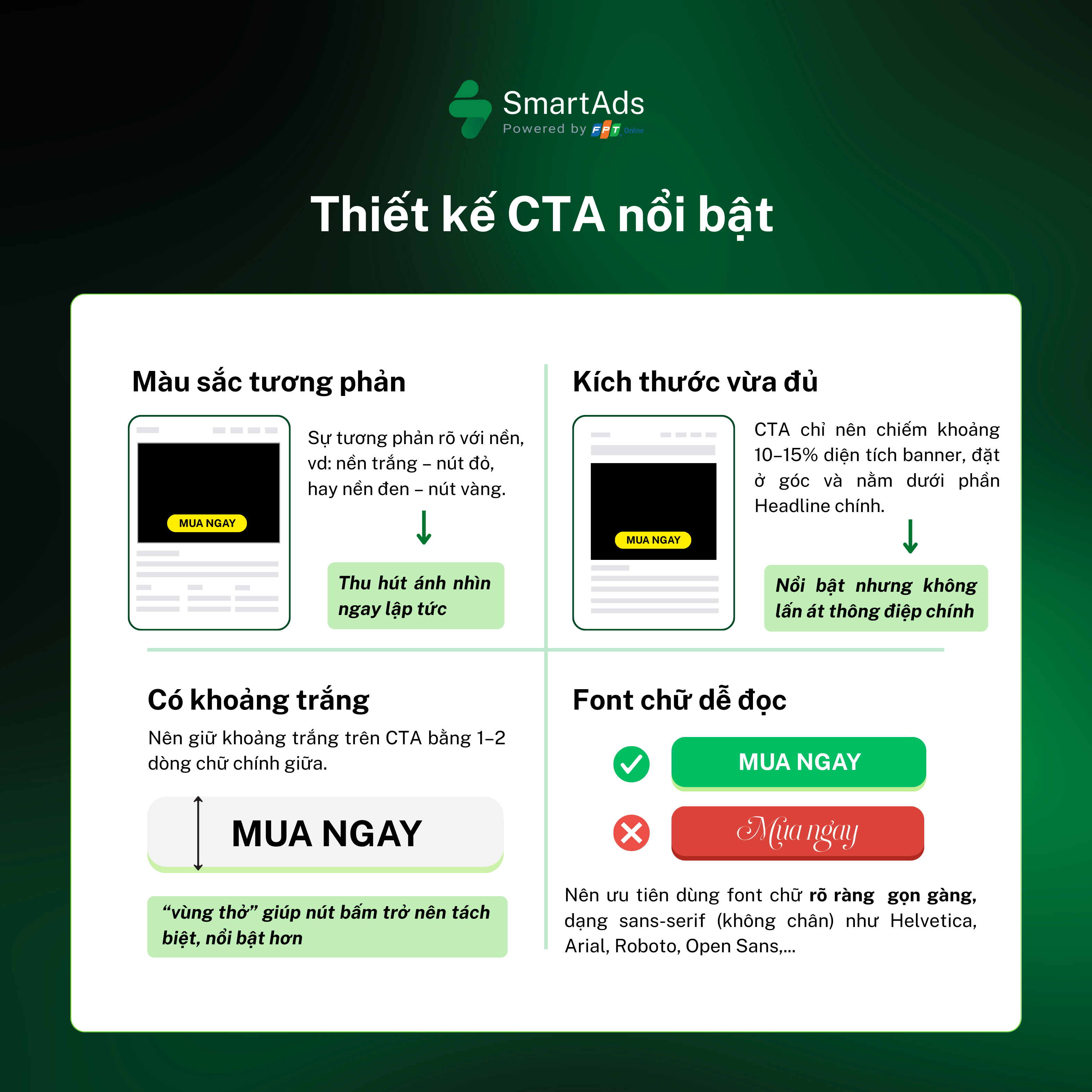
2. Kích thước vừa đủ
Call to Action cần đủ lớn để gây chú ý, nhưng không nên chiếm quá nhiều diện tích khiến bố cục trở nên mất cân đối. Cụ thể, CTA chỉ nên chiếm khoảng 10–15% diện tích banner, nổi bật nhưng không lấn át thông điệp chính hoặc hình ảnh sản phẩm, đồng thời thường đặt ở góc và nằm dưới phần Headline chính để người lướt nhanh có thể thấy ngay.
3. Có khoảng trắng (white space) xung quanh vừa đủ
Không gian này như “vùng thở” giúp nút bấm trở nên tách biệt, nổi bật hơn thay vì bị chen chúc trong một rừng chữ và hình ảnh. Với layout có nhiều yếu tố, nên giữ khoảng trắng trên CTA bằng 1–2 dòng chữ chính giữa để đảm bảo sự nổi bật.
4. Font chữ dễ đọc
CTA nên ưu tiên dùng font sans-serif (không chân) như Helvetica, Arial, Roboto, Open Sans hoặc Inter vì rõ ràng, gọn gàng và tối ưu cho môi trường digital; tránh các font serif rườm rà hoặc script nếu không cần thiết, đặc biệt là dạng chữ viết tay vì có thể gây khó đọc ở kích thước nhỏ.
III. Vị trí CTA hợp lý
1. Đảm bảo phù hợp với từng nền tảng
Đối với banner quảng cáo hoặc bài post: CTA thường ngắn gọn, trực diện, đủ sức tạo cú hích khiến khách hàng bấm vào (ví dụ: ‘Đăng ký ngay’, ‘Xem chi tiết’).
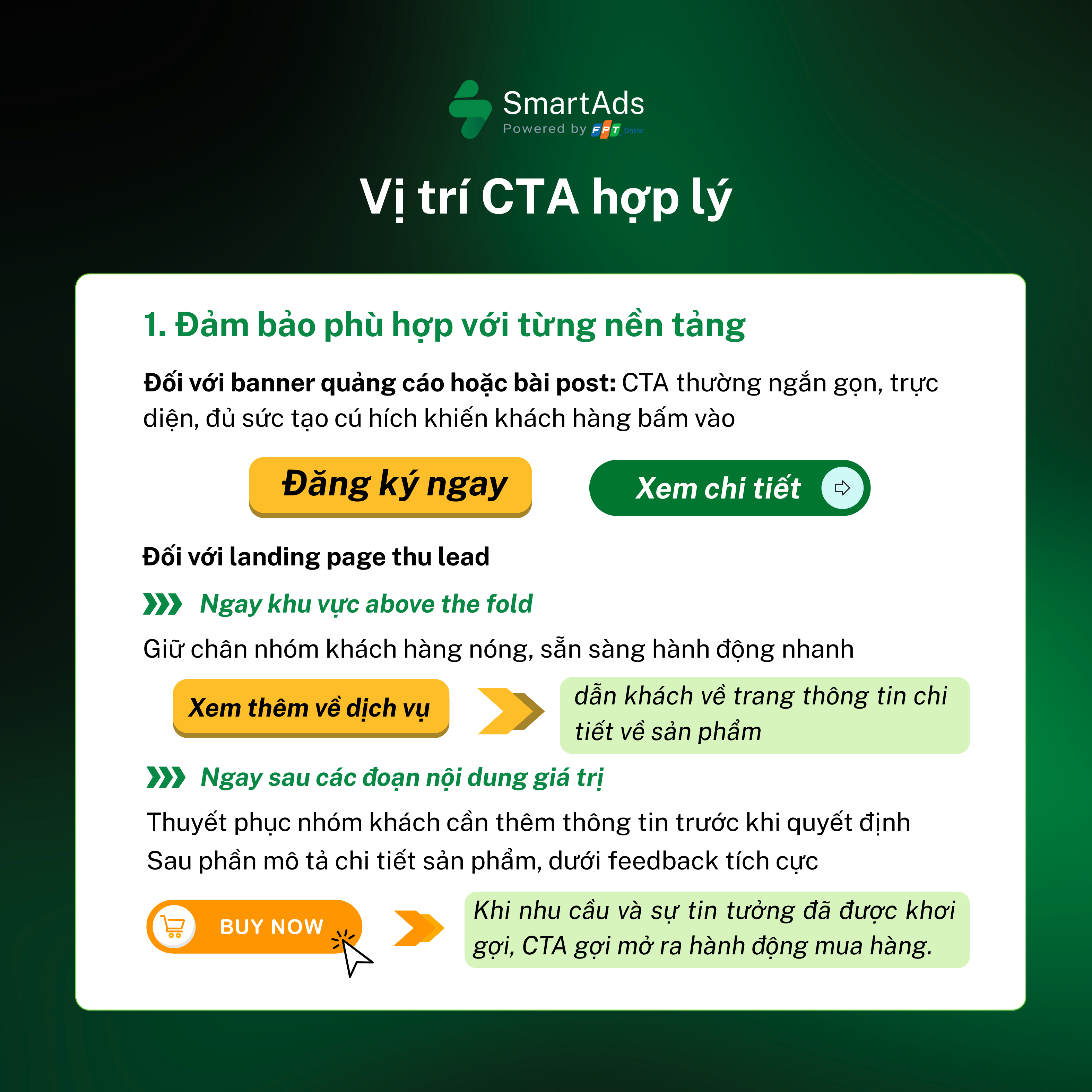
Đối với landing page thu lead: CTA cần được bố trí chiến lược hơn:
-
Ngay khu vực above the fold: để giữ chân nhóm khách hàng nóng, sẵn sàng hành động nhanh. Ví dụ: đặt nút “Xem thêm về dịch vụ” để dẫn khách về trang thông tin chi tiết về sản phẩm.
-
Ngay sau các đoạn nội dung giá trị: để thuyết phục nhóm khách hàng cần thêm thông tin trước khi quyết định. Ví dụ: sau phần mô tả chi tiết sản phẩm, sau video hướng dẫn, hay ngay dưới feedback tích cực của khách hàng. Khi nhu cầu và sự tin tưởng đã được khơi gợi, CTA chính là “cánh cửa” mở ra hành động mua hàng.
Sự kết hợp đúng cách giữa CTA trên quảng cáo và CTA trên landing page sẽ giúp tối ưu hiệu quả tổng thể của chiến dịch.
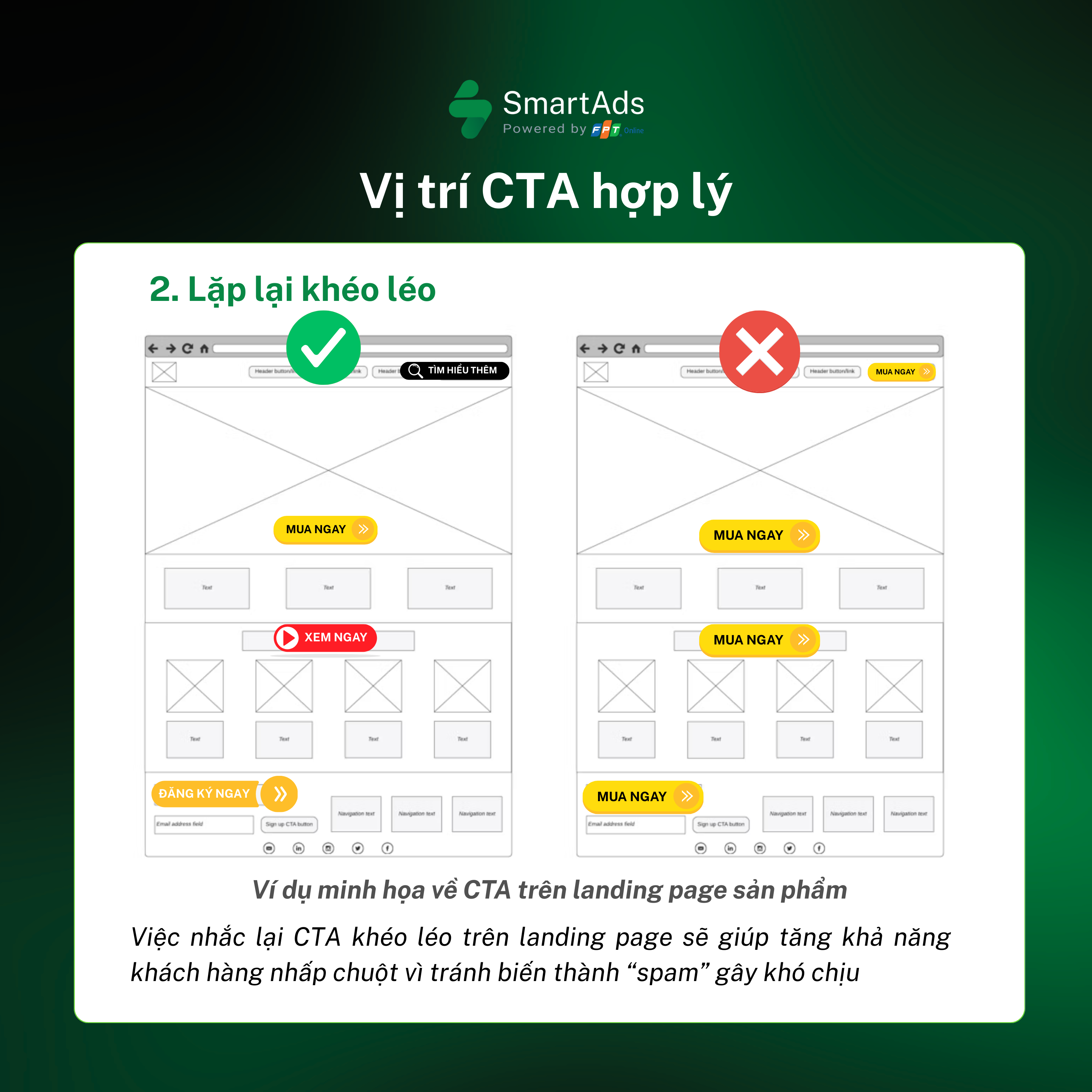
2. Lặp lại khéo léo
Việc nhắc lại CTA khéo léo trên landing page sẽ gia tăng khả năng khách hàng nhấp chuột, nhưng hãy tránh biến nó thành “spam” gây khó chịu. Sự lặp lại cần tinh tế và hợp lí, ví dụ:
-
Sau đoạn giới thiệu sản phẩm có thể có CTA ‘Xem bảng giá ngay’.
-
Sau phần feedback khách hàng thì thêm CTA ‘Đăng ký tư vấn miễn phí’.
-
Cuối trang chốt lại bằng CTA mạnh mẽ ‘Đặt hàng hôm nay – Giảm 20%’.
Như vậy, Call to Action có thể được nhắc lại nhiều lần nhưng mỗi lần đều gắn với một giá trị khác nhau. Người đọc sẽ cảm thấy được dẫn dắt tự nhiên thay vì bị ép buộc.
IV. Cá nhân hóa CTA theo hành vi
Không phải mọi khách hàng đều giống nhau, vậy nên CTA cần được cá nhân hóa để phù hợp với từng người. Với sự hỗ trợ của chatbot hoặc AI, doanh nghiệp có thể biến CTA thành lời mời gọi mang tính cá nhân, ví dụ: “Chào [Tên], bạn muốn tư vấn mẫu A hay mẫu B?”, hoặc, phân phối quảng cáo với các creative chứa CTA khác nhau được cá nhân hóa theo hành trình giúp nội dung tiếp cận vừa thân thiện vừa gợi mở hành động.
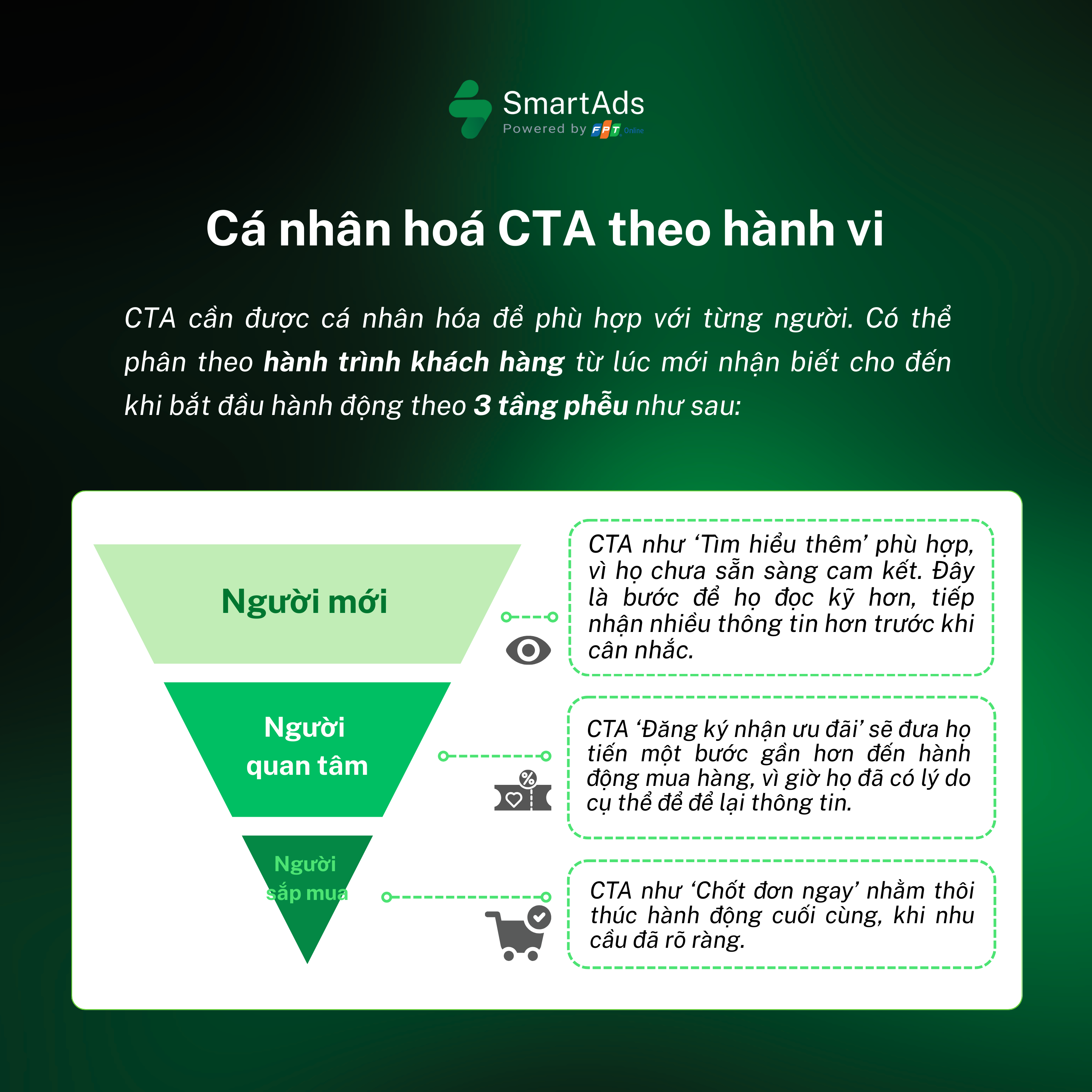
Ví dụ: Cá nhân hóa CTA trên landing page gắn liền với hành trình khách hàng trong phễu:
-
Người mới: CTA như ‘Tìm hiểu thêm’ phù hợp, vì họ chưa sẵn sàng cam kết. Đây là bước để họ đọc kỹ hơn, tiếp nhận nhiều thông tin hơn trước khi cân nhắc.
-
Người quan tâm: CTA ‘Đăng ký nhận ưu đãi’ sẽ đưa họ tiến một bước gần hơn đến hành động mua hàng, vì giờ họ đã có lý do cụ thể để để lại thông tin.
-
Người sắp mua: CTA như ‘Chốt đơn ngay’ nhằm thôi thúc hành động cuối cùng, khi nhu cầu đã rõ ràng.
V. Đo lường và kiểm tra liên tục
Doanh nghiệp có thể áp dụng A/B Testing với nhiều biến thể khác nhau để tối ưu CTA thông qua thay đổi màu sắc, nội dung chữ, vị trí hay hiệu ứng để tìm ra phiên bản hiệu quả nhất.
>>> Làm sao để lựa chọn ra mẫu winning khi thực hiện A/B testing?
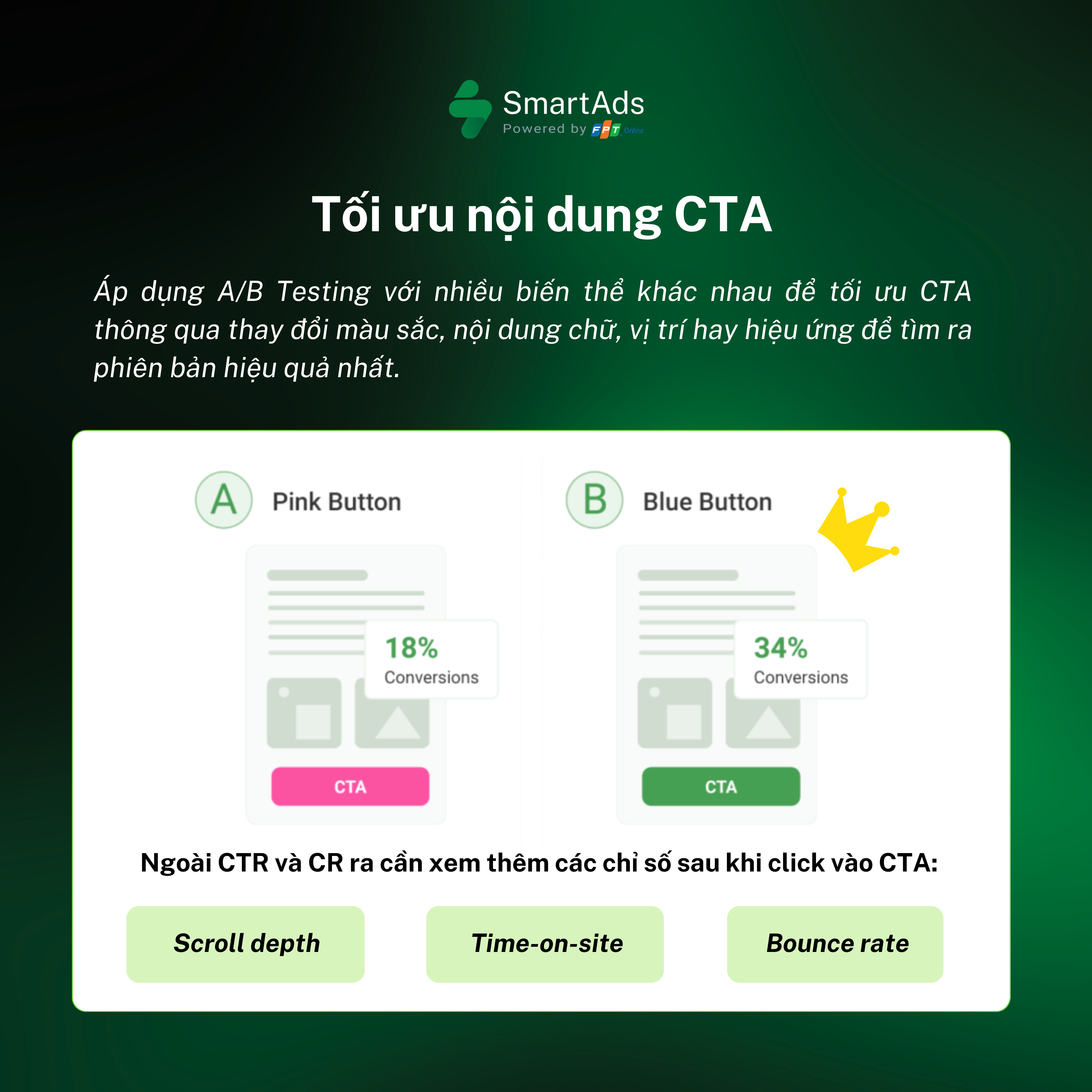
Đồng thời, cần thường xuyên đo lường hiệu quả chiến dịch lẫn landing page thông qua các chỉ số như:
-
Tỷ lệ khách nhấp chuột CTR (Click-through rate)
-
Tỷ lệ chuyển đổi thực sự CR (Conversion rate)
-
Mức độ tương tác tiếp theo (Time-on-site, Bounce rate và Scroll depth sau khi nhấn CTA)
Nhìn chung, một chiến dịch quảng cáo dù sáng tạo đến đâu cũng chỉ thật sự trọn vẹn khi có một nút Call to Action (CTA) dẫn khách hàng đi đến hành động cuối cùng. Từ nội dung rõ ràng, thiết kế nổi bật, vị trí hợp lý, cho đến cá nhân hóa và tối ưu liên tục, mỗi yếu tố đều góp phần biến CTA từ một nút bấm đơn thuần thành “công cụ chuyển đổi” hiệu quả.
>>> Khám phá những nguyên nhân khiến quảng cáo chạy mãi vẫn không hiệu quả.
Về SmartAds, tiền thân là Eclick, được phát triển bởi FPT Online – một trong những đơn vị tiên phong trong lĩnh vực công nghệ và truyền thông số tại Việt Nam. Trải qua quá trình đổi mới và phát triển, với mạng lưới hợp tác cùng các premium publisher hàng đầu, SmartAds khẳng định vị thế tiên phong trong việc nâng cao chuẩn mực quảng cáo native tại thị trường Việt Nam, đồng thời kỳ vọng trở thành đối tác đáng tin cậy cùng thương hiệu trong hành trình chinh phục khách hàng. Nếu bạn đang tìm kiếm một giải pháp quảng cáo tối ưu nhận diện và hiệu suất, đừng ngần ngại tạo tài khoản và trải nghiệm setup chiến dịch trên SmartAds tại đây.