1. Market context of postgraduate education in Vietnam
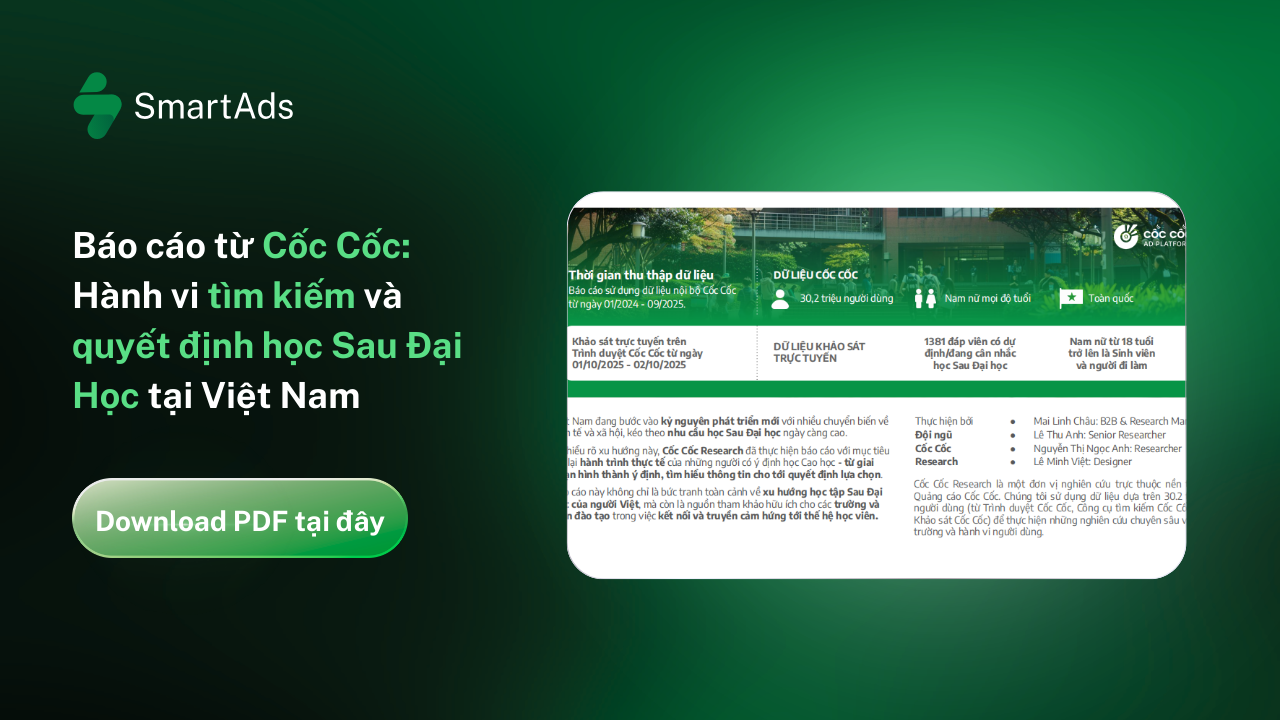
Vietnam is entering a new development era marked by significant socio-economic transformation, which is driving a clear increase in demand for postgraduate education.
>>> Download the full PDF report on the postgraduate education market by Cốc Cốc here.
Several notable figures highlight this trend:
-
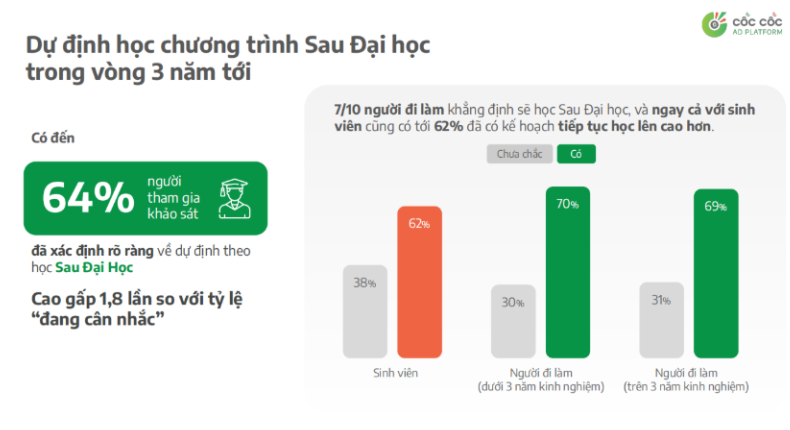
64% of survey respondents have clearly stated that they plan to pursue postgraduate education within the next three years.
-
Nearly 70% of working professionals and almost 80% of managers and lecturers have confirmed plans to pursue postgraduate study within the next three years.
The age group with the highest search volume related to Master's and PhD programs is 25–34, while the 18–24 group contributes up to 32% of searches.
This indicates that demand does not come solely from experienced professionals but also from students and young individuals. It also suggests that pursuing postgraduate education is increasingly becoming a strategic decision rather than an emotional one.
2. Key insights into learner behavior
2.1. Motivations for postgraduate study and career goals
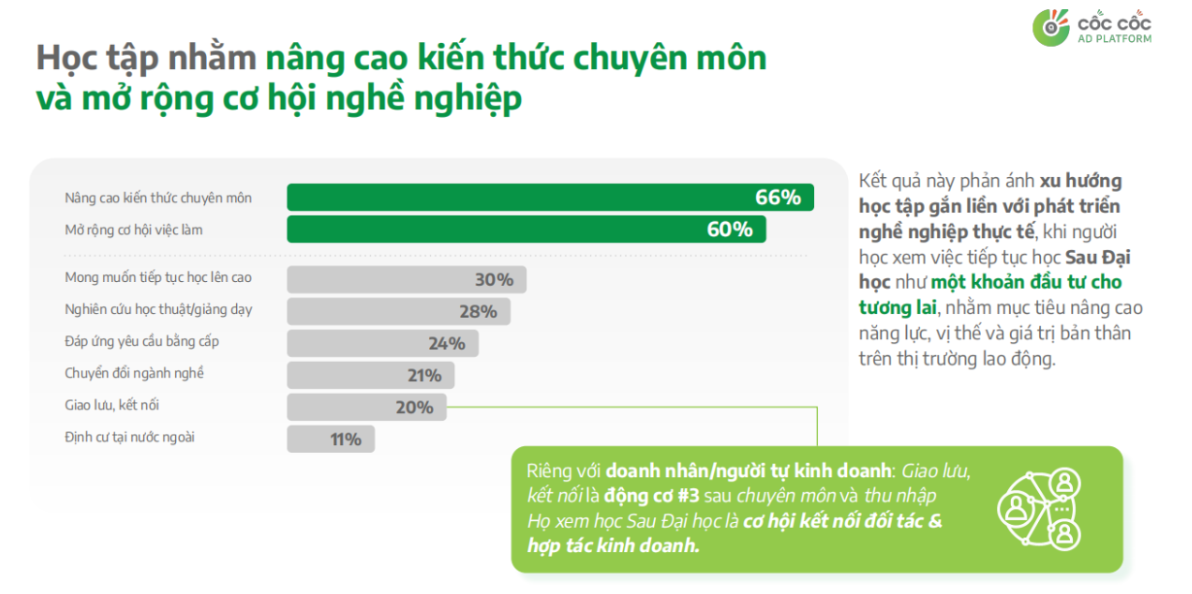
When examining motivations more closely, the picture becomes clearer. 66% of learners say their main goal is to deepen professional knowledge, while 60% aim to expand career opportunities.
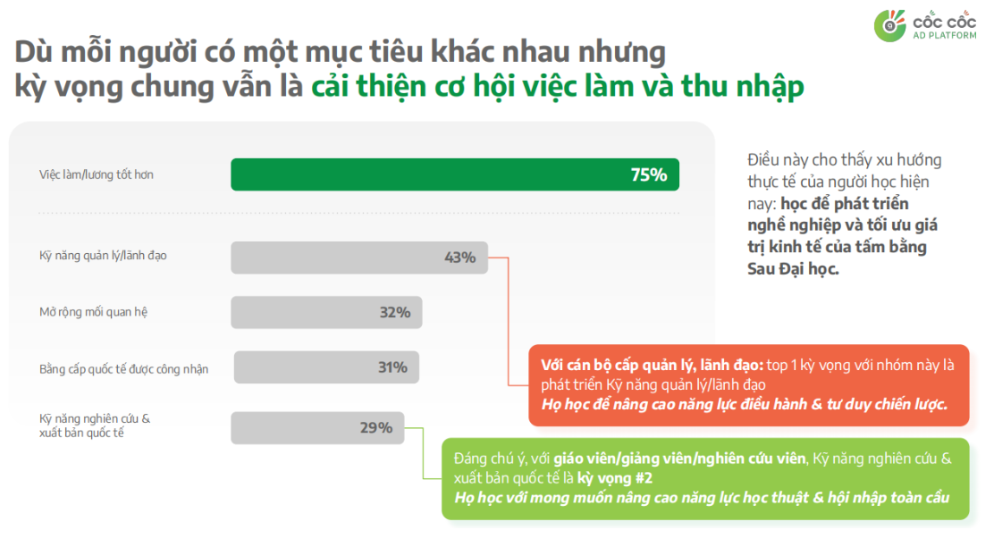
After completing their programs, 75% expect improved employment and income. Postgraduate education is increasingly viewed as an investment in “future economic value,” marking an important shift in the market: from “studying for a degree” to “studying to elevate professional standing.”
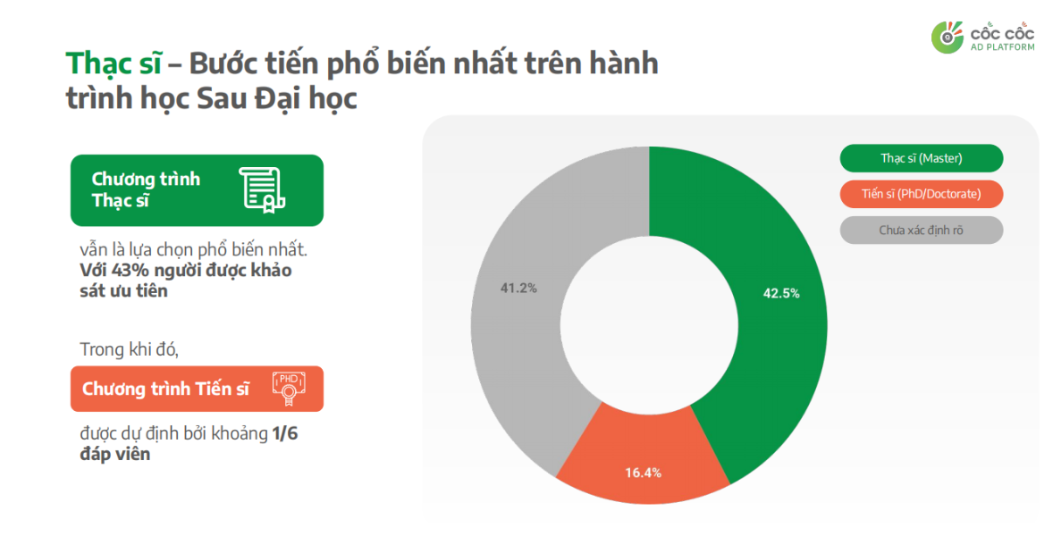
Regarding degree orientation, Master’s programs account for 43% of choices, while around one-sixth plan to pursue a PhD. A Master’s degree has become the most practical and common next step, while PhD programs are more concentrated among lecturers, researchers, and senior leaders who require advanced academic credentials for long-term career strategies.
2.2. The postgraduate information search journey
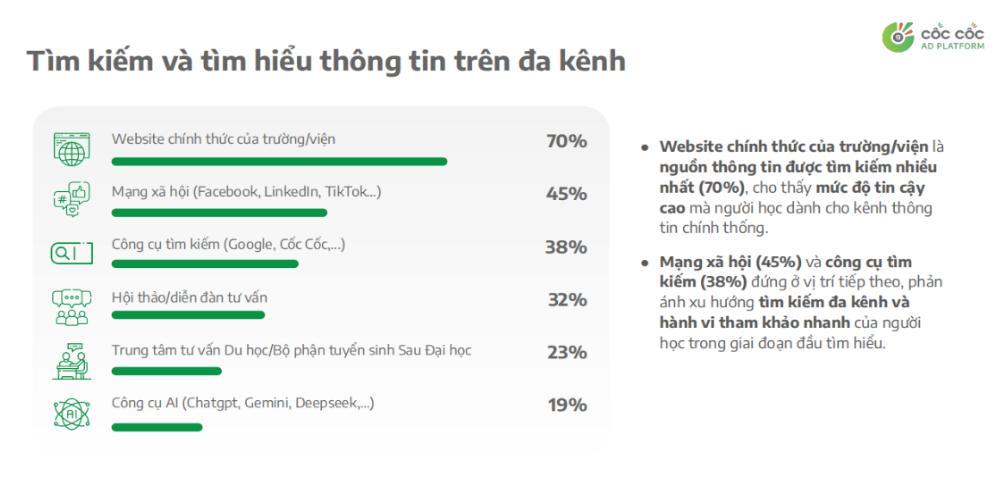
70% of prospective learners search for information on official university or institute websites. This highlights the central role of owned media in the decision-making process. Meanwhile, social media (45%) and search engines (38%) primarily support early awareness and initial information discovery.
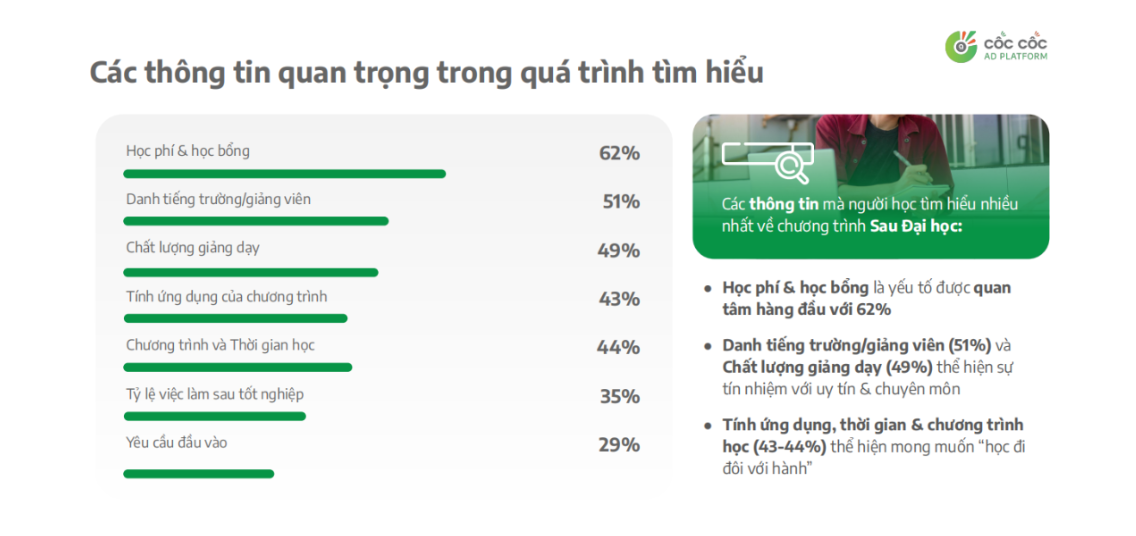
Interestingly, the most important factor for prospective students is not institutional reputation or program structure but tuition fees and scholarships (62%). This reflects the financial considerations behind education decisions. Next come university reputation (51%) and teaching quality (49%).
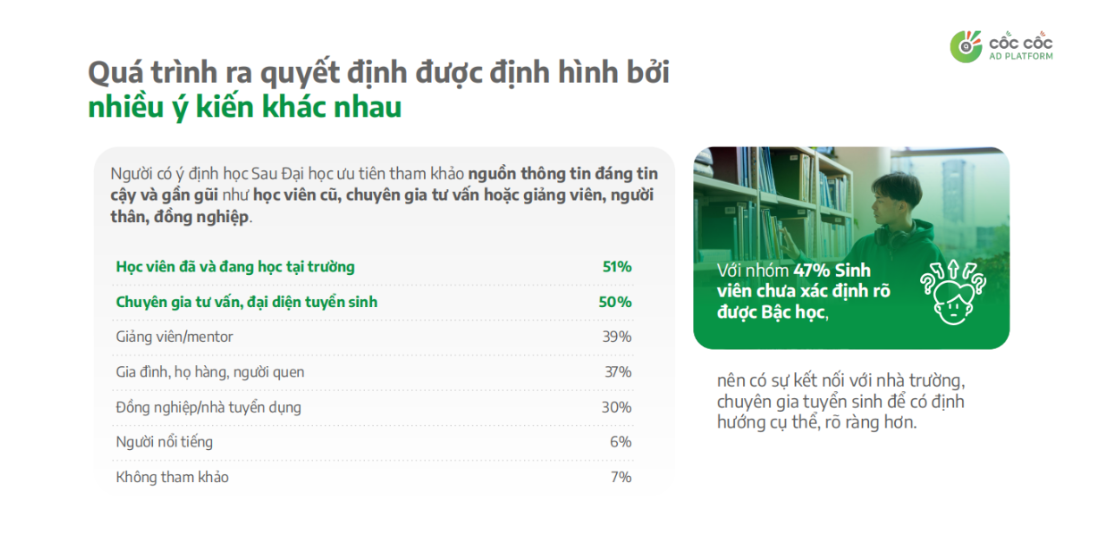
Alongside official information channels, the role of “social trust” is also significant. 51% consult current or former students, while 50% consult admissions experts. This shows that prospective learners seek not only information but also validation through real experiences.
2.3. Barriers and challenges in postgraduate education
Although the intention to pursue postgraduate education is high, the transition from “interest” to “actual enrollment” is influenced by several practical barriers.
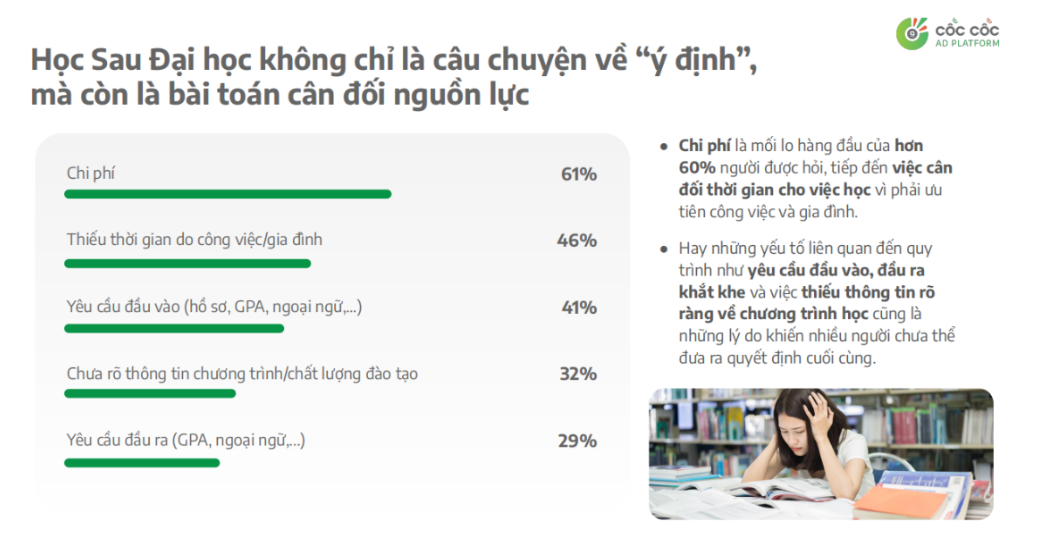
The biggest challenge is cost, with 61% of respondents identifying it as a major concern. In addition, 46% worry about time constraints due to work and family responsibilities.
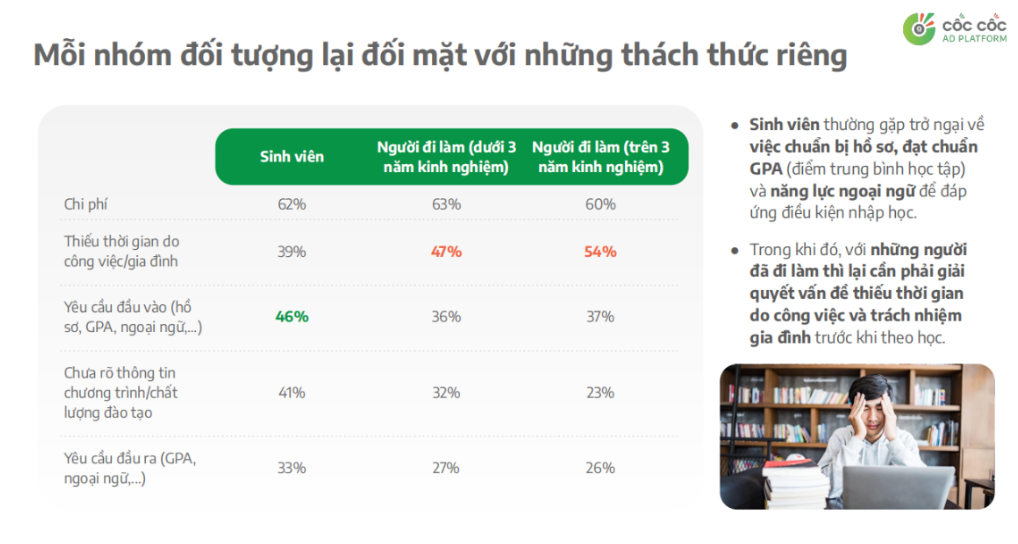
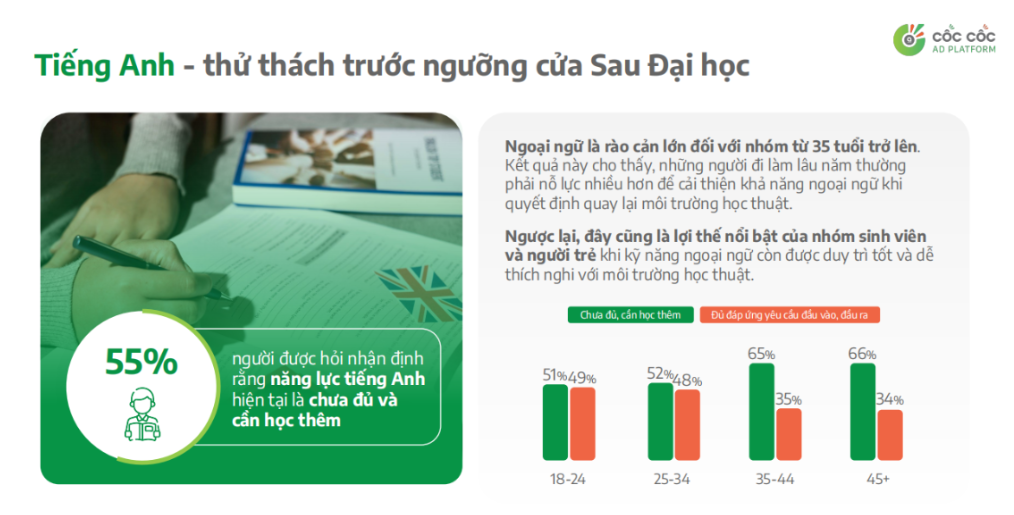
Notably, 55% believe their current English proficiency is not yet sufficient and requires further improvement. Language ability is not only an administrative requirement but also a psychological barrier, especially for older learners.
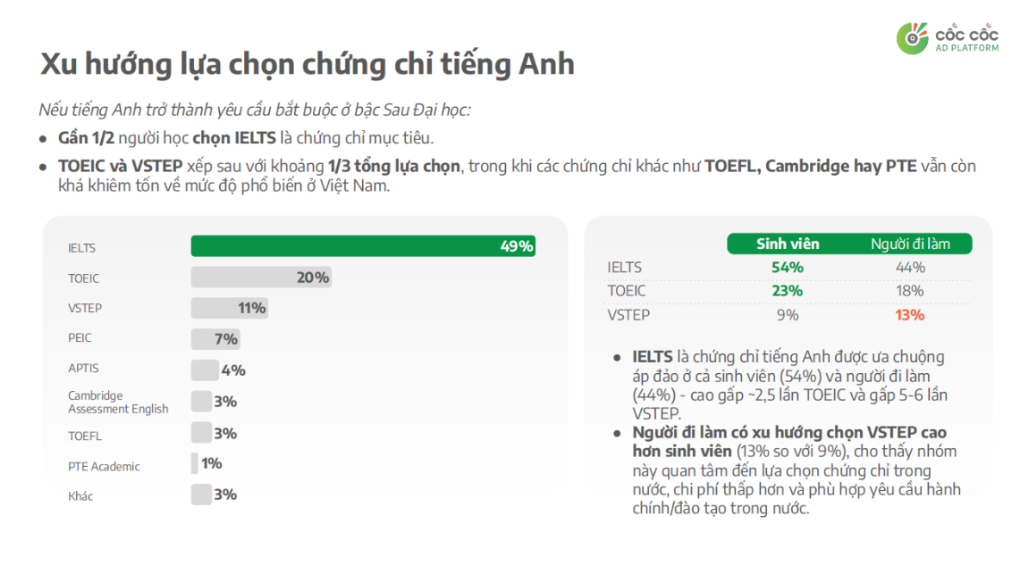
The fact that 49% of respondents choose IELTS indicates that English certification is increasingly seen as a “standard requirement” for postgraduate study. This not only reflects language capability but also a desire to meet expectations within academic environments and the job market. As competition intensifies, holding a widely recognized certification like IELTS becomes a way for learners to ensure they remain aligned with broader professional trends.
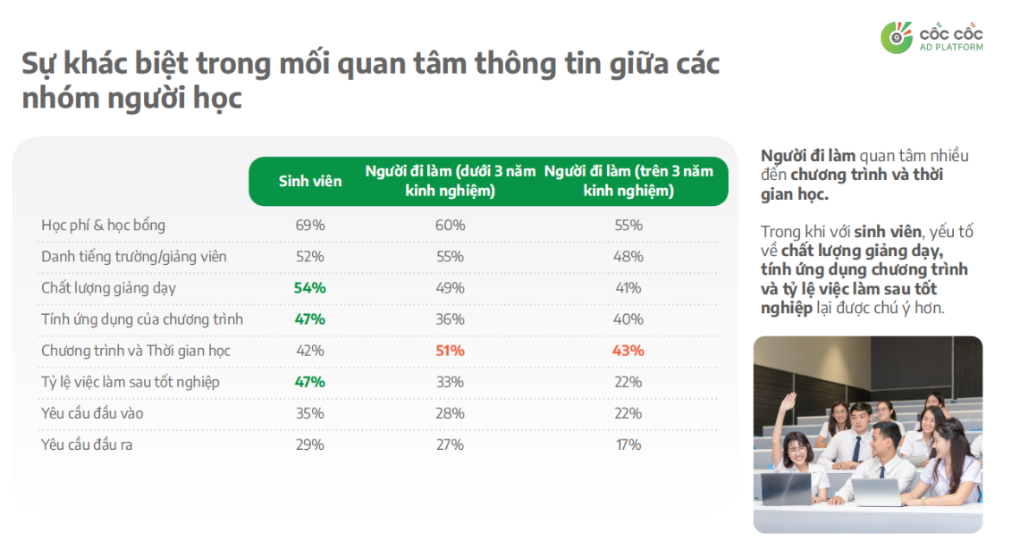
Today’s learners approach postgraduate education with an investor mindset. They are not only motivated by personal development but also carefully evaluate costs, expected value, and future career opportunities.
-
69% of students consider tuition fees and scholarships as critical factors, making cost a clear starting point in the decision-making process.
-
Meanwhile, 54% value teaching quality highly, indicating that academic excellence remains the core foundation.
As most expenses must be self-funded and tuition fees continue to rise, pursuing postgraduate education is no longer simply an academic choice. Instead, it becomes a long-term financial commitment that requires careful evaluation.
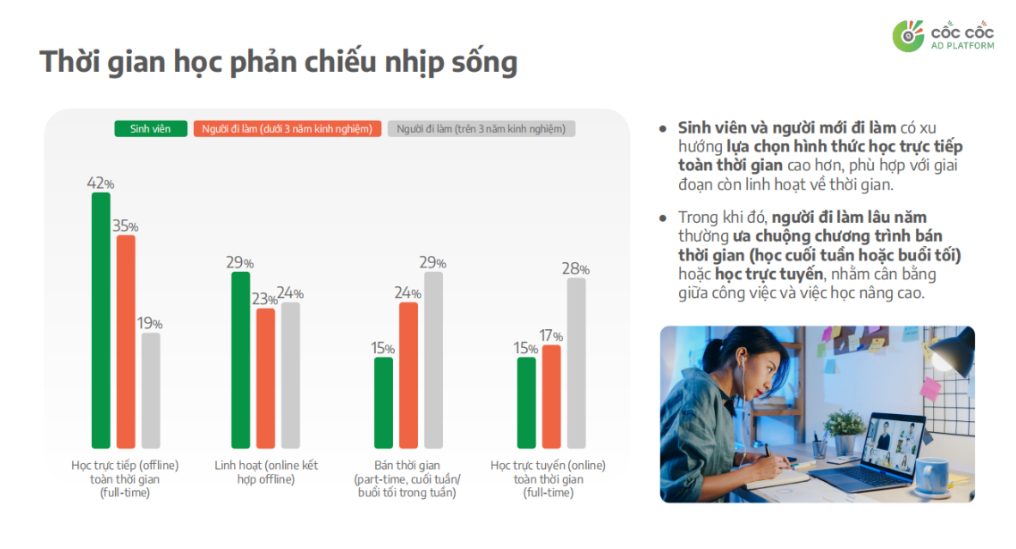
Beyond financial considerations, time pressure is another key variable influencing postgraduate study decisions. For working professionals, every hour spent studying requires redistributing already limited time between work, family responsibilities, and personal development.
Data shows that 42% of students prefer full-time on-campus programs, while 28% of working professionals opt for full-time online learning. This difference reflects the growing need for flexibility among individuals with prior work experience.
In essence, pursuing postgraduate education is not merely about aspiration. It represents a complex equation involving financial resources, time availability, personal capability, and long-term commitment. Without practical solutions to address these constraints, high intention does not necessarily translate into actual enrollment.
2.4. Decision-making behavior when choosing postgraduate institutions and study formats
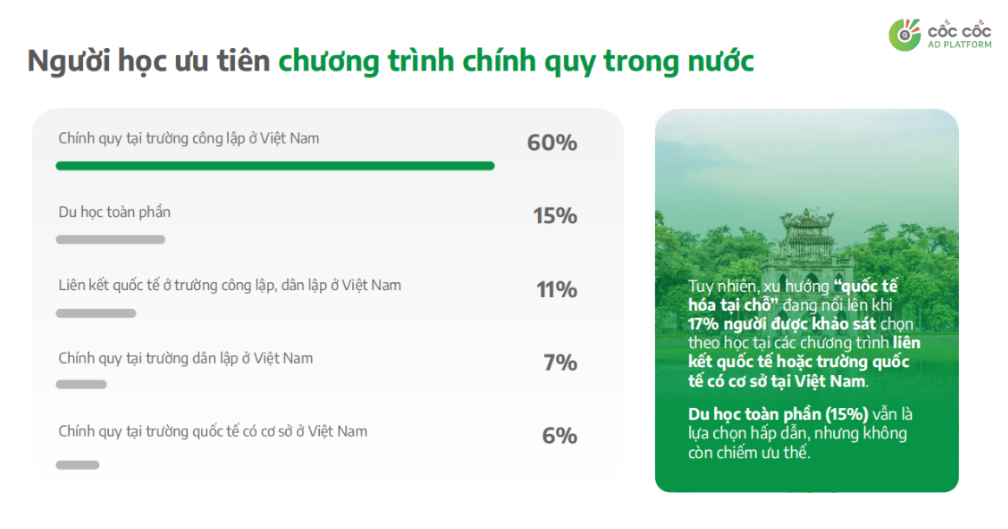
When entering the decision-making stage, most learners choose options that are both practical and achievable. 60% plan to enroll in full-time programs at public universities in Vietnam. Fully overseas study accounts for only 15%, while the “internationalization at home” trend (joint programs or international universities located in Vietnam) reaches around 17%.
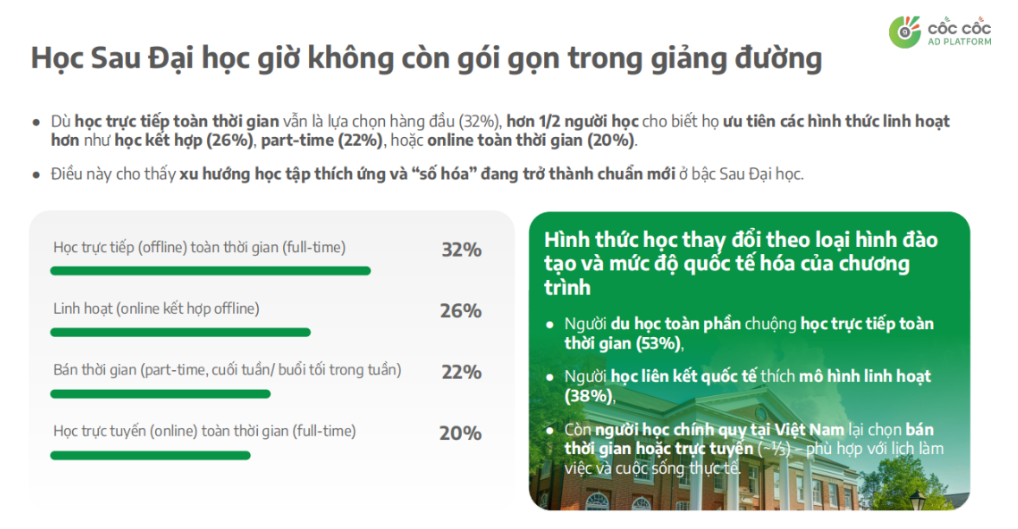
Regarding study format, although full-time on-campus learning remains common (32%), more than half of learners prefer flexible options such as online, hybrid, or part-time models. This clearly indicates that postgraduate education is adapting to modern lifestyles.
3. Strategic implications for education brands and advertisers
As learners in Vietnam increasingly pursue postgraduate education to improve career prospects and income potential, businesses and education brands need to refine their outreach and communication strategies. Several strategic directions can be considered:
-
Strengthen professional connections and mentorship: Prospective applicants tend to seek advice from alumni, lecturers, mentors, or admissions experts before making decisions. Building alumni communities, hosting orientation workshops, and offering one-on-one consultations allow education brands to position themselves as trusted “partners” rather than merely program providers.
-
Address barriers with practical solutions: Cost, time availability, and language requirements represent the three major bottlenecks in the postgraduate journey, particularly for experienced professionals. Education brands can enhance competitiveness by offering financial aid packages, flexible learning pathways (part-time, hybrid, online), and English support programs that help reduce barriers early in the decision stage.
-
Ensure transparent information and optimize digital touchpoints: The official website remains the most trusted channel, but prospective learners increasingly research through multiple platforms—from search engines and social media to consultation seminars. Therefore, institutions should standardize information on tuition fees, scholarships, programs, and admission requirements while ensuring consistency across platforms to reduce uncertainty and build trust.
-
Leverage online newspapers as a credibility-building channel: In the postgraduate education sector, enrollment decisions are often closely tied to institutional credibility and the perceived authority of information sources. Analytical articles on career trends, expert interviews, student experience stories, or program introductions published on online newspapers can help education brands strengthen their reputation while providing deeper insights for prospective learners during the research and consideration stages.
-
Combine in-depth content with display advertising to optimize the research journey: Prospective postgraduate students typically undergo a long, multi-channel information search before making decisions. Integrating advertorials, career guidance content, or analytical articles about the benefits of postgraduate education with display advertising formats (display ads, video ads, native ads) on online newspapers can help brands maintain consistent visibility throughout the entire journey—from awareness and consideration to program inquiry and registration.
About SmartAds, formerly known as eClick and developed by FPT Online—one of the pioneers in Vietnam’s digital technology and media industry. Through continuous innovation and development, along with partnerships with leading premium publishers, SmartAds has established itself as a pioneering platform for online newspaper advertising in Vietnam. The platform aims to become a trusted partner for brands seeking to reach and engage their audiences effectively. If you are looking for an advertising solution that optimizes both brand awareness and performance, feel free to create an account and set up your first campaign on SmartAds here.