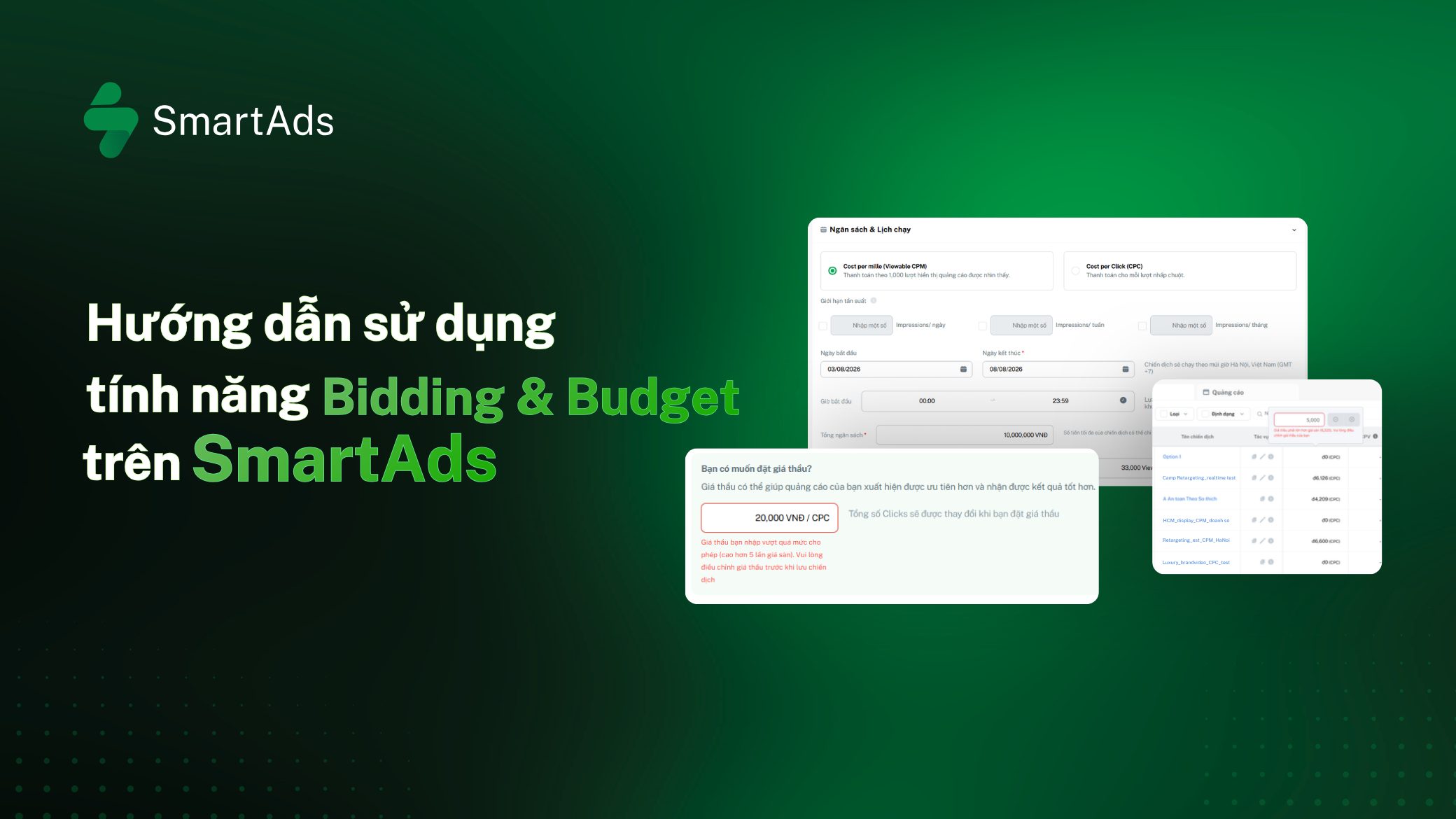
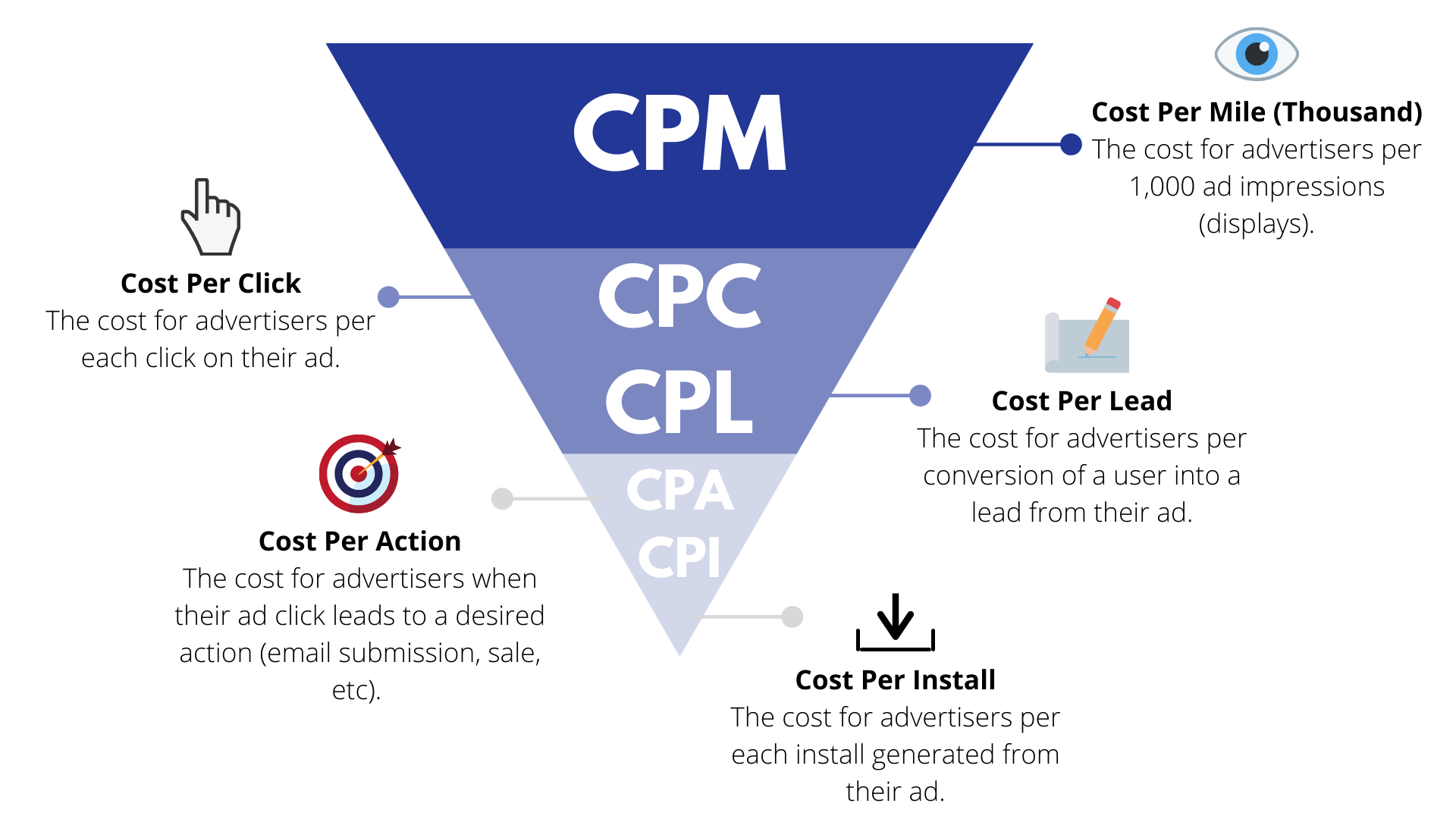
1. CPC (Cost Per Click) – Trả phí theo lượt nhấp
-
Công thức: CPC = số lượt nhấp × giá mỗi click.
2. CPM (Cost Per Mille) – Trả phí cho 1.000 lượt hiển thị
Quảng cáo được tính phí dựa trên số lần hiển thị đến người dùng. Thông thường, quảng cáo này được sử dụng để tăng độ phủ và nhận diện thương hiệu.
-
Công thức: CPM = (số lượt hiển thị ÷ 1.000) × giá CPM.
3. CPA (Cost Per Action) – Trả phí theo hành động
Quảng cáo được tính phí khi khách hàng hoàn tất hành động cụ thể (đăng ký, mua hàng, tải app...) phù hợp cho các chiến dịch chuyển đổi.
-
Công thức: CPA = số hành động × giá thầu cho mỗi hành động.
4. CPL (Cost Per Lead) – Trả phí theo khách hàng tiềm năng
Doanh nghiệp chỉ trả tiền khi thu được data hợp lệ (email, số điện thoại...).
-
Công thức: CPL = số lượng lead × giá cho mỗi lead
5. CPV (Cost Per View) – Trả phí theo lượt xem video
Hình thức này dành cho quảng cáo video, quảng cáo được tính phí khi người dùng xem video đủ thời gian quy định (3s, 10s hoặc 50% độ dài), đặc biệt hữu ích để quảng bá sản phẩm qua storytelling.
-
Công thức: CPV = số lượt xem video × giá mỗi lượt xem
6. CPO (Cost Per Order/Outcome) – Trả phí theo đơn hàng/kết quả
Doanh nghiệp chỉ chi tiền khi có đơn hàng thành công hoặc outcome xác định. Hình thức này thường dùng cho sàn thương mại điện tử.
-
Công thức: CPO = số đơn hàng (hoặc kết quả) × giá mỗi đơn hàng/kết quả
7. CPD (Cost Per Day) – Trả phí theo ngày
Quảng cáo được hiển thị liên tục trong 24h tại một vị trí cố định (ví dụ: banner homepage, top newsfeed). Thường dùng cho các thương hiệu muốn chiếm spotlight trong sự kiện ngắn hạn giúp đảm bảo hiển thị với độ phủ rộng. Tuy nhiên với hình thức này chi phí cao và đặc biệt khó đo lường hiệu quả theo hành vi.
-
Công thức: CPD = số ngày chạy × giá mỗi ngày
8. CP Mess (Cost Per Message) – Trả phí theo tin nhắn
9. CPI (Cost Per Install) – Trả phí theo lượt cài đặt ứng dụng
Đây là cơ chế phổ biến trong quảng cáo mobile app. Doanh nghiệp chỉ mất phí khi có người dùng cài app thành công, dễ dàng đo lường trực tiếp kết quả, tuy nhiên, có nguy cơ nhận traffic kém chất lượng nếu không kiểm soát nguồn.
-
Công thức: CPI = số lượt cài đặt × giá mỗi lượt cài đặt
Những yếu tố nào ảnh hưởng đến chi phí quảng cáo?
Đối tượng mục tiêu: càng chính xác, chi phí càng tối ưu.
Khi khoanh vùng đúng nhóm khách hàng tiềm năng, quảng cáo dễ tạo ra tương tác chất lượng, từ đó hệ thống sẽ ưu tiên phân phối với chi phí thấp hơn. Ngược lại, nhắm mục tiêu quá rộng sẽ gây lãng phí ngân sách.
Chất lượng nội dung: quảng cáo hấp dẫn giúp giảm giá thầu.
Nội dung sáng tạo, thu hút và phù hợp với nhu cầu người xem sẽ tăng điểm chất lượng, khiến hệ thống phân phối ưu tiên hiển thị với mức giá thấp hơn đối thủ.
Vị trí hiển thị: vị trí premium nổi bật sẽ có xu hướng đắt hơn.
Quảng cáo xuất hiện ở những vị trí nổi bật, dễ thấy (như trang chủ, top feed, banner chính) thường có giá cao hơn vì lượng hiển thị và mức độ chú ý lớn.
Thời điểm chạy: mùa cao điểm giá tăng.
Vào các dịp lễ, Tết hoặc mùa sale, nhiều thương hiệu cùng chạy quảng cáo nên mức cạnh tranh tăng, kéo theo chi phí cũng cao hơn so với ngày thường.
Ngành nghề: tài chính, bảo hiểm, BĐS thường cao hơn ngành khác vì tính chất sản phẩm
Đây là những lĩnh vực có giá trị đơn hàng lớn và mức độ cạnh tranh gay gắt, nên giá quảng cáo thường cao hơn nhiều so với các ngành FMCG hay dịch vụ thông thường.
>>> Chi tiết các yếu tố khác và giải pháp tối ưu tại đây.
Kết luận
Chi phí quảng cáo không phải là một con số cố định, mà phụ thuộc vào nhiều yếu tố như đối tượng mục tiêu, chất lượng nội dung, vị trí hiển thị, thời điểm chạy và đặc thù ngành nghề. Hiểu rõ cơ chế và tác động của từng yếu tố giúp marketer đưa ra kế hoạch phân bổ ngân sách hợp lý, tối ưu hiệu quả đầu tư và gia tăng tỷ lệ chuyển đổi.
Nếu bạn đang tìm kiếm một giải pháp giúp tối ưu chi phí quảng cáo và đồng thời gia tăng sức mạnh thương hiệu, đừng ngần ngại tạo tài khoản trên SmartAds tại đây.