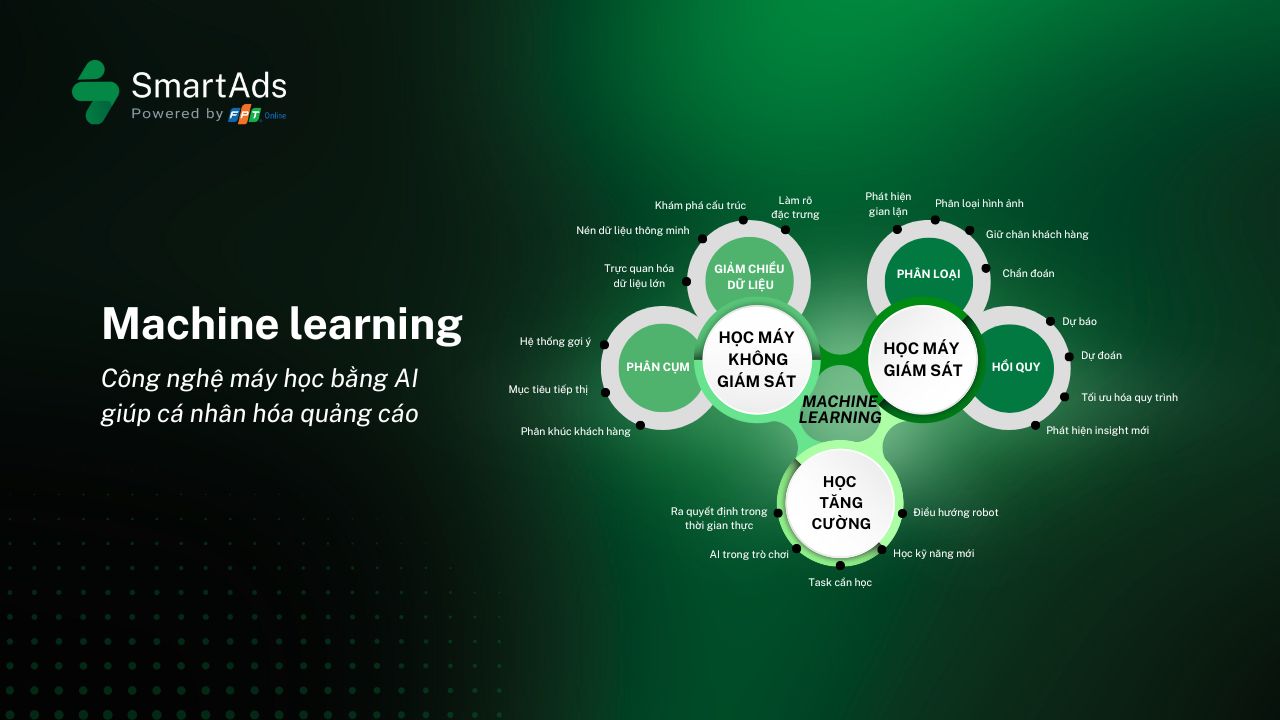
1. Machine learning là gì?
Machine learning (máy học) là một nhánh của trí tuệ nhân tạo (AI) tập trung vào việc phát triển các thuật toán cho phép máy tính cải thiện hiệu suất của mình thông qua kinh nghiệm – hay nói cách khác, "học" từ dữ liệu. Thay vì phải lập trình thủ công từng bước như trong các hệ thống truyền thống, machine learning giúp máy tự tìm ra các mẫu hình (patterns) và đưa ra dự đoán hoặc quyết định dựa trên dữ liệu mà nó được cung cấp.
Một ví dụ đơn giản có thể kể đến là hệ thống lọc email spam . Thay vì phải lập trình chi tiết từng từ khóa để phân loại email, một mô hình máy học sẽ tự động phân tích và học hỏi từ hàng ngàn email mẫu để xác định đâu là thư rác, đâu là email quan trọng. Hay ngay trên một số nền tảng quảng cáo, machine learning được ứng dụng để phát hiện click fraud – hành vi nhấp chuột gian lận – giúp tối ưu hóa hiệu quả quảng cáo và bảo vệ lợi ích của doanh nghiệp, khách hàng.
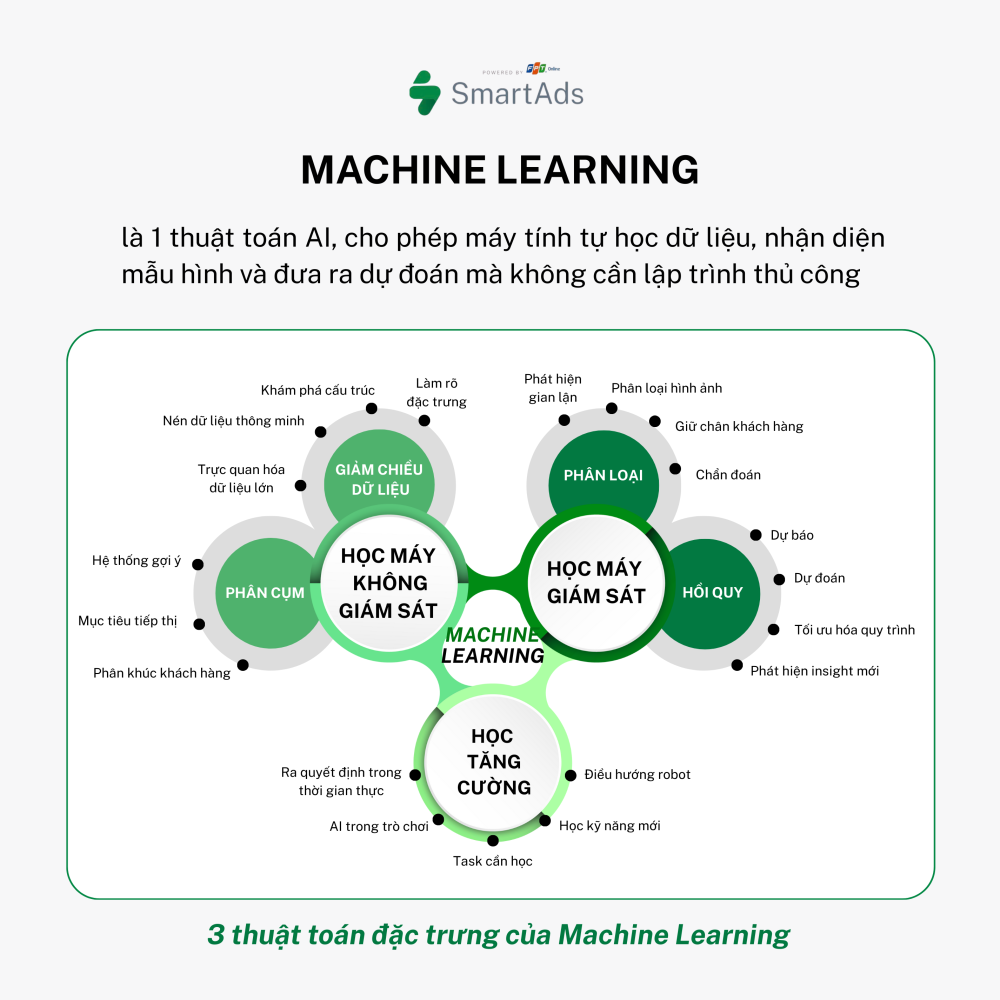
Machine learning không chỉ là một công nghệ, mà còn là một cách tiếp cận mới để giải quyết vấn đề. Nó trao quyền cho máy tính để học và thích nghi với những tình huống chưa từng được dự đoán trước, điều mà lập trình truyền thống không thể làm được.
2. Machine learning hoạt động như thế nào?
Để hiểu cách machine learning (máy học) hoạt động, hãy tưởng tượng đang dạy một đứa trẻ nhận biết mèo và chó, cho nó xem hàng loạt hình ảnh: đây là mèo, kia là chó. Qua thời gian, đứa trẻ bắt đầu nhận ra các đặc điểm như tai nhọn, đuôi dài, hay bộ lông để tự phân biệt mà không cần phải chỉ dẫn từng bước. Machine learning cũng hoạt động tương tự, nhưng với dữ liệu và thuật toán.
Quy trình cơ bản của machine learning bao gồm các bước sau:
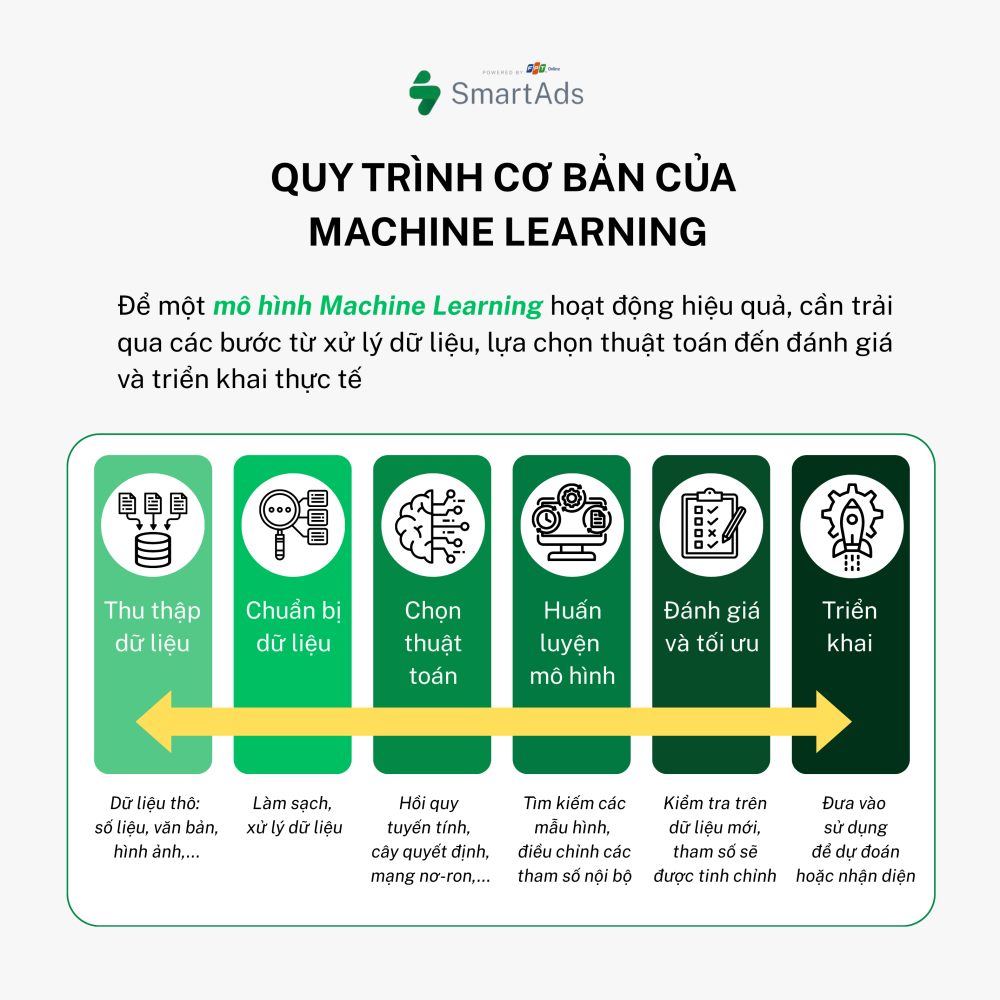
Bước 1. Thu thập dữ liệu (Data Collection) : Mọi mô hình machine learning đều bắt đầu với dữ liệu – "nguyên liệu thô" để máy học. Dữ liệu này có thể là số liệu, văn bản, hình ảnh, hoặc bất kỳ định dạng nào khác.
Bước 2. Chuẩn bị dữ liệu (Data Preparation) : Dữ liệu thô thường lộn xộn, thiếu sót, hoặc không đồng nhất. Chuyên gia sẽ làm sạch và xử lý dữ liệu để đảm bảo nó phù hợp cho việc huấn luyện.
Bước 3. Chọn thuật toán (Algorithm Selection) : Tùy vào bài toán (dự đoán, phân loại, hay tạo dữ liệu mới), một thuật toán phù hợp sẽ được chọn, ví dụ như hồi quy tuyến tính (linear regression), cây quyết định (decision trees), hay mạng nơ-ron (neural networks).
Bước 4. Huấn luyện mô hình (Training) : Đây là giai đoạn máy "học" từ dữ liệu. Thuật toán sẽ tìm kiếm các mẫu hình và điều chỉnh các tham số nội bộ để giảm thiểu sai số trong dự đoán.
Bước 5. Đánh giá và tối ưu (Evaluation & Optimization) : Sau khi huấn luyện, mô hình được kiểm tra trên dữ liệu mới để đánh giá độ chính xác. Nếu cần, các tham số sẽ được tinh chỉnh để cải thiện hiệu suất.
Bước 6 . Triển khai (Deployment) : Khi mô hình đã đủ tốt, nó được đưa vào sử dụng thực tế, chẳng hạn như dự đoán giá nhà, nhận diện khuôn mặt, hay đề xuất sản phẩm trên sàn thương mại điện tử.
Điểm đặc biệt ở đây là machine learning không chỉ dừng lại ở việc học một lần. Một mô hình tốt có thể tiếp tục cải thiện khi được cung cấp thêm dữ liệu mới – một quá trình gọi là "học tăng cường" (reinforcement learning) hoặc cập nhật mô hình.
3. Các hình thức machine learning phổ biến
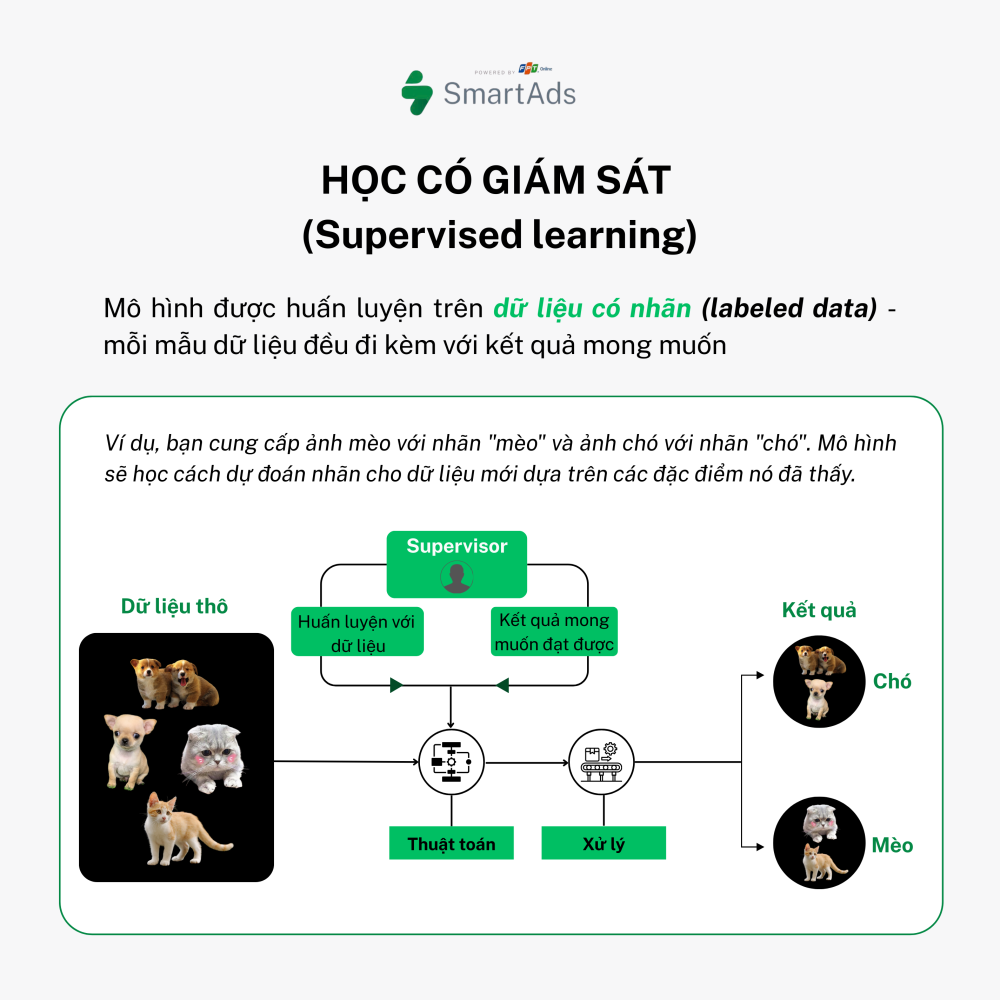
a. Học có giám sát (Supervised learning)
Đây là loại phổ biến nhất, nơi mô hình được huấn luyện trên dữ liệu có nhãn (labeled data) – nghĩa là mỗi mẫu dữ liệu đều đi kèm với kết quả mong muốn. Ví dụ, bạn cung cấp ảnh mèo với nhãn "mèo" và ảnh chó với nhãn "chó". Mô hình sẽ học cách dự đoán nhãn cho dữ liệu mới dựa trên các đặc điểm nó đã thấy.
Ứng dụng: Dự đoán giá nhà, phân loại email spam, chẩn đoán bệnh dựa trên triệu chứng.
Thuật toán tiêu biểu: Hồi quy tuyến tính, SVM (Support Vector Machines), mạng nơ-ron.
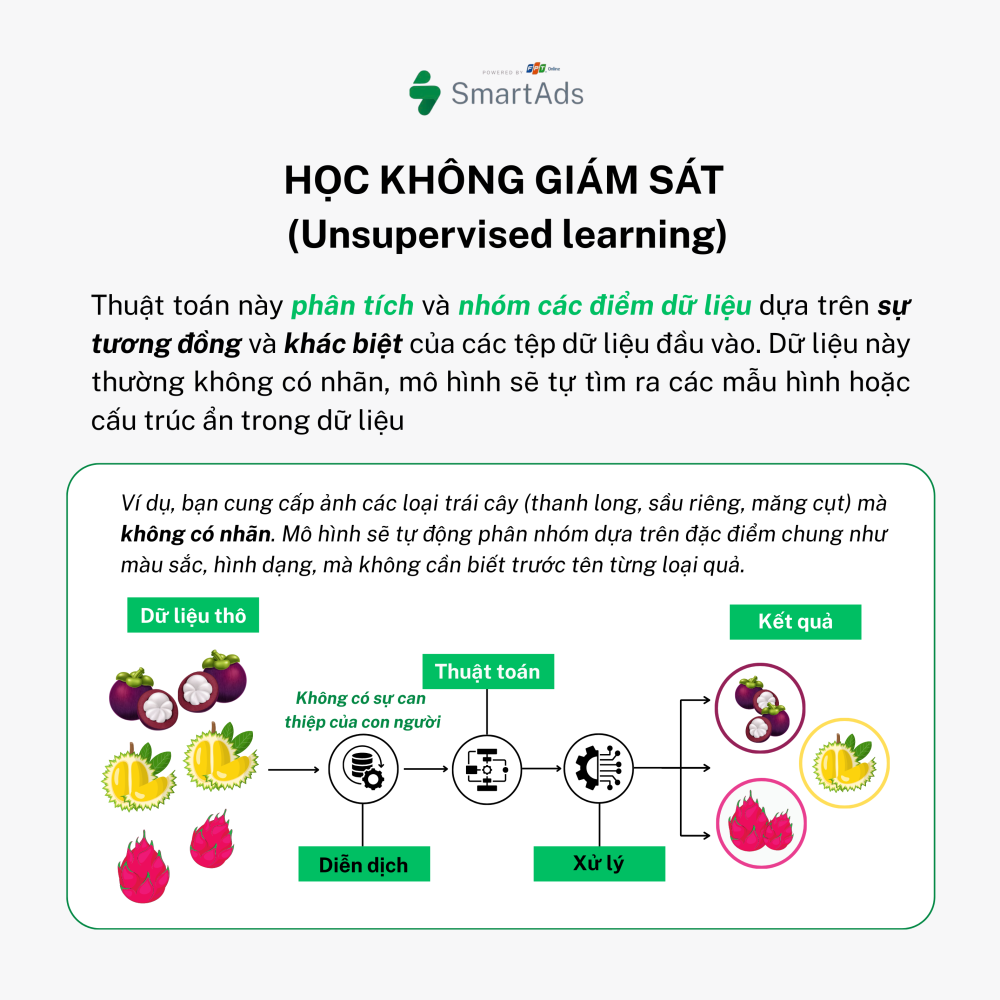
b. Học không giám sát (Unsupervised learning)
Đối với hình thức học không giám sát (Unsupervised Learning), dữ liệu thường không có nhãn (unlabeled data), và nhiệm vụ của mô hình là tự tìm ra các mẫu hình hoặc cấu trúc ẩn trong dữ liệu. Ví dụ, bạn cung cấp ảnh các loại trái cây (thanh long, sầu riêng, măng cụt) mà không có nhãn. Mô hình sẽ tự động phân nhóm chúng dựa trên đặc điểm chung như màu sắc, hình dạng, mà không cần biết trước tên từng loại quả.
Ứng dụng: Phân khúc thị trường, nén dữ liệu, phát hiện bất thường (anomaly detection).
Thuật toán tiêu biểu: K-Means Clustering, PCA (Principal Component Analysis).
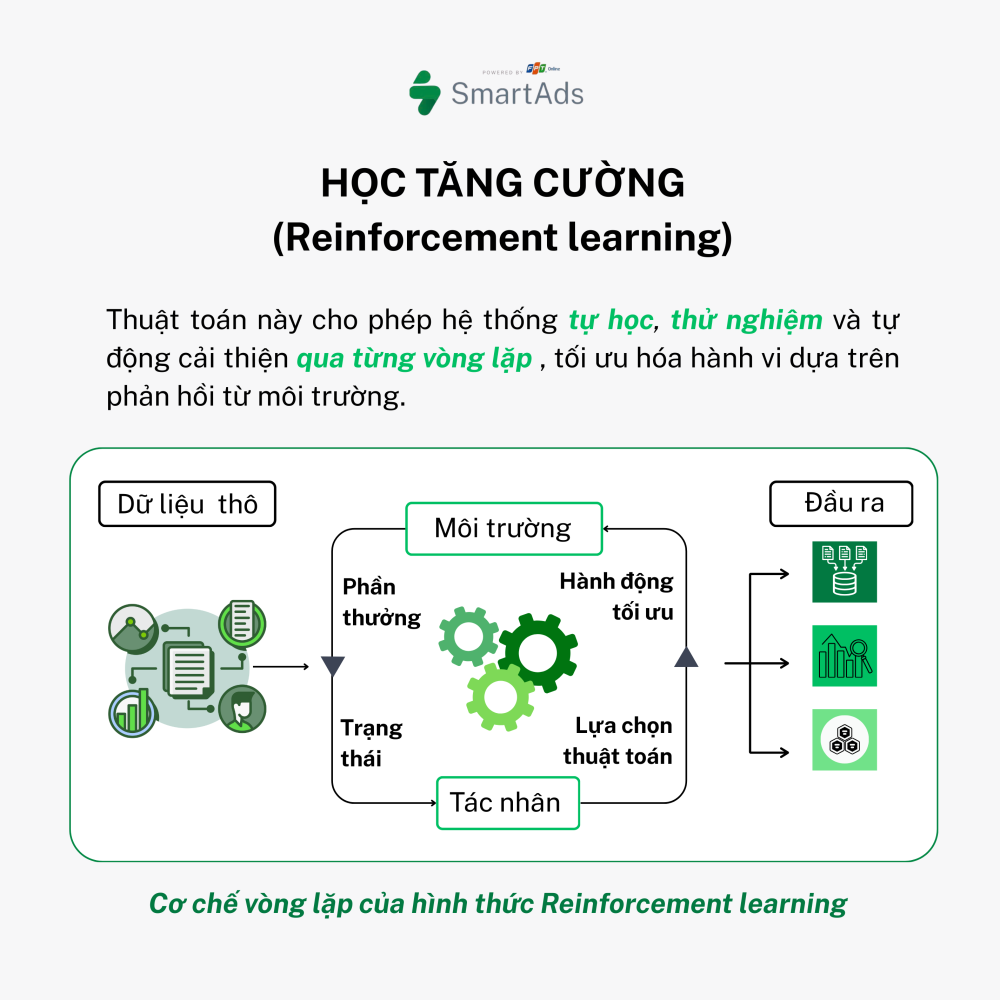
c. Học tăng cường (Reinforcement learning)
Đây là loại tiên tiến hơn, nơi mô hình học qua thử và sai trong một môi trường để tối ưu hóa một mục tiêu cụ thể. Hãy tưởng tượng một robot học cách đi bộ: nó thử nghiệm, ngã, và điều chỉnh để cải thiện.
- Ứng dụng: Chơi game (như AlphaGo), điều khiển robot, tối ưu hóa chiến lược kinh doanh.
- Thuật toán tiêu biểu: Q-Learning, Deep Reinforcement Learning.
4. Ứng dụng machine learning trong phân tích dữ liệu
Machine learning giúp phân tích dữ liệu hiệu quả nhờ khả năng tự động phát hiện các mẫu hình ẩn trong lượng dữ liệu lớn - điều mà con người khó làm thủ công. Chẳng hạn, trong kinh doanh, các thuật toán machine learning có thể phân tích hành vi khách hàng từ dữ liệu mua sắm, lịch sử truy cập web hoặc tương tác trên mạng xã hội để dự đoán xu hướng tiêu dùng và cá nhân hóa trải nghiệm người dùng. Trong lĩnh vực khoa học, machine learning hỗ trợ phân tích dữ liệu phức tạp như chuỗi gen hoặc hình ảnh y khoa, giúp phát hiện bệnh lý sớm với độ chính xác cao. Nhờ khả năng học hỏi và thích nghi, công nghệ này không chỉ tăng tốc quá trình phân tích mà còn mang lại những insight giá trị, hỗ trợ ra quyết định hiệu quả hơn.
Với những tiềm năng to lớn đó, machine learning đã được áp dụng trong lĩnh vực quảng cáo, nơi mà việc phân tích dữ liệu đóng vai trò then chốt. Quy trình triển khai thường bao gồm các bước sau:
Bước 1: Thu thập dữ liệu: impression, click, CTR, lịch sử duyệt web, thời gian xem trang,...
Bước 2: Tiền xử lý dữ liệu: Làm sạch, chuẩn hóa, mã hóa dữ liệu.
Bước 3 : Lựa chọn và huấn luyện mô hình: Logistic Regression, Random Forest, XGBoost,..
Bước 4: Triển khai và giám sát: Đưa mô hình vào hệ thống, theo dõi và cập nhật.
Bước 5: Phân tích và ra quyết định: Diễn giải kết quả, điều chỉnh chiến lược marketing.
5. Machine learning trong SmartAds
Từ những quy trình ở trên, tại hệ thống SmartAds, machine learning cũng đang “cách mạng hóa” việc triển khai contextual ads và cá nhân hóa trải nghiệm cho người dùng. Bằng cách phân tích nội dung trang web hoặc ứng dụng theo thời gian thực, machine learning giúp xác định ngữ cảnh phù hợp để đặt quảng cáo mà không cần dựa vào cookie. Ngoài ra, nhờ khai thác lượng lớn dữ liệu hành vi người dùng, machine learning cũng giúp hệ thống dự đoán mô hình quảng cáo chính xác. Cụ thể:
- Dự đoán tỷ lệ nhấp chuột (CTR - Click-Through Rate) machine learning giúp dự đoán khả năng người dùng sẽ nhấp vào quảng cáo dựa trên dữ liệu hành vi và nhân khẩu học. Giả sử nếu một người dùng thường xuyên đọc và tìm kiếm thông tin về ô tô, SmartAds sẽ phân tích lịch sử tìm kiếm, vị trí đặt quảng cáo, và hành vi lướt web để dự đoán khả năng người đó sẽ nhấp vào quảng cáo có nội dung tương tự.
- Phân khúc khách hàng (Customer Segmentation) SmartAds phân tích dữ liệu người dùng và tự động tối ưu chiến lược quảng cáo theo từng nhóm khách hàng. Khi đánh giá hiệu quả một chiến dịch quảng cáo trên báo, hệ thống sẽ áp dụng kỹ thuật phân tích cụm (Clustering) để tự động nhóm các đối tượng có đặc điểm tương đồng. Cụ thể, nhóm độc giả không tương tác với bất kỳ nào được gán nhãn là cụm khách hàng có giá trị thấp, nhóm độc giả thường xuyên click vào quảng cáo cũng như có thời gian xem trang lâu được xem là cụm có giá trị cao, và nhóm độc giả tương tác thấp, thời gian xem trang không nhiều được xem là cụm có giá trị trung bình.Dựa trên từng cụm khách hàng, SmartAds sẽ tối ưu việc phân phối quảng cáo theo yêu cầu khi setup chiến dịch của advertiser. Chẳng hạn, với chiến lược nhắm mục tiêu theo hành vi (User behavior targeting), hệ thống sẽ ưu tiên hiển thị quảng cáo đến các cụm có giá trị trung bình và cao.
- Phát hiện gian lận quảng cáo (Ad Fraud Detection): Machine learning cũng giúp phát hiện click fraud bằng cách phân tích dữ liệu theo thời gian thực, sử dụng mô hình phân loại và phát hiện bất thường (anomaly detection). Chẳng hạn như, khi SmartAds phát hiện một thiết bị hoặc địa chỉ IP có tần suất click vào quảng cáo quá cao trong khoảng thời gian ngắn mà không có dấu hiệu tương tác thực sự, hệ thống sẽ đánh dấu đây là hành vi gian lận và lọc bỏ các lượt click này để bảo vệ ngân sách quảng cáo cho thương hiệu.
- Cá nhân hóa quảng cáo (Ad Personalization) Collaborative Filtering và Deep Learning giúp cá nhân hóa quảng cáo theo sở thích người dùng. Ví dụ, khi người dùng đọc một bài viết về du lịch, thuật toán machine learning của SmartAds tự động nhận diện từ khóa như “bãi biển” hay “khách sạn” và ngay lập tức phân phối quảng cáo vé máy bay hoặc ưu đãi nghỉ dưỡng.
Machine learning không chỉ là một thuật ngữ công nghệ mà còn là nền tảng thúc đẩy những bước đột phá quan trọng trong cuộc sống hiện đại, từ xe tự lái của Tesla cho đến các trợ lý ảo như Siri. Việc hiểu rõ bản chất, cách thức hoạt động và các loại machine learning sẽ mở ra cánh cửa để khám phá tiềm năng vô hạn của nó. Đặc biệt, với SmartAds, công nghệ này còn được tận dụng để tối ưu hóa quảng cáo, phát hiện gian lận và mang lại nhiều giá trị cho doanh nghiệp.