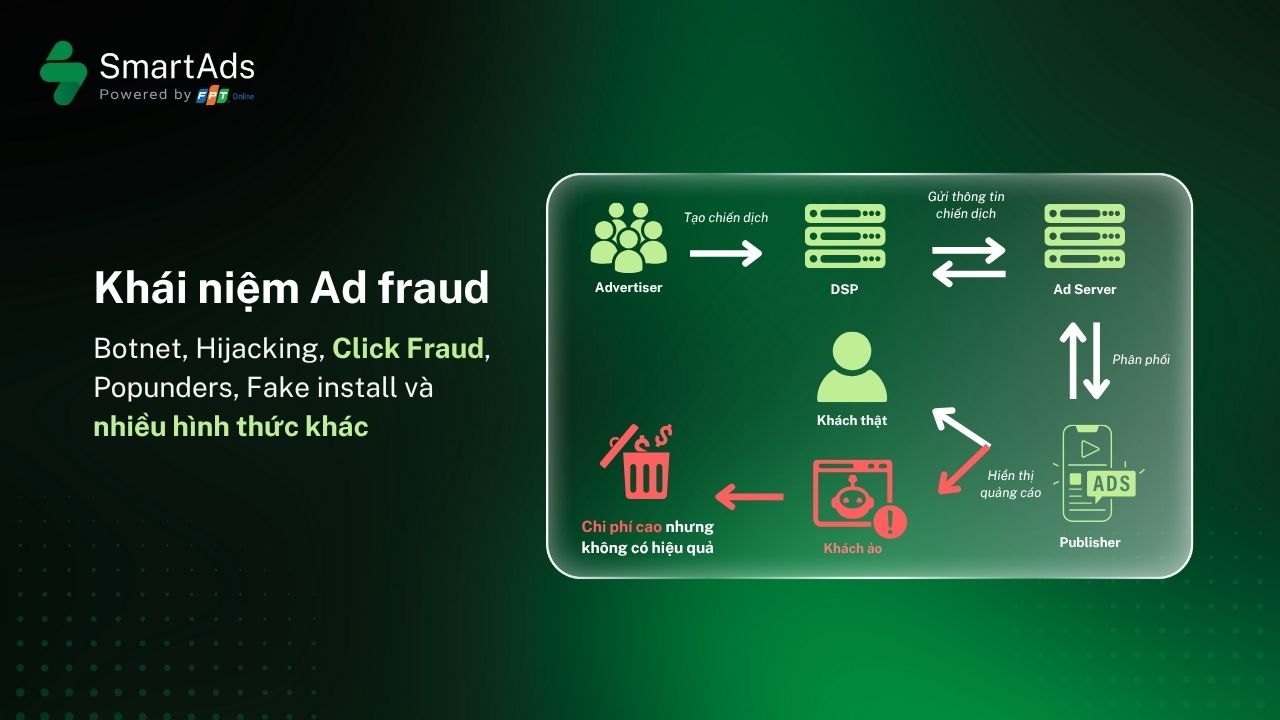
Vậy Ad fraud là gì?
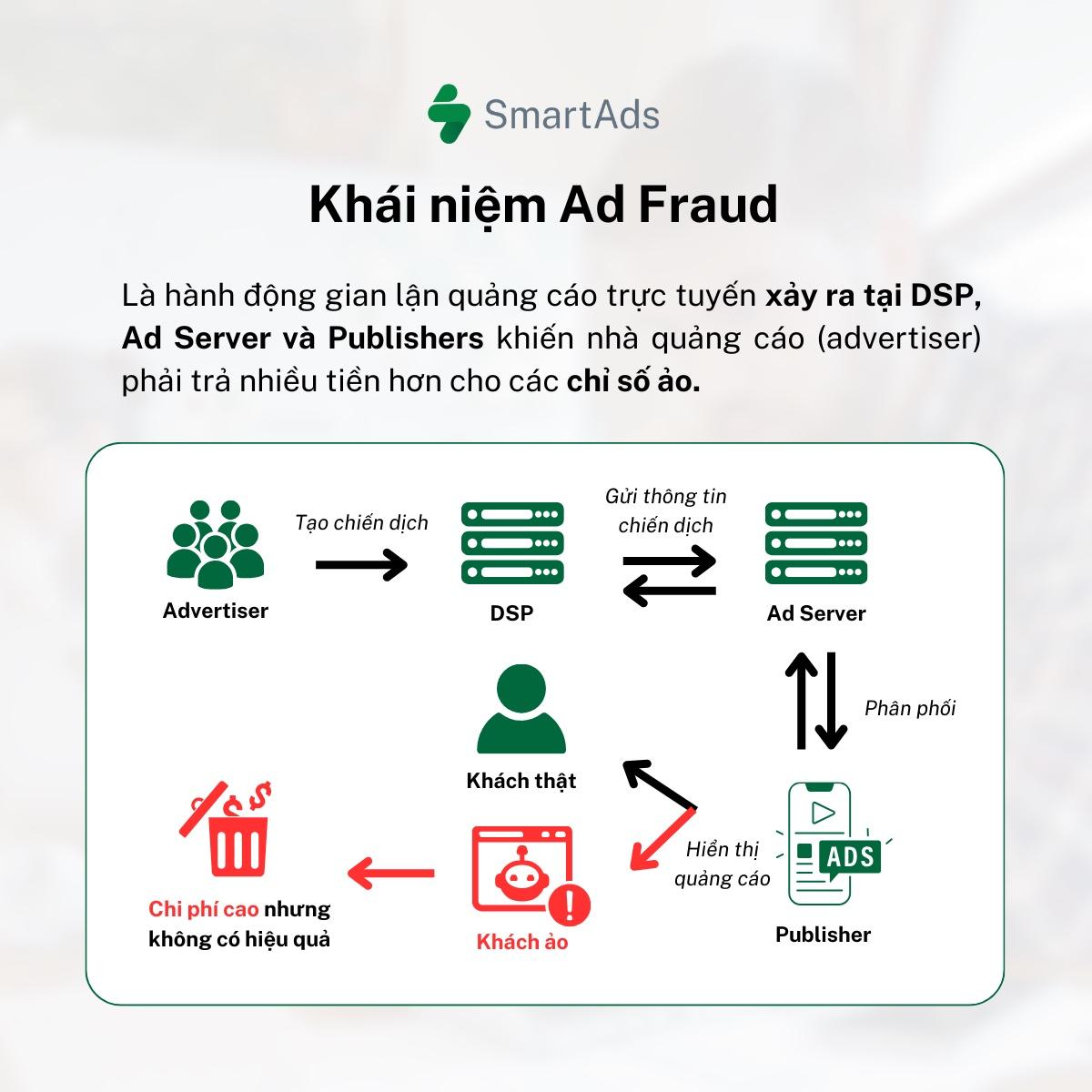
Đây là hành động lừa đảo xuất hiện trên internet, nhắm vào các loại hình quảng cáo trực tuyến , từ đó nhà quảng cáo (advertiser) phải trả nhiều tiền quảng cáo hơn. Cụ thể, họ phải gia tăng chi phí quảng cáo theo số lượng lượt hiển thị (CPM), số lượng click chuột (CPC),… vào những quảng cáo đến người dùng ảo. Gian lận quảng cáo bao gồm các thủ thuật giả mạo số lượt hiển thị, lượt click, lượt chuyển đổi hoặc dữ liệu,… giúp nhà xuất bản (publisher) gia tăng doanh thu, tuy nhiên, trên thực tế quảng cáo của advertiser không được nhìn thấy bởi đối tượng khách hàng thực sự mà họ muốn nhắm đến.
Phân loại Ad fraud
1. Gian lận vị trí quảng cáo
-
Quảng cáo ẩn: Các nhà xuất bản không trung thực sử dụng kỹ thuật như quảng cáo vô hình (1×1 pixel) để tạo ra lượt hiển thị giả, giúp tăng doanh thu mà không mang lại giá trị thực.
-
Giả mạo impression: Quảng cáo bị giả mạo qua các website không chính thống để che giấu địa điểm thực sự, khiến nhà quảng cáo nghĩ rằng quảng cáo của họ hiển thị trên các trang hợp pháp.
2. Phần mềm độc hại và phần mềm quảng cáo
-
Hijacking Ads: Một kỹ thuật gian lận quảng cáo trong đó phần mềm độc hại chiếm quyền kiểm soát vị trí quảng cáo trên trang web và thay thế nó bằng quảng cáo của kẻ tấn công, tạo ra doanh thu cho chúng thay vì chủ sở hữu trang web.
-
Hijacking Clicks: Kẻ xấu có thể thay đổi lưu lượng nhấp chuột của người dùng, điều hướng họ đến trang khác mà không mang lại bất kỳ giá trị chuyển đổi nào cho nhà quảng cáo.
-
Click Fraud: tạo lượt nhấp giả trên các quảng cáo hiển thị trên trang web của họ hoặc của bên thứ ba để kiếm lợi từ ngân sách quảng cáo.
-
Popunders: Quảng cáo xuất hiện dưới cửa sổ chính của trình duyệt, tạo ra lượt hiển thị giả mà nhà quảng cáo phải trả tiền.
-
Bot Traffic: Sử dụng botnet để tạo ra lượt truy cập giả mạo và tăng doanh thu quảng cáo.
3. Ứng dụng di động
-
Fake Users (Ứng Dụng Di Động): Tạo lượt nhấp giả mạo và cài đặt giả để lừa nhà quảng cáo.
-
Fake Installs: Sử dụng hệ thống cài đặt hoặc giả lập thiết bị di động để tạo ra lượt cài đặt giả và làm giả lượt tương tác của người dùng.

Làm sao để phát hiện Ad Fraud?
Quá trình này đòi hỏi thu thập các dữ liệu quan trọng từ người dùng như địa chỉ IP, nguồn truy cập, thời gian nhấp, thời gian thực hiện hành động, loại trình duyệt, thiết bị sử dụng... Việc phân tích dữ liệu này giúp nhận diện các dấu hiệu bất thường, từ đó phát hiện và ngăn chặn hành vi gian lận trong quảng cáo trực tuyến.
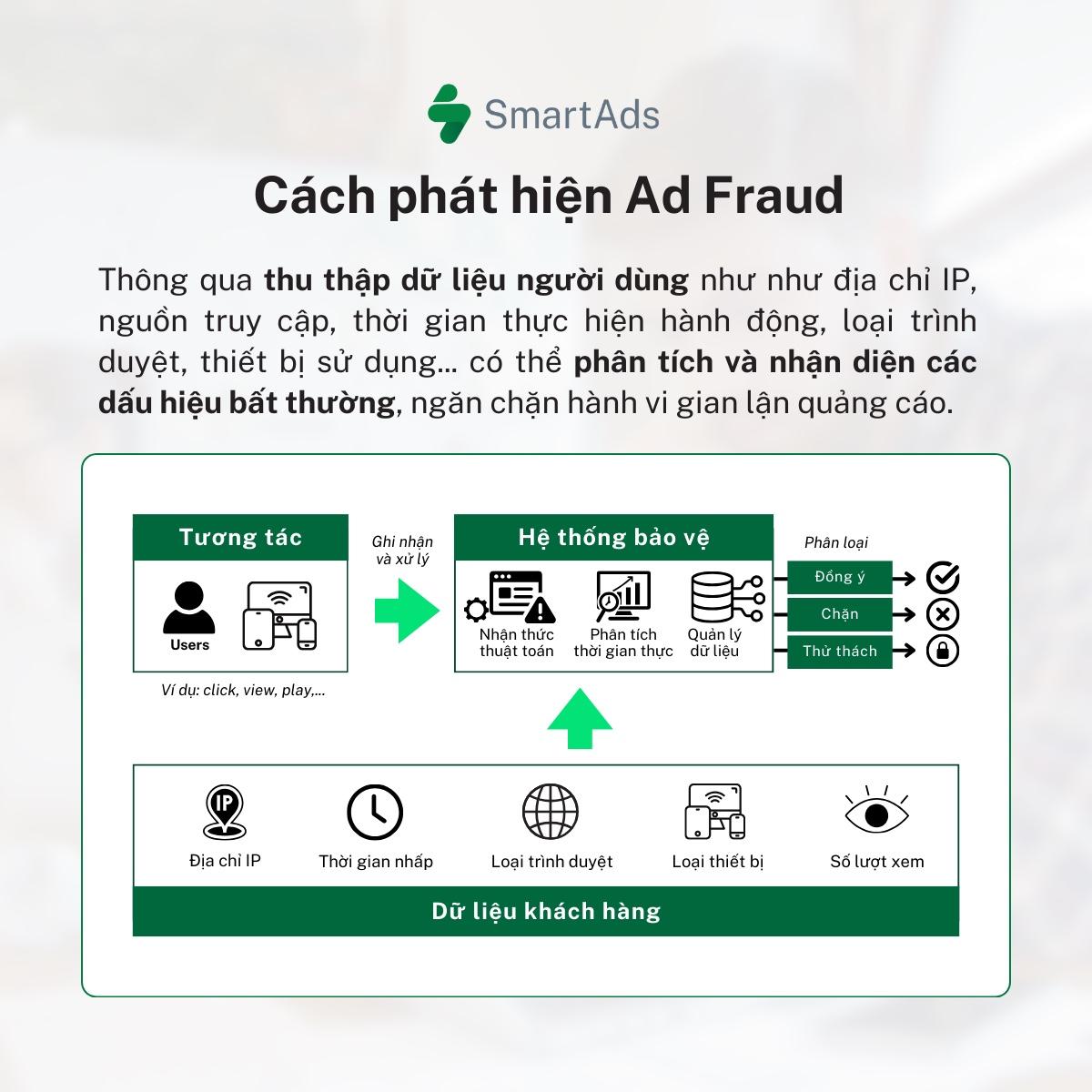
Ví dụ về các dấu hiệu gian lận dễ nhận diện ở mức độ cơ bản:
-
Nhiều lượt truy cập bất thường từ cùng một địa chỉ IP.
-
500 lần nhấp chuột nhưng không có chuyển đổi.
-
Lượt nhấp từ các vùng không phải mục tiêu.
Hiện tại, SmartAds đang sử dụng thuật toán tiên tiến và công nghệ theo dõi theo thời gian thực , nhận diện IP, thiết bị và phân tích hành vi để loại bỏ lượt nhấp giả, bot và các tương tác độc hại. Đặc biệt, nhờ hợp tác với các Premium Publisher, hệ thống hạn chế tối đa rủi ro gian lận quảng cáo, bảo vệ ngân sách của doanh nghiệp một cách hiệu quả nhất.