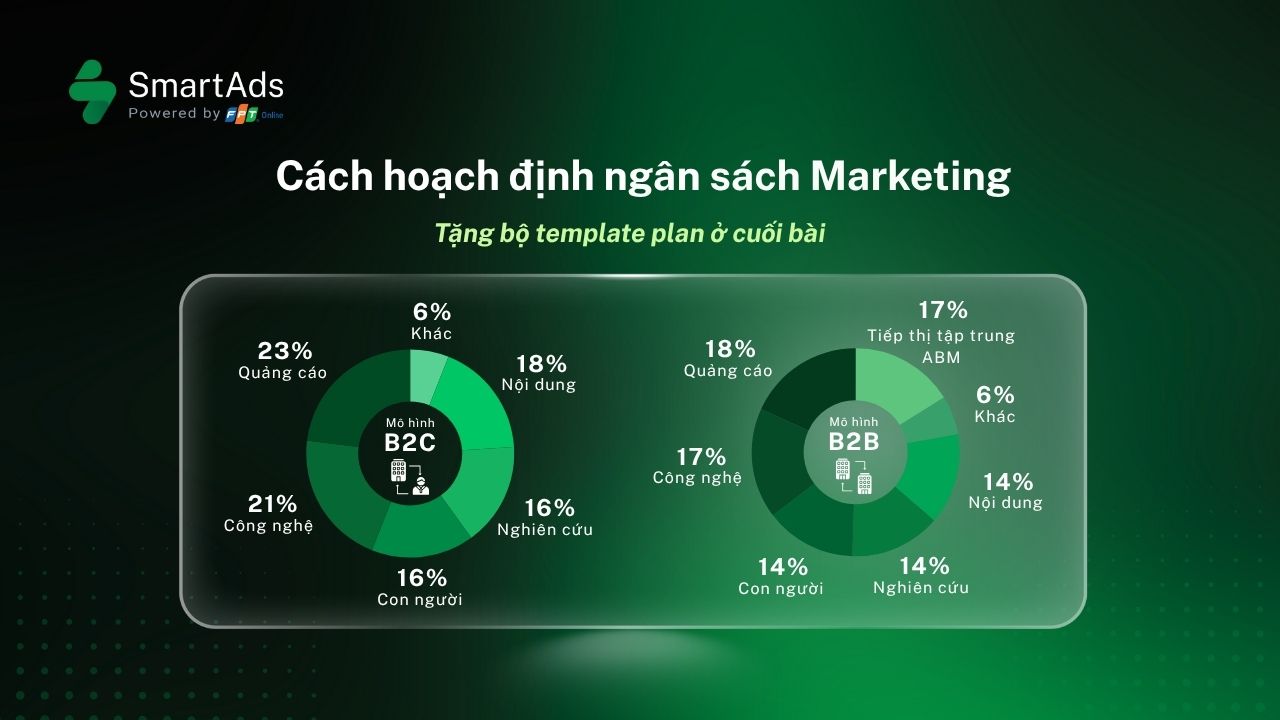
Ngân sách Marketing - Bài toán chiến lược trong thời kỳ biến động
Phân bổ ngân sách marketing luôn là nhiệm vụ mang tính chiến lược nhằm xác định hướng đi của doanh nghiệp. Tuy nhiên trong tình hình thị trường đầy biến động, bài toán này đã trở nên phức tạp và đòi hỏi sự tính toán cẩn trọng hơn bao giờ hết. Theo báo cáo từ Gartner, tỷ lệ ngân sách marketing so với tổng doanh thu đang có xu hướng giảm trong năm 2024. Điều này buộc 75% các Giám đốc Marketing (CMO) phải đối mặt với áp lực "làm nhiều hơn với ít tài nguyên hơn", đồng thời cân nhắc lại các công cụ, nguồn lực và công nghệ đang sử dụng.
Để giải quyết vấn đề này, doanh nghiệp cần dựa trên các nguyên tắc cốt lõi về phân bổ ngân sách, sử dụng dữ liệu phân tích làm nền tảng cho mọi quyết định. Đồng thời, một chiến lược linh hoạt sẽ có khả năng thích nghi tốt, tối ưu hóa hiệu quả đầu tư và đảm bảo lợi nhuận. Sau đây là một số gợi ý giúp doanh nghiệp hoạch định ngân sách Marketing phù hợp nhu cầu và tình hình kinh doanh.
I. Đánh giá tổng quan: Doanh nghiệp đang ở đâu?
Trước khi lập kế hoạch ngân sách tiếp thị, doanh nghiệp cần phân tích hiệu suất tài chính hiện tại thông qua xác định 1 số chỉ số sau:
1. Xác định CAC và CLV
-
CAC (Customer Acquisition Cost): tổng chi phí để thu hút 1 khách hàng.
-
CLV (Customer Lifetime Value): giá trị trung bình mà khách hàng mang lại trong suốt vòng đời.
-
CLV > 3 lần CAC được xem là hợp lý.
2. Xem xét ROI của các kênh tiếp thị
Không nên chỉ dựa vào ROI đơn lẻ của từng kênh, doanh nghiệp cần phải phân tích hệ sinh thái đa điểm chạm (multi-touch attribution) để có đánh giá chính xác nhất về hiệu quả sử dụng ngân sách trong quá khứ.
>>> Xem thêm một số phương pháp đánh giá ROI và hiệu quả marketing tại đây.
3. Đánh giá điểm mạnh - điểm yếu nội bộ
Đánh giá các yếu tố về nguồn lực con người, dữ liệu, công nghệ,.. liệu rằng đã phù hợp với quy mô chưa? Có nguồn lực nào bị thiếu hụt không? Ngoài ra, xem xét đồng thời để đánh giá liệu các kênh đã đầu tư có đang vận hành hiệu quả.
II. Xác định mục tiêu Marketing rõ ràng
Xác định mục tiêu Marketing rõ ràng là bước nền tảng giúp doanh nghiệp xây dựng kế hoạch ngân sách hiệu quả và có định hướng. Mục tiêu không chỉ là kim chỉ nam cho toàn bộ chiến dịch mà còn quyết định cách phân bổ nguồn lực phù hợp theo từng ưu tiên kinh doanh. Các mục tiêu có thể là:
-
Tăng trưởng doanh thu (Revenue growth)
-
Tăng độ nhận biết thương hiệu (Brand awareness)
-
Tạo khách hàng tiềm năng (Lead generation)
-
Thâm nhập thị trường mới
-
Ra mắt sản phẩm mới
Để đảm bảo ngân sách phục vụ đúng mục đích, mỗi mục tiêu cần được cụ thể hóa bằng các chỉ số đo lường hiệu suất (KPI) rõ ràng, có thể theo dõi và đánh giá được, chẳng hạn:
-
Tăng 20% lượng organic traffic trong vòng 3 tháng.
-
Giảm chi phí tạo khách hàng (CAC) 15% thông qua tối ưu chiến dịch quảng cáo.
Việc gắn mục tiêu với KPI giúp doanh nghiệp kiểm soát hiệu quả đầu tư, điều chỉnh kịp thời và chứng minh được giá trị của hoạt động marketing đối với tăng trưởng chung.
III. Chọn mô hình phân bổ ngân sách phù hợp
Hiện nay, có hai hướng tiếp cận chính trong việc xây dựng ngân sách marketing:
-
Top-down budgeting (lập từ trên xuống): Ban lãnh đạo hoặc phòng tài chính đưa ra ngân sách tổng thể, sau đó phòng marketing sẽ phân bổ ngân sách theo từng hoạt động và kênh. Cách này giúp kiểm soát ngân sách chặt chẽ, phù hợp với doanh nghiệp có chiến lược tài chính rõ ràng hoặc đang cần tối ưu chi phí.
-
Bottom-up budgeting (lập từ dưới lên): Phòng marketing đề xuất ngân sách dựa trên kế hoạch hành động cụ thể – bao gồm các chiến dịch, mục tiêu, chỉ số kỳ vọng... Sau đó, kế hoạch được trình lên cấp cao để phê duyệt. Phương pháp này tạo điều kiện cho tư duy linh hoạt và sáng tạo, phù hợp với doanh nghiệp có định hướng tăng trưởng mạnh mẽ hoặc muốn đo lường ROI sát sao cho từng hoạt động.
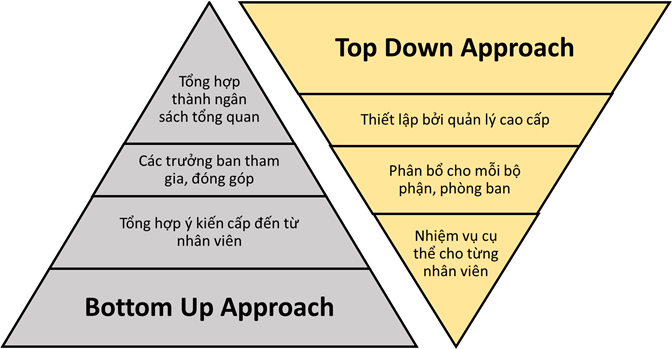
Có 5 phương pháp hoạch định phổ biến dựa trên 2 mô hình này:
1. Dựa trên phần trăm doanh thu (Percentage of revenue)
Phương pháp này dựa trên hướng tiếp cận Top-down. Theo phương pháp này, ngân sách được xác định bằng một tỷ lệ cố định trên tổng doanh thu dự kiến – ví dụ: 5% hoặc 10% doanh thu hằng năm.
Ưu điểm:
-
Dễ dự báo và tính toán, phù hợp với doanh nghiệp hạn chế về nguồn lực hoặc chưa có hệ thống đo lường hiệu suất phức tạp.
-
Giúp kiểm soát chi phí, đảm bảo ngân sách marketing tỷ lệ thuận với quy mô hoạt động thực tế.
Tuy nhiên, phương pháp này cũng tồn tại một số hạn chế đáng lưu ý:
-
Không linh hoạt với biến động thị trường – nếu doanh thu sụt giảm, ngân sách marketing cũng bị cắt giảm, dẫn đến khó duy trì mức độ hiện diện thương hiệu.
-
Không gắn với mục tiêu cụ thể, dễ bỏ lỡ cơ hội tăng trưởng nếu không đầu tư đủ trong những giai đoạn cần bứt phá.
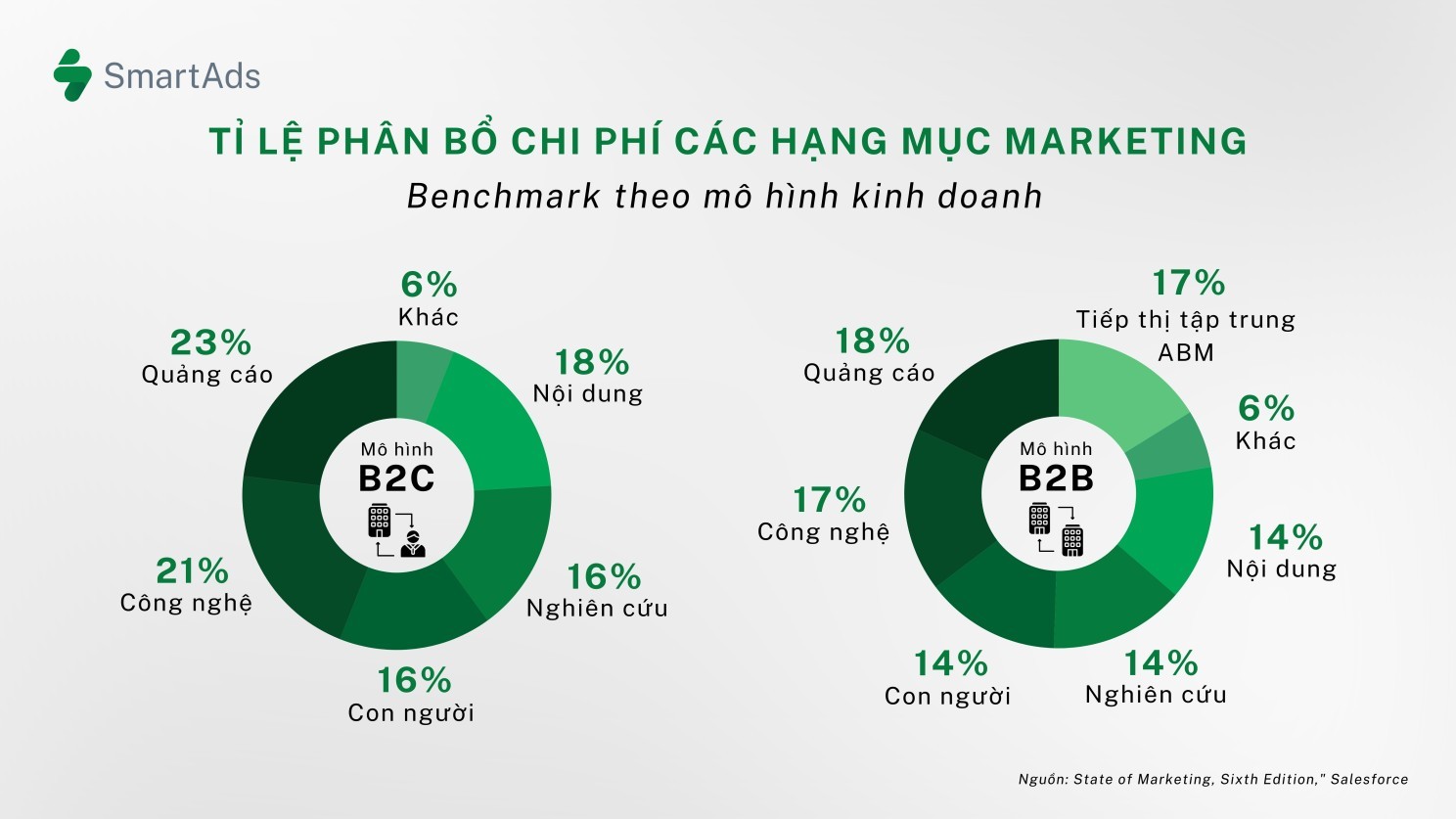
2. Dựa trên mục tiêu và hiệu suất (Objective-based budgeting)
Trong phương pháp hoạch định ngân sách dựa trên mục tiêu và hiệu suất (objective-based budgeting), doanh nghiệp cần tính toán ngược từ mục tiêu cuối cùng – chẳng hạn như số lượng khách hàng tiềm năng (lead) hay doanh thu mong muốn – để xác định ngân sách phù hợp. Đây là phương pháp tiếp cận theo hướng Bottom-up, đòi hỏi marketers phải nắm rõ các chỉ số hiệu suất như CPA, ROAS, conversion rate… nhằm ước tính chính xác mức đầu tư cần thiết cho từng mục tiêu. Đồng thời doanh nghiệp cũng cần phân bổ hợp lý giữa hai nhóm hoạt động chính:
-
Branding: xây dựng độ nhận biết và giá trị thương hiệu lâu dài.
-
Performance (Sales activation): thúc đẩy hành vi mua hàng trong ngắn hạn.
Một nghiên cứu nổi bật từ Les Binet và Peter Field đã chỉ ra rằng brand-building và sales activation hoạt động hiệu quả trên hai mốc thời gian khác nhau. Trong khi các chiến dịch performance giúp tăng doanh số nhanh nhưng chỉ mang lại hiệu ứng ngắn hạn, thì brand-building lại giúp tích lũy tăng trưởng bền vững theo thời gian, bằng cách nâng cao mức doanh thu nền tảng và giảm chi phí chuyển đổi trong dài hạn.
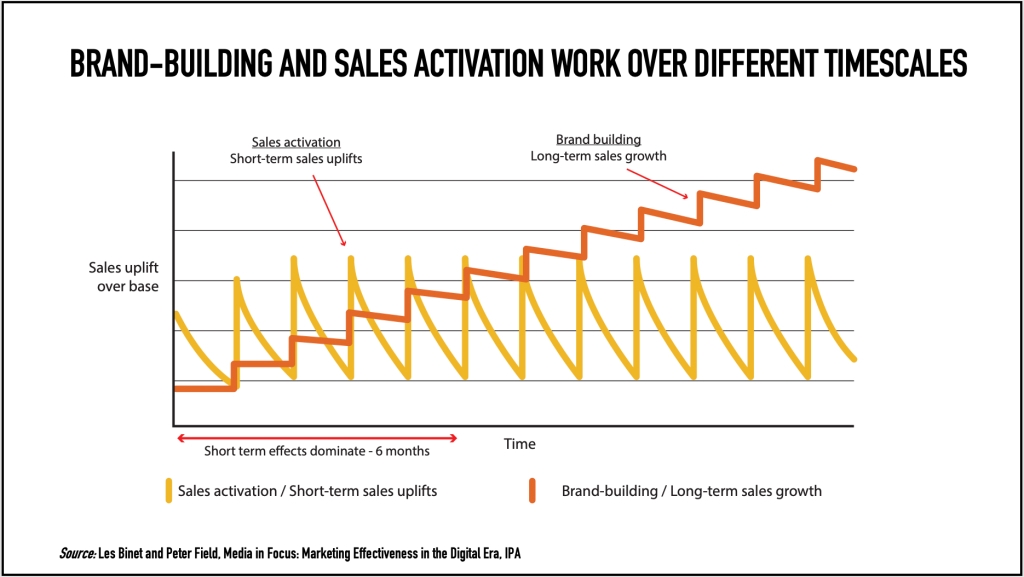
Biểu đồ trên cho thấy:
-
Sales activation (đường vàng): tạo ra các đỉnh doanh số ngắn hạn, nhưng giảm nhanh nếu không được duy trì.
-
Brand-building (đường cam): không tạo ra cú hích ngay lập tức, nhưng dần nâng nền tảng doanh thu theo chiều hướng tăng trưởng liên tục.
Như vậy, với phương pháp này, cần lưu ý phân bổ ngân sách hợp lý giữa: Branding để tạo độ phủ, tăng giá trị thương hiệu dài hạn và Performance để kích thích hành vi mua ngay. Tỷ lệ hợp lý được đề xuất như sau: :
-
Ngắn hạn: 40% brand – 60% performance.
-
Dài hạn: 60% brand – 40% performance.
3. So sánh đối thủ cạnh tranh (Competitive parity)
Phương pháp lập ngân sách dựa trên so sánh đối thủ (competitive parity) là cách tiếp cận phổ biến theo hướng Top-down khi doanh nghiệp muốn xác định mức đầu tư marketing phù hợp với “mặt bằng chung” ngành hàng. Thay vì tính toán ngân sách từ mục tiêu nội tại, doanh nghiệp sẽ tham khảo ngân sách, tỷ lệ chi tiêu hoặc mức độ hiện diện truyền thông của các đối thủ có quy mô tương đương. Mục tiêu là không để thương hiệu của mình bị “chìm” giữa cuộc đua truyền thông, đảm bảo mức độ nhận diện tương xứng để giữ thị phần.
Một nguyên lý quan trọng củng cố cho phương pháp này là mối quan hệ giữa Share of Voice (SOV) – tỷ lệ đầu tư truyền thông của một thương hiệu trên toàn ngành – và Share of Market (SOM) – thị phần doanh nghiệp đang sở hữu.
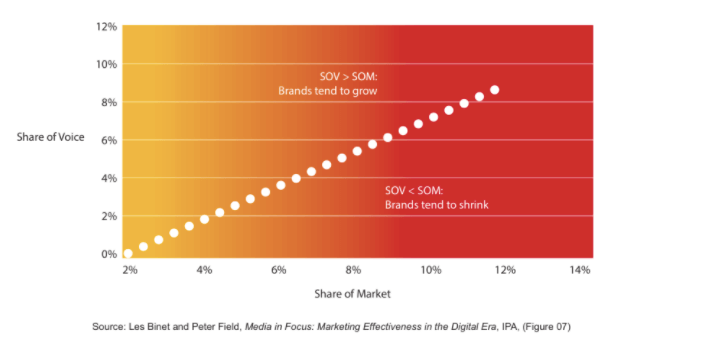
Biểu đồ kinh điển trên cho thấy:
-
Nếu SOV > SOM, thương hiệu có xu hướng tăng trưởng thị phần – bởi đầu tư truyền thông đang vượt mức chiếm lĩnh thị trường hiện tại. Doanh nghiệp có thể duy trì hoặc tối ưu hóa ngân sách truyền thông nhận diện, đặc biệt vào các hoạt động branding để nuôi dài hạn. Đồng thời, tập trung vào việc chuyển hóa độ phủ thành chuyển đổi thực tế bằng các chiến dịch performance được thiết kế khéo léo.
-
Ngược lại, nếu SOV < SOM, doanh nghiệp dễ bị thu hẹp thị phần, do mức độ hiện diện truyền thông không đủ để duy trì vị thế cạnh tranh. Trường hợp này cần xem xét tăng ngân sách marketing, đặc biệt trong các kênh giúp duy trì hiện diện thương hiệu liên tục (mass media, digital branding, social...). Nếu ngân sách không thể tăng, cần tập trung tối đa vào hiệu quả, chọn đúng phân khúc, đúng thông điệp và đúng thời điểm để tối ưu từng đồng chi phí.
Tuy nhiên, phương pháp này cũng tồn tại những hạn chế:
-
Dễ dẫn đến tư duy lệ thuộc, chỉ “đi sau” thay vì chủ động dẫn dắt thị trường.
-
Không phản ánh đúng tiềm lực hoặc chiến lược ưu tiên của từng thương hiệu.
4. Phân bổ ngân sách theo phễu marketing (TOFU - MOFU - BOFU)
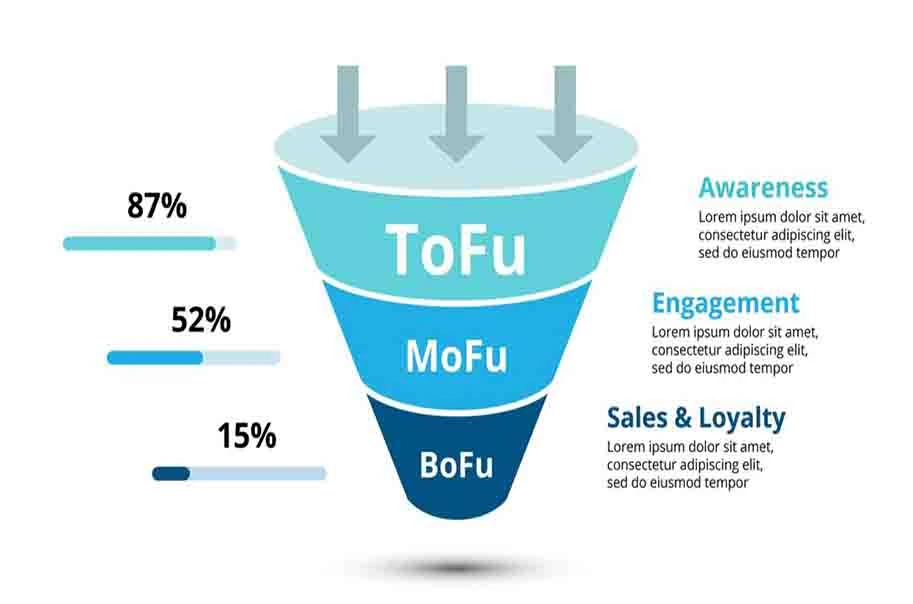
Một cách tiếp cận chiến lược khác theo hướng Bottom up là phân bổ ngân sách theo giai đoạn hành trình khách hàng, lựa chọn kênh phù hợp theo từng phễu và KPI chính. Cụ thể:
TOFU - Top of Funnel (Đầu phễu)
-
Kênh: social organic, ads awareness, influencer, PR.
-
Mục tiêu: Hiển thị, lượng tiếp cận, impression.
-
Tỷ trọng ngân sách: ~40-50%
MOFU - Middle of Funnel (Giữa phễu)
-
Kênh: email nurturing, remarketing, content chuyên sâu.
-
Mục tiêu: lead, form điền, phiên truy cập lặp lại.
-
Tỷ trọng: ~30-40%
BOFU - Bottom of Funnel (Cuối phễu - thúc đẩy chuyển đổi)
-
Kênh: paid search, direct sales, sản phẩm mẫu.
-
Mục tiêu: đơn hàng, doanh thu.
-
Tỷ trọng: ~10-20%
5. Mô hình hỗn hợp linh hoạt (Hybrid/Flexible budgeting)
Đây là cách tiếp cận kết hợp các phương pháp lập ngân sách như theo mục tiêu, theo đối thủ, theo phần trăm doanh thu… để tạo nên một kế hoạch phân bổ ngân sách phù hợp với từng giai đoạn và mức độ ưu tiên của chiến dịch.
Ưu điểm của mô hình này:
-
Linh hoạt thích ứng với thay đổi thị trường, đặc biệt trong các ngành có chu kỳ mua sắm nhanh hoặc chịu ảnh hưởng bởi xu hướng.
-
Tối ưu nguồn lực theo thời điểm, ví dụ: đẩy mạnh performance vào mùa cao điểm và đầu tư branding ở giai đoạn xây dựng thương hiệu.
-
Tận dụng điểm mạnh của từng phương pháp, đồng thời hạn chế nhược điểm khi chỉ dùng một cách tiếp cận đơn lẻ.
Với các thương hiệu hoạt động trong môi trường cạnh tranh cao hoặc ngành hàng có tốc độ thay đổi nhanh, mô hình hybrid được xem là giải pháp hiệu quả để cân bằng giữa hiệu suất ngắn hạn và tăng trưởng bền vững.
IV. Một số lưu ý khác khi thực hiện phân bổ ngân sách
Bên cạnh mô hình phân bổ và các nguyên tắc theo phễu hành trình, doanh nghiệp cần chú ý đến những yếu tố sau để tránh thất thoát ngân sách và đảm bảo hiệu quả lâu dài:
1. Không dồn toàn bộ ngân sách vào kênh hiệu suất
Mặc dù các kênh như paid search hay quảng cáo mạng xã hội có khả năng tạo đơn hàng nhanh, nhưng nếu chỉ đầu tư vào các kênh này mà bỏ qua branding hoặc nội dung hữu ích, doanh nghiệp sẽ khó xây dựng giá trị dài hạn.
2. Phân bổ ngân sách theo chu kỳ hoạt động và mùa vụ
Ngân sách marketing nên có sự linh hoạt giữa các quý, đặc biệt trong ngành bán lẻ, du lịch, thời trang… Những giai đoạn cao điểm cần tăng đầu tư để tận dụng cơ hội, trong khi các thời điểm thấp nên tập trung tối ưu hệ thống, CRM và nội dung.
3. Dự phòng ngân sách cho thử nghiệm
Luôn dành khoảng 5-10% ngân sách để thử nghiệm các kênh mới, định dạng quảng cáo mới hoặc chiến dịch sáng tạo. Việc này giúp doanh nghiệp liên tục cập nhật xu hướng và khám phá cơ hội tăng trưởng tiềm năng.
4. Theo dõi và điều chỉnh ngân sách theo thời gian thực
Thị trường thay đổi liên tục, vì vậy việc giám sát hiệu quả từng kênh theo tuần hoặc tháng sẽ giúp bạn linh hoạt điều chỉnh dòng tiền, thay vì giữ cố định cả quý hoặc năm.
>>> Xem thêm các yếu tố tác động đến giá quảng cáo và cách tối ưu.
5. Tối ưu theo mô hình chi phí - lợi nhuận biên
Thay vì chỉ nhìn ROI tổng, hãy phân tích thêm chi phí – lợi nhuận biên (marginal cost-benefit) để xác định điểm tới hạn: kênh nào đang bắt đầu cho lợi suất giảm và nên giảm đầu tư, kênh nào đang còn dư địa mở rộng.
Hiện, SmartAds đang triển khai giải pháp Brandformance – kết hợp giữa xây dựng thương hiệu và tối ưu hiệu suất, liên kết trực tiếp với các nhà xuất bản uy tín. Giải pháp kỳ vọng giúp doanh nghiệp tiếp cận đúng khách hàng tiềm năng với chi phí tối ưu và nâng cao tỷ lệ chuyển đổi để dễ dàng đạt được các mục tiêu trong media plan của doanh nghiệp.
>>> Để hỗ trợ bạn lập kế hoạch marketing hiệu quả hơn, SmartAds xin gửi tặng bạn bộ template miễn phí chỉ qua vài thao tác đơn giản bên dưới. LƯU Ý BỘ TEMPLATE SẼ GỬI ĐẾN EMAIL NHỮNG TÀI KHOẢN GHI NHẬN ĐĂNG KÝ LẦN ĐẦU TRÊN HỆ THỐNG: