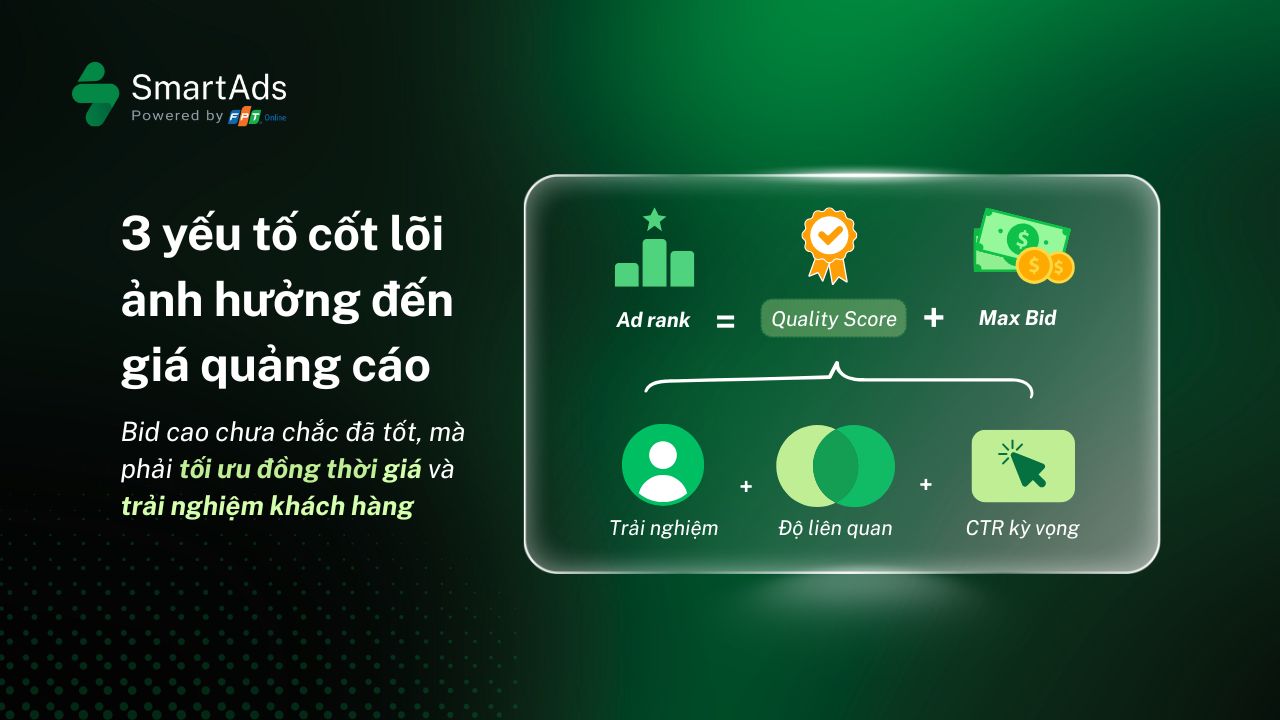
Advertising costs are constantly fluctuating due to three core factors : ad auction mechanisms, user experience, and market competition . Bid prices are determined by historical campaign performance (such as click-through rate – CTR), your allocated budget, and platform-generated recommendations. User experience encompasses ad creative quality, landing page loading speed, and relevance—factors that directly impact advertising costs. Notably, during peak seasons such as Lunar New Year or Black Friday, intensified competition among brands can drive ad costs up by 30–50%.

1. Bid pricing – a strategic game, not just a number
Most advertising platforms operate on a real-time bidding (RTB) model. This means you are competing not only through content quality, but also through how much you are willing to pay to appear in front of your target audience.
Key factors influencing bid prices include:
-
Historical data: Past campaign performance (CTR, conversion rate, retention rate, etc.) impacts quality scores and directly affects delivery priority in the ad auction.
-
Cost cap / bid cap: This is the maximum amount you set per impression or conversion. Setting it too low may prevent you from winning auctions, while setting it too high can rapidly drain your budget.
-
Platform recommendations: Many platforms provide bid suggestions based on real-time market data and performance analysis.
Note: A higher bid does not automatically guarantee better results. The key lies in balancing competitive bids with a high-quality user experience to improve system-assigned quality scores.
2. User experience – the “silent” but decisive factor
An effective advertising campaign goes beyond visibility—it must deliver a positive user experience for viewers. Platforms increasingly prioritize valuable, relevant content, making user experience a critical driver of advertising costs and budget optimization.
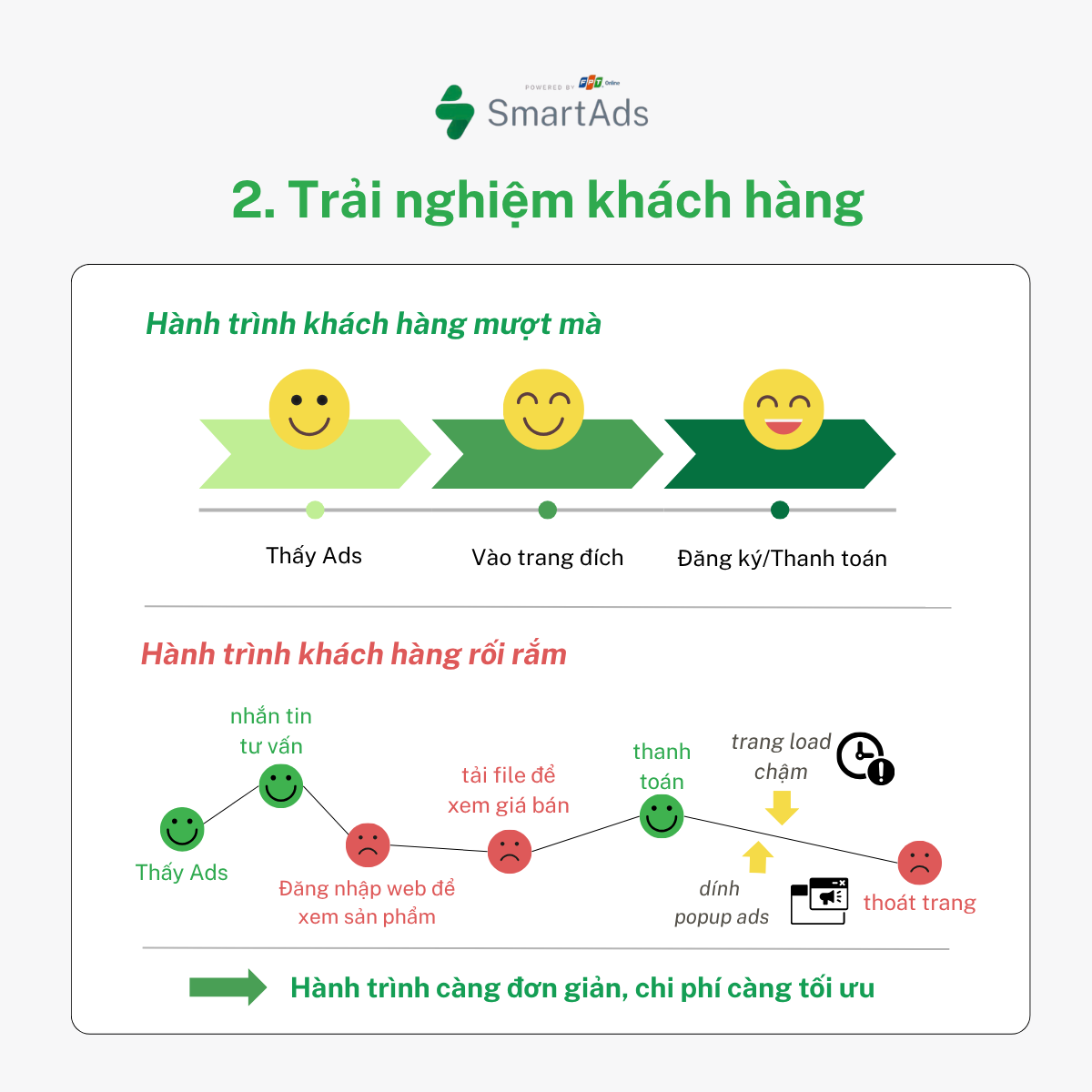
Key components of a strong user experience include:
-
Relevant and engaging content: The higher your CTR, view-through rate (VTR), and conversion rate (CR), the more platforms tend to “reward” your ads with lower delivery costs.
-
Clear and user-friendly landing pages: Well-optimized landing pages with fast load times and intuitive layouts significantly improve user experience and conversion performance.
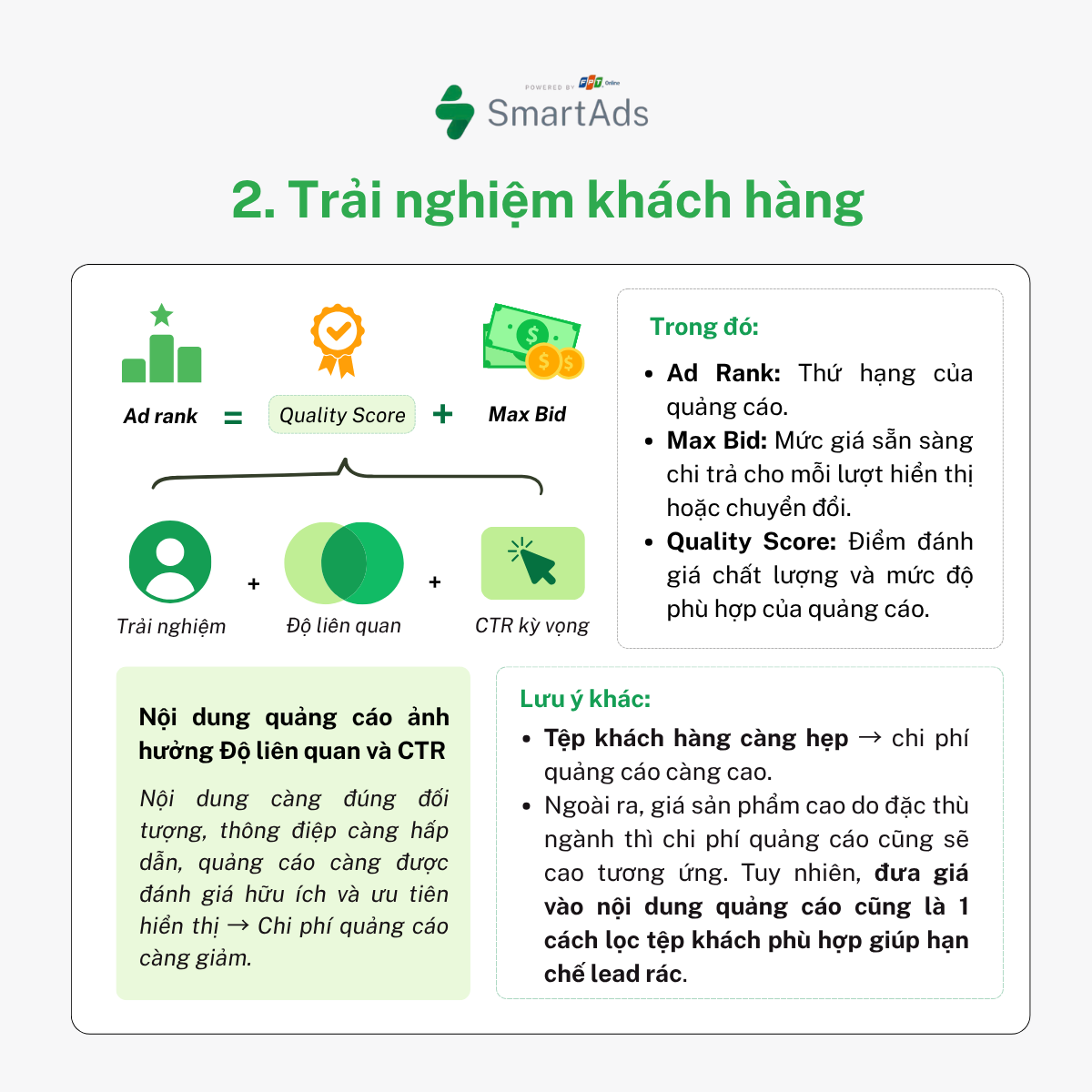
- Select the right campaign objective: If conversions are your goal, optimize for conversion actions rather than impressions. This enables platforms to deliver ads to the right users at the right moment.
-
Industry-specific dynamics: Industries such as finance, real estate, and insurance typically face higher advertising costs due to intense competition and high conversion value.
3. Competition intensity – never a solo race
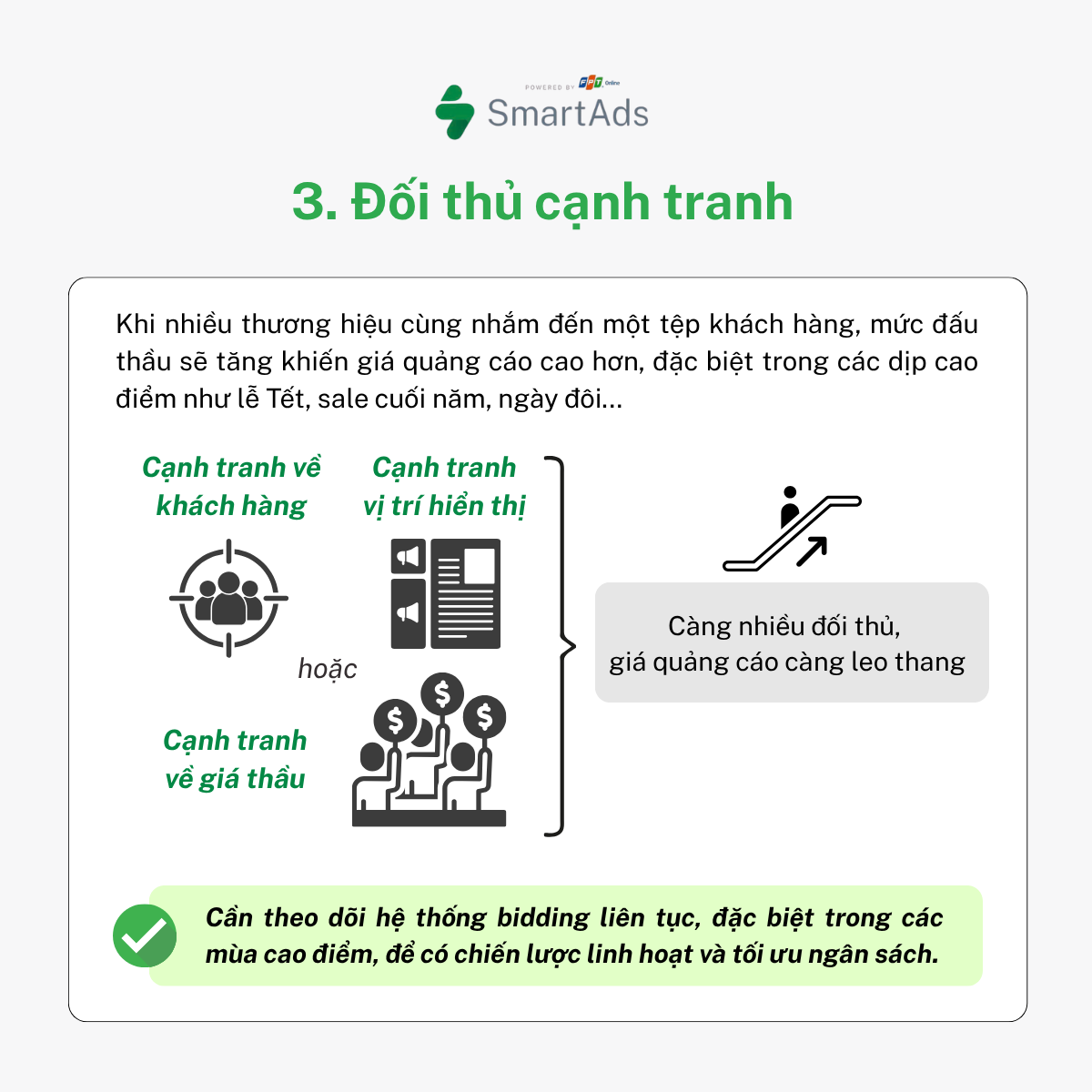
When multiple brands compete for the attention of the same audience segment, advertising costs inevitably rise. Common scenarios include:
-
Multiple advertisers targeting the same audience: When competitors pursue the same niche audience with similar interests, behaviors, and demographics, ad inventory becomes scarce—driving bid prices higher.
-
Industries that are perpetually “crowded”: Certain sectors experience sustained competition due to a high volume of active advertisers or premium-priced products targeting affluent segments—keeping ad costs elevated even outside peak seasons.
-
Competitive timing: During peak periods such as Lunar New Year, Black Friday, or enrollment seasons, simultaneous campaign launches from multiple brands inevitably push advertising costs upward.
As a result, marketers must continuously monitor market fluctuations and bid dynamics—especially during sensitive periods—to flexibly adjust timing, targeting strategies, and budget allocation.
4. Additional considerations
-
Allocate 15% of your budget for testing: Budget distribution should remain flexible based on business scale, performance objectives, and core product groups.
-
Cheap clicks are not always good, and higher ad costs are not necessarily bad: Scaled ads enable optimization of high-performing ad groups after A/B testing. Consider content investment and early scaling once positive signals emerge (typically after two weeks).
-
The ultimate goal is revenue—not just the last ad touchpoint: Sales outcomes also depend on product quality and business models. Users may see ads without immediate online actions and convert offline. Accurate measurement requires proper attribution across channels, as ads often represent just one touchpoint in the customer journey.
-
Awareness and conversion campaigns can run in parallel: There is no need to execute campaigns sequentially. Running them simultaneously accelerates learning, improves budget control, and enables earlier performance insights.
-
Advertising inevitably reaches saturation: Saturation occurs when reach costs rise without corresponding performance gains. Without optimization, prolonged campaigns become increasingly inefficient.
-
Advertising is constantly affected by competitors and market volatility: Competitive bidding drives continuous cost fluctuations. Without timely monitoring and adjustments, budgets can inflate while performance declines.
-
The cookieless future: Advertising today heavily relies on cookies and third-party data. As the cookieless trend accelerates, targeting capabilities will decline—requiring brands to proactively prepare alternative strategies.
Budget optimization is not about forcing bids to the lowest possible level—it is about understanding how ad systems evaluate performance and allocating budgets strategically. As highlighted above, effective advertising optimization goes beyond spend levels or impression metrics; it depends on how well brands deliver the right message to the right user at each touchpoint. Contextual Ads stand out as a powerful solution, enabling ad delivery based on content context without relying on cookies. At SmartAds, our Native Ads solution leverages CI technology and IAB-3 classification to help brands reach audiences more precisely, enhance campaign performance, and achieve sustainable cost optimization.