1. What is retargeting and how does it work?
1.1. Retargeting and Retargeting Ads explained
-
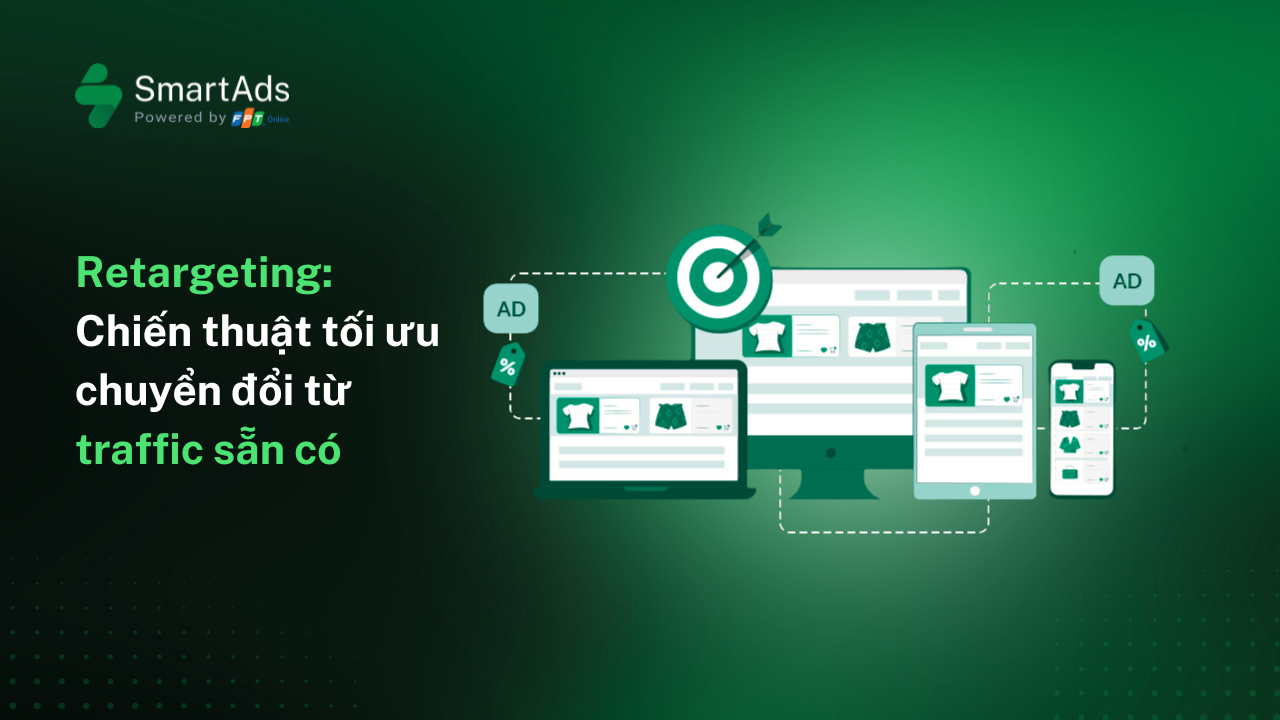
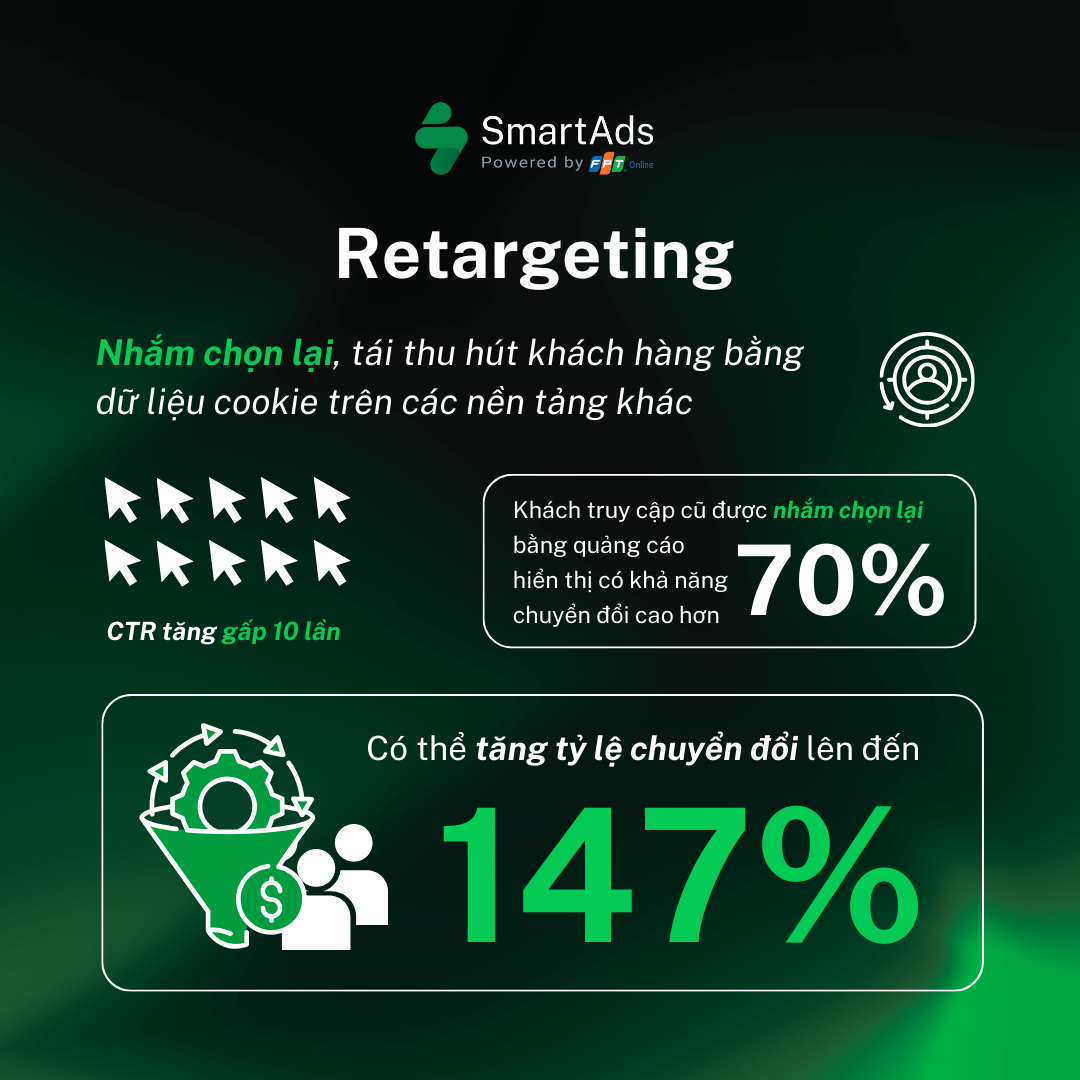
Retargeting is a targeting strategy in digital marketing that focuses on re-engaging users who have previously interacted with a brand (website, app, content, products, etc.) but have not yet converted or completed the desired action. The core difference between Retargeting and other targeting methods (Demographic, Interest, Lookalike, etc.) lies in the fact that retargeted audiences already have historical behavioral data—they are not entirely new users.
-
Retargeting Ads refer to the execution of a retargeting strategy through advertising platforms by delivering ads to predefined user segments (such as website visitors, product viewers, or users who added items to cart). In essence, Retargeting Ads are the advertising format that operationalizes the retargeting strategy through specific budgets, platforms, and tailored ad messaging.
>>> Learn in detail how to personalize advertising messages with Retargeting Ads using SmartAds Pixel Code
1.2. How retargeting works
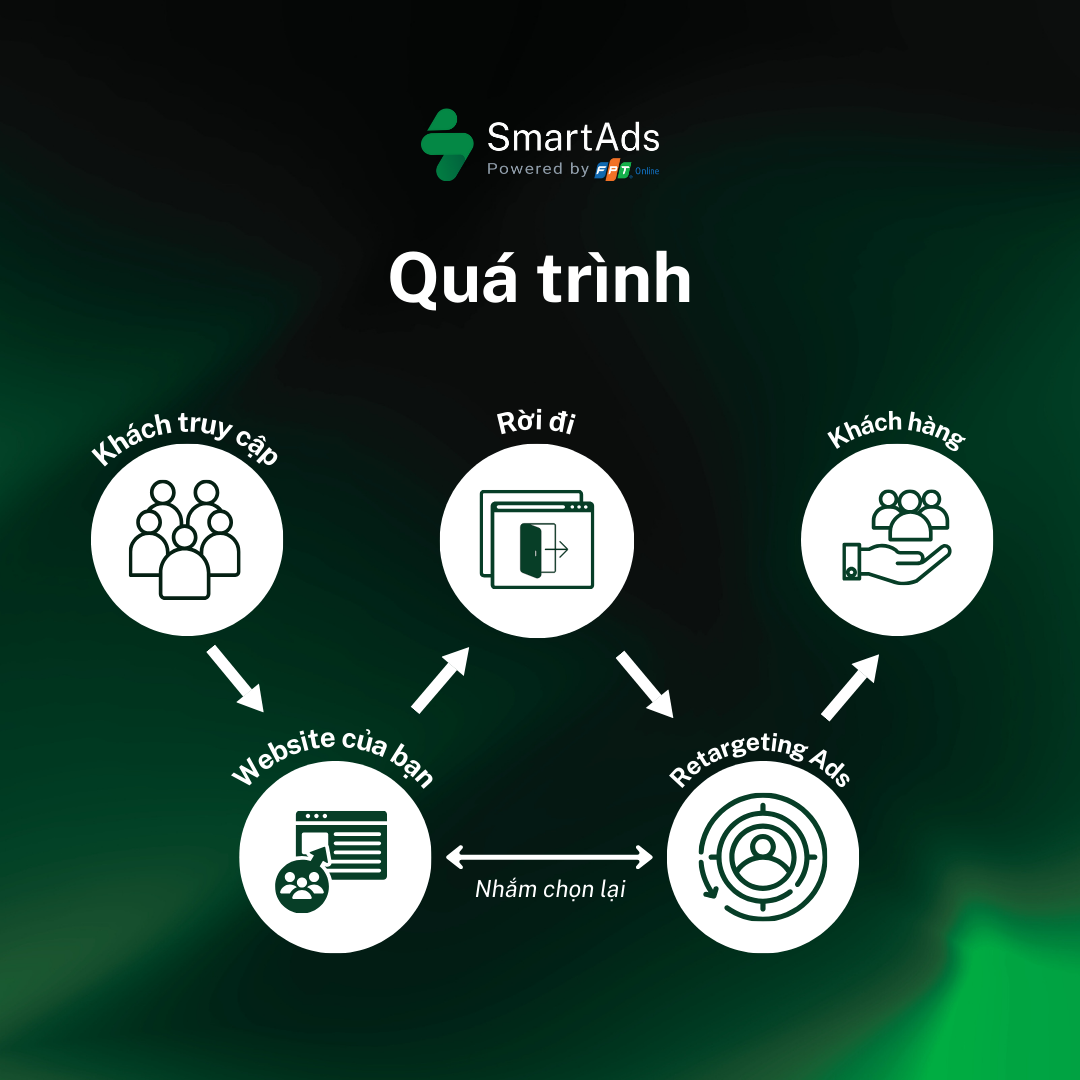
At its core, Retargeting operates by tracking user behavior through tracking codes such as pixels or cookies, following these steps:
-
Step 1: Users visit your website.
-
Step 2: They leave without making a purchase, but their behavioral data is stored.
-
Step 3: As they browse other websites or use social media, ads featuring previously viewed products appear as reminders.
-
Step 4: Users are re-engaged and return to complete the conversion.
2. Common types of Retargeting
Depending on the channel and user behavior, Retargeting is typically implemented through several key formats:
2.1. By Channel
-
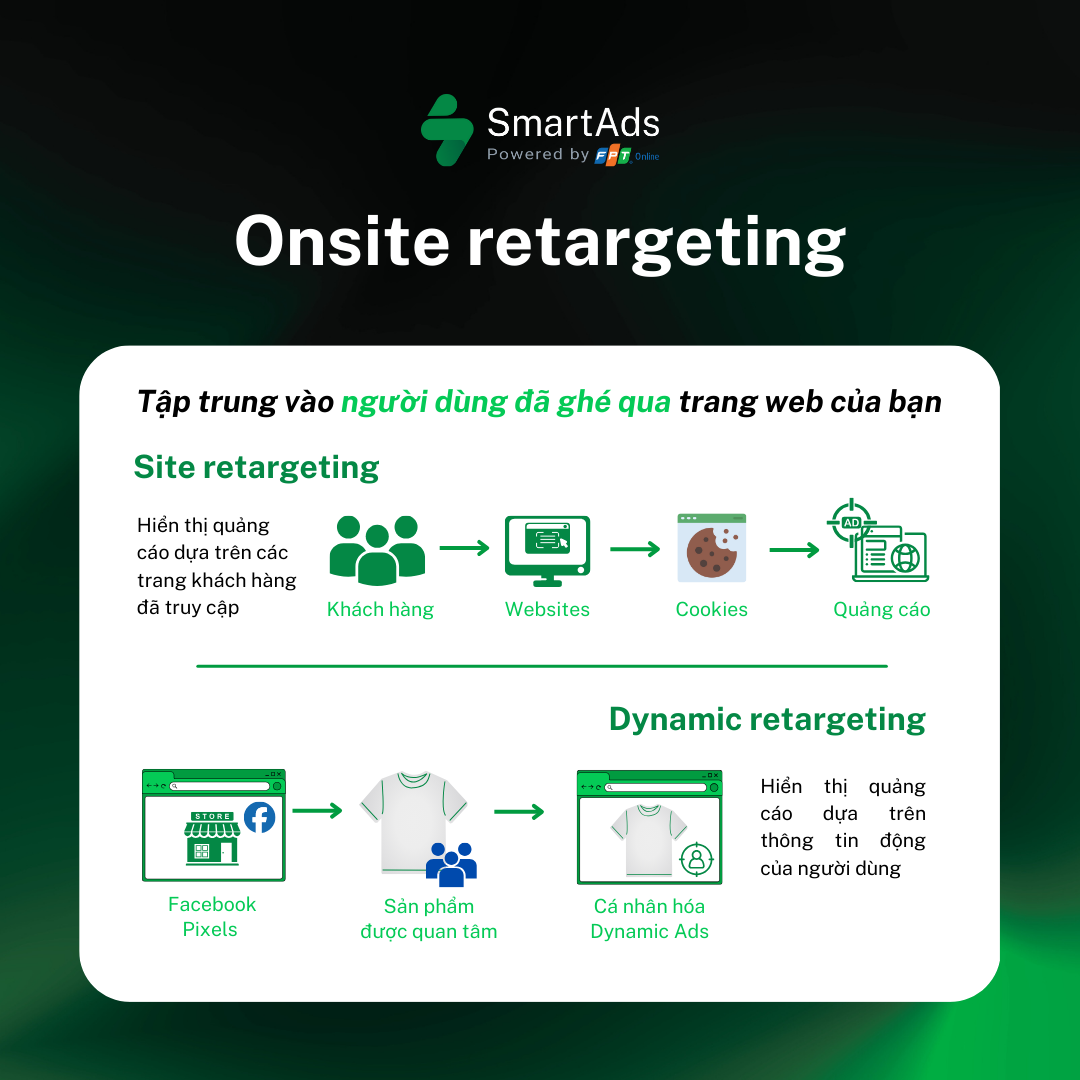
Site Retargeting
Displays ads to users who have visited a website but have not yet converted (e.g., made a purchase, registered, or submitted a form). Tracking is typically done via cookies or pixels embedded on the site, enabling relevant ads to follow users across other websites and increase conversion optimization. -
Social Retargeting
Reaches users on social media platforms based on previous interactions with a website, product, service, or ad content. For example, users who viewed a product but did not purchase may later see ads on Facebook or Instagram, reinforcing brand recall and encouraging action using rich customer behavior data. -
Search Retargeting
Targets users based on keyword search behavior related to specific industries or needs—even if they have not previously visited the website—by delivering relevant ads across display networks or social platforms. -
Email Retargeting
Sending emails or using existing email data to re-engage users after they interact with a website or previous email campaigns through personalized content (such as product reminders or abandoned cart notifications). This can also involve tracking pixels embedded in emails to support display ad retargeting.
-
CRM Retargeting
Leveraging CRM data (such as email addresses, phone numbers, and purchase history) to accurately retarget existing or potential customers across websites and social media, maximizing first-party data value and strengthening long-term customer relationships.
2.2. By specific user behavior
-
Dynamic Retargeting
An advanced form of site retargeting where ads are dynamically personalized based on products or services users have viewed or interacted with. Instead of generic creatives, the system automatically generates ads featuring specific items, prices, and images, significantly improving click-through and conversion rates—especially effective for e-commerce websites. -
Cart Abandonment Retargeting
Targets users who added products to their cart but did not complete checkout. This strategy often uses reminder emails, display ads, or special incentives (discounts, coupons, free shipping) to encourage order completion. Due to strong purchase intent, this is one of the highest-performing retargeting segments. -
RLSA (Remarketing Lists for Search Ads)
A Google Ads feature that retargets users who previously visited your website when they continue searching on Google. With RLSA, advertisers can adjust bids, keywords, and ad copy based on prior on-site behavior, making it particularly effective in the lower funnel stages of conversion.
Unlike general Search Retargeting (which relies on keyword intent data), RLSA applies exclusively to users who have already visited the website and then continue searching on Google.

3. Key benefits of retargeting for businesses
3.1. Increasing conversion opportunities and completing the purchase journey
-
Re-engaging potential customers
Most first-time website visitors do not convert immediately, meaning a large portion of initial advertising budgets does not generate direct revenue. Retargeting helps businesses reconnect with interested users, increasing the likelihood of return visits and purchase completion. -
Improving conversion rates
Users who have already viewed products or explored services show higher intent compared to new audiences. Thanks to brand familiarity and prior exposure, retargeting campaigns consistently achieve better conversion performance. -
Encouraging users to complete actions
Retargeting ads act as timely reminders, prompting users to resume unfinished steps such as revisiting carts, reviewing products, or completing checkout.
3.2. Especially effective for SMEs toward Year-end
With limited marketing resources, retargeting allows businesses to maximize existing website traffic and improve advertising ROI. Toward year-end, when large brands aggressively increase budgets and even raise bids for branding campaigns, smaller brands often struggle to compete on reach and frequency. Retargeting past visitors who have not yet converted becomes a highly efficient and strategic solution.
4. Retargeting Ads and Personalized Advertising messages
The effectiveness of Retargeting largely depends on technology implementation and the level of message personalization. Supported by tracking tools such as pixels, businesses can better understand customer behavior and deliver more relevant ads at each stage of the buying journey. Personalized Retargeting Ads help optimize costs while significantly increasing conversion potential.
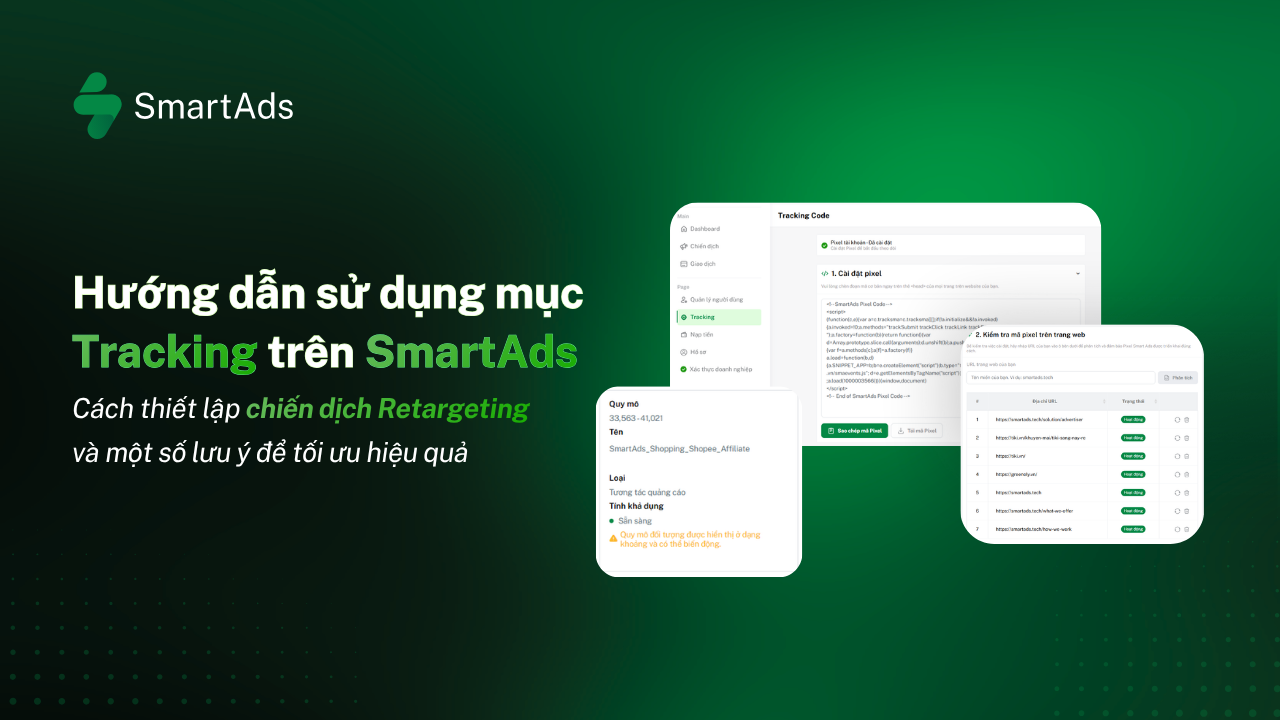
Currently, SmartAds provides a comprehensive Retargeting solution powered by SmartAds Pixel, enabling consistent cross-platform measurement and re-engagement of high-intent users. When users land on pixel-enabled pages, advertisers can seamlessly retarget them across SmartAds’ premium publisher network. Create an account here to start launching campaigns on SmartAds.