1. Hiểu lầm trong chiến dịch quảng cáo Digital nói chung
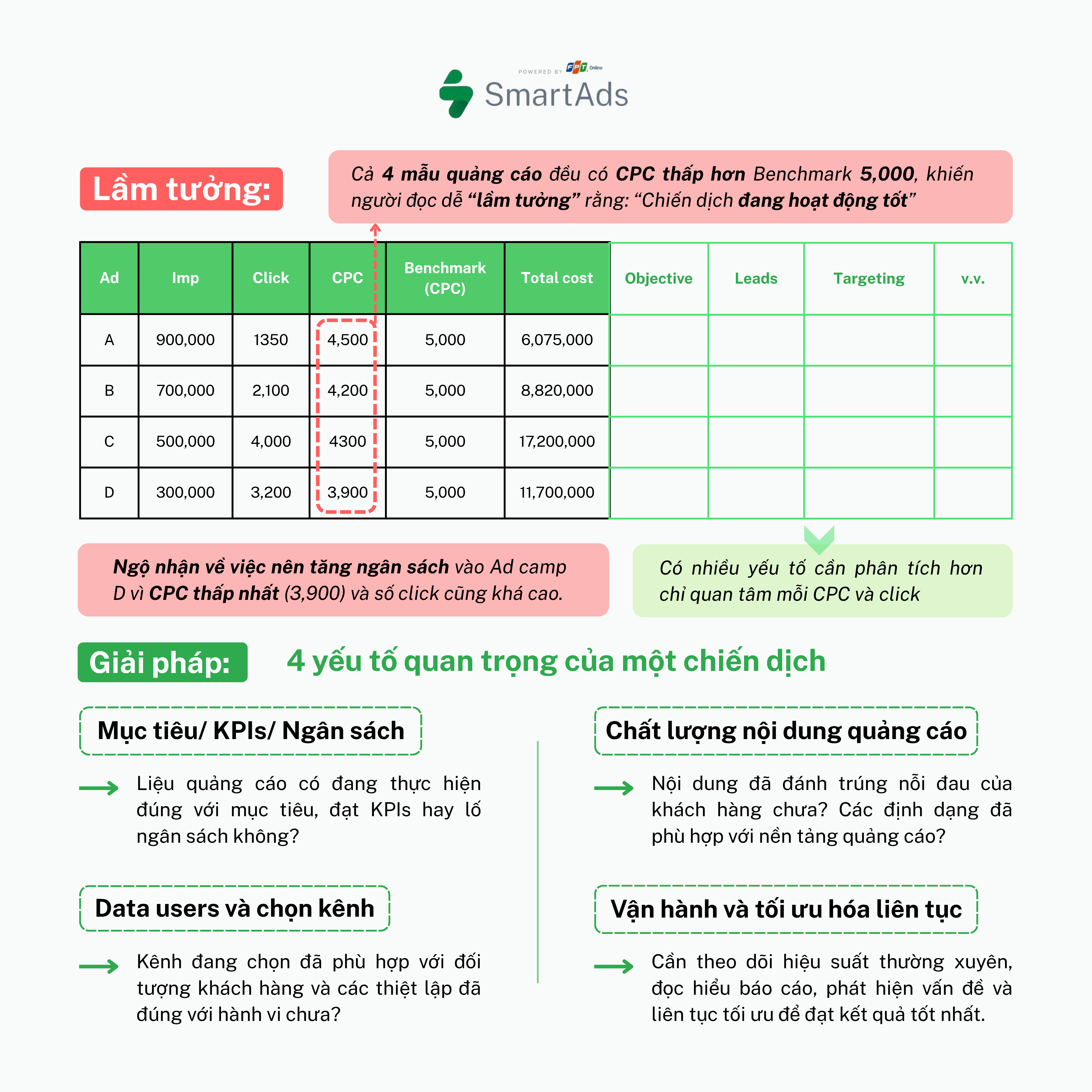
Performance marketing, hay quảng cáo dựa trên hiệu suất, là hình thức marketing tập trung vào việc đo lường, đánh giá và tối ưu các chỉ số quan trọng trong những kênh có thể theo dõi hiệu quả một cách minh bạch. Một trong những sai lầm phổ biến nhất hiện nay của các doanh nghiệp thường là đánh đồng các chỉ số performance như CPC, CTR hay CPV với hiệu quả tổng thể của chiến dịch digital. Chỉ cần các chỉ số này “đẹp” như giá CPC và CPV thấp hay CTR cao so với benchmark của ngành là chiến dịch được đánh giá thành công, bất kể mục tiêu chiến dịch ban đầu là gì.
Hệ quả: Khi mục tiêu không được xác định rõ, sai chỉ số để đo lường, chiến dịch rất dễ bị điều chỉnh lệch quỹ đạo, dữ liệu bị gây nhiễu, ngân sách bị lãng phí chỉ để giải quyết vấn đề ở phần ngọn như giảm giá bid hoặc tăng ngân sách, hiệu suất quảng cáo tổng quan khó đảm bảo.
Giải pháp:
Doanh nghiệp cần xác định rõ mục tiêu của từng chiến dịch. Không nên đánh đồng các chỉ số hiệu suất ngắn hạn với tiêu chí đánh giá cho mọi loại chiến dịch, bởi mỗi mục tiêu đòi hỏi cách tối ưu riêng và hệ thống đo lường phù hợp. Cụ thể, cần dựa trên bốn yếu tố cốt lõi sau:
-
Mục tiêu, KPI và ngân sách rõ ràng: Trước khi bắt đầu, cần xác định mục tiêu cụ thể (như tăng nhận diện, tăng đơn hàng hay thu lead), chỉ số đo lường phù hợp và ngân sách tương ứng với kỳ vọng. Một chiến dịch branding không nên bị đánh giá về mặt hiệu suất bằng tỉ lệ chuyển đổi; ngược lại, một chiến dịch chuyển đổi không thể chỉ nhìn impression mà cho là hiệu quả.
-
Dữ liệu người dùng và lựa chọn kênh truyền thông: Việc hiểu rõ chân dung khách hàng mục tiêu, hành vi tiêu dùng và các kênh họ thường xuyên sử dụng là yếu tố then chốt giúp chọn đúng nền tảng để truyền thông. Target sai kênh hoặc sai đối tượng sẽ làm giảm hiệu suất quảng cáo dù nội dung có hay đến đâu.
-
Chất lượng nội dung quảng cáo: Nội dung quảng cáo không chỉ cần bắt mắt, mà còn phải đánh trúng nhu cầu hoặc nỗi đau của khách hàng và đồng thời phù hợp với định dạng và quy định trên nền tảng.
-
Vận hành và tối ưu hóa liên tục: Một chiến dịch không nên chỉ được "set up rồi để đó". Cần theo dõi hiệu suất quảng cáo thường xuyên, đọc hiểu báo cáo, phát hiện vấn đề và liên tục tối ưu để đạt kết quả tốt nhất.
2. Hiểu lầm về performance marketing trong chiến dịch gia tăng độ nhận biết
Chiến dịch độ nhận biết thường được triển khai để mở rộng thị trường, giới thiệu sản phẩm mới hoặc xây dựng hình ảnh thương hiệu. Tuy nhiên, chính trong loại chiến dịch này lại xuất hiện nhiều hiểu lầm phổ biến về performance:
Trường hợp 1: Đánh giá hiệu quả awareness bằng Impression, CTR hoặc số Click cao
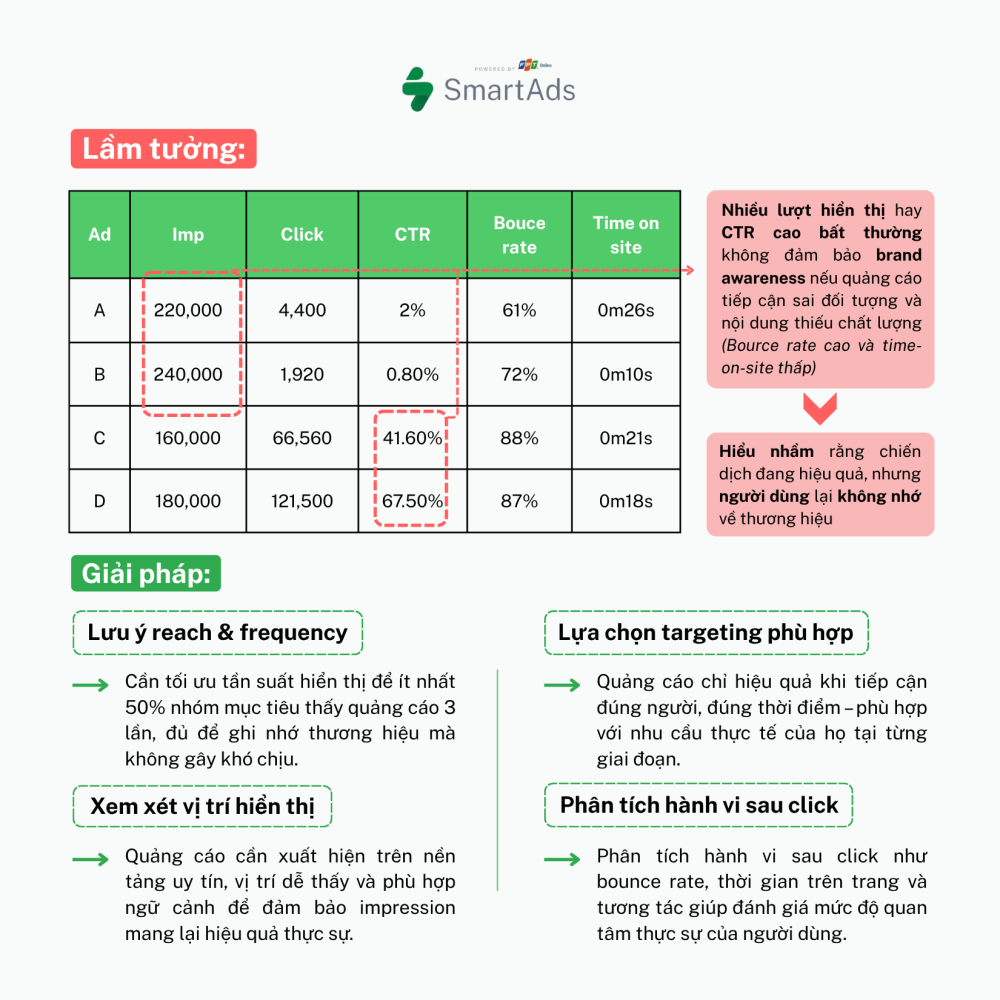
Đối với hiệu suất quảng cáo trong trường hợp này, nhiều doanh nghiệp thường cho rằng khách hàng không nhớ đến thương hiệu là do số lượt hiển thị (impression) chưa đủ cao. Tuy nhiên, vấn đề không nằm ở số lượng hiển thị mà ở chất lượng tiếp cận. Nếu quảng cáo ghi nhận nhiều lượt hiển thị nhưng tiếp cận sai đối tượng, mục tiêu brand awareness vẫn không đạt được. Thêm vào đó, các chỉ số như click hoặc CTR cao cũng dễ gây hiểu lầm bởi người dùng có thể click vì tò mò, do thông điệp giật gân, hoặc đơn giản là những tương tác ảo không mang lại giá trị nhận diện thực sự cho thương hiệu.
Hệ quả: Nhà quảng cáo có thể hiểu nhầm rằng chiến dịch đang thành công, nhưng thực chất người dùng không nhớ hoặc không hiểu về thương hiệu sau khi xem quảng cáo, hiệu suất quảng cáo không đảm bảo.
Giải pháp:
- Lưu ý mối quan hệ giữa reach và frequency: Quảng cáo xuất hiện quá ít thì khó để người xem ghi nhớ thương hiệu, nhưng nếu lặp lại quá nhiều lần lại dễ gây khó chịu, thậm chí phản tác dụng. Vì vậy, cần tối ưu tần suất hiển thị, đảm bảo tối thiểu 50% nhóm mục tiêu nhìn thấy quảng cáo ít nhất 3 lần – ngưỡng cơ bản để thông điệp của thương hiệu có cơ hội được ghi nhớ, nhưng vẫn giữ trải nghiệm tích cực cho người dùng.
- Xem xét vị trí hiển thị quảng cáo: Khi inventory được phân phối trên những website kém chất lượng, thiếu uy tín hoặc nằm ở các vị trí ít được chú ý trên trang, quảng cáo dù có được tính impression vẫn khó tạo ra tác động thực sự. Do đó cần ưu tiên phân phối quảng cáo trên các nền tảng uy tín với vị trí hiển thị dễ thấy và phù hợp ngữ cảnh.
- Lựa chọn targeting phù hợp: Đảm bảo quảng cáo tiếp cận đúng người, đúng thời điểm, khi họ thực sự quan tâm và có nhu cầu. Ví dụ, quảng cáo đất nền vào dịp Tết – khi nhu cầu cho mua sắm thực phẩm và trang phục tăng cao thì sẽ khó tạo chuyển đổi tốt.
- Phân tích hành vi sau click (post-click analysis):
- Xem xét tỷ lệ thoát (Bounce rate) và Thời gian trên trang: Nếu người dùng chỉ click và rời trang sau 3 giây, họ không thực sự quan tâm.
- Cân nhắc về các sự kiện Hành động: Scroll, click CTA, điền form… là chỉ báo cho mức độ hứng thú.
Ngoài ra, Brand Lift Survey đôi khi cũng được sử dụng kết hợp trong việc đo lường tác động của chiến dịch truyền thông. Thông qua việc khảo sát người dùng, có thể đánh giá mức độ nhận biết và cảm nhận của họ đối với thương hiệu sau khi họ tiếp xúc với quảng cáo.
Trường hợp 2: Lầm tưởng performance có thể thay thế branding
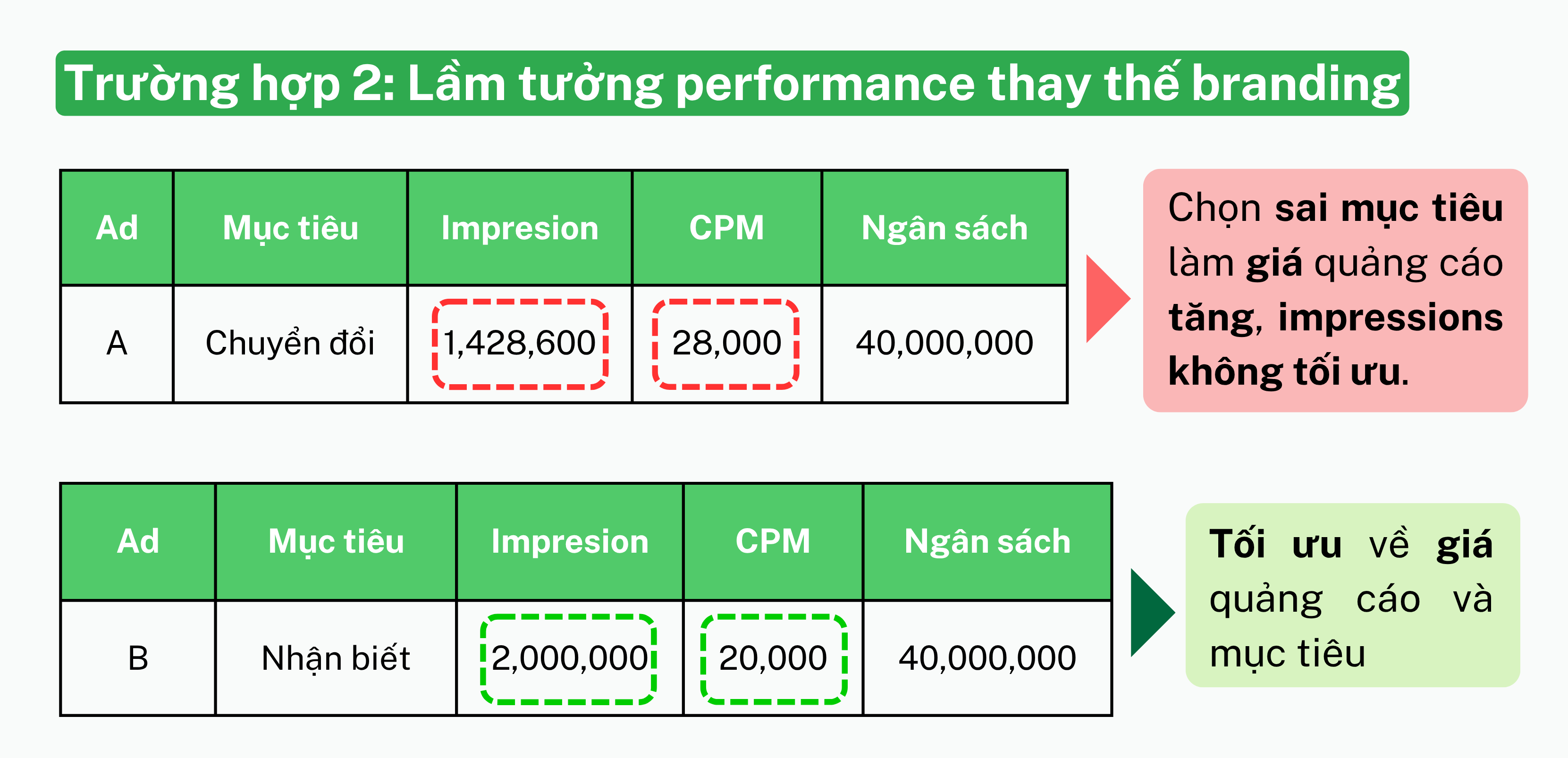
Một quan niệm sai lầm khác thường gặp trong hiệu suất quảng cáo đó là: chạy performance ads (chuyển đổi) thì sẽ “kiêm luôn” tăng nhận diện thương hiệu.
Hệ quả: Performance ads thường nhắm vào đối tượng hẹp, dùng lời kêu gọi hành động rõ ràng – không phải để kể một câu chuyện thương hiệu. Nếu chỉ chạy performance, doanh nghiệp có thể bỏ lỡ nhóm khách hàng tiềm năng.
Giải pháp:
-
Tách riêng 2 loại chiến dịch, chạy song song cùng thời điểm: Doanh nghiệp có thể chạy chiến dịch branding riêng biệt, song song với các chiến dịch performance. Trong khi chiến dịch performance tập trung vào việc tiếp cận đối tượng cụ thể và thúc đẩy hành động ngay lập tức (như mua hàng, đăng ký), chiến dịch branding sẽ giúp tăng cường nhận thức và xây dựng hình ảnh thương hiệu trong tâm trí khách hàng. Việc duy trì hiện diện thương hiệu rộng rãi, kể cả khi chưa có hành động cụ thể từ khách hàng, là điều kiện quan trọng để tăng khả năng chuyển đổi trong tương lai.
-
Áp dụng giải pháp Brandformance – kết hợp branding và performance: Brandformance là một chiến lược kết hợp cả hai yếu tố branding và performance trong một chiến dịch duy nhất. Giải pháp này không chỉ giúp tăng nhận thức thương hiệu mà còn tối ưu hóa chuyển đổi ngay lập tức thông qua việc kết hợp branding (tạo dựng hình ảnh, kết nối cảm xúc với khách hàng) và performance (tối ưu hóa hành động và kết quả ngắn hạn). Brandformance cho phép doanh nghiệp tận dụng cả hai lợi ích mà không phải chia tách ngân sách hay chiến lược, từ đó mang lại hiệu quả toàn diện hơn trong chiến dịch marketing.
3. Hiểu lầm trong chiến dịch chuyển đổi
Chiến dịch chuyển đổi thường được sử dụng để thúc đẩy hành động cụ thể từ khách hàng, như mua hàng, đăng ký hoặc thực hiện các giao dịch trực tiếp. Tuy nhiên, loại chiến dịch quảng cáo này cũng có nhiều trường hợp hiểu lầm về performance phổ biến:
Trường hợp 1: Tối ưu quá mức theo tín hiệu ngắn hạn như CPC, CPL
Nhiều nhà quảng cáo theo dõi chỉ số CPC, CPL theo ngày hoặc từng giờ và phản ứng ngay khi thấy biến động – như hạ ngân sách, tắt nhóm quảng cáo hoặc scale mạnh. Tuy nhiên, hành vi “phản xạ tức thì” này mang tính cảm tính hơn là chiến lược. Các chỉ số ngắn hạn thường biến động tự nhiên do nhiều yếu tố như hành vi người dùng, ngân sách đối thủ hay giai đoạn học của thuật toán, nên việc tối ưu dựa trên dữ liệu 24 giờ là thiếu cơ sở.
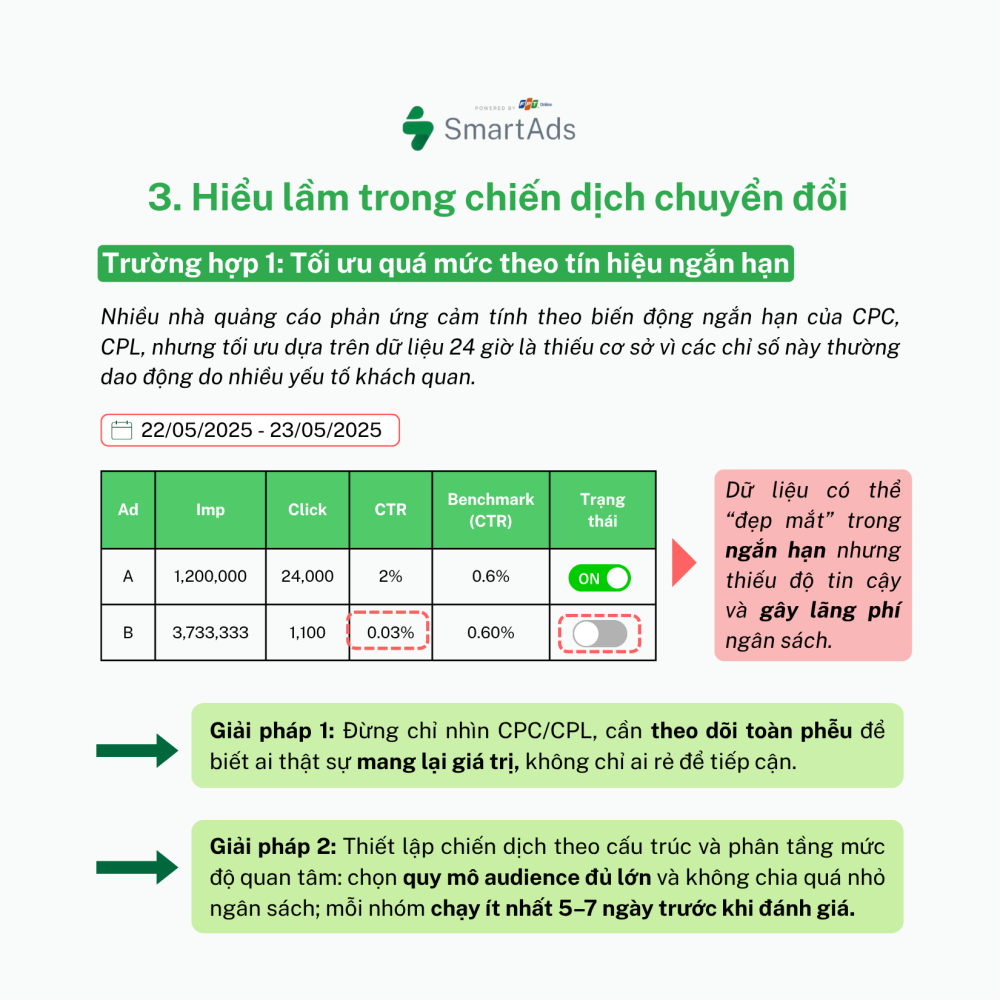
Hệ quả: Làm rối thuật toán tối ưu của nền tảng quảng cáo, dẫn đến chiến dịch không thể học máy ổn định. Dữ liệu có thể “đẹp mắt” trong ngắn hạn nhưng thiếu độ tin cậy và gây lãng phí ngân sách.
Giải pháp:
- Tư duy phễu đầy đủ – từ impression đến chuyển đổi sâu: Thay vì dừng lại ở CPC/CPL, hãy theo dõi tỉ lệ điền form, tỉ lệ mở email, tỉ lệ mua hàng sau khi remarketing… Điều này giúp advertiser biết được ai thực sự có giá trị, thay vì chỉ biết ai rẻ để tiếp cận.
- Thiết lập chiến dịch theo cấu trúc ổn định bao gồm:
-
Tập trung vào nhóm quảng cáo có quy mô audience đủ lớn.
-
Không chia nhỏ ngân sách quá mức (tránh scaling chia nhỏ 10 ad set, mỗi cái vài trăm nghìn/ngày).
-
Giữ cố định nhóm chạy ít nhất 5–7 ngày trước khi đánh giá.
- Phân tầng mức độ quan tâm: Chia nhóm người dùng theo hành vi:
-
Click nhưng thoát sớm → loại khỏi nhóm remarketing.
-
Click + tương tác sâu nhưng chưa mua → nuôi dưỡng bằng remarketing.
-
Click + chuyển đổi → tạo lookalike hoặc lưu trữ lại để tiếp tục remarketing khi ra mắt thêm sản phẩm mới
Trường hợp 2: Tăng ngân sách nhưng order không về là do leads kém chất lượng
Tư duy “leads kém chất lượng” không sai, nhưng chưa đủ. Nó chỉ phản ánh một lát cắt nhỏ của vấn đề, trong khi thực tế có nhiều yếu tố khác ảnh hưởng đến hiệu suất chiến dịch chuyển đổi.
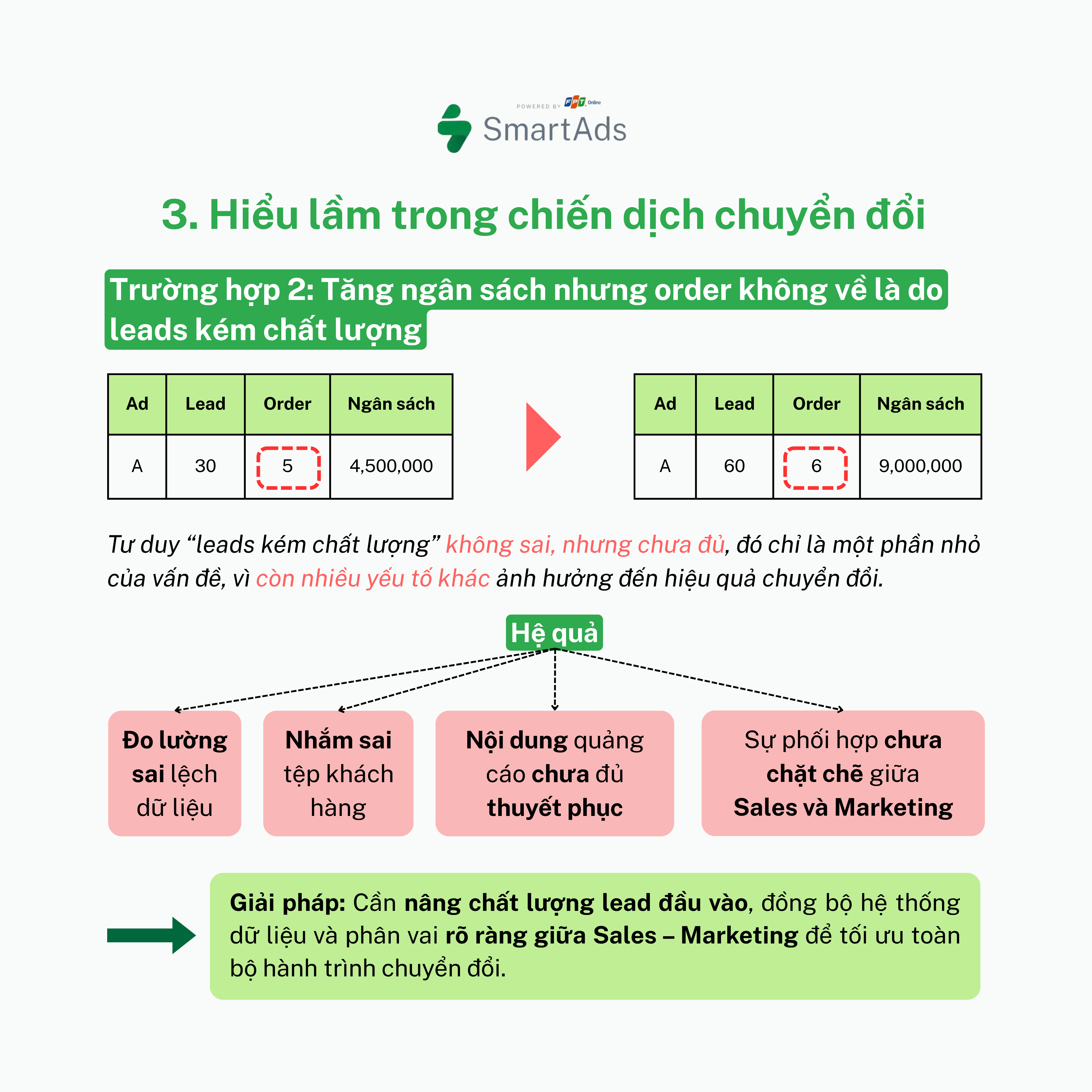
Hệ quả: Nếu chỉ tập trung đổ lỗi cho leads, doanh nghiệp dễ bỏ qua những nguyên nhân cốt lõi như: nhắm sai tệp khách hàng, nội dung quảng cáo chưa đủ thuyết phục, đo lường sai lệch dữ liệu, hay sự phối hợp chưa chặt chẽ giữa Sales và Marketing. Điều này khiến ngân sách tiếp tục bị lãng phí mà hiệu suất quảng cáo không cải thiện.
Giải pháp: Cần rà soát toàn bộ hành trình khách hàng – từ đối tượng mục tiêu, thông điệp quảng cáo, cách đo lường, đến chất lượng tư vấn và quy trình chăm sóc. Cụ thể:
- Với Lead kém chất lượng: Cần xây dựng biểu mẫu chi tiết hơn và thiết lập tiêu chí lọc lead rõ ràng để nâng cao chất lượng đầu vào.
- Đồng bộ các hệ thống tracking (GA4, Meta, CRM...): để đảm bảo dữ liệu chính xác và minh bạch và đồng thời rà soát lại data hành vi khách hàng, kết hợp A/B testing để xác định đúng nhóm tiềm năng.
- Thiết lập rõ vai trò Sales & Marketing: định nghĩa rõ ràng, chia KPI cụ thể cho từng bộ phận theo từng giai đoạn. Đối với Sale, đào tạo kỹ năng tư vấn – xử lý từ chối, đồng thời kiểm soát tốc độ phản hồi sau khi nhận lead. Đối với Marketing, cần kiểm soát chất lượng trang đích nội dung (Marketing), đảm bảo nội dung phù hợp với nhu cầu và kỳ vọng của người xem.
Nhìn chung, hiệu quả một chiến dịch không chỉ do nội dung hay ngân sách, mà là bài toán tổng thể về vận hành, quy trình, phối hợp liên phòng ban và chiến lược từ nhận diện đến chuyển đổi.
Hiện, SmartAds đang triển khai giải pháp Brandformance – kết hợp giữa xây dựng thương hiệu và tối ưu hiệu suất chiến dịch quảng cáo, liên kết trực tiếp cùng các nhà xuất bản uy tín. Giải pháp kỳ vọng giúp doanh nghiệp tiếp cận đúng khách hàng tiềm năng với chi phí tối ưu và nâng cao tỷ lệ chuyển đổi.