1. Thiên lệch chọn mẫu (Sampling bias)
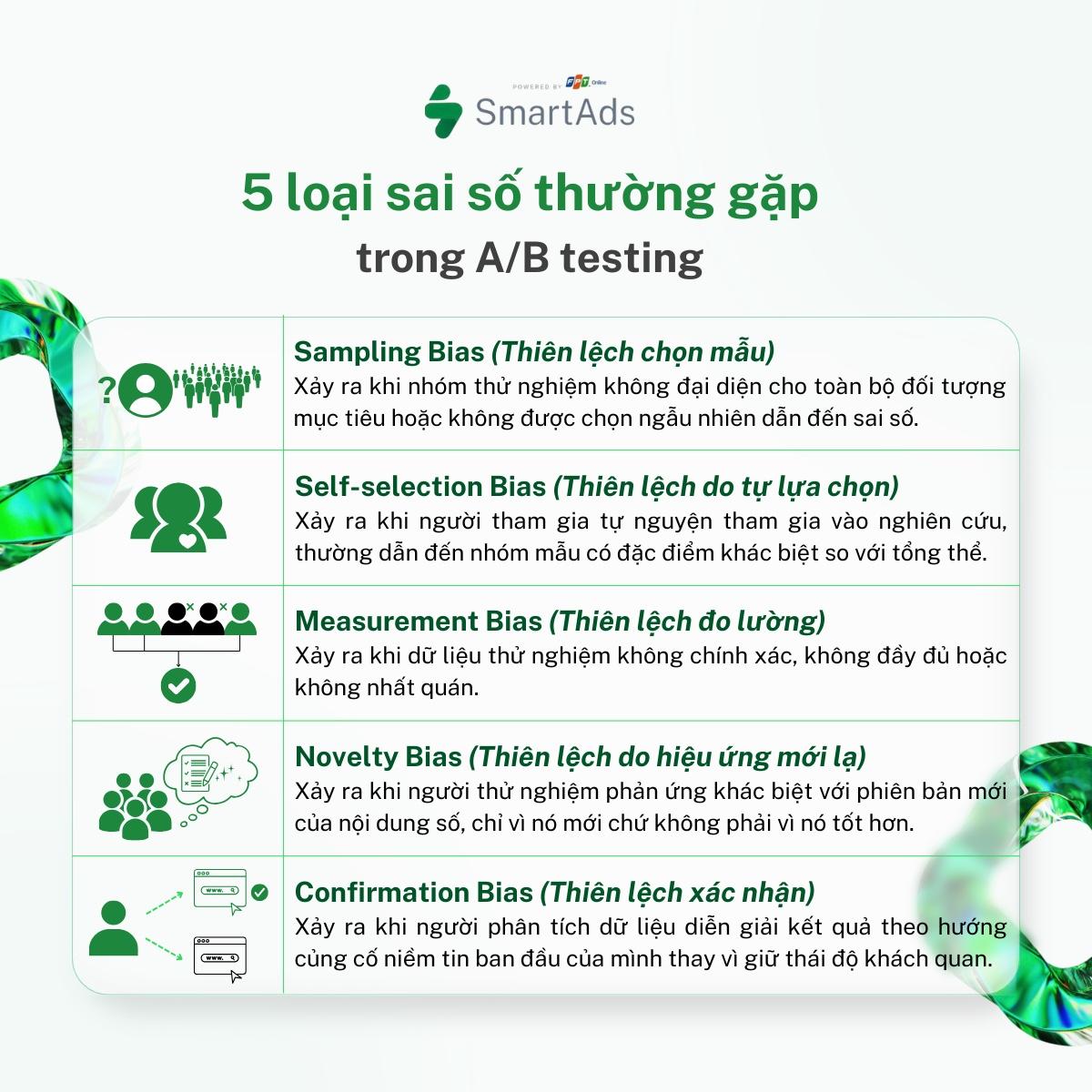
Thiên lệch chọn mẫu xảy ra khi nhóm thử nghiệm không đại diện cho toàn bộ đối tượng mục tiêu hoặc không được chọn ngẫu nhiên dẫn đến sai số. Ví dụ, nếu chạy thử nghiệm A/B trên một trang web có lượng truy cập thay đổi theo mùa, chúng ta có thể gặp phải các nhóm khách truy cập khác nhau tùy vào thời điểm thử nghiệm. Điều này có thể ảnh hưởng đến tính hợp lệ và độ tin cậy của kết quả, khiến chúng ta không thể khái quát hóa chúng cho toàn bộ khách hàng. Để tránh thiên lệch lấy mẫu, nên đảm bảo nhóm thử nghiệm đủ lớn, cân bằng, được chọn ngẫu nhiên và thời gian thử nghiệm đồng đều giữa các nhóm.
2. Thiên lệch do tự lựa chọn (Self-Selection bias)
Hiện tượng này xảy ra khi người tham gia tự nguyện tham gia vào nghiên cứu, thường dẫn đến nhóm mẫu có đặc điểm khác biệt so với tổng thể. Ví dụ: Khảo sát mức độ hài lòng của khách hàng nhưng chỉ những người có trải nghiệm mạnh (rất hài lòng hoặc rất không hài lòng) mới tham gia. Điều này có thể dẫn đến kết luận sai lệch, vì không tính đến sự khác biệt trong hành vi hoặc sở thích của những người hài lòng hoặc không hài lòng về dịch vụ. Để tránh sự thiên lệch này, cần thu thập dữ liệu từ nhiều nguồn khác nhau, gia tăng nhóm đối tượng tham khao khảo sát. Song song với đó, cần theo dõi và phân tích nhiều chỉ số trong toàn bộ phễu chuyển đổi không chỉ những chỉ số bị ảnh hưởng trực tiếp bởi biến thử nghiệm.
3. Thiên lệch đo lường (Measurement bias)
Sai số do thiên lệch đo lường xảy ra khi dữ liệu thử nghiệm không chính xác, không đầy đủ hoặc không nhất quán. Ví dụ, nếu chạy thử nghiệm A/B trên một trang đích, có thể xảy ra lỗi kỹ thuật khiến một số khách truy cập không thấy đúng phiên bản của trang hoặc không được hệ thống phân tích theo dõi. Điều này có thể dẫn đến dữ liệu bị thiếu hoặc bị sai lệch, làm méo mó kết quả thử nghiệm và mức độ tin cậy. Để giảm thiểu thiên lệch đo lường, nên đảm bảo thiết lập thử nghiệm chính xác, mã theo dõi hoạt động tốt và dữ liệu thu thập có chất lượng cao.
4. Thiên lệch do hiệu ứng mới lạ (Novelty bias)
Thiên lệch do hiệu ứng mới lạ xảy ra khi người tham gia thử nghiệm phản ứng khác biệt với phiên bản mới của nội dung số, chỉ vì nó mới chứ không phải vì nó tốt hơn. Ví dụ, khi chạy thử nghiệm A/B trên cùng một vị trí quảng cáo để so sánh 2 định dạng banner và spinner ,có thể thấy tỷ lệ nhấp vào phiên bản của spinner cao hơn vì khả năng tương tác tốt, nhưng không có sự cải thiện về tỷ lệ chuyển đổi hoặc tỷ lệ giữ chân khách hàng. Điều này có thể chỉ ra rằng khách hàng tò mò về quảng cáo mới nhưng có thể không thực sự quan tâm đến sản phẩm hoặc dịch vụ. Để tránh thiên lệch này, nên chạy thử nghiệm đủ lâu để loại bỏ tác động ban đầu của sự mới lạ và so sánh kết quả với hiệu suất cơ bản trước đó.
5. Thiên lệch xác nhận (Confirmation bias)
Thiên lệch xác nhận xảy ra khi người phân tích dữ liệu diễn giải kết quả thử nghiệm theo hướng củng cố niềm tin hoặc kỳ vọng ban đầu của mình, thay vì giữ thái độ khách quan. Chẳng hạn, khi chạy thử nghiệm A/B trên một tiêu đề, chúng ta có thể thiên vị phiên bản phù hợp với sở thích cá nhân, ngay cả khi sự khác biệt về hiệu suất không có ý nghĩa thống kê. Điều này có thể dẫn đến kết luận sai lầm (false positive hoặc false negative), ảnh hưởng đến quyết định tối ưu hóa của chúng ta. Để tránh thiên lệch xác nhận, nên xác định rõ giả thuyết và tiêu chí thành công trước khi thử nghiệm, đồng thời sử dụng các phương pháp và công cụ thống kê để phân tích dữ liệu một cách khách quan.
Kết
Nhìn chung, A/B Testing là một phương pháp mạnh mẽ để tối ưu hóa hiệu suất chiến dịch, nhưng kết quả có thể bị sai lệch nếu doanh nghiệp không kiểm soát chặt chẽ các yếu tố gây nhiễu. Để đảm bảo độ chính xác và tin cậy, cần thiết kế thử nghiệm cẩn thận, đảm bảo mẫu thử ngẫu nhiên, thu thập dữ liệu đầy đủ và phân tích kết quả khách quan.
Với nền tảng quảng cáo trên các báo điện tử hàng đầu Việt Nam, SmartAds kỳ vọng mang đến giải pháp quảng cáo tối ưu, đồng hành cùng doanh nghiệp trong việc thử nghiệm các ý tưởng A/B testing để tối ưu hóa hiệu suất và triển khai chiến lược tiếp thị hiệu quả.