Tổng quan: 80% sinh viên Việt Nam chi tiêu dưới 5 triệu/tháng với ngân sách tập trung vào nhu cầu thiết yếu
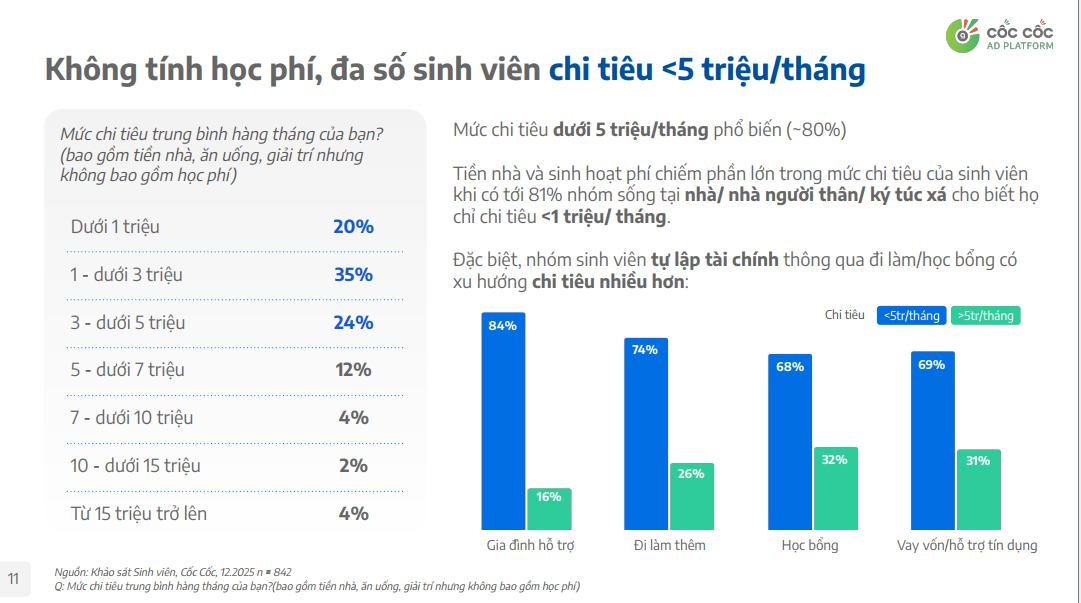
Theo báo cáo, phần lớn sinh viên Việt Nam chi tiêu dưới 5 triệu đồng/tháng (không bao gồm học phí) với tiền nhà và sinh hoạt phí luôn là khoản chi lớn nhất. Trong đó:
-
20% chi tiêu dưới 1 triệu/tháng
-
35% ở mức 1 – dưới 3 triệu
-
24% ở mức 3 – dưới 5 triệu
>>> Tải PDF báo cáo Students Behavior Report 2025 tại đây.
Sự phân hóa về chi tiêu theo nhóm sinh viên, đặc biệt tiến đến thời điểm gần ra trường
Cấu trúc chi tiêu cho thấy sinh viên ưu tiên rõ rệt các nhu cầu sinh hoạt cơ bản, thay vì tiêu dùng cảm xúc hoặc chi tiêu xa xỉ. Đáng chú ý, nhóm sinh viên tự lập tài chính (như đi làm thêm, học bổng, vay vốn/hỗ trợ tín dụng) có xu hướng chi tiêu cao hơn so với nhóm phụ thuộc gia đình. Xu hưởng này thể hiện qua tỷ lệ chi tiêu trên 5 triệu/tháng tăng rõ rệt ở nhóm Sinh viên năm 4 (24%) và Sinh viên năm 5+ (35%).
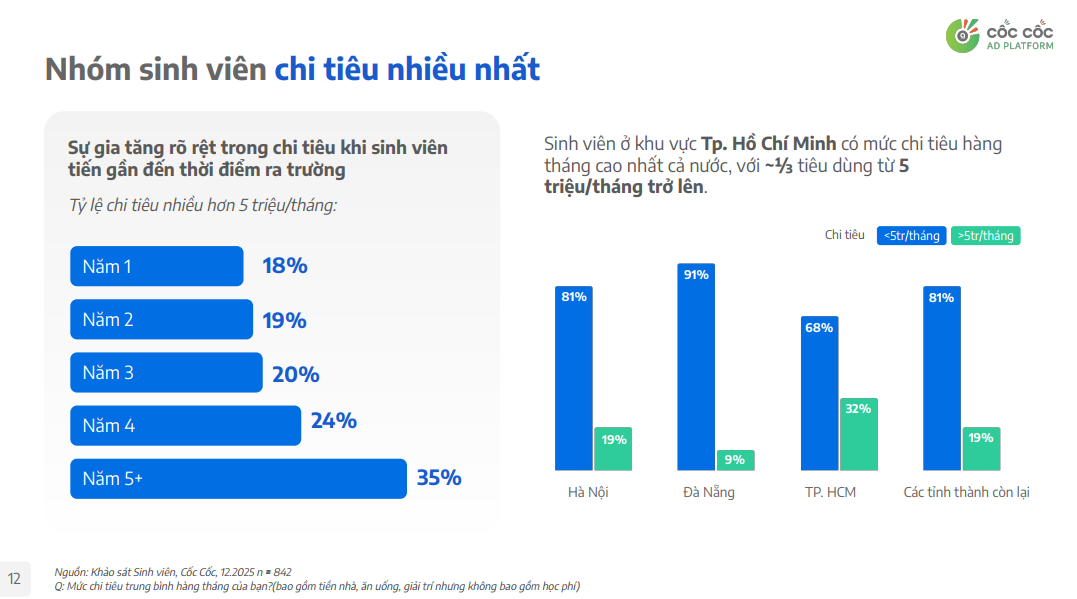
Điều này phản ánh một quy luật hành vi tất yếu: càng gần thời điểm ra trường, mức độ tự chủ tài chính của sinh viên ngày càng cao và năng lực chi tiêu càng mở rộng.
Sự khác biệt về chi tiêu theo vùng miền: TP.HCM dẫn đầu mức chi tiêu
Dữ liệu cho thấy sự phân hóa rõ rệt theo khu vực:
-
TP.HCM: ~1/3 sinh viên chi tiêu từ 5 triệu/tháng trở lên (cao nhất cả nước)
-
Hà Nội: 19% trên 5 triệu
-
Đà Nẵng: 9% trên 5 triệu
-
Các tỉnh thành khác: 19% trên 5 triệu
Điều này phản ánh chi phí sinh hoạt đô thị, nhịp sống nhanh và hệ sinh thái tiêu dùng và dịch vụ phát triển mạnh tại các đô thị lớn, đặc biệt là TP.HCM. Do đó, cần phân hóa chiến lược theo vùng miền để thương hiệu tiếp cận đúng khả năng chi trả và tâm lý tiêu dùng của từng nhóm sinh viên, từ đó tối ưu hiệu quả chiến dịch.
Sự khác biệt phân hóa theo nhu cầu: Chi tiêu của sinh viên tập trung vào nhu cầu thiết yếu nhưng không theo hướng thắt chặt cực đoan
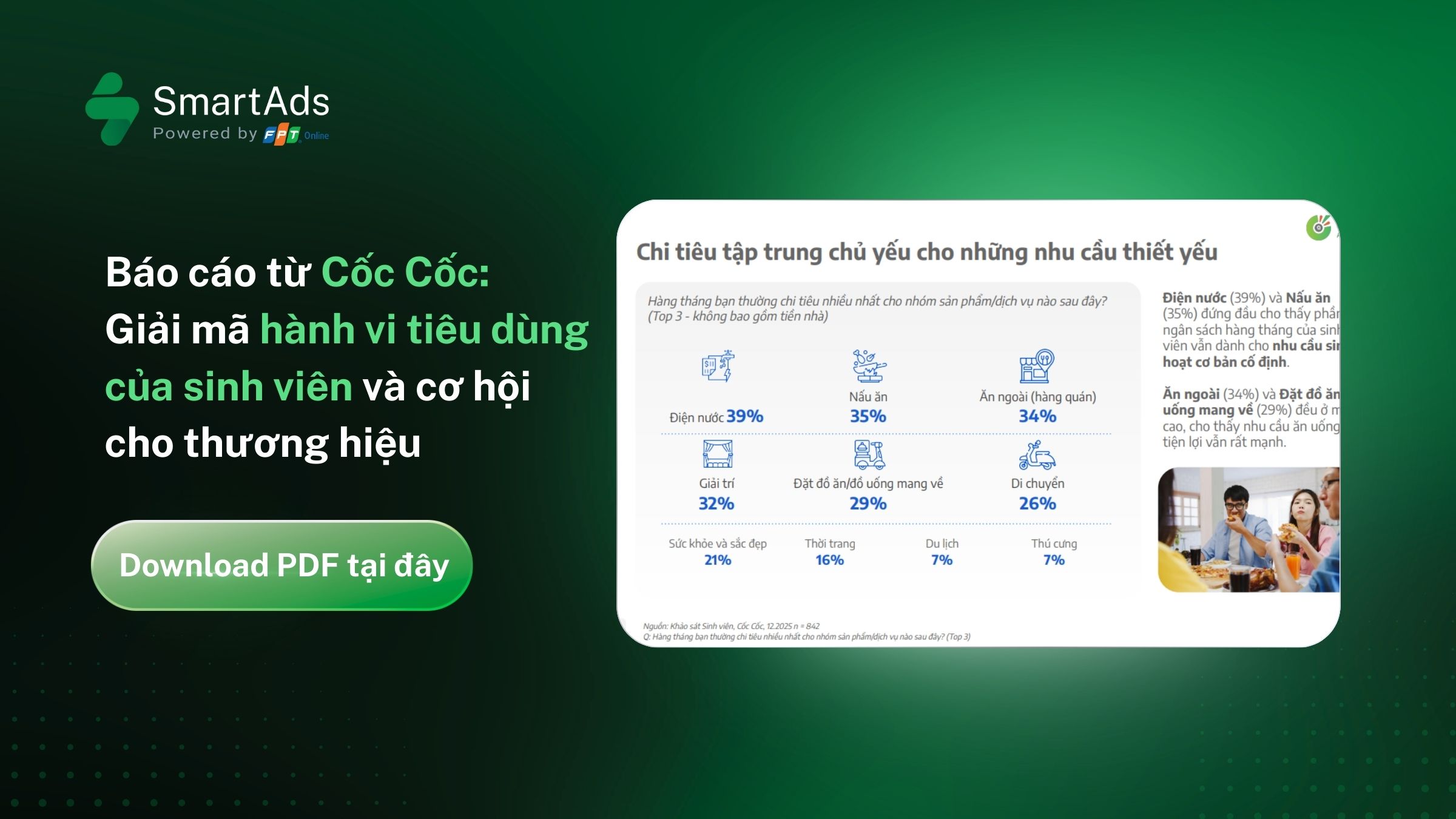
Kết quả khảo sát cho thấy ngân sách hàng tháng của sinh viên chủ yếu được phân bổ cho các nhu cầu cơ bản. Các nhóm chi tiêu nổi bật gồm:
- Điện nước chiếm tỷ trọng cao nhất, đạt 39%
- Nấu ăn tại nhà ở mức 35%, phản ánh xu hướng chủ động tiết kiệm chi phí
- Ăn ngoài tại hàng quán vẫn phổ biến với 34%
- Giải trí chiếm 32%, cho thấy nhu cầu cân bằng giữa học tập và thư giãn
- Đặt đồ ăn, đồ uống mang về đạt 29%
- Di chuyển chiếm 26%
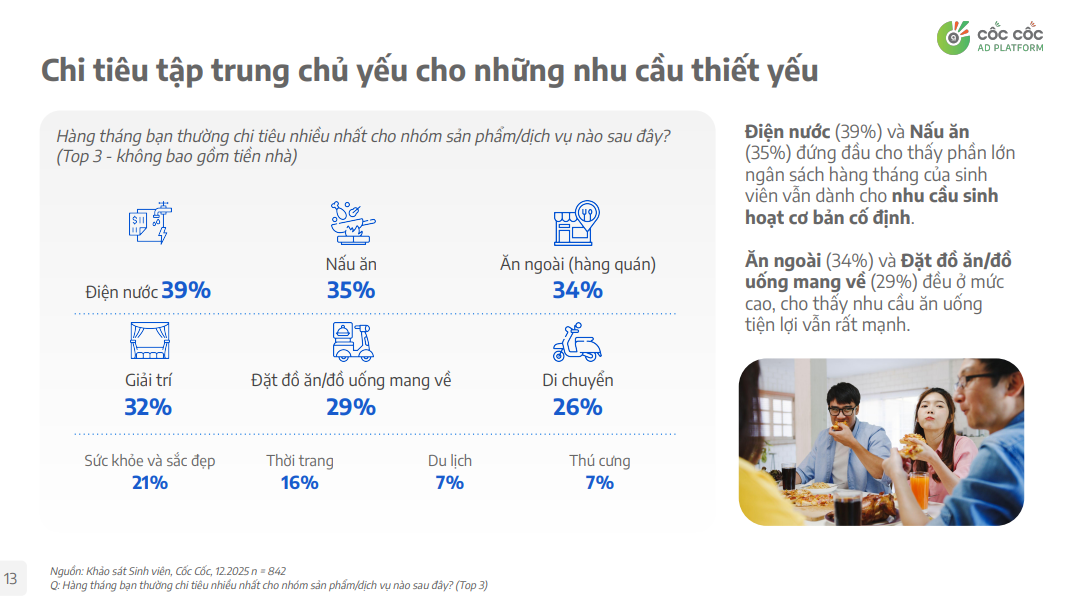
Điểm đáng chú ý không nằm ở việc sinh viên tiết kiệm tuyệt đối, mà ở cách họ tối ưu ngân sách chi tiêu. Tự nấu ăn vẫn được ưu tiên như một giải pháp kiểm soát chi phí hiệu quả nhưng đồng thời vẫn duy trì ăn ngoài và đặt đồ ăn khi cần thiết. Sự kết hợp này cho thấy nhu cầu về tiện lợi, giao lưu xã hội và trải nghiệm cá nhân vẫn hiện diện rõ rệt, dù trong bối cảnh chi tiêu có chọn lọc hơn.
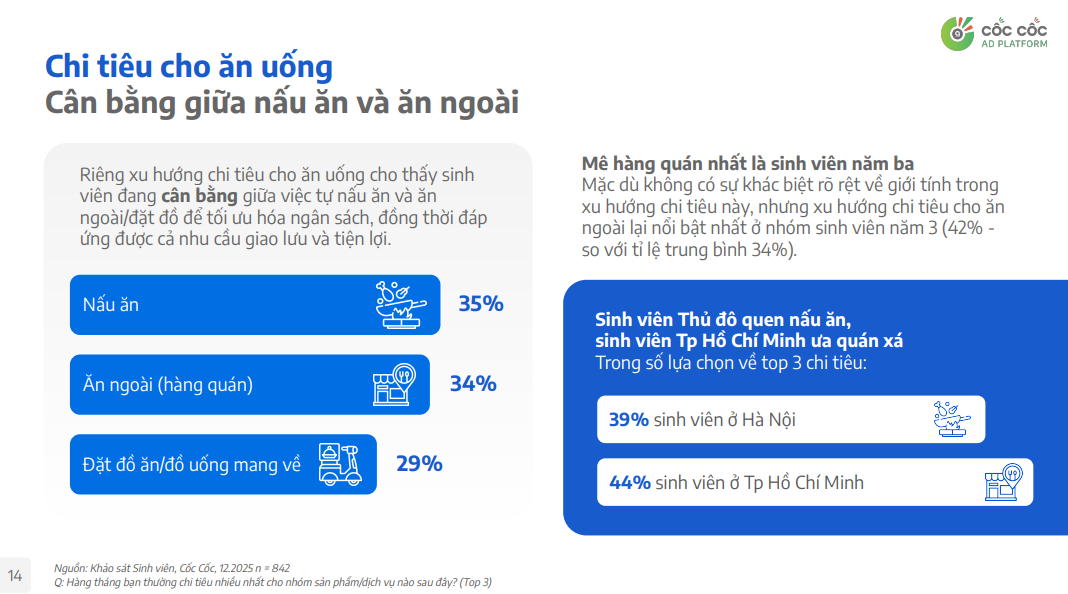
Xét theo yếu tố khu vực, hành vi tiêu dùng có sự khác biệt tương đối rõ ràng:
- Sinh viên tại Hà Nội có xu hướng ưu tiên nấu ăn tại nhà (39%), gắn với tâm lý tiết kiệm và thói quen sinh hoạt ổn định
- Sinh viên tại TP.HCM lại thiên về ăn ngoài và hàng quán (44%), cho thấy nhu cầu tiện lợi và trải nghiệm ẩm thực cao hơn
Những khác biệt này mở ra cơ hội lớn cho các thương hiệu trong lĩnh vực F&B, dịch vụ giao đồ ăn, chuỗi hàng quán cũng như các thương hiệu FMCG. Việc thiết kế thông điệp, sản phẩm và kênh tiếp cận phù hợp theo từng khu vực sẽ giúp thương hiệu gia tăng mức độ liên quan và hiệu quả khi tiếp cận nhóm khách hàng sinh viên.
Sự khác biệt về hành vi sử dụng sàn TMĐT: Shopee & TikTok Shop thống trị hành vi mua sắm
Trong hành vi mua sắm online của Sinh viên, theo báo cáo Students Behavior Report 2025 của Cốc Cốc, thương mại điện tử nội địa chiếm ưu thế với các chỉ số ghi nhận như sau:
-
Shopee: 64%
-
TikTok Shop: 43%
-
Mua trực tiếp tại cửa hàng/siêu thị/chợ: 40%
-
Các sàn khác (Lazada, Tiki…): 17%
-
Mạng xã hội (Facebook, Instagram, Zalo): 15%
-
Website thương hiệu: 11%
Bức tranh hành vi này cho thấy thương mại điện tử nội địa đang giữ vai trò trung tâm với hành vi mua sắm theo mô hình hybrid. Cụ thể:
-
Online: săn giá, tiện lợi, đa lựa chọn
-
Offline: phục vụ nhu cầu thiết yếu, tức thời
Đây là đặc trưng điển hình của hành vi tiêu dùng đa kênh (multi-channel behavior) trong thế hệ trẻ.
Chân dung sinh viên Việt Nam 2025 dưới góc nhìn tiêu dùng
Từ dữ liệu của Students Behavior Report 2025, có thể khái quát 5 đặc điểm cốt lõi:
-
Tài chính: Tự chủ dần, không phụ thuộc tuyệt đối gia đình
-
Chi tiêu: Thận trọng, ưu tiên thiết yếu, nhưng không cực đoan
-
Hành vi mua sắm: Số hóa mạnh, ưu tiên nền tảng nội địa
-
Phong cách sống: Cân bằng giữa tiết kiệm - tiện lợi - trải nghiệm
-
Tư duy tiêu dùng: Thực dụng, logic, dựa trên giá trị sử dụng hơn là hình thức
Hàm ý chiến lược cho thương hiệu và nhà quảng cáo
Đối với doanh nghiệp và thương hiệu, nhóm sinh viên không còn là phân khúc “giá rẻ” đơn thuần, mà là phân khúc tiêu dùng chiến lược dài hạn. Do đó, cách tiếp cận hiệu quả cần:
-
Tái định vị sinh viên: không “chi tiêu ít” mà “chi tiêu có kiểm soát”: Khoảng 80% sinh viên chi tiêu dưới 5 triệu/tháng, ngân sách tập trung cho điện nước, ăn uống và sinh hoạt. Điều này cho thấy sinh viên không cắt giảm tiêu dùng mà tối ưu từng quyết định chi tiêu. Thương hiệu cần chứng minh giá trị sử dụng thực tế, tránh thông điệp cảm tính hoặc định vị xa rời bối cảnh sống của sinh viên.
-
Phân khúc theo năm học & mức tự lập tài chính thay vì chỉ theo độ tuổi: Sinh viên năm cuối và nhóm tự lập tài chính (đi làm thêm, học bổng) có tỷ lệ chi tiêu trên 5 triệu/tháng cao hơn đáng kể. Doanh nghiệp nên chia nhỏ thông điệp và sản phẩm theo: sinh viên năm đầu (nhạy giá, ưu tiên thiết yếu) và sinh viên năm 3–5+ (cởi mở với trải nghiệm, dịch vụ và sản phẩm giá trị cao hơn).
-
Ưu tiên Mobile-first trong toàn bộ hành trình tiêu dùng: Hành vi tìm kiếm, đặt đồ ăn, mua sắm TMĐT của sinh viên diễn ra chủ yếu trên mobile. Mobile không chỉ là kênh tiếp cận mà là nơi quyết định chuyển đổi. Doanh nghiệp cần tối ưu tốc độ, UX, CTA và quy trình thanh toán ngắn gọn trên thiết bị di động để giảm bounce và tăng CR.
-
Khai thác khác biệt vùng miền trong chiến lược nội dung & phân phối: Sinh viên TP.HCM chi tiêu cao hơn, thiên về ăn ngoài và dịch vụ; sinh viên Hà Nội ưu tiên nấu ăn và chi tiêu kiểm soát. Thông điệp, hình ảnh và kênh phân phối cần được địa phương hóa, tránh áp dụng một công thức truyền thông cho toàn bộ thị trường sinh viên.
-
TMĐT nội địa là điểm chạm chính, nhưng không thể bỏ qua offline: Shopee và TikTok Shop là hai kênh mua sắm được sử dụng thường xuyên nhất, phản ánh hành vi mua sắm số hóa mạnh. Tuy nhiên, 40% sinh viên vẫn mua trực tiếp tại cửa hàng cho các nhu cầu thiết yếu. Chiến lược hiệu quả cần kết hợp online để tạo nhận biết – offline để chốt hành vi (OMO).
-
Nội dung cần thực tế, dễ kiểm chứng và gắn với đời sống sinh viên: Sinh viên ưu tiên thông tin rõ ràng, review thực tế và so sánh cụ thể trước khi chi tiêu. Các định dạng nội dung như advertorial, bài phân tích, trải nghiệm sử dụng, hướng dẫn chi tiêu hợp lý trên báo điện tử giúp thương hiệu xây dựng niềm tin và hỗ trợ giai đoạn cân nhắc.
-
Tiếp cận sinh viên là đầu tư cho vòng đời khách hàng dài hạn: Thói quen tiêu dùng hình thành trong giai đoạn sinh viên có xu hướng duy trì khi đi làm. Doanh nghiệp tiếp cận sớm, đúng ngữ cảnh và đúng giá trị có thể xây dựng sự quen thuộc thương hiệu, từ đó tối ưu LTV thay vì chỉ tập trung ROI ngắn hạn.
-
Báo điện tử giữ vai trò củng cố niềm tin trong hành trình ra quyết định: Trong bối cảnh sinh viên chi tiêu thận trọng, các kênh có độ tin cậy cao như báo chí chính thống đóng vai trò quan trọng trong việc xác nhận thông tin, giảm rủi ro nhận thức và hỗ trợ chuyển đổi. Đây là nền tảng phù hợp để triển khai nội dung chiều sâu kết hợp với quảng cáo hiển thị.
Về SmartAds, tiền thân là eClick, được phát triển bởi FPT Online – một trong những đơn vị tiên phong trong lĩnh vực công nghệ và truyền thông số tại Việt Nam. Trải qua quá trình đổi mới và phát triển, với mạng lưới hợp tác cùng các premium publisher hàng đầu, SmartAds khẳng định vị thế tiên phong trong quảng cáo trên báo điện tử tại thị trường Việt Nam, đồng thời kỳ vọng trở thành đối tác đáng tin cậy cùng thương hiệu trong hành trình chinh phục khách hàng. Nếu bạn đang tìm kiếm một giải pháp quảng cáo tối ưu nhận diện và hiệu suất, đừng ngần ngại tạo tài khoản và trải nghiệm setup chiến dịch trên SmartAds tại đây.