Native ads on online newspapers: reaching the right target audience with a seamless advertising experience
Native Ads, also known as native advertising, are designed to blend naturally into the surrounding content. Native Ads on online newspapers appear directly within the news feed of digital publishers, often presented as articles, images, or videos aligned with the editorial context. A key characteristic is that these ads are programmed and displayed in a style consistent with the publisher’s editorial format, making the content feel more natural, familiar, and trustworthy to readers.
>>> Explore the latest native ad formats for 2025 here.
Unlike traditional banner ads, Native Ads rarely feel intrusive to readers. They appear as part of the content flow, creating a seamless experience on news platforms without disrupting the context users are engaging with. This is also why Native Ads are increasingly becoming a preferred strategy in digital advertising and modern content marketing.
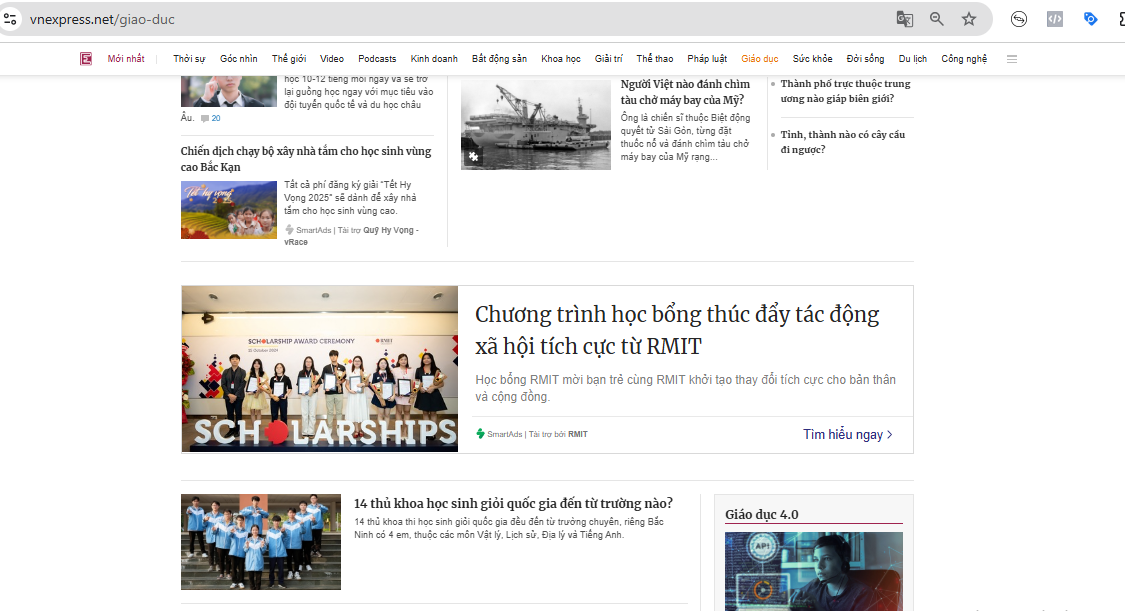
How native ads are delivered through reader behavior targeting
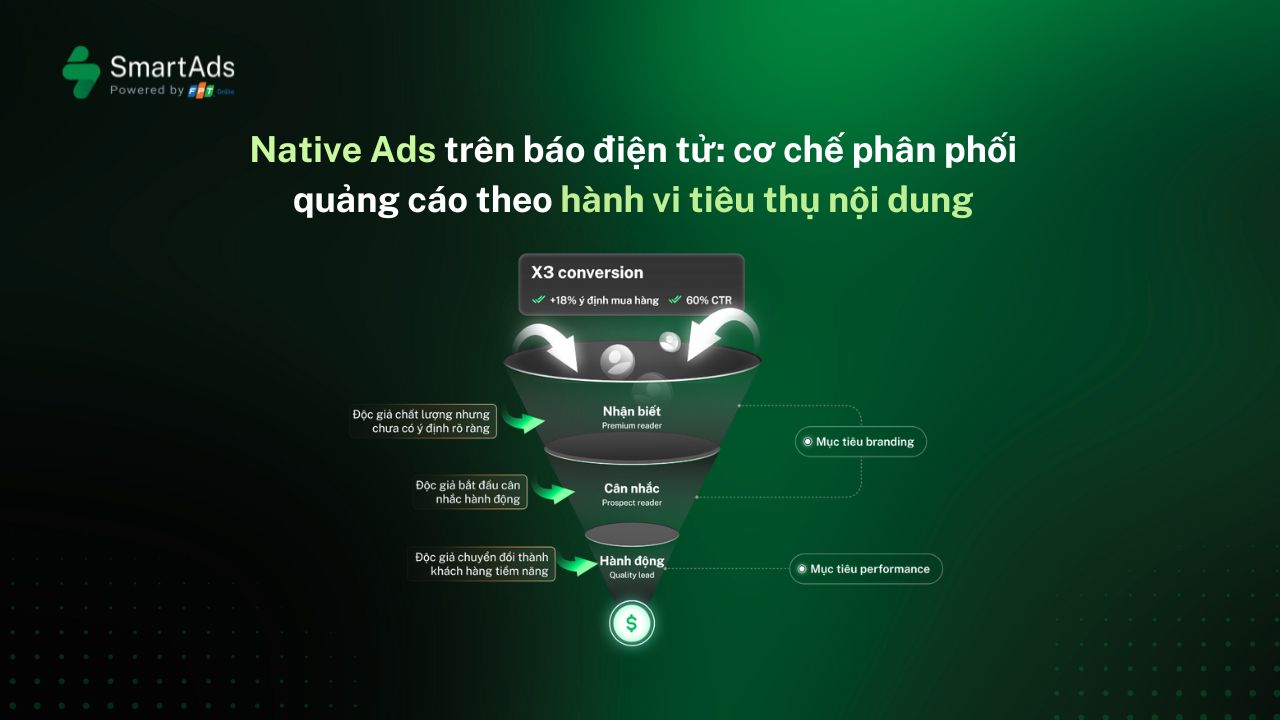
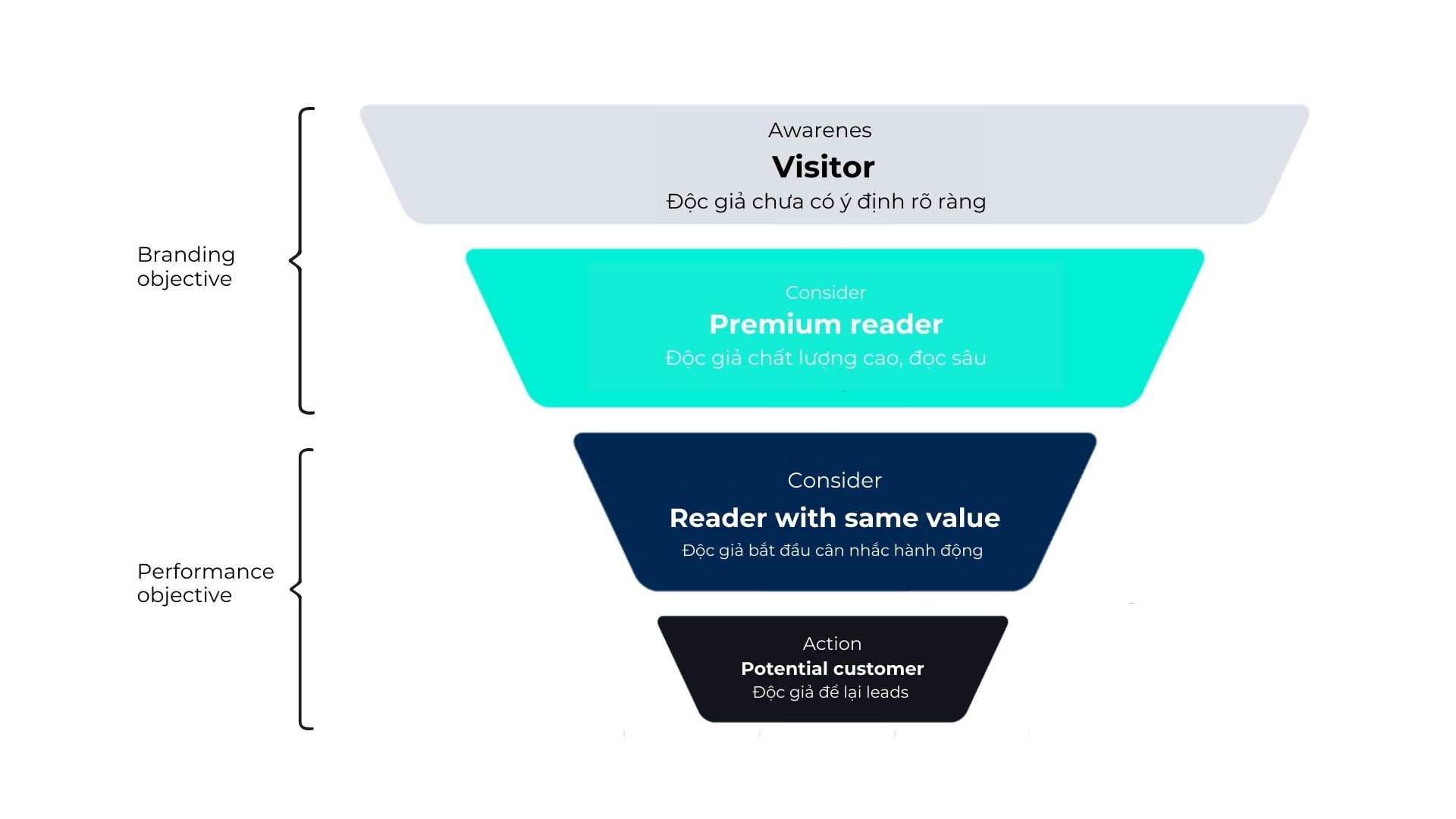
In general, most Native Ads on online newspapers are programmed to target readers based on behavior across four stages of the marketing funnel as outlined below:
Top stage: awareness – layer 1
- Audience: At this stage, reader behavior mainly consists of visitors. This includes users who visit a publisher’s news site intentionally or casually, whether they already know which article they want to read or are simply browsing for updates. Readers at this stage have not yet developed strong engagement; they typically skim quickly, interact minimally, and easily leave if the content is not relevant or engaging.
-
Main behavior: scanning information with no clear intent. Therefore, brands aiming to reach readers at this stage should prioritize advertising campaigns focused on branding objectives. The main goal is to build brand awareness and create a strong first impression that encourages readers to stay longer and move toward deeper engagement, eventually becoming premium readers. During this process, the audience size naturally decreases because not all visitors are genuinely interested in the content. Some visitors may be bot traffic, spam users, or casual readers who only skim headlines. As a result, the transition from awareness to the next stage always involves natural filtering. Only readers who truly find the content valuable and relevant will stay longer and gradually develop deeper engagement.
Ad targeting mechanism based on reader behavior
Next stage: consideration – layer 2
-
Audience: Premium readers. This group consists of high-quality audiences who regularly follow the platform and spend more time reading in depth. They value reliable information, are selective in their reading choices, and actively seek content related to their personal or professional interests.
-
Main behavior: reading thoroughly and spending more time on articles, often returning multiple times with a higher level of engagement compared to casual visitors. This group typically has longer time on site, lower bounce rates, higher page views per session, and frequent sessions overall. At this stage, brands should focus on providing in-depth and trustworthy content aligned with readers’ interests, while maintaining consistent messaging to build credibility. Therefore, branding objectives remain essential to foster emotional connection and trust before moving readers closer to action.
Next stage: consideration – layer 3
-
Audience: Prospect readers or readers who share the same values as the brand. These audiences have already engaged deeply with the content and begin recognizing that the brand aligns with their needs or personal values.
-
Main behavior: from the publisher’s news platform, prospect readers click on native ads and navigate to the brand’s landing page to explore more details, compare information, and evaluate options before making a decision. They are more likely to review case studies, testimonials, product benefits, or service details. At this stage, brands should focus on performance-driven campaigns with persuasive content that builds trust and encourages readers to move toward the final step of the customer journey.
Final stage: action – layer 4
-
Audience: Potential customers. These are highly engaged readers who have become prospects and are ready to provide their information (leads) for further consultation.
-
Main behavior: proactively submitting personal information and showing clear intent to interact with the brand. At this stage, campaigns should focus on performance objectives to maximize conversions through clear calls to action (CTA), attractive offers, simple registration processes, and smooth user experiences. This stage completes the journey from awareness to action within the marketing funnel.
Practical benefits of native ads for businesses
Increase brand awareness and build trust
At the awareness stage, Native Ads help reinforce brand presence naturally by appearing seamlessly within news content streams. When combined with contextual AI and personalized messaging, brand communication becomes more organic and memorable while reducing the perception of intrusive advertising. As readers move toward deeper engagement (premium readers), Native Ads continue supporting branding efforts by strengthening trust and gradually building a loyal audience base.
Improve ctr, conversions, and campaign performance
When readers move into the consideration stage (prospect readers), Native Ads demonstrate clear performance advantages. Data from Vietnam in 2025 shows that the average CTR of Native Ads ranges from 1–2%, roughly double that of traditional banners (0.5–1%). Advanced targeting algorithms combined with relevant content significantly improve conversion rates and campaign efficiency across multiple industries.
>>> How to run effective native advertising campaigns?
Reach the right target audience more precisely
Native Ads are distributed based on readers’ browsing behavior and content history, helping brands reach the most relevant audiences. Businesses can reduce wasted advertising budgets because ads are shown only to users with higher potential to convert. When integrated with contextual AI, the experience becomes more personalized, increasing the likelihood that readers will submit their information (leads) at the action stage.
Strengthen brand credibility through trusted news publishers
Across all four stages of the funnel, Native Ads offer a unique advantage when placed on reputable online newspapers. Ads displayed on major digital news platforms benefit from the credibility and authority of the publisher. This reduces the perception of overt advertising while increasing reader trust and strengthening brand image.
In addition, audiences on reputable news sites often consist of readers who seek reliable information, typically with higher education levels, stronger purchasing power, and greater social influence. These readers are more engaged with content and more likely to develop deeper relationships with brands.
These factors make Native Ads not only effective at increasing awareness at the top of the funnel but also highly persuasive in later stages. This creates a strong foundation for brands to reach the right prospect readers, increase conversions into real customers, and strengthen overall brand trust.
Key considerations when implementing native ads on online newspapers
Ensure transparency and comply with advertising regulations
Marketers should clearly label sponsored content as “advertising” in accordance with regulations to avoid misleading readers, while also complying with the policies of each digital publisher and relevant Vietnamese advertising laws.
Leverage advanced technologies such as contextual ai and behavioral analytics
Platforms that integrate AI can automatically optimize targeting while personalizing content based on each reader’s context and behavior. This increases relevance and reduces wasted advertising budgets. Modern technology also helps ensure data security and privacy protection under increasingly strict standards, building trust for both businesses and consumers. Leveraging contextual AI and behavioral analytics is essential for achieving both branding impact and performance results throughout the customer journey.
Invest in creative content aligned with editorial environments
Content is the core of native advertising. Brands should prioritize meaningful, valuable content that aligns with the audience of each publisher rather than relying on clickbait tactics or superficial “traffic-driving” headlines.
Choose the right placements, publishers, and continuously optimize data
Ad placement significantly influences reader attention and engagement. Therefore, marketers should prioritize placements aligned with typical news-reading behavior, such as in-feed placements or contextual sections related to the article topic. In addition, selecting reputable publishers ensures high-quality traffic and minimizes issues such as bots, spam, or fake users. After campaign launch, marketers should continuously monitor metrics such as CTR, time on site, bounce rate, and conversion rates to optimize performance and ensure campaigns deliver results for both branding and performance goals.
From premium publishers to potential customers with SmartAds brandformance solutions
Native Ads on online newspapers are not only a growing trend in digital advertising but also a powerful bridge connecting brands with their target audiences through a natural, seamless, and trustworthy experience. What differentiates SmartAds from other ad networks is its strong network of premium publishers, helping brands shorten the customer journey by reaching high-quality premium readers from the very first touchpoint.
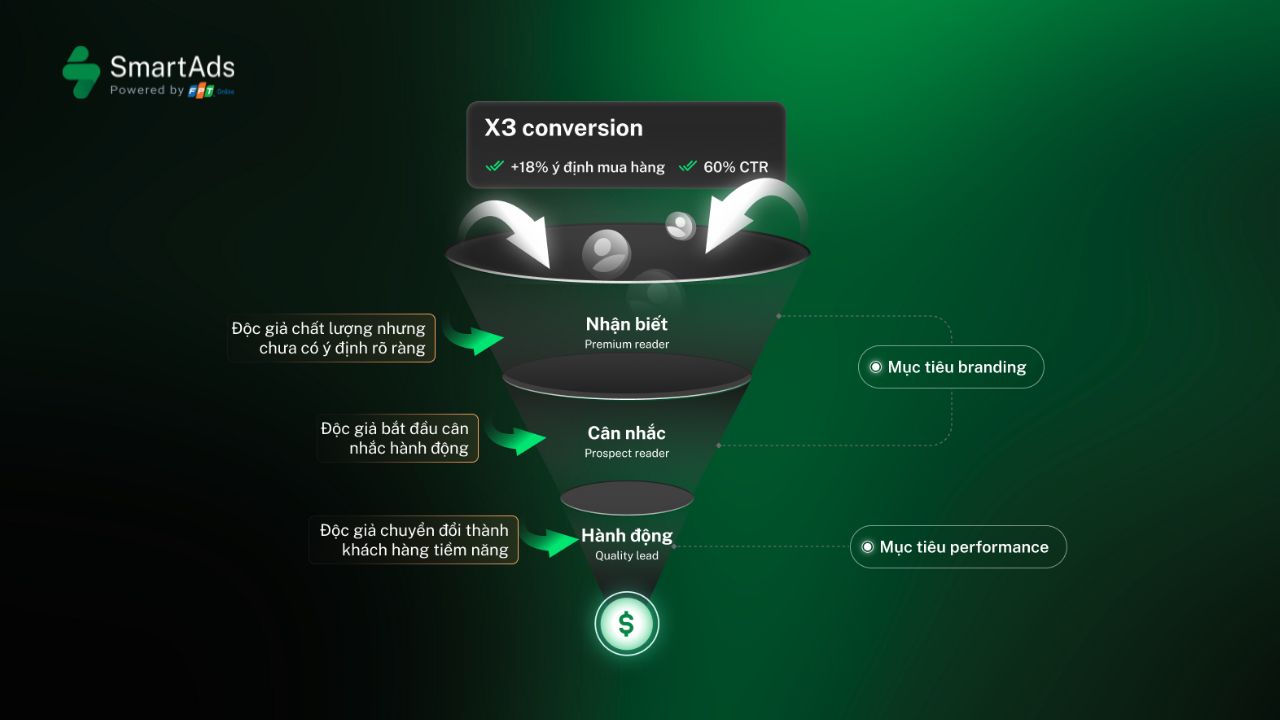
To optimize this journey, SmartAds has developed the Brandformance model – combining the power of branding and performance. By leveraging premium publishers, brands can simultaneously strengthen credibility and drive measurable conversions. Within this model, SmartAds structures the customer journey into three key funnel layers:
-
Awareness (premium reader): stimulate intent by building trust and delivering high-quality content.
-
Consideration (prospect reader): guide readers to explore the brand in more depth and align with shared values, leading toward conversion.
-
Action (quality leads – potential customers): maximize conversion behavior and capture high-quality leads.
With a strong focus on brand safety through strict content moderation, SmartAds aims to be a leading solution that ensures brand visibility in high-quality environments while improving conversion performance. If you are looking for an effective advertising solution, feel free to create an account and experience campaign setup on SmartAds here.