
Definition of CSAT – what is CSAT?
CSAT (Customer Satisfaction Score) is a metric used to measure how satisfied customers are with a company’s products or services. It is typically collected through direct surveys after a specific interaction within the customer journey. Today, CSAT is one of the most widely used customer experience metrics, playing a critical role in both marketing strategy and business management.
Why is measuring customer satisfaction important? Even when a company invests heavily in products or services, failing to meet customer expectations can threaten long-term growth and market share. The CSAT metric provides a clear and timely view of customer experience quality at each touchpoint, helping businesses identify improvement opportunities as soon as issues arise.
The nature of CSAT and measurement methods
The CSAT score is primarily collected through customer surveys, often in the form of a specific question asked after a customer completes a transaction or interaction. The most common method uses a Likert scale (for example, 1–5, ranging from “very dissatisfied” to “very satisfied”) or calculates the percentage of positive responses.
CSAT formula:
CSAT = (Number of positive responses / Total number of responses) x 100%
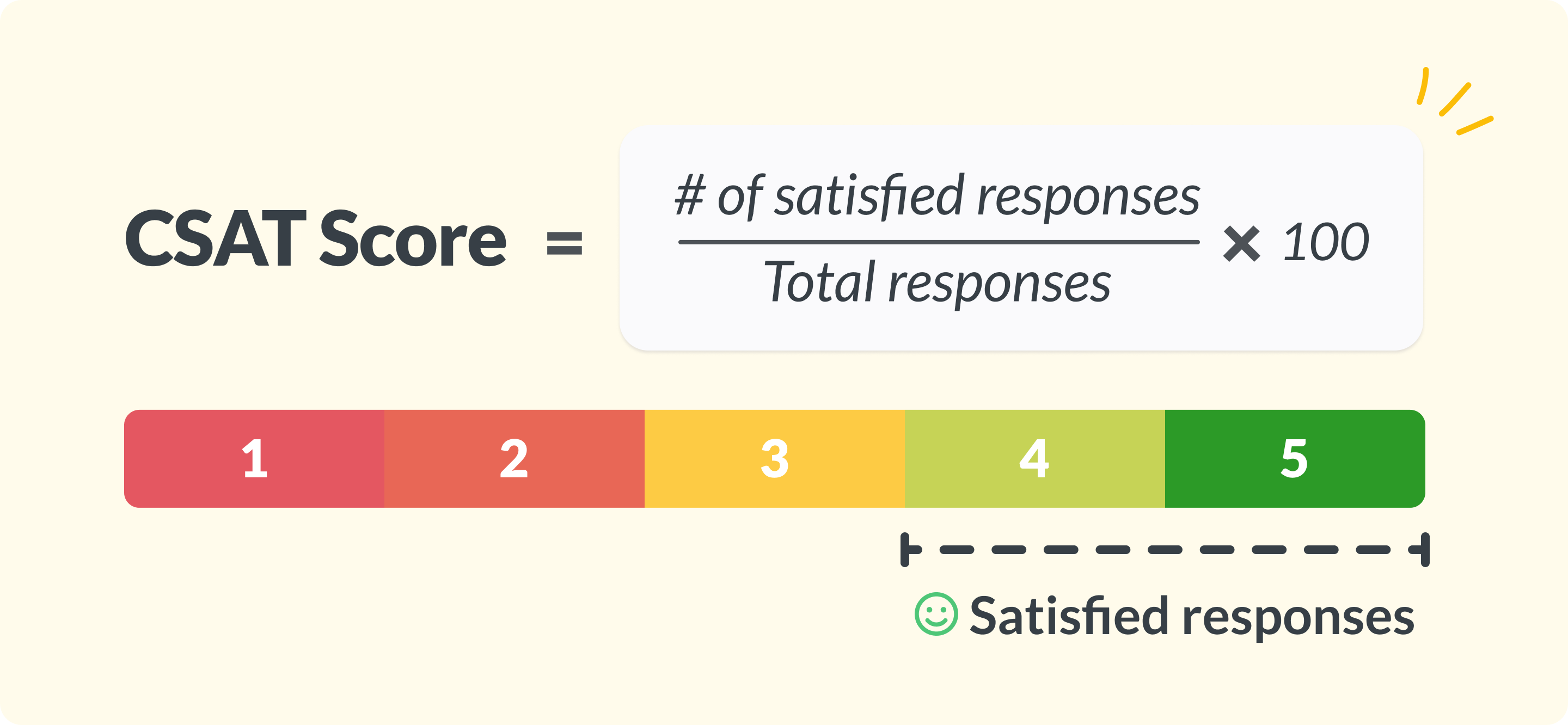
Example: An e-commerce retail chain may ask, “Are you satisfied with the quality of the product you just received?” after each order. The business achieves a high CSAT score when the majority of customers select the highest ratings on the scale.
When measuring CSAT, surveys should be linked to specific touchpoints such as delivery quality, staff attitude, or return procedures. Experts recommend avoiding overly general questions, as they may overlook critical details that influence the customer satisfaction score.
Designing effective surveys and question types
An effective CSAT survey should not only evaluate overall satisfaction but also focus on key touchpoints within the customer journey, such as:
- “How would you rate the delivery time?” (Very dissatisfied – Very satisfied)
- “Did our support staff resolve your questions promptly?”
Example CSAT survey questions focusing on key customer experience touchpoints
Checklist for designing CSAT survey questions:
- Clear and easy to understand
- Neutral wording to avoid bias
- Delivered at the right time (immediately after the experience)
- Segmented by touchpoints to help identify root causes of low CSAT scores
Benefits of using CSAT in business
Measuring the CSAT score is not merely a routine process—it is a powerful lever that helps businesses improve customer experience management and drive stronger business performance.
Evaluating and improving operational performance
CSAT provides quantitative data that marketers and service managers can use to evaluate the quality of every operational stage. Comparing CSAT scores before and after campaigns or service improvements helps quickly identify trends and pinpoint weak areas that require optimization.
Strengthening customer loyalty and decision-making
According to data from Qualtrics, customers who report high satisfaction (CSAT scores of 8 or above) are three times more likely to repurchase and recommend a service compared with other groups. Businesses can use this metric as a foundation for staff training, product development, and flexible adjustments to customer service processes based on real feedback.
Comparison with other metrics (NPS, CES)
CSAT stands out for its ability to quickly measure satisfaction at individual touchpoints. However, to gain a more comprehensive view of brand health, experts often recommend combining CSAT with NPS (Net Promoter Score — measuring customer loyalty) and CES (Customer Effort Score — measuring how easy it is for customers to interact with a company) in marketing performance reports.
Best practices and optimization when applying CSAT
Many common mistakes in customer surveys can lead to biased CSAT data. To measure customer satisfaction effectively, businesses must optimize every step—from survey design to data analysis.
Survey timing and data collection methods
- Conduct surveys immediately after each transaction or service interaction
- Use multiple channels such as email, SMS, pop-ups, phone calls, or social media
- Prioritize automated survey systems that can integrate with CRM platforms to increase response rates
- Ensure the sample size is large and representative to minimize statistical bias
Analyzing results and taking action based on CSAT
Do not stop at the average score. Analyze CSAT results by customer segments, products, and services. Combine quantitative data with qualitative feedback to uncover the root causes of issues. Continuously monitor changes over time, update survey questions, and adopt new technologies to maintain both data security and the practical value of survey insights.
Optimization checklist:
- Regularly review and improve survey content
- Apply modern data analysis methods
- Protect customer data to build trust when collecting feedback
Conclusion: Measuring CSAT is the key for marketers and businesses to deeply understand their customers, make more accurate decisions, and build a real competitive advantage. Investing in a well-structured survey strategy is essential for any company aiming to grow through exceptional customer experience.