
What is brand affinity?
Brand affinity is defined as the level of positive emotional connection between customers and a brand. Unlike brand awareness, which only reflects whether customers recognize a brand’s existence, brand affinity goes much deeper—focusing on preference, trust, and the long-term willingness to support and advocate for the brand. In other words:
- Brand awareness answers the question: “Do customers know the brand?”
- Brand affinity answers: “Do customers genuinely like the brand and want to stay connected with it?”
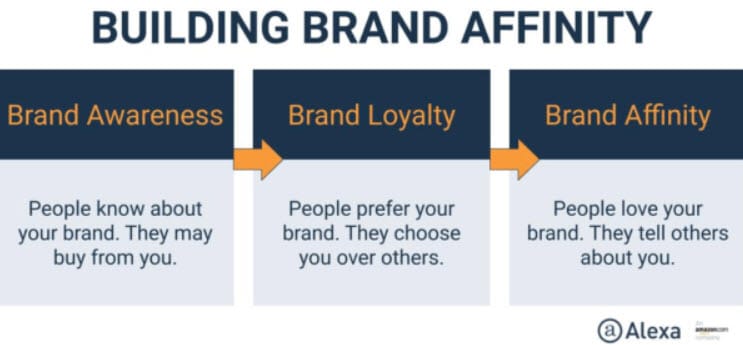
For example, many people are familiar with Apple. However, brand affinity is demonstrated when customers consistently choose Apple products and genuinely believe in the value the brand delivers.
Core elements that shape brand affinity
To build meaningful brand affinity and emotional loyalty, businesses must focus on the following key drivers:
- Product and service quality that consistently delivers on brand promises
- A seamless and consistent customer experience across every touchpoint
- Clear brand values and personality aligned with customer beliefs and lifestyle
- Consistency in messaging and brand actions from online to offline channels
- Strong interaction capabilities, community building, and emotional engagement
All of these components work together to create a solid foundation for long-term customer attachment and brand loyalty.
Business value and benefits of high brand affinity
Increase customer loyalty and retention
Industry research indicates that when brand affinity is high:
- Customer return rates increase significantly, reducing customer acquisition costs (CAC)
- Loyal customer bases expand, while churn rates decline noticeably
This demonstrates that effective brand building is not just a marketing activity—it is a sustainable investment in both resources and long-term value creation.
Enhance brand equity and business performance
Reports from Harvard Business Review highlight that brands with strong brand affinity typically:
- Gain a clear competitive advantage that is difficult to replicate
- Command premium pricing because customers are willing to pay more for brands they love
- Achieve superior revenue and profit growth compared to competitors with low brand affinity metrics
Improving brand affinity is therefore not merely a communication objective—it directly impacts financial performance and sustainable business growth.
Strengthen resilience and organic brand advocacy
Businesses with strong brand affinity often:
- Receive greater understanding and forgiveness when minor issues occur
- Benefit from organic word-of-mouth marketing and positive social sharing, reducing the risk of communication crises
Checklist to build and improve brand affinity
To help marketers and businesses apply brand affinity strategies effectively, below is a practical action framework:
1. Build your brand on clear core values
- Clearly define brand purpose, mission, and core values, and communicate them consistently across all channels
- Leverage SmartAds solutions such as Native Ads to create natural, trust-driven brand experiences throughout the customer journey
2. Optimize customer experience and content strategy
- Ensure excellence in both product quality and after-sales service
- Invest in high-value or entertaining content aligned with the insights of target audiences, especially media buyers, SMEs, and marketing managers
3. Build community and drive omnichannel engagement
- Create forums, groups, and knowledge-sharing communities centered around brand storytelling
- Strengthen real-time engagement across channels such as social media, digital news platforms (native ads), email marketing, and events
4. Measure and optimize brand affinity metrics
Key performance indicators to track include:
- NPS (Net Promoter Score): measuring customers’ likelihood to recommend the brand
- Number of loyal customers and repeat purchase rate
- Content engagement levels across platforms
5. Craft a compelling brand story and narrative
- Develop a distinctive and memorable brand story
- Create emotional resonance through personalized content and social proof, including success stories from influencers or key customers
In summary, understanding and applying brand affinity strategically is a proven pathway to building strong brand equity, lasting brand trust, and sustainable business outcomes. True brand attractiveness is not defined by noise or visibility alone, but by the depth of emotional connection and the consistent value customers receive every day.