How does SmartAds’ Sentiment Targeting feature work?
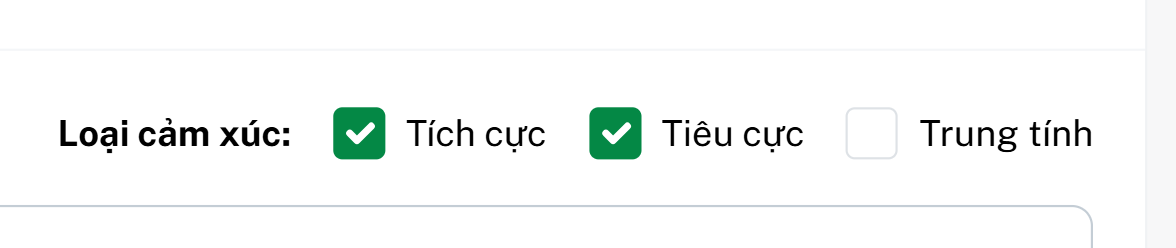
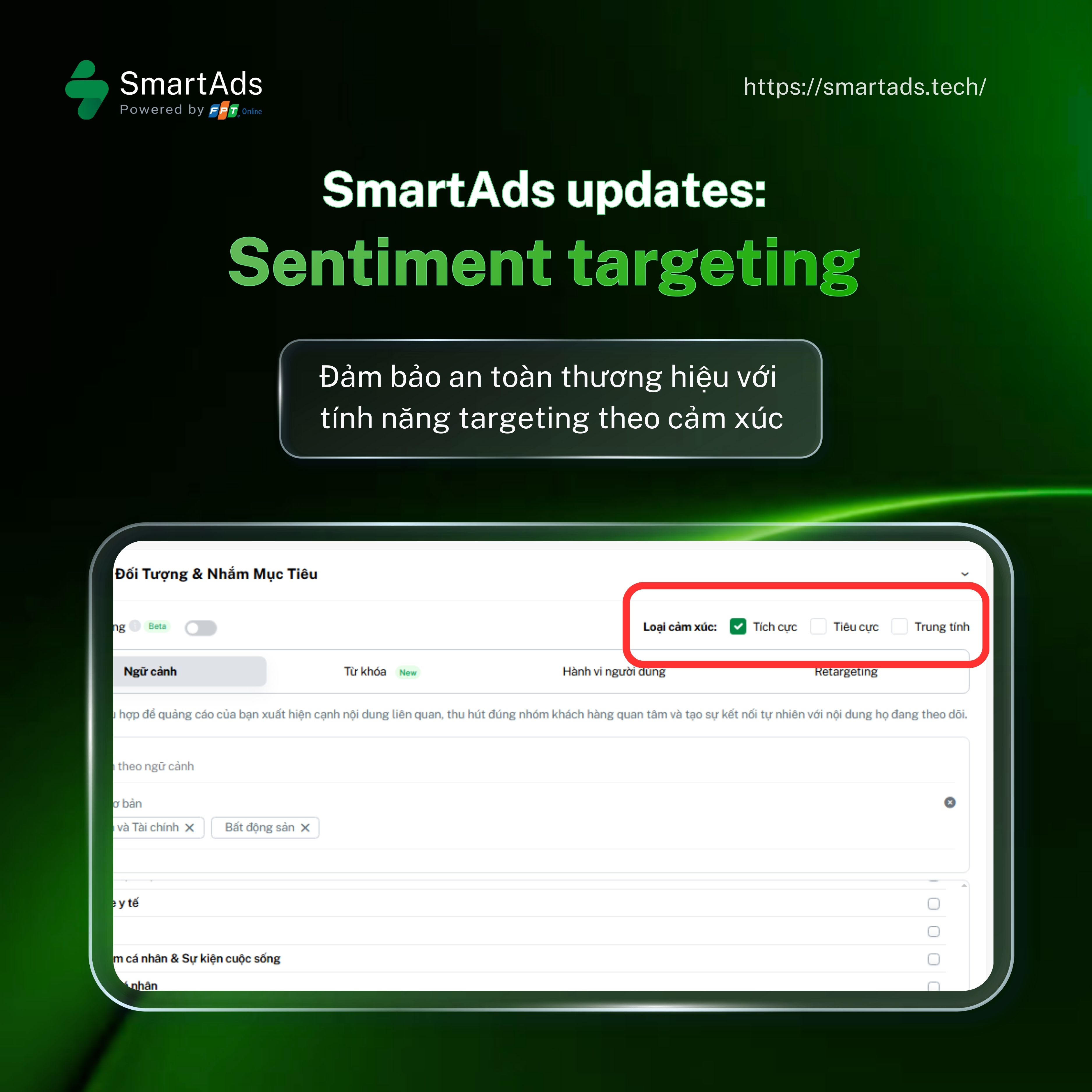
Sentiment Targeting enables advertisers to proactively select the emotional tone of the content environment where their ads are delivered. Powered by AI, SmartAds analyzes text at the content level and classifies it into three primary sentiment categories:
-
Positive: Inspirational, entertaining, and uplifting content that spreads positive energy. Ideal for FMCG, education, entertainment, and brand-building campaigns focused on brand awareness and long-term brand equity.
-
Neutral: Informational, analytical, and objective content. Well-suited for banking, finance, real estate, and B2B sectors where credibility and clarity are essential.
-
Negative (Selective): Content addressing risks, social issues, health, or security topics. Suitable for insurance, healthcare, and risk-mitigation products—or can be excluded entirely to ensure strict Brand Safety standards.
>>> Proven tips to build high-impact performance content for your brand.
As a result, advertising messages are placed within the most emotionally aligned context, increasing receptivity, engagement, and brand recall.
Key benefits of sentiment targeting in digital advertising
With Sentiment Targeting, SmartAds introduces a new optimization layer to Contextual Targeting and AI-powered digital advertising:
-
Stronger Brand Alignment: Beyond the inherent credibility of SmartAds’ Premium Publisher ecosystem, combining it with sentiment-based targeting ensures that your ads appear in emotionally consistent environments aligned with brand values and communication objectives.
>>> Explore SmartAds’ premium online publisher network.
-
Higher Relevance: Messages resonate with the reader’s emotional state, improving CTR and CVR through better contextual and psychological alignment.
-
Proactive Brand Safety Control: Avoid undesirable or sensitive contexts before impressions are served.
-
More Native-Like Experience: Ads feel less intrusive and integrate naturally into the surrounding content, enhancing user experience and overall campaign performance.
Integrating SmartAds’ 4 targeting layers with sentiment: One layer, One strategic role
SmartAds does not use Sentiment as a standalone filter. Instead, it integrates sentiment signals into each targeting layer, assigning distinct roles across the entire Brandformance funnel—from awareness to conversion.
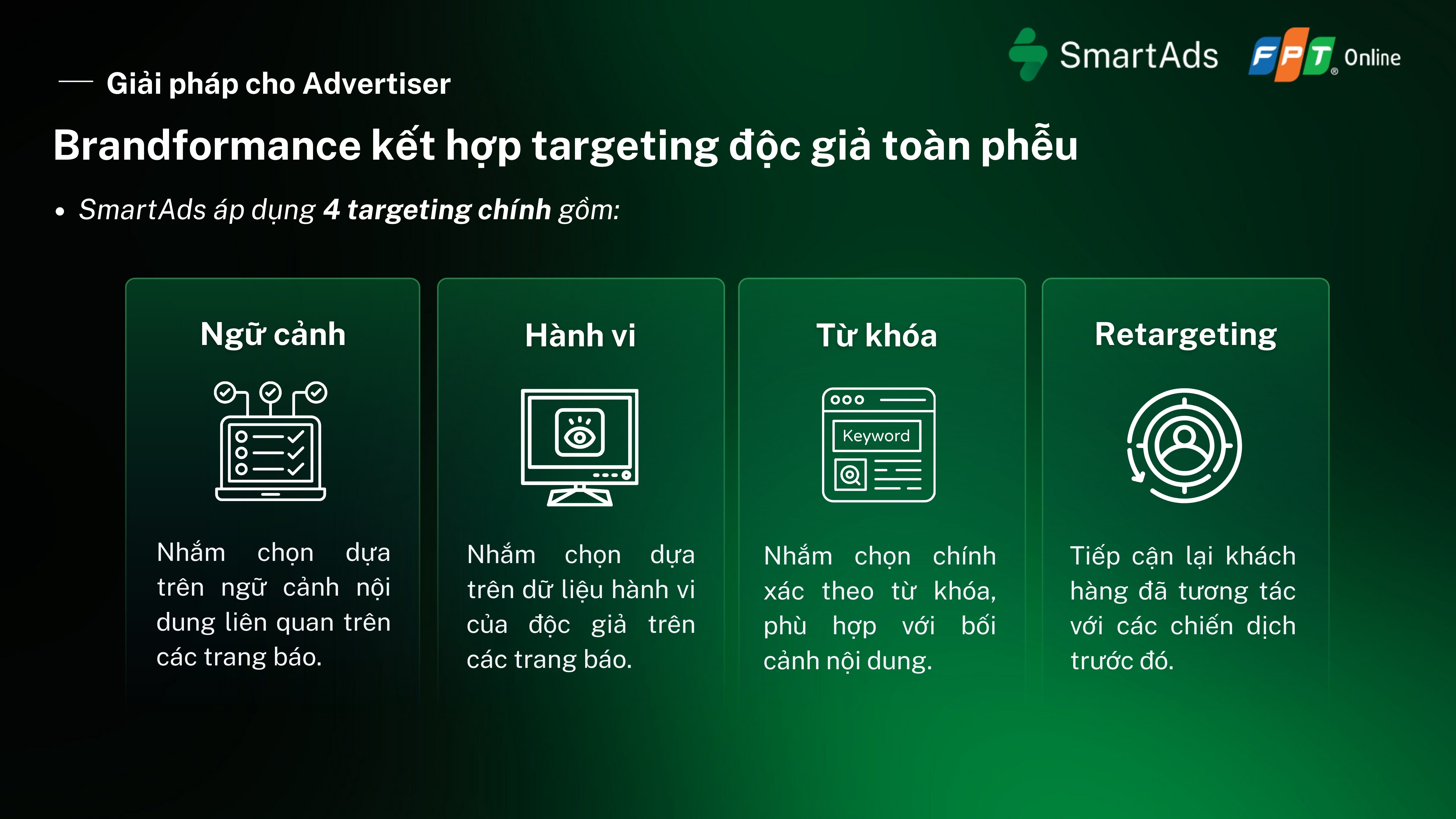
1. Contextual Targeting + Sentiment = Environment Fit
Context answers the question where the ad appears, while Sentiment determines the emotional atmosphere of that content. This layer ensures Brand Safety and brand image protection—especially critical at the TOFU (Top of Funnel) stage.
2. Keyword Targeting + Sentiment = Message Fit
Keywords define the specific topics users are engaging with, while Sentiment identifies their emotional mindset. This combination is particularly effective at the MOFU (Middle of Funnel) stage, where messages must be relevant to both the problem and the emotion to drive consideration.
3. Behavioral Targeting + Sentiment = Moment Fit
Behavioral data reveals who is demonstrating strong interest signals, while Sentiment selects the most appropriate psychological moment to deliver the message. This layer optimizes CTR and engagement rates, preventing wasted impressions in the “wrong mood.”
4. Retargeting + Sentiment = Conversion Fit
While Retargeting identifies users already familiar with the brand, Sentiment controls the emotional context in which the brand reappears. This strategic combination helps increase CVR and strengthen trust, rather than simply chasing users through frequency-based exposure.