1. What Determines the Effectiveness of an Advertising Campaign?
A successful advertising campaign does not rely solely on choosing the right media channels or precise targeting. At its core lies performance content and brand strength. According to Nielsen’s study across more than 500 multi-channel advertising campaigns, performance content—creative content directly tied to conversion impact—accounts for up to 47% of direct sales effectiveness. In parallel, brand equity contributes an additional 15%.
In other words, these two factors alone represent over 60% of an ad campaign’s potential for success. The remaining portion—less than 40%—comes from Digital Media elements. While still important, they play a supporting role and cannot replace the foundational impact of content.
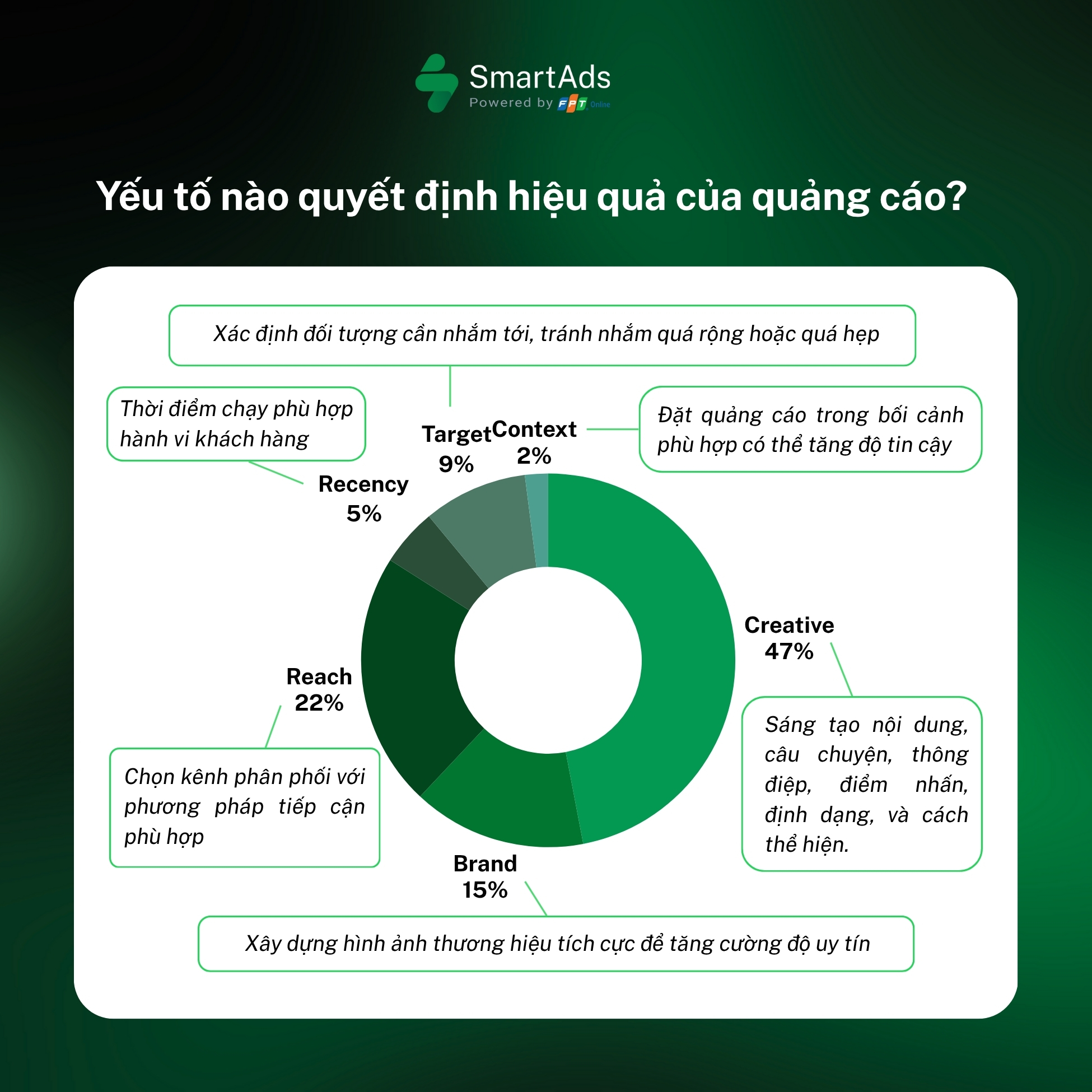
Based on the chart above, advertising effectiveness can be broken down into the following six factors:
-
Reach (22%): selecting the right distribution channels and reach strategies to ensure the message effectively connects with the target audience.
-
Targeting (9%): accurately identifying the audience to avoid budget waste caused by targeting that is too broad or too narrow.
-
Recency (5%): choosing the optimal timing to maximize impact—ideally when users are most active and receptive to the message.
-
Context (2%): placing ads in relevant contexts to enhance credibility and persuasion. Appearing alongside trusted content or on leading, reputable publishers acts as a powerful lever to improve brand perception, build trust, and influence purchase decisions.
-
Brand (15%): building a strong brand foundation so every advertisement reinforces awareness and trust.
-
Creative (47%): crafting compelling content, storytelling, messaging, key highlights, formats, sound elements (when applicable), and execution to maximize attention and engagement.
The key takeaway is this: no matter how well media factors such as channels, timing, or context are optimized, if performance content lacks creativity, emotional appeal, or alignment with brand values, advertising results will struggle to scale. Content is ultimately the differentiator that connects with emotions and drives real customer action.
2. What Is Performance Content?
Performance Content refers to advertising content designed with a clear end goal: driving conversions—such as form submissions, lead generation, trial sign-ups, or purchases. This type of content is continuously optimized based on performance metrics to achieve business objectives, commonly seen in high-converting landing pages, email marketing campaigns, or action-driven video ads.
-
Clear conversion objectives: focused on driving a specific user action such as purchasing, submitting a form, or clicking an ad.
-
Data-driven measurement: performance is evaluated through measurable KPIs such as CTR, conversion rate (CR), CPA, and CPE.
-
Continuous optimization: content and visuals are constantly tested and refined to identify the most effective versions and improve ROI.
-
Performance-first mindset: prioritizing tangible business outcomes over pure messaging or brand storytelling.
Essential Components of Performance Content
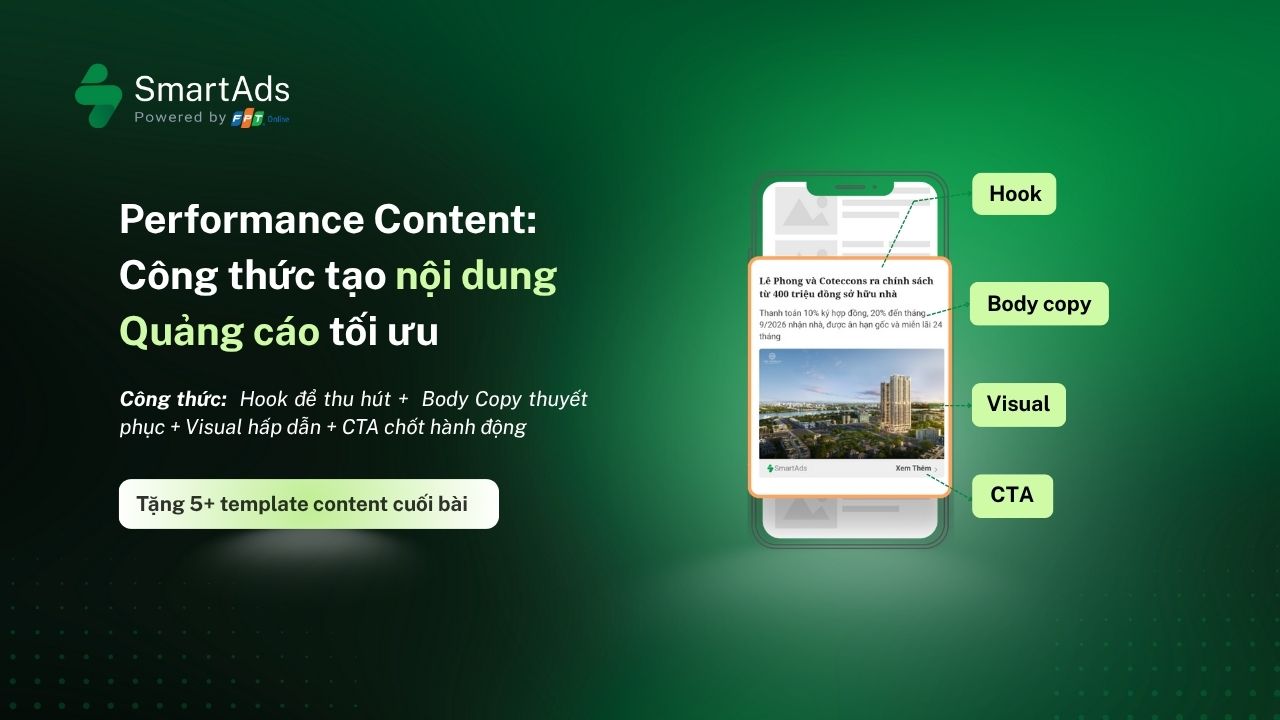
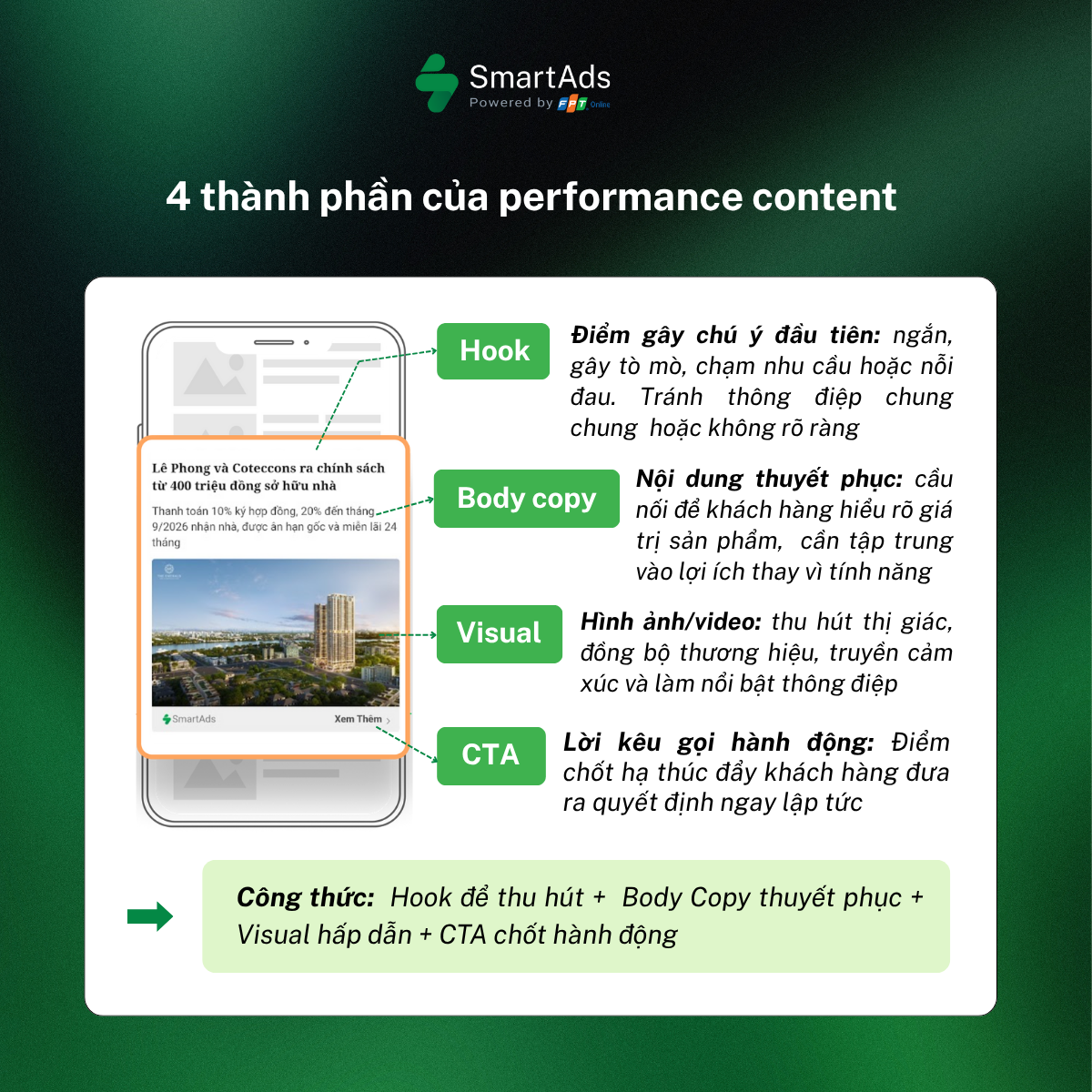
A high-performing advertising asset typically consists of four core building blocks: a compelling Hook, persuasive Body Copy, engaging Visuals, and a strong CTA to drive action.
-
Hook: the first critical entry point that determines whether users stop scrolling or move on. Effective hooks are concise, curiosity-driven, and address key pain points—often using numbers, questions, FOMO, or data.
-
Body Copy: the persuasive bridge that helps users clearly understand the value proposition and trust the offer. It should emphasize benefits over features and can be reinforced with data, case studies, or testimonials.
-
Visuals: images, videos, or motion designs that convey emotion and capture attention. Visual elements must align with brand identity and amplify the core message. In many cases, this also includes audio branding in video—such as signature sounds, voiceovers, or music—to create a consistent multi-sensory brand experience.
-
CTA: the decisive trigger that encourages immediate action. A strong CTA should be clear, compelling, easy to execute, visually prominent, and often paired with urgency to increase conversion rates.
3. Proven Tactics for High-Performing Performance Content
3.1. Craft Strong Messages Focused on Benefits and Offers
A clear sales message combined with compelling promotions acts as a powerful attention driver. Rather than vague messaging, content should directly address user pain points and offer concrete solutions such as:
-
Product discounts or special offers
-
Free trials or experiences
-
Direct solutions to pressing customer problems
Example: An English education center targeting students might use the message: “Free placement test – Get 1 week of trial classes instantly.”
3.2. Test Multiple Creative Angles
Instead of relying on a single idea, campaigns should deploy at least three creatives across 3–5 different creative angles for testing. These angles may include:
-
Audience-based or customer journey–based creatives
-
Promotion-driven creatives (discounts, limited offers)
-
Format variations: images, videos, GIFs
-
Content types: testimonials, pain-point narratives, product reviews
>>> Discover clickbait headline tactics that boost advertising CTR.
3.3. Targeting: Place Content in the Right Context
Contextual targeting is essential for ensuring Performance Content reaches the right audience. When ads appear in relevant environments—such as education, health, or consumer content—trust and engagement rates increase significantly.
3.4. Optimize Formats and User Experience
-
Horizontal formats enhance readability and visual clarity.
-
Landing pages must align with ad content, featuring strong hooks, clear offers, resolved pain points, and decisive CTAs. Campaigns can deploy multiple landing pages for different offers or user intents.
-
Lead forms should be concise, user-friendly, and integrated with tracking systems for performance optimization.
3.5. Storytelling: Turning Sales Content into Emotional Narratives
Performance Content is not just about selling—it’s about emotional connection. High-impact content blends rational value (offers, benefits) with emotional storytelling.
-
Start with relatable real-life situations.
-
Show transformation journeys before and after using the product or service.
-
End with inspiring or uplifting moments that prompt immediate action.
Example: “From lacking confidence in English communication to confidently presenting in class after just three months.”
4. How to Measure Content Performance Effectively
Evaluating content performance requires a structured measurement framework: setting objectives, selecting the right KPIs, collecting data, analyzing insights, and optimizing continuously.
Step 1. Define Clear Measurement Objectives
Identify what you expect from the content—brand awareness, engagement, or conversions—and measure accordingly.
Step 2. Select Appropriate Metrics & KPIs
-
Awareness: impressions, reach, page views, traffic sources.
-
Engagement: CTR, time on page, bounce rate, shares, comments.
-
Conversion: conversion rate, leads, CPA.
-
Retention: returning visitors, email open rates, newsletter CTR.
Step 3. Collect Data from Multiple Sources
To ensure data accuracy, you need to leverage multiple analytics tools:
-
Google Analytics, Adobe Analytics: track user behavior and on-site interactions across your website.
>>> How to categorize event tracking in Google Analytics 4, explained here.
-
Social Analytics (Facebook, TikTok, LinkedIn): measure engagement and performance across social media platforms.
-
SEO Tools (Ahrefs, SEMrush, GSC): evaluate SEO performance, keyword rankings, and organic visibility.
-
Heatmap Tools (Hotjar, CrazyEgg): visualize how users scroll, move, and click on your pages.
Each tool offers a different perspective—when combined, they provide a comprehensive and actionable view of user behavior.
Step 4. Analyze Data and Extract Actionable Insights
Data collection is only the first step. The real value lies in interpreting what the numbers actually mean. For example:
-
A high bounce rate may indicate that the content does not meet user expectations or that page load speed is too slow.
-
A long average time on page suggests engaging content, but without a clear CTA, conversion opportunities may be missed.
-
High social shares combined with low CTR may signal entertaining content that lacks a strong action-driving message.
This analysis helps you identify strengths, weaknesses, and determine which content truly delivers measurable value.
Step 5. Optimize and Continuously Improve
Measurement is not just for reporting—it is a foundation for optimization. Here are several effective approaches:
-
A/B Testing: test multiple versions of headlines, visuals, and CTAs to identify the highest-performing combinations.
-
User Experience (UX) Optimization: if users struggle to find information, refine layout, navigation, and content hierarchy.
-
Repurpose high-performing content: transform the core angle of a long-form blog with strong traffic into videos, infographics, or short-form social content while maintaining the same strategic message.
-
Monitor industry trends: adapt your content strategy based on emerging customer insights or platform algorithm changes.
Conclusion
Performance Content is not just about crafting an advertising message—it is a continuous cycle of creation, testing, and optimization to maximize impact. When content is insight-driven, contextually distributed, and guides users to a logical landing page, advertising campaigns generate real conversions rather than just impressions.
About SmartAds, formerly known as Eclick, SmartAds is developed by FPT Online—one of Vietnam’s pioneering organizations in digital technology and media. Through continuous innovation and growth, and with a strong network of leading premium publishers, SmartAds has established itself as a pioneer in elevating native advertising standards in Vietnam. At the same time, SmartAds aims to become a trusted partner for brands on their journey to win and convert customers. If you are looking for an advertising solution that optimizes both brand visibility and performance, create an account and experience campaign setup on SmartAds here.
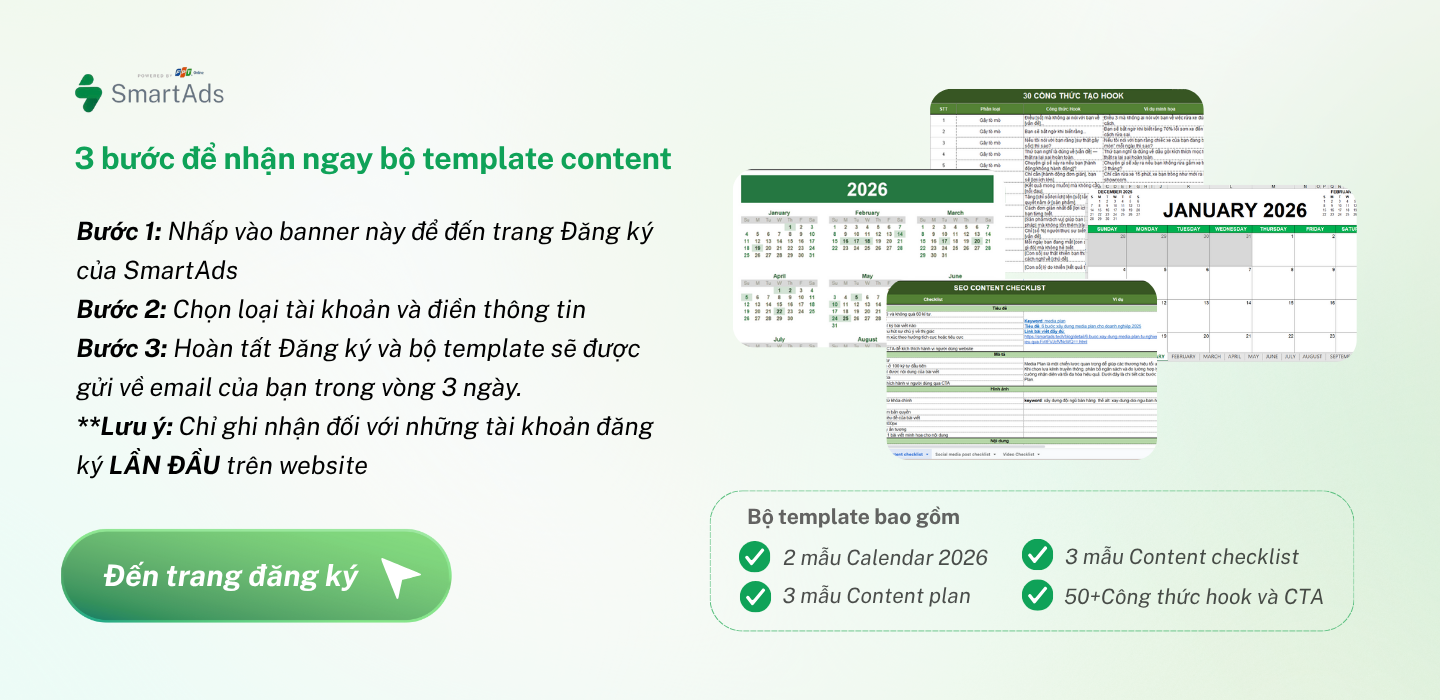
>>> To support your marketing planning more effectively, SmartAds is offering a free content template bundle and a 2026 content calendar—available through just a few simple steps below. PLEASE NOTE: THE TEMPLATE WILL BE SENT VIA EMAIL TO ACCOUNTS REGISTERED FOR THE FIRST TIME ON THE SYSTEM.