1. What is Ad Blindness?
Ad blindness refers to a form of selective attention in which internet users tend to ignore or fail to notice advertisements, especially banner ads. These ads are often placed in prominent positions such as the top, bottom, or side columns of a webpage to capture user attention, yet are frequently overlooked.
The term ad blindness was coined in 1998 by cognitive psychologist Jan Panero Benway, based on usability studies and eye-tracking experiments. Benway discovered that when users looked at a banner, they often scanned past it rather than directly focusing on it—even when the ad was bright, visually striking, and designed to attract attention.
This phenomenon becomes even more pronounced when users are actively searching for specific information on a website. In such cases, they deliberately filter out advertisements—particularly banner ads—to concentrate solely on the content they intend to find.
2. The cognitive mechanisms behind ad blindness
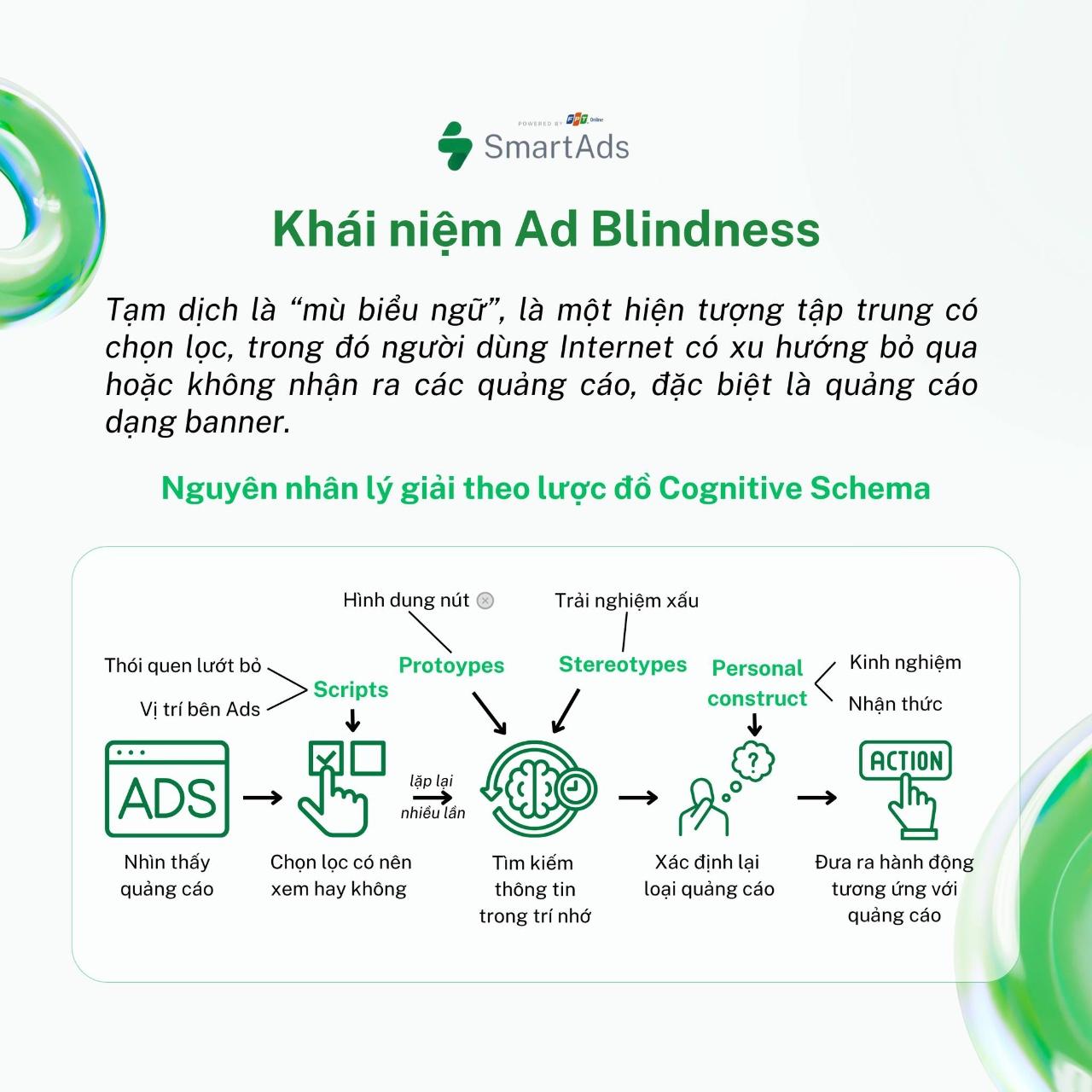
Ad blindness can be explained through the concept of Cognitive Schemata in cognitive psychology. When users visit an ad-supported website, the brain automatically categorizes information, prioritizing what is perceived as relevant while ignoring what seems irrelevant. If an ad appears in familiar placements, uses repetitive designs, or does not align with personal interests, it is likely to be skimmed over without conscious awareness. Over time, users develop a habitual tendency to ignore ads altogether.
The human cognitive system relies on prototypes, personal constructs, stereotypes, and scripts, all of which play a crucial role in how information is perceived and processed:
• Prototypes are mental representations of a typical category or object. For example, when users think of “banner ads,” they often picture rectangular images with a close (“X”) button, making it easier for them to instantly disregard ads that match this familiar pattern.
• Stereotypes are generalized beliefs formed from past experiences. In digital advertising, if users hold the belief that “online ads are usually intrusive,” they are more likely to ignore advertising content without evaluating it in detail.
• Personal Constructs are individual evaluation systems shaped by personal experiences and perceptions. Each user interprets ads differently—for instance, someone interested in technology may pay attention to ads for new smartphones, while others may simply scroll past.
• Scripts are habitual behavioral patterns. When browsing the web, users often follow a learned “script” of scanning main content while ignoring ads, especially those placed in predictable locations such as the right sidebar or below articles.
These cognitive mechanisms collectively lead to ad blindness, where users unconsciously ignore advertisements due to repeated exposure and familiarity with how ads are presented.
3. Visual factors that cause ads to be ignored
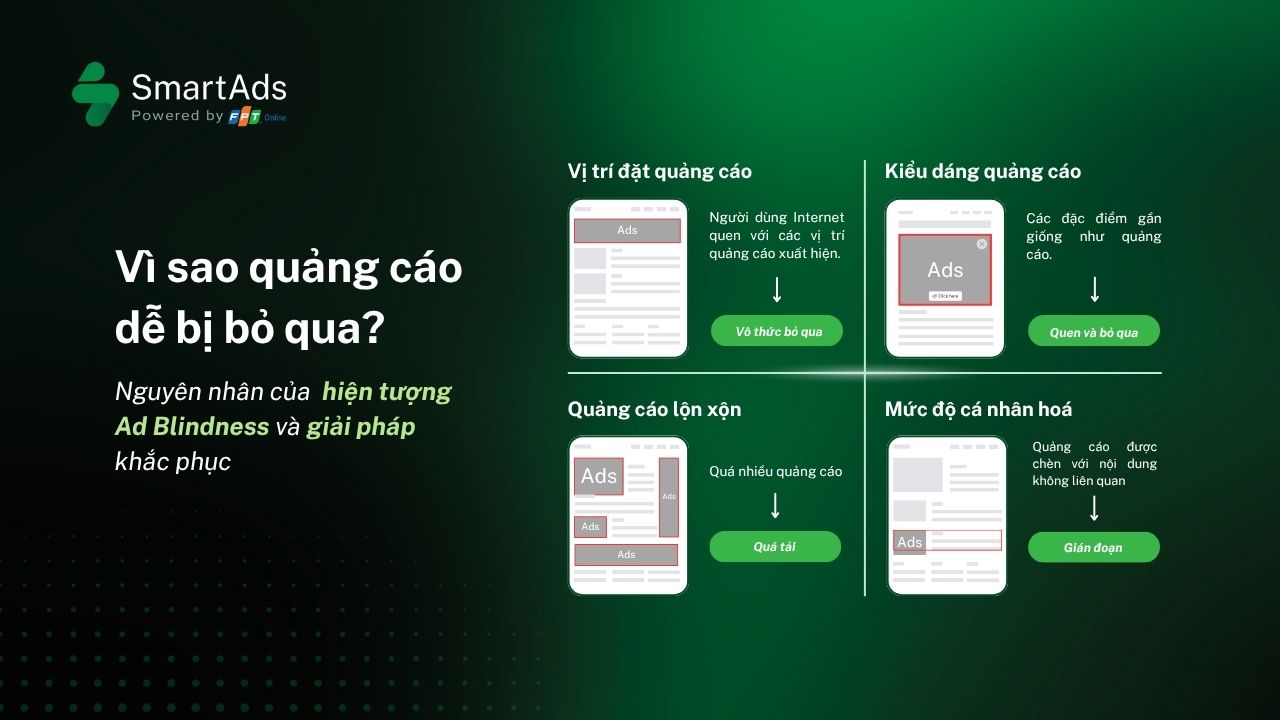
Poor layout, inappropriate colors, and ineffective formats can render ads virtually invisible to users. Below are four key visual factors that influence ad visibility and marketing effectiveness:
a. Ad placement
Internet users have become accustomed to ads appearing in specific areas of a webpage. As a result, they subconsciously ignore these zones, significantly reducing the effectiveness of digital advertising.
b. Ad clutter
When a website contains too many ads—such as banners, pop-ups, and text ads—users experience cognitive overload and may ignore all advertising content entirely, leading to potential revenue loss for publishers.
c. Ad design and format
Ad blindness can also occur when users instinctively skip content that visually resembles ads. Elements such as layout, shape, size, typography, CTAs, or overly contrasting colors can trigger this reaction. This explains why ads that blend naturally into a website’s structure often perform better, as they reduce the sense of disruption and align more closely with user behavior.
d. Level of personalization
A 2021 study found that 58% of consumers respond positively to personalized advertising based on their interests. Therefore, advertisers must accurately target audiences and deliver relevant content to increase attention and reduce ad blindness. For example, if a user is reading an article about real estate, ads promoting new apartment projects, mortgage interest rates, or investment consulting services are far more likely to attract attention than unrelated ads. By personalizing ads based on interests, browsing behavior, and content context, brands can improve engagement and mitigate unconscious ad avoidance.

4. Practical solutions to overcome ad blindness
Understanding how users read and scan webpages is an effective way to reduce ad blindness. Users typically scan content following specific visual patterns. Recognizing these patterns helps publishers place ads more strategically to capture attention.
The F-pattern: According to a 2006 study by the Nielsen Norman Group (NNG), users scan webpages in an F-shaped pattern—reading horizontally across the top (forming the top bar of the “F”), then across the middle (the second bar), and finally scanning vertically down the left side (the stem of the “F”). This pattern helps explain why ads placed at the top of the page or in the right sidebar are often ignored.
The Gutenberg Diagram: In left-to-right reading cultures, users tend to focus on four key areas of a page, with the top-left corner receiving the highest attention. Placing ads in this area can help improve click-through rates.
In addition, Native Ads are widely regarded as an effective solution for reducing ad blindness. Unlike traditional banner ads that are easily ignored, native ads are designed to seamlessly integrate with website content and user experience. This approach minimizes disruption and increases information receptivity.
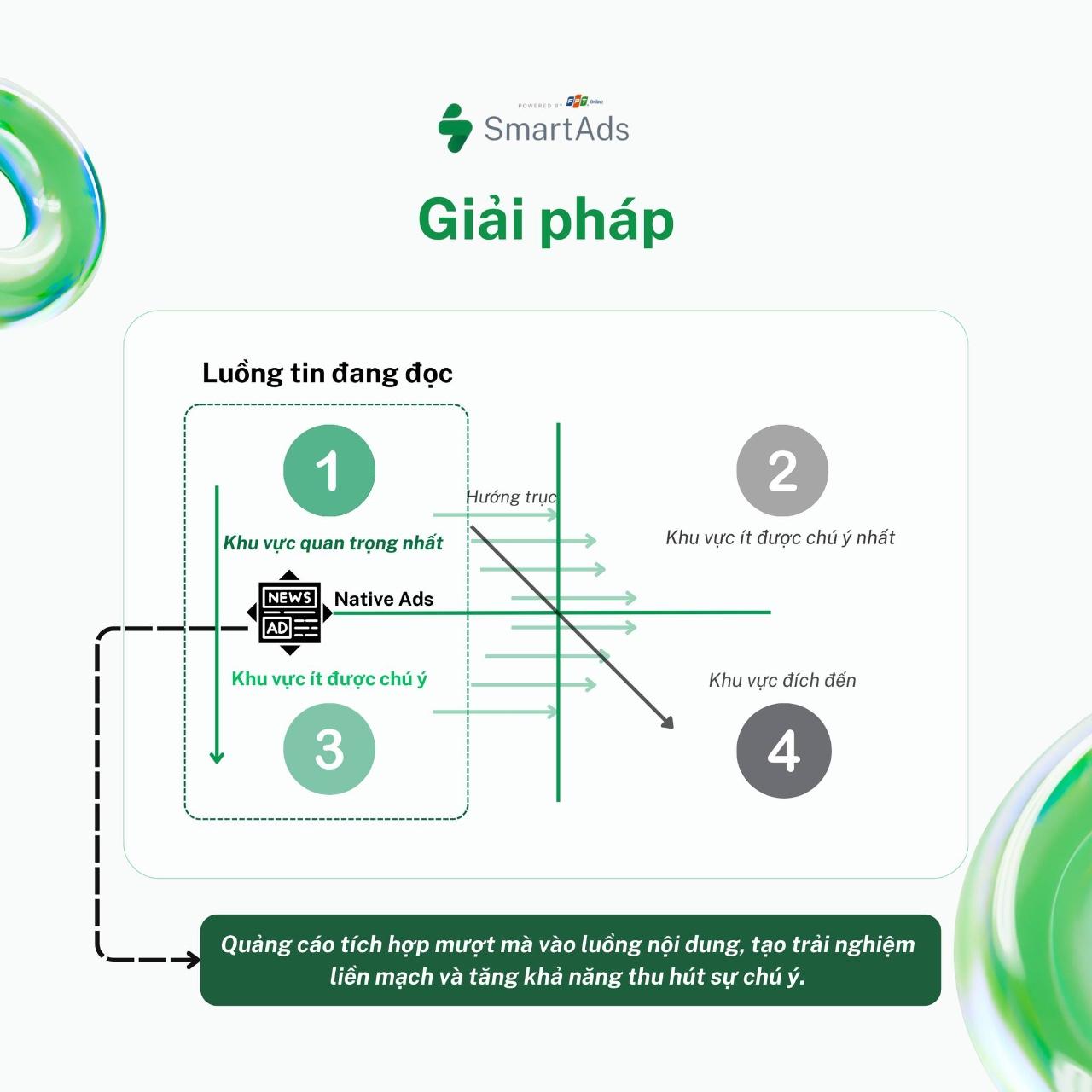
With their natural, non-intrusive presentation, native ads capture user attention without disrupting the browsing experience, helping improve click-through rates (CTR) and engagement. This is why many publishers and advertisers are prioritizing native advertising as a strategic solution to enhance campaign performance in today’s highly competitive digital landscape.
Currently, SmartAds is deploying Native Ads solutions across major online news platforms. This approach enables brands to reach audiences more organically, ensuring message and content alignment within the website environment.