
What is taxonomy?
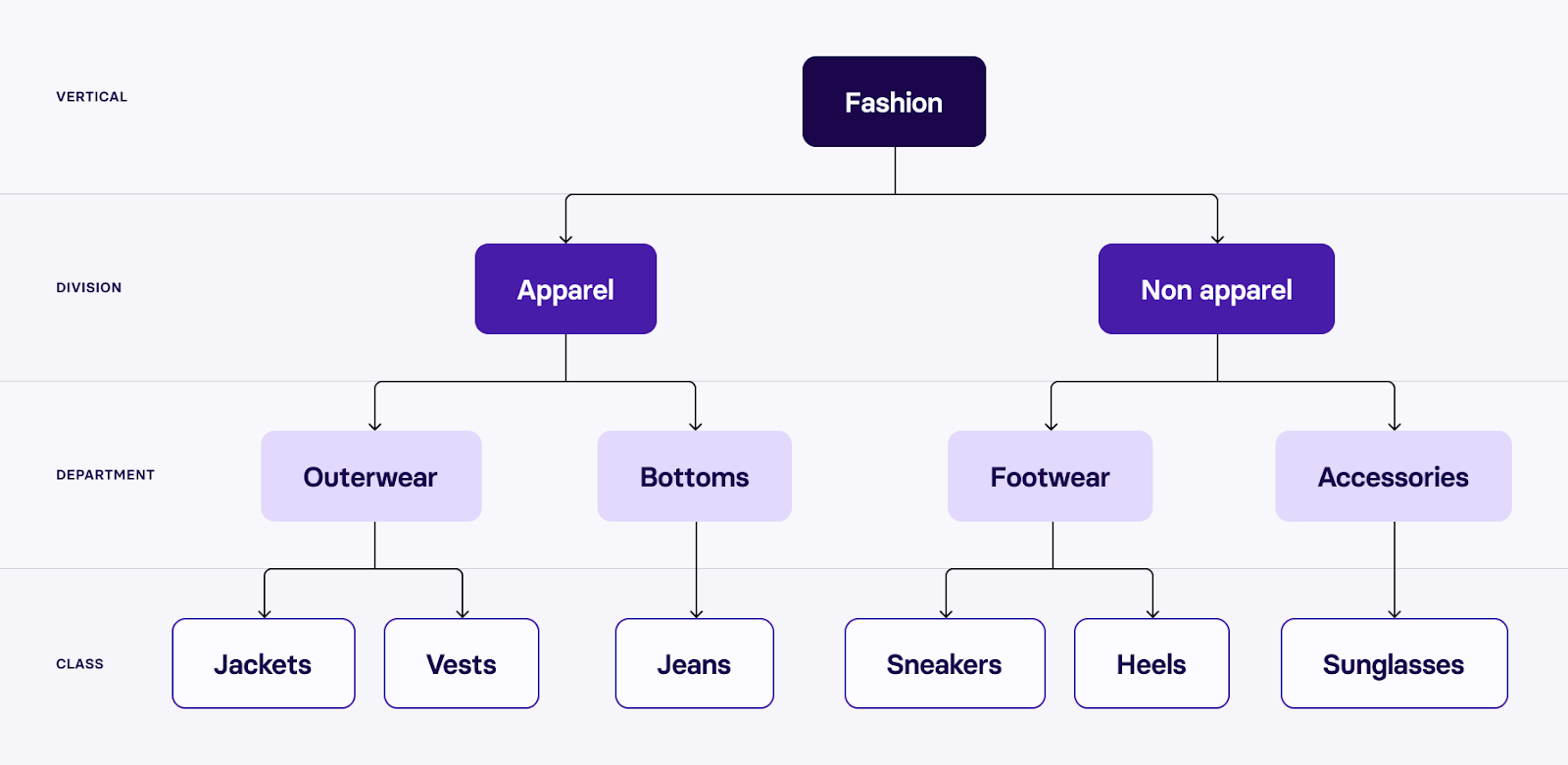
Taxonomy is a structured classification system designed to organize and manage information in a systematic way. In digital advertising, taxonomy not only helps categorize and structure website content, but also supports audience segmentation and even standardizes ad formats. A well-defined taxonomy framework is a critical foundation for data-driven marketing and scalable campaign optimization.
Practical examples:
- A major news website such as VnExpress typically organizes content by categories like Business, Entertainment, Sports, and more. Each article is assigned specific tags aligned with the site’s taxonomy structure.
- Similarly, advertisers use taxonomy to define target audience segments. For example, users who frequently read content under the “Finance” category may be ideal prospects for investment banking or wealth management ads.
IAB taxonomy standards in digital advertising
As the digital advertising ecosystem continues to evolve, the need for standardized language and structured data becomes increasingly critical. The Interactive Advertising Bureau (IAB) has developed a specialized taxonomy system for digital advertising, including:
- Content taxonomy: Classifies website or app content into detailed topics and categories, enabling contextual targeting and brand safety alignment.
- Ad product taxonomy: Defines advertising product types, ad formats, placements, and inventory structures across platforms.
By adopting IAB taxonomy standards, stakeholders in the digital advertising industry - advertisers, agencies, publishers, and media buyers - can operate using a shared data language. This facilitates seamless system integration, improves programmatic advertising workflows, and enhances the effectiveness of contextual advertising strategies.
Benefits of applying IAB taxonomy in digital advertising
Improve campaign performance and targeting precision
Enhancing personalization and audience targeting with taxonomy
- Implementing taxonomy enables more accurate classification of content, audiences, and ad formats. This empowers marketers to deliver the right message to the right audience, increasing personalization and overall campaign performance.
- According to a HubSpot study, native ads campaigns leveraging a clearly structured taxonomy achieved a 13% higher ROI compared to campaigns without standardized classification.
Enhance measurement, analytics, and optimization
- Standardized data enables marketers to generate detailed performance reports by content category and audience segment, making it easier to compare results and optimize budgets across multiple platforms.
- Using taxonomy also supports unified reporting frameworks by integrating data from Google, Facebook, and native advertising platforms, reducing inconsistencies and measurement discrepancies.
Strengthen collaboration across digital advertising stakeholders
- When all parties adopt IAB-standard taxonomy, advertisers, publishers, and agencies collaborate more effectively through a shared understanding of data classification.
- Large-scale campaigns can reduce deployment time while increasing transparency, as content distribution becomes easier to track and control.
Support emerging advertising technologies
Applying taxonomy to cookie-less contextual advertising strategies
- IAB taxonomy serves as the foundation for contextual advertising, enabling content-based targeting without relying on third-party cookies - an essential advantage as major platforms tighten data privacy regulations.
- Many platforms have proactively implemented contextual intelligence combined with taxonomy to deliver ads effectively. This allows marketers to reach millions of users based on content topics while remaining compliant with privacy standards.
Ensure compliance and build credibility
- Adopting IAB taxonomy standards increases transparency, supports regulatory compliance, and enhances credibility with partners and clients.
Key considerations when applying IAB taxonomy for businesses and advertising campaigns
Understand the structure and classification principles of IAB taxonomy
IAB taxonomy follows a hierarchical, multi-level structure in which each piece of content is assigned specific labels. This ensures consistent data synchronization across internal systems and external platforms.
Checklist for taxonomy mapping implementation:
- Review the relevant IAB standard taxonomy categories for your industry
- Define primary and secondary content groups aligned with your products and target audiences
- Apply taxonomy labels consistently throughout the entire content and advertising workflow
Update regularly and maintain the latest version
IAB taxonomy is continuously updated with new topics, modern ad formats, and evolving audience segments to reflect market changes.
To stay competitive, marketers should monitor official IAB resources or trusted platforms such as SmartAds for the latest updates and best practices in taxonomy management.
Customize to fit specific campaign needs
Businesses may extend or adapt taxonomy structures to suit specific industries, such as real estate, education, or FMCG. However, it is essential to maintain structural consistency and compatibility with larger systems such as ad networks and DSPs to ensure seamless integration.
Conclusion
As digital advertising continues to accelerate, implementing taxonomy - particularly IAB taxonomy standards - will become a strategic foundation for optimizing targeting, improving ROI, and enabling global scalability. By proactively upgrading content classification systems and modernizing advertising operations, Vietnamese businesses can strengthen their competitive advantage in today’s rapidly evolving digital landscape. Partner with SmartAds to unlock the full potential of structured data and contextual targeting in the era of digital transformation.