CPA definition and its role in digital advertising
CPA (Cost Per Acquisition) is a metric that represents the cost a business pays to acquire a target customer or achieve a desired conversion. This conversion can include a purchase, newsletter sign-up, app download, or any other value-driven action defined within a campaign.
General formula:
CPA = Total advertising cost / Total number of conversions.
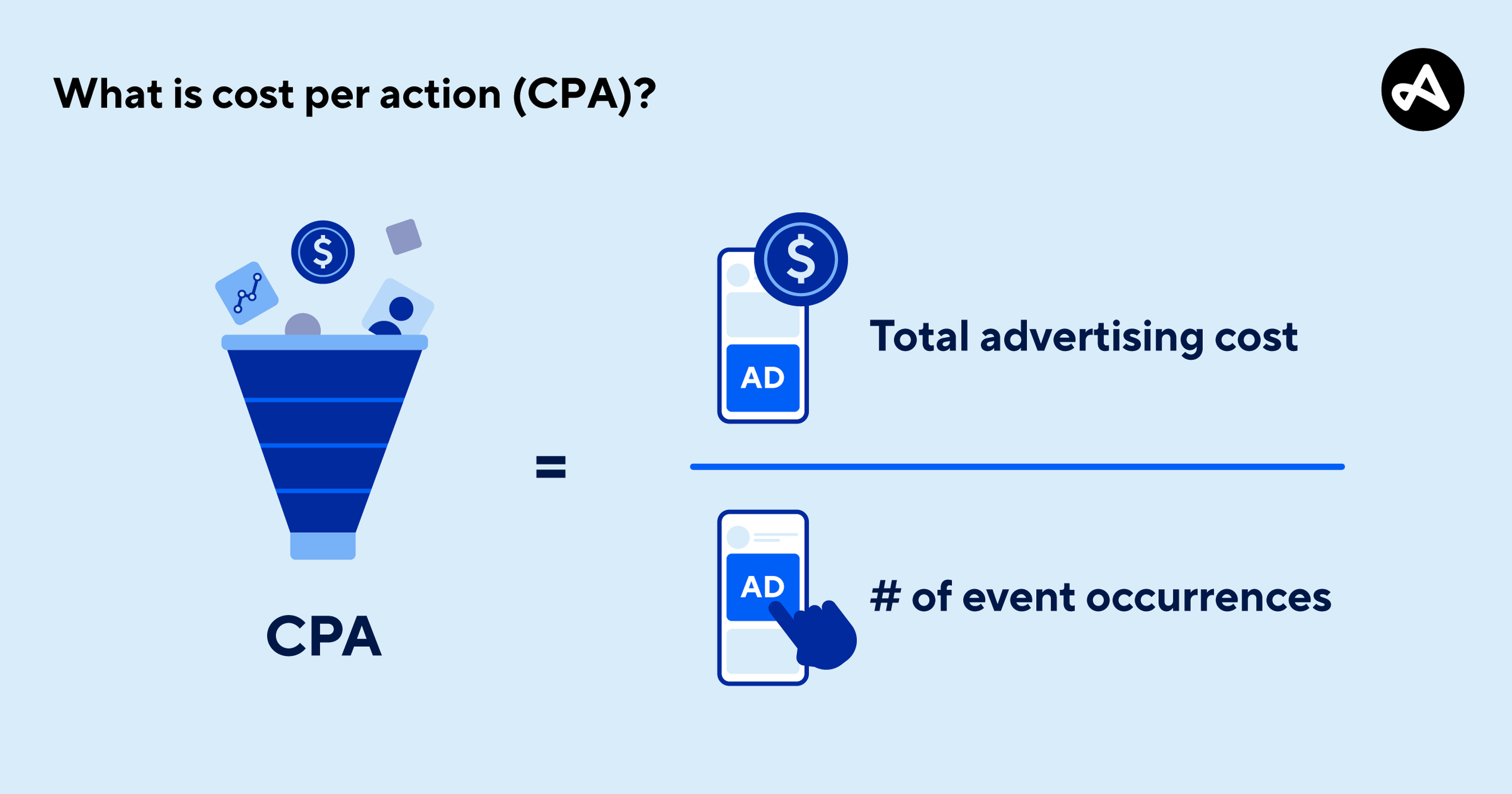
Example: If you run a campaign with a budget of 10,000,000 VND and generate 500 conversions, your CPA is 20,000 VND per conversion.
Comparison with common metrics:
- CPC (Cost Per Click): Charges per ad click but does not reflect actual conversion performance
- >>> Learn more about CPC here
- CPM (Cost Per Mille): Cost per 1,000 impressions, primarily used for brand awareness objectives
Why CPA has become a gold standard metric in digital campaigns
-
Focus on real outcomes: CPA only incurs costs when users complete meaningful actions such as purchases, registrations, or app installs—unlike CPC, which stops at clicks, or CPM, which measures impressions.
-
Direct reflection of ROI: Each expense is directly tied to a value-generating conversion, allowing businesses to measure profitability more accurately.
-
Effective budget optimization: Businesses avoid wasting ad spend on clicks or impressions that do not deliver real value. With clear CPA data, marketers can forecast future campaign performance, set realistic KPIs by channel or source, and dynamically adjust budgets based on performance data rather than assumptions.
-
Optimized marketing strategy: CPA insights help marketers identify which channels, creatives, or audience segments drive the highest conversion rates, enabling smarter budget allocation.
-
Alignment of short-term and long-term goals: CPA drives immediate conversions while building a solid data foundation for long-term customer growth strategies.
How to optimize CPA effectively?
Below are proven approaches to optimizing advertising campaigns and reducing CPA efficiently:
#1. Clearly Define Conversion Goals
-
First, specify what constitutes a conversion for your campaign, such as form submissions, purchases, email sign-ups, or app installs.
-
Continuously review and refine conversion goals to align with each stage of campaign growth.
-
Connecting an omnichannel measurement ecosystem gives marketers a holistic view and enables proactive optimization across channels and campaigns. Apply tracking tools such as Google Analytics, Facebook Pixel, or SmartAds Dashboard to collect accurate performance data.
-
Ensure proper tagging and event tracking for every conversion touchpoint.
#2. Reach the Right Audience
A campaign with well-defined audience segmentation and genuine user value is far more likely to generate conversions. As users complete more meaningful actions, the average cost per action naturally decreases.
#3. Leverage A/B Testing and Predictive Insights
- Test multiple ad variations and landing pages to identify the most conversion-efficient approach and reduce CPA.
- A/B testing budgets should be sufficient but not overly fragmented, as excessive splitting can lead to wasted spend without statistically meaningful results.
- Continuously validate data accuracy to avoid optimizing in the wrong direction due to incorrect datasets or poorly defined conversions.
#4. Improve Ad Creative Quality
After running A/B tests across different creatives and messages, marketers can identify which combinations resonate most with audience needs. Investing in compelling visuals, strong value propositions, and clear calls-to-action (CTAs) that address real user intent will consistently outperform generic “Sign up now” messaging.
#5. Prevent Advertising Fraud (Ad Fraud)
CPA fraud occurs when malicious actors simulate fake actions to claim advertiser payouts. Investing in anti-fraud solutions and continuously monitoring campaign data helps protect budgets and ensures that spend is allocated only to genuine user interactions.
Conclusion
To maximize budget efficiency, modern marketers must treat CPA as a guiding compass in every digital marketing strategy. Optimizing CPA requires not only technical expertise but also strategic flexibility and creative thinking. Do not hesitate to test, monitor, and analyze continuously—supported by SmartAds solutions—to achieve the most effective results for your business.