What is Click Fraud? An overview and its impact on Digital Advertising
Click fraud is a form of ad fraud that occurs when ad clicks do not come from genuine potential customers, but are instead generated artificially to drain advertising budgets or sabotage campaign performance. The primary objectives of click fraud typically include:
- Rapidly exhausting advertising budgets, especially to deplete competitors’ spend
- Distorting performance data, misleading marketers into believing campaigns are effective while failing to attract real users
This activity has become increasingly sophisticated with the support of automation technologies, proxy networks, and botnets. According to Statista, global click fraud rates in digital marketing approached 15 percent in 2023 and are projected to continue rising in Vietnam as automated online advertising adoption accelerates.
Common types of Click Fraud explained
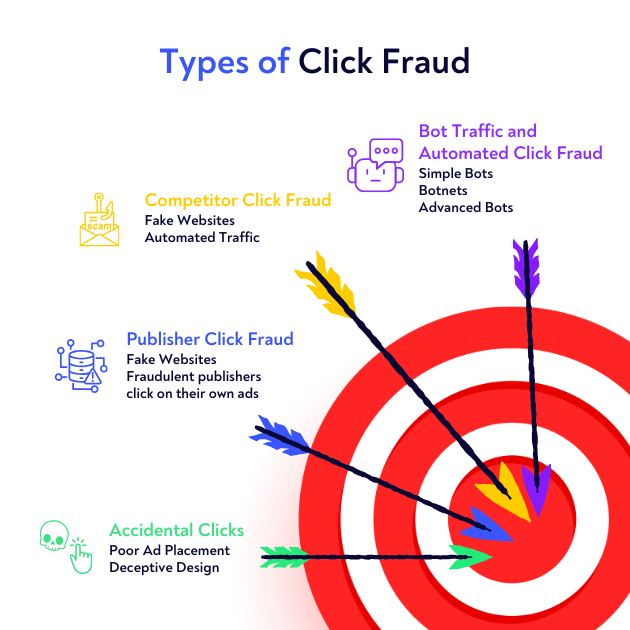
Click fraud does not occur in a single form but manifests through multiple execution methods:
- Manual click fraud: Performed by individuals or groups hired to repeatedly click on ads.
- Automated click fraud: Uses bots, scripts, or automated systems to generate thousands of clicks within a short timeframe.
- Clicks from spoofed IPs and proxy networks: Conceal user identities and distribute clicks across regions, making detection more difficult.
- Paid click networks: Organized services that sell artificial clicks to disrupt competitors or fabricate performance metrics.
Business objectives behind Click Fraud and its consequences
The negative impacts of click fraud on businesses include:
Advertising budget loss: Spending on clicks that do not generate real conversions.
Reduced data accuracy: Campaigns optimized on distorted data often lead to poor targeting and ineffective decisions.
ROI and brand damage: Lower ROI and declining trust in online advertising platforms, as users are repeatedly exposed to irrelevant or fake interactions.
Benefits of proactively detecting and preventing Click Fraud
Proactively identifying click fraud enables businesses to:
Protect advertising budgets: According to a recent HubSpot study, campaigns equipped with effective click fraud prevention solutions reduced wasted ad spend by up to 30 percent compared to control groups.
Improve campaign performance: Clean data empowers marketers to refine targeting, optimize CPA and CPC metrics, and significantly improve real ROI. For example, a SmartAds case study recorded a 25 percent increase in conversion rates after implementing anti-fraud automation.
Warning Signs: How to detect Click Fraud effectively
Detecting click fraud requires marketers to stay alert to abnormal signals or illogical campaign outcomes. Below is a practical checklist of common indicators of fraudulent activity:
-
Sudden spikes in click volume without corresponding conversions.
-
Extremely high bounce rates with minimal or no user engagement.
-
Clicks originating from unexpected geographic locations, IP ranges, devices, or repetitive behavioral patterns.
-
Exceptionally short on-site duration (under 2–5 seconds).
-
Multiple clicks detected from a single IP address or suspicious IP ranges.
To identify these signals effectively, marketers should follow a structured verification process:
-
Regularly review traffic data on campaign dashboards.
-
Monitor weekly optimization results to confirm that click fraud is being controlled.
-
Analyze reports by location, IP address, and device type.
-
Identify abnormal traffic sources and filter suspicious IPs.
-
Cross-check conversion rates against defined target audience segments.
-
Document significant discrepancies between advertising spend and actual performance.
-
Implement CAPTCHA and two-factor verification on landing pages.
-
Set up traffic filters to block suspicious IPs or devices within advertising platforms.
-
Report fraudulent activity directly to ad service providers for investigation and resolution.

Conclusion: Proactively detecting click fraud has become a non-negotiable standard for modern digital marketers. By applying the checklist, tools, and real-world processes outlined above, businesses can safeguard their advertising budgets, strengthen brand credibility, and restore genuine performance to their online advertising campaigns.