I. What is Time on Site?
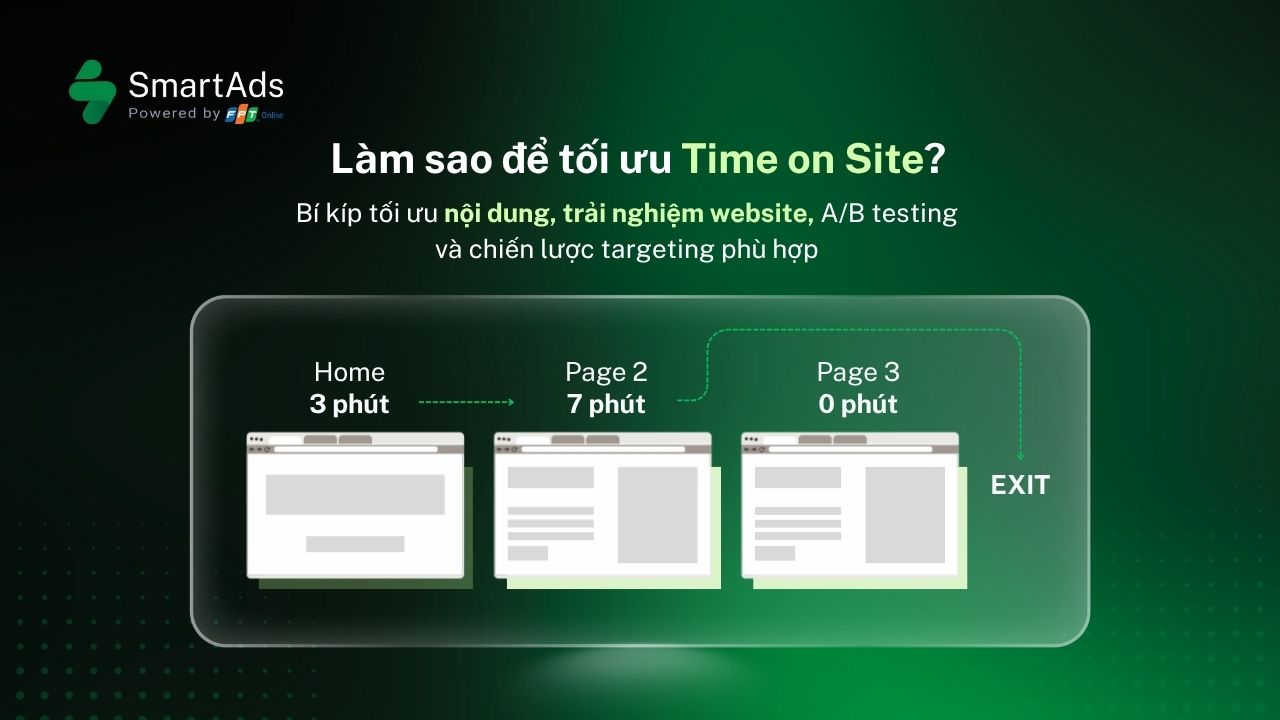
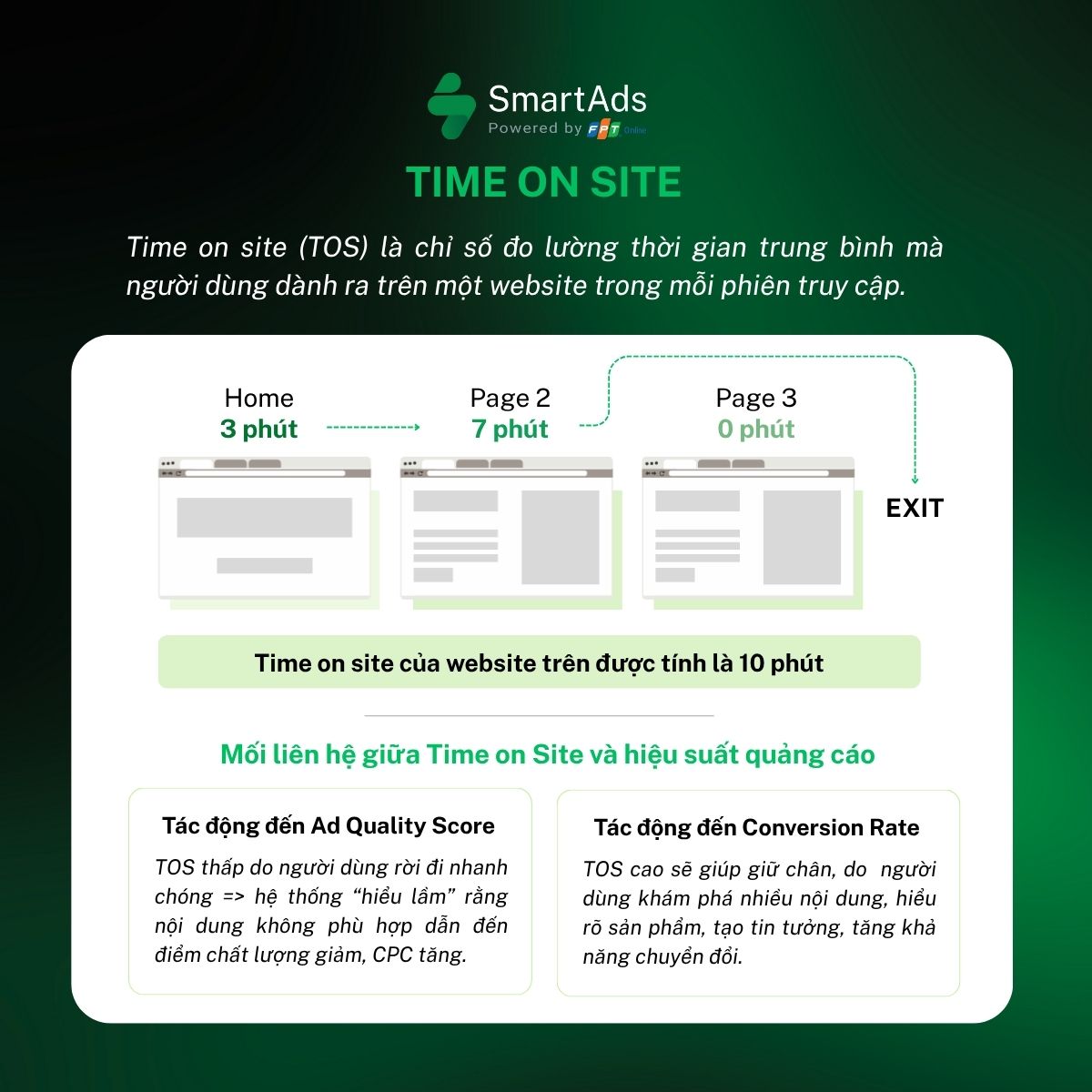
Time on Site (TOS) is a metric that measures the average amount of time users spend on a website during a single session. It is a critical indicator in Digital Marketing, especially when evaluating content performance, user experience, and the alignment between advertising messages and landing pages. A high Time on Site typically signals strong user interest, deeper interaction with content, and sends positive signals to both user experience benchmarks and advertising algorithms. Therefore, if you want to truly optimize advertising performance, don’t focus solely on CTR or CPA—start by improving how long users stay and engage on your website.
II. The relationship between Time on Site and Advertising Performance
Time on Site influences advertising performance across two core dimensions:
1. Impact on Ad Quality Score
Advertising platforms often rely on behavioral signals such as Time on Site, Bounce Rate, and engagement metrics to assess how relevant an ad is to the user experience. A low TOS indicates that users leave quickly, which may cause the system to interpret the content as irrelevant—resulting in a lower Ad Quality Score and higher CPC.
>>> Learn more about Ad Quality Score and how to optimize advertising costs here .
2. Impact on Conversion Rate
The longer users stay on your site, the more likely they are to explore additional content, understand your product or service, and take action—such as making a purchase or submitting a registration. A high Time on Site helps retain users, build trust, and ultimately improve Conversion Rate.
In short, Time on Site acts as a “mirror” reflecting the overall quality of the website experience. Improving this metric means retaining the right audience and optimizing advertising costs from the very foundation.
III. How to optimize Time on Site
To improve Time on Site (TOS), the first step is to clearly understand the factors that directly influence how long users stay on your website. Once the root causes are identified, you can implement effective solutions to keep users engaged for longer. Below are four core elements to focus on:
1. High-quality content – capturing attention from the very first click
Content is the primary reason users either stay or leave immediately. High-quality content effectively addresses search intent and is presented in an engaging, accessible way—especially on advertising landing pages.
Actionable content tips to increase Time on Site:
-
Invest in in-depth, high-value content that solves real user problems.
-
Use diverse formats: videos, images, and infographics to increase engagement and dwell time.
-
Update content regularly to maintain freshness and improve SEO performance.
-
Design clear layouts and compelling headlines, ensuring message consistency between ads and on-page content.
-
Add trust-building elements such as reviews, case studies, FAQs, and testimonials.
Content that is both insightful and engaging acts as a “magnet” that keeps users on your site longer—significantly improving Time on Site.
2. Seamless User Experience (UX)
No matter how strong the content is, a slow-loading website or cluttered interface can cause users to leave within seconds. A smooth UX is a fundamental requirement for retaining users.
Effective UX should meet the following criteria:
-
Fast page load speed – ideally under 3 seconds, especially on mobile devices.
-
Clean, readable interface with balanced typography and colors that make information easy to scan.
-
Responsive design to ensure optimal display across all devices.
-
Strategic use of internal links and CTAs to guide users toward related content.
A strong UX not only reduces Bounce Rate but also extends the user journey, increases Conversion Rate, and encourages repeat visits.

3. A/B Testing Content to Identify the Best Retention Version
Content effectiveness does not follow a fixed formula. That’s why A/B Testing is the most reliable method to identify which content type, format, and presentation truly extend Time on Site. You can start by testing:
a. Headlines, length, structure, and tone of voice
Depending on the industry and content objectives, factors such as article length, structure, information hierarchy, and delivery speed directly influence reader behavior.
-
Fashion or F&B: Users prefer short-form content, quick scrolling, strong visuals, and concise product information.
-
Entertainment & lifestyle: High emphasis on trends, instant engagement, and entertainment value.
-
FMCG: Familiar products, visual-driven content, minimal explanation required.
-
B2B – software – technology: Decision-makers prefer long-form, detailed, expert-level content.
-
Education & training: Users require in-depth analysis, reviews, and comparisons before registering.
-
Beauty, healthcare, finance, insurance: Complex products demand accuracy, credibility, and clear explanations of benefits and risks.
-
Premium real estate & investment: Users seek deep insights into legal aspects, ROI potential, planning, and financial forecasting.
There is no universal formula—effective content is the version that best aligns with audience behavior while balancing depth, delivery, and conversion goals.
b. Different formats deliver different retention levels
-
Text-only: Ideal for SEO-driven and expert content, but may cause early exits without visual highlights.
-
Video: Can significantly increase Time on Site when engaging from the first few seconds.
-
Carousel: Effective on platforms like Instagram, Facebook, and LinkedIn—boosting scroll depth and engagement.
-
Animated visuals (GIFs, animations): Ideal for highlighting key messages or CTAs without heavy text.
Multi-format testing helps identify the optimal retention “combo” for each audience segment.
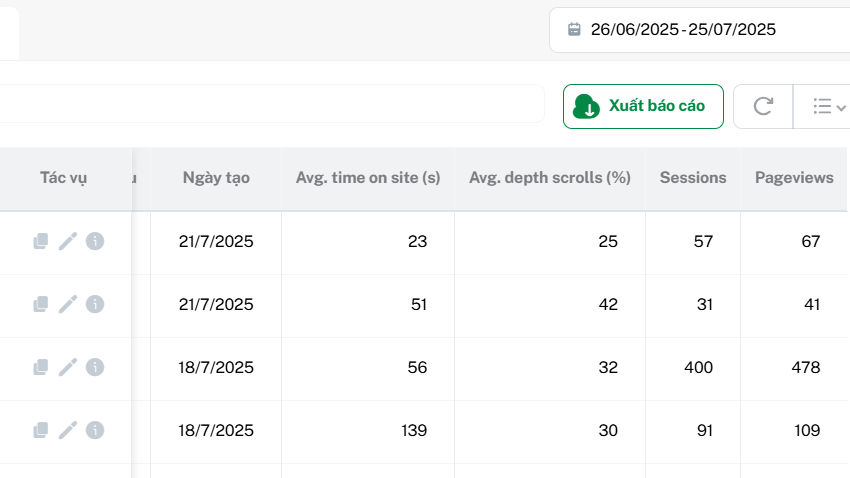
c. Compare versions using behavioral data
-
Time on Site: Indicates overall content engagement.
-
Bounce Rate: Signals misalignment between expectations and content delivery.
-
Scroll Depth: Reflects genuine interest and reading behavior.
-
Engagement Rate: Measures content resonance and sharing potential.
4. Targeting & Retargeting Strategy – Right audience, right content
Time on Site ultimately depends on delivering the right content to the right audience. Optimized targeting and retargeting ensure every click comes from users with genuine intent.
For new users:
-
Develop detailed targeting based on keywords, behaviors, and demographics.
-
Deliver immediate value by addressing core pain points from the first interaction.
For returning users (retargeting):
-
Leverage behavioral tracking to personalize content distribution.
-
Prioritize comparison content, reviews, and case studies to build trust and extend reading time.
Conclusion
Time on Site is the combined result of content quality, user experience, measurement, and precise targeting. Mastering these factors makes user retention easier and lays the groundwork for sustainable advertising performance growth.
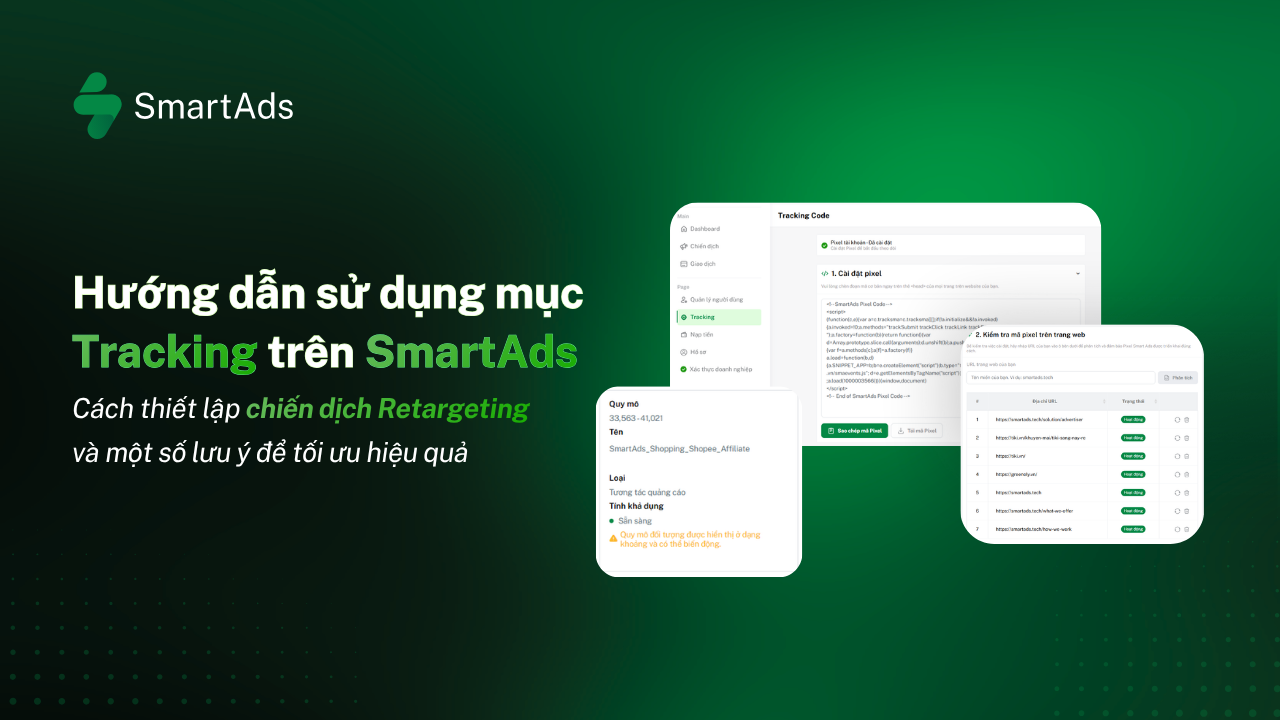
Currently, SmartAds leverages advanced tracking pixel technology to monitor user behavior across each session—including Time on Site, scroll depth, and interaction events. These insights power content optimization, ad delivery, and personalized experiences, all aimed at one ultimate goal: maximizing advertising performance and extracting the highest value from every website visit.