Quảng cáo theo ngữ cảnh là gì?
Contextual ads (contextual advertising) hay quảng cáo theo ngữ cảnh là hình thức quảng cáo trực tuyến dựa trên nội dung mà người dùng đang xem thay vì lịch sử hành vi hay nhân khẩu học. Thay vì theo dõi cookie cá nhân, hệ thống sẽ phân tích chủ đề, từ khóa và ngữ cảnh của trang web, bài viết hoặc video rồi hiển thị quảng cáo liên quan.
Ví dụ: Nếu khi đang đọc một bài viết về thị trường bất động sản, rất có thể bạn sẽ nhìn thấy quảng cáo về căn hộ của một thương hiệu về bất động sản.
Quảng cáo theo ngữ cảnh (contextual advertising) đang là lựa chọn ưu tiên của nhiều doanh nghiệp trước bối cảnh quyền riêng tư ngày càng được chú trọng. Không chỉ tạo cảm giác tự nhiên, quảng cáo định hướng ngữ cảnh còn mở ra những cơ hội hoàn toàn mới cho các chiến lược tiếp thị nội dung, góp phần tối ưu chi phí và nâng cao trải nghiệm khách hàng.
Sự khác biệt nổi bật với quảng cáo theo đối tượng là contextual advertising KHÔNG dùng thông tin cá nhân như cookie để xác định ai sẽ thấy quảng cáo. Thay vào đó, tất cả dựa trên chính nội dung bài viết, video, hoặc blog mà bạn đang xem. Đây chính là lý do quảng cáo theo ngữ cảnh được xem là giải pháp bền vững khi Google và nhiều trình duyệt đã bắt đầu loại bỏ cookie bên thứ ba từ 2024. Doanh nghiệp hoàn toàn yên tâm khi không vi phạm quyền riêng tư mà vẫn tăng được hiệu quả truyền tải thông điệp.
Cách thức hoạt động của quảng cáo trực tuyến theo ngữ cảnh - Contextual Ads mới nhất 2025
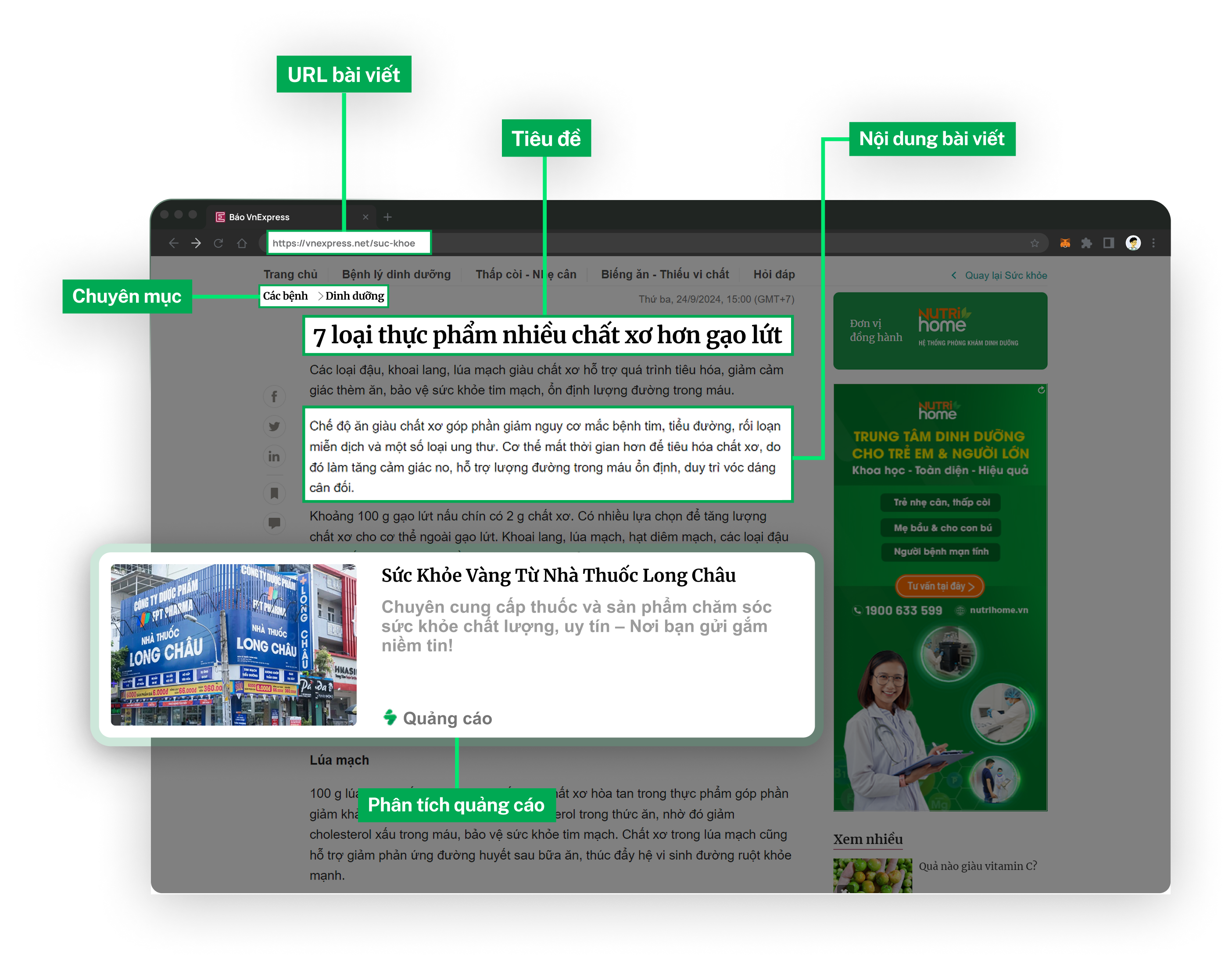
Quy trình cơ bản của contextual advertising gồm 3 bước:
-
Bước 1: Phân tích nội dung: Thuật toán quét toàn bộ nội dung trên trang bao gồm tiêu đề, văn bản, URL, chuyên mục, từ khóa, hashtag ở các định dạng như bài viết, video, hình ảnh và chuyển thành metadata.
-
Bước 2: Xác định từ khóa và chủ đề: Hệ thống nhận diện các từ khóa chính, chủ đề nổi bật và tông giọng nội dung (tích cực, trung lập hay tiêu cực) để xác định các vị trí phù hợp hiển thị quảng cáo.
-
Bước 3: Khớp quảng cáo phù hợp: Dựa trên hành vi đọc của người dùng (bao gồm các dữ liệu hành vi như pageview, session, bounce rate, scroll depth, time on site, engagement rate,...), thuật toán sẽ quyết định Quảng cáo nào có liên quan trực tiếp đến chủ đề sẽ được hiển thị.
Nhờ cơ chế này, quảng cáo trở nên tự nhiên, không gây cảm giác “bám đuôi” như quảng cáo dựa trên cookie truyền thống.
So sánh 2 cơ chế nhắm mục tiêu quảng cáo contextual trên báo điện tử
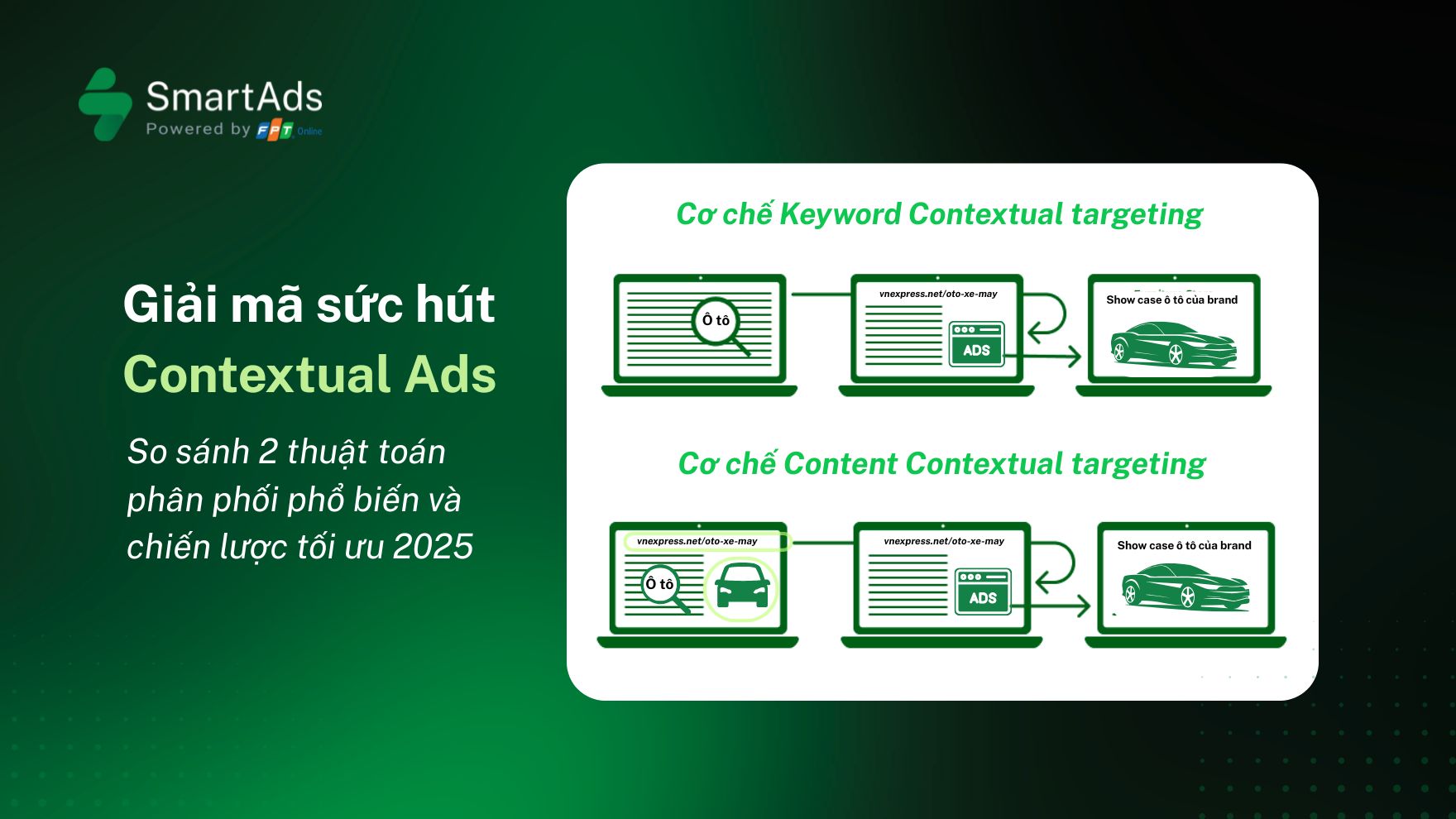
Có 2 thuật toán chính để nhắm mục tiêu ngữ cảnh cho quảng cáo Contextual trên các trang tin điện tử bao gồm:
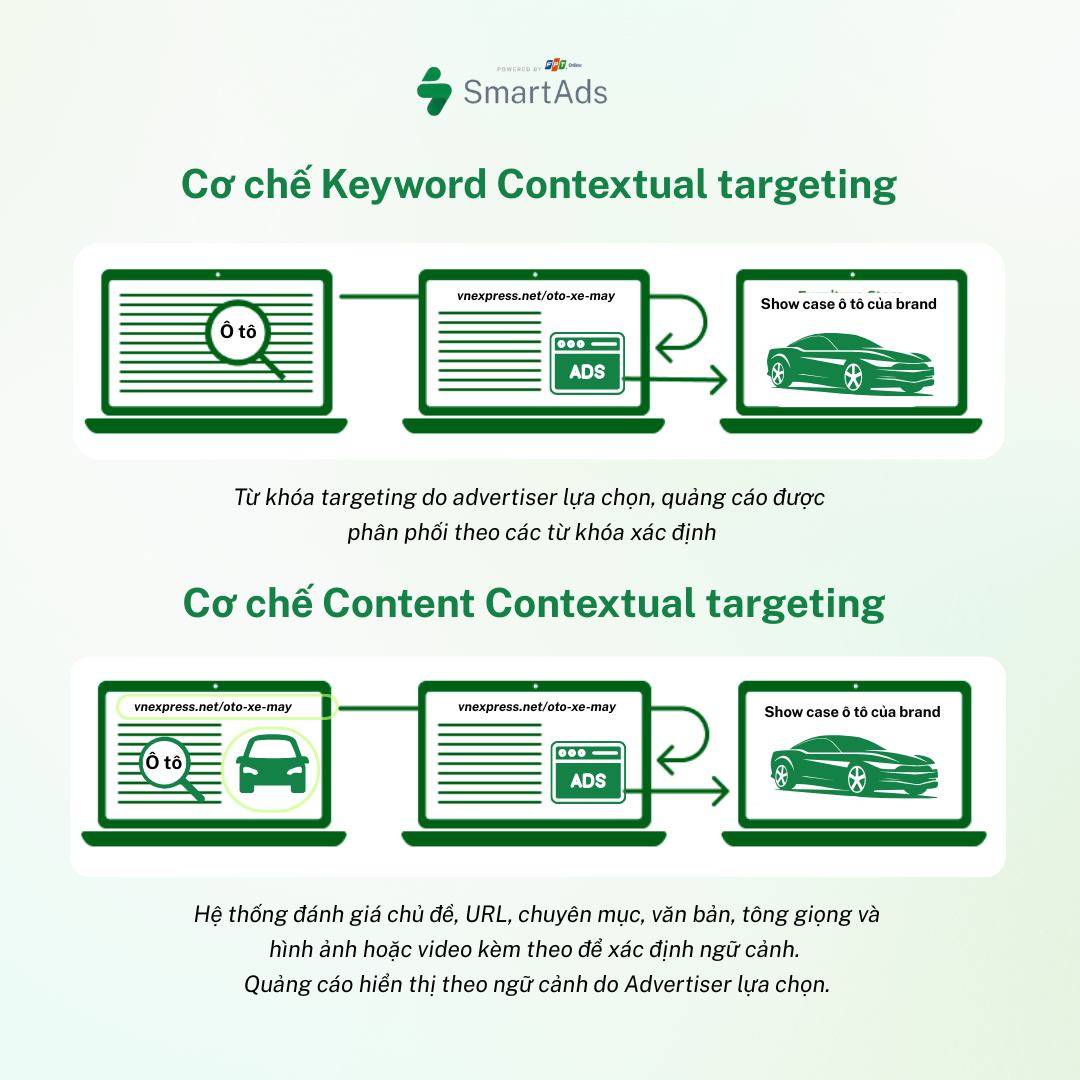
1. Cơ chế Keyword Contextual Targeting
Đây là thuật toán truyền thống giúp nhắm mục tiêu quảng cáo trên báo chí bằng cách hiển thị khi bài báo chứa từ khóa hoặc hashtag cuối bài báo do advertiser chọn khi setup chiến dịch. Lợi thế của thuật toán này là cách triển khai nhanh chóng, chi phí thấp và có khả năng phủ rộng đối tượng trong thời gian ngắn.
Tuy nhiên, chính vì không phân tích sâu về yếu tố giọng văn hoặc cảm xúc của bài viết, mẫu quảng cáo của advertiser dễ rơi vào tình huống hiển thị trong ngữ cảnh tiêu cực hoặc sai chủ đề, gây rủi ro brand safety và ảnh hưởng hình ảnh thương hiệu.
Ví dụ: Từ khóa “ô tô” có thể xuất hiện trong bài về “tai nạn ô tô nghiêm trọng” → quảng cáo xe hơi bị đặt sai chỗ, gây cảm xúc tiêu cực cho độc giả.
Ứng dụng:
-
Phù hợp cho các thương hiệu nhỏ.
-
Thích hợp với chiến dịch cần tiết kiệm ngân sách.
-
Dùng khi mục tiêu chính là phủ sóng rộng rãi, không quá khắt khe về chất lượng ngữ cảnh.
2. Cơ chế Content Contextual Targeting
Đây là thuật toán nhắm mục tiêu quảng cáo bằng AI, phân tích toàn bộ nội dung bài báo thay vì chỉ dựa vào từ khóa. Hệ thống đánh giá chủ đề, URL, chuyên mục, văn bản, tông giọng (tích cực/tiêu cực) và cả ngữ cảnh hình ảnh hoặc video kèm theo.
Điểm mạnh của thuật toán này là giúp giảm nguy cơ mẫu quảng cáo xuất hiện cạnh nội dung nhạy cảm để bảo vệ hình ảnh thương hiệu trên báo chí uy tín. Đồng thời, tăng mức độ liên quan với nội dung tích cực giúp thúc đẩy hành vi của người đọc.
Ví dụ: quảng cáo du lịch sẽ hiển thị trong bài “Top 10 điểm đến mùa hè”, không phải chủ đề “bão lớn làm tê liệt ngành du lịch”.
Ứng dụng:
- Thường dùng cho brand lớn, ngành hàng cao cấp (bất động sản, ô tô, tài chính).
-
Thích hợp cho chiến dịch cần duy trì uy tín và hình ảnh thương hiệu.
-
Dùng khi mục tiêu là gắn kết quảng cáo với nội dung chất lượng, đúng ngữ cảnh.
>>> Nên chạy quảng cáo bao nhiêu tiền 1 ngày?
Lợi ích của việc ứng dụng contextual Marketing và AI trong quảng cáo
Bước xa hơn quảng cáo, contextual marketing là một xu thế chiến lược ngày càng toàn diện hơn bởi các lợi ích vượt trội như sau:
-
Mở rộng kênh hiển thị: Ngoài các trang tin điện tử phổ biến, contextual ads còn đang được tích hợp vào nhiều nền tảng ở nhiều định dạng khách nhau như: video streaming, podcast, và game.
-
Đảm bảo brand safety tối đa: Thuật toán NLP kết hợp Machine Learning giúp các nền tảng quảng cáo ngày càng chính xác trong phân tích ngôn ngữ tự nhiên và hình ảnh. Chẳng hạn, phân tích trên diện rộng các chủ đề nóng, xu hướng mới trong lĩnh vực bạn kinh doanh, từ đó đề xuất ý tưởng quảng cáo, nội dung tiếp thị sắc nét và sát nhu cầu thực tế hơn. Đồng thời, đảm bảo môi trường quảng cáo minh bạch, sạch sẽ, nội dung quảng cáo của thương hiệu không xuất hiện chung thông tin tiêu cực.
-
Tiền đề cho các mô hình brandformance: dung hòa giữa mục tiêu xây dựng thương hiệu dài hạn và hiệu suất kinh doanh đo lường được (ROI/ROAS). Đây chính là xu hướng nổi bật, giúp doanh nghiệp vừa gia tăng uy tín thương hiệu, vừa tối ưu hiệu quả đầu tư quảng cáo.
-
Cookies và Quyền riêng tư được tối ưu: Xu hướng cookieless trở thành lựa chọn ưu tiên khi người dùng ngày càng lo ngại việc theo dõi hành vi cá nhân. Với việc áp dụng các nền tảng quảng cáo contextual, thương hiệu có thể nhắm mục tiêu dựa trên ngữ cảnh nội dung thay vì dữ liệu cá nhân, từ đó vừa đảm bảo tính minh bạch, vừa duy trì trải nghiệm quảng cáo phù hợp và không gây khó chịu. Điều này không chỉ giúp xây dựng niềm tin với khách hàng, mà còn góp phần nâng cao hình ảnh thương hiệu trong dài hạn.
Khi dữ liệu lớn và trí tuệ nhân tạo (AI) được tận dụng để nhận diện nhanh mục tiêu, ngữ cảnh ngắn hạn theo hành vi của khách hàng và đưa ra thông điệp được đề xuất phù hợp nhất theo thời điểm tương ứng. Đó là lý do contextual marketing ngày càng trở thành trụ cột trong các chiến lược marketing số hiện đại và tạo ưu thế "đúng người – đúng vị trí – đúng thời điểm"
Cách tối ưu chi phí và hiệu quả các chiến dịch quảng cáo theo ngữ cảnh
Để khai thác tối đa sức mạnh của contextual advertising, marketer và doanh nghiệp cần nhận diện những nguyên tắc “vàng” sau khi triển khai chiến dịch:
#1. Lựa chọn hiển thị trên các môi trường quảng cáo minh bạch
Cần ưu tiên lựa chọn publisher (đối tác đăng quảng cáo) thật sự uy tín để bảo vệ tối đa hình ảnh thương hiệu. Nội dung trên các publisher cần rõ ràng, mạch lạc, chuẩn SEO onpage ngay từ đầu. AI của hệ thống quảng cáo sẽ dễ dàng nhận diện chủ đề chính xác, đảm bảo quảng cáo hiển thị sát nhất với nội dung hiện tại. Tránh tình trạng nội dung "loãng", có quá nhiều chủ đề trong cùng một trang, dễ khiến quảng cáo bị đưa về bối cảnh sai hoặc không phù hợp với khách truy cập.
#2. Tối ưu hóa creative và chiến lược đấu thầu
Trong quảng cáo theo ngữ cảnh (contextual advertising), nội dung quyết định trực tiếp đến việc người dùng có dừng lại, ghi nhớ hay thực hiện hành động theo thông điệp của thương hiệu. Vì vậy, thiết kế quảng cáo cần được tối ưu để cân bằng giữa thẩm mỹ – thông điệp – trải nghiệm đọc.
-
Quảng cáo hiển thị (article, banner, video, sticky): Hình ảnh phải rõ ràng, thông điệp ngắn gọn, tập trung 1–2 key message và kèm CTA mạnh mẽ nhằm thúc đẩy hành động ngay.
-
Storytelling: có thể bắt đầu bằng pain point hoặc nhu cầu khơi gợi cảm xúc và niềm tin thúc đẩy tương tác của khách hàng thay vì chỉ cung cấp thông tin khô cứng.
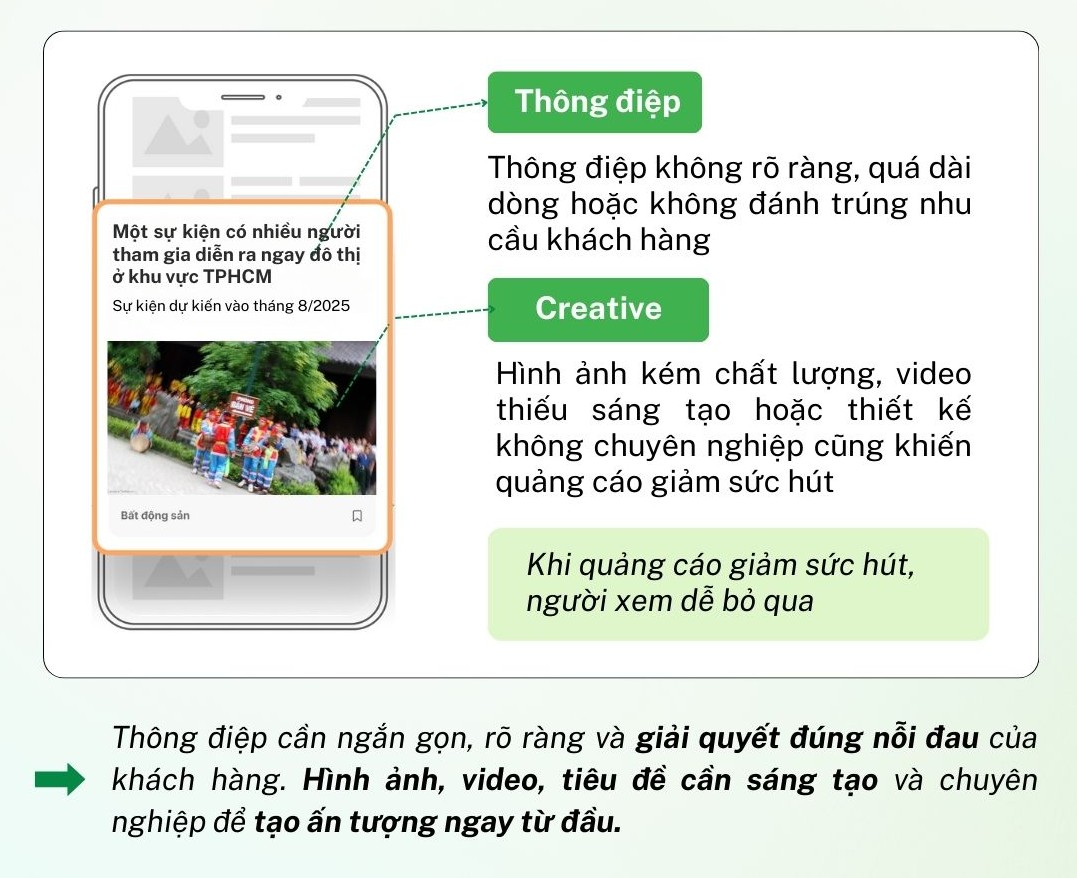
Minh họa về trường hợp mẫu quảng cáo contextual chưa tối ưu nội dung -
Tối ưu đa nền tảng: Đảm bảo hình ảnh, text và CTA hiển thị tốt trên cả desktop lẫn mobile, bởi phần lớn hành vi đọc báo điện tử hiện nay diễn ra trên thiết bị di động.
Nhìn chung, nội dung và creative quảng cáo vẫn cần được đảm bảo tuân thủ những quy định chung, tránh các vi phạm về pháp luật, thuần phong mỹ tục để hạn chế tình trạng bị từ chối quảng cáo.
>>> Khám phá nguyên nhân quảng cáo chạy mãi không hiệu quả.
#3. Hiểu thuật toán phân phối và có chiến lược đấu thầu phù hợp
Bên cạnh đó, chiến lược đấu thầu trong contextual ads cũng cần linh hoạt: ưu tiên đặt ngân sách cao hơn ở những publisher chất lượng và khung giờ có tỷ lệ tương tác tốt, đồng thời theo dõi sát dữ liệu ROI/ROAS để điều chỉnh, tránh lãng phí ngân sách.
#4. Theo dõi, đo lường và tối ưu liên tục các chiến dịch quảng cáo theo ngữ cảnh
Một chiến dịch contextual ads chỉ thực sự hiệu quả khi được giám sát chặt chẽ và tối ưu thường xuyên. Doanh nghiệp nên thực hiện A/B testing với các mẫu quảng cáo hoặc chủ đề nội dung khác nhau và xây dựng hệ thống báo cáo trực quan để theo dõi ngay các chỉ số quan trọng như CTR (click-through rate – tỷ lệ nhấp chuột), CPA (cost per action – chi phí mỗi chuyển đổi), ROI… theo thời gian thực. Từ đó, dễ dàng nhận diện đâu là phương án mang lại hiệu quả cao nhất.
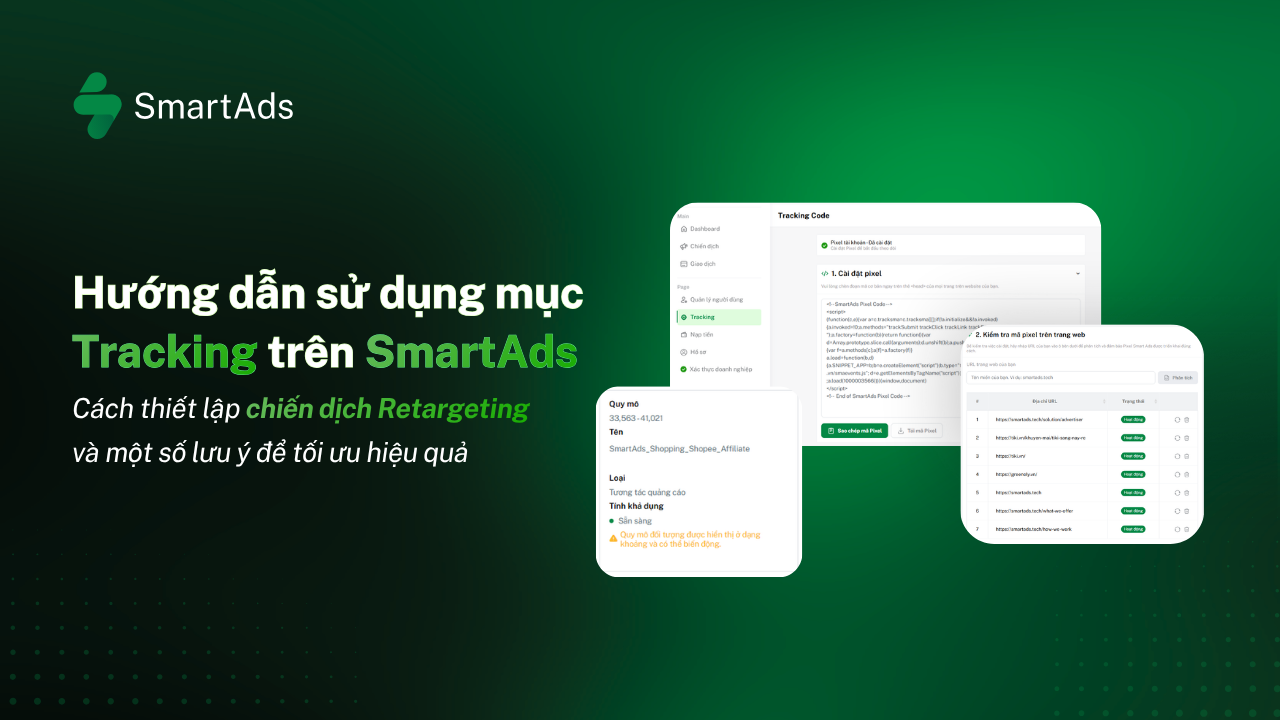
Song song đó, cần kết hợp gắn UTM tracking cho từng chiến dịch và từng kênh hiển thị để phân tích chính xác chất lượng traffic, hành vi người dùng, cũng như hiệu quả theo từng publisher. Việc kết hợp pixel tracking trên website/landing page còn giúp theo dõi sâu hơn hành vi sau nhấp chuột (conversion, đăng ký, mua hàng), từ đó tối ưu ngân sách và tái nhắm mục tiêu (retargeting) hiệu quả hơn.
>>> Cách gắn UTM tracking và pixel đo lường hiệu quả quảng cáo.
Kết luận
Sau tất cả, quảng cáo theo ngữ cảnh đang khẳng định mình là kênh không thể thiếu trong chiến lược quảng cáo trực tuyến hiện đại. Với ngân sách khoa học, khả năng đo lường chuẩn xác và hiệu quả truyền thông ngày càng lớn, dù là SME, agency hay marketer cá nhân cũng có thể bắt đầu từng bước và gặt hái kết quả tích cực.