Step 1: Competitor analysis
Competitor analysis is a critical foundation for building an effective media plan. Before defining any advertising or marketing strategy, businesses need a clear understanding of how their competitors operate across channels. This step includes six core activities that support strategic planning, budget allocation, and long-term campaign optimization:
a. Analyzing competitors’ products or services
To establish a solid basis for a media plan, businesses must thoroughly analyze competitors’ products or services and benchmark them against their own offerings. This process not only helps identify strengths and weaknesses in competitors’ messaging and execution, but also provides strategic insights to differentiate positioning more effectively. Key aspects to clarify when analyzing products or services within a media plan include:
-
Emotional benefits : How do customers feel when using the product or service? Does it provide reassurance, confidence, comfort, or a sense of being cared for?
-
Functional benefits : What tangible value does the product or service deliver? Does it save time or costs, improve usability, or generate measurable efficiency?
-
Competitive differentiation : What makes the product or service stand out? Are there proprietary technologies, superior features, or a better customer experience?
-
Reasons to choose : Why should customers select this product or service? Does it effectively solve a specific problem, align with consumer trends, or meet unmet needs?
-
Pricing suitability : What does the price reflect? Is it aligned with quality, competitive within the market, and appropriate for the target audience’s purchasing power?
-
Reasons for trust : Does the brand demonstrate credibility through clear commitments, positive reviews, transparent information, or strong brand equity?
-
Potential challenges and solutions : What obstacles might customers face during usage? Are there clear solutions such as onboarding guides, technical support, or responsive customer service?
-
Product or service pricing : Is the cost proportional to the solution delivered? Are there hidden fees or additional charges? How are discounts or commercial incentives structured?
b. Analyzing competitors’ media channels
Understanding which media channels competitors prioritize helps avoid repeating ineffective approaches and enables brands to design more distinctive strategies. This analysis should focus on the channels competitors actively invest in, including:
- Paid Media (Paid channels): Are competitors leveraging paid advertising such as Google Ads, Facebook Ads, YouTube, or other platforms like LinkedIn and TikTok?
- Earned Media: Are competitors gaining attention through unpaid channels such as customer reviews, PR articles, or influencer mentions?
- Owned Media: Do they operate owned platforms such as websites, blogs, social media pages, or email marketing systems to nurture customer relationships? Are these channels consistently active, and what is the weekly publishing frequency?
c. Evaluating competitors’ content strategy
Content is a core pillar of any advertising and marketing strategy. Analyzing competitors’ content provides deeper insight into how they deliver value and communicate with their audiences. Key factors to evaluate include:
- Core messaging: What messages are competitors communicating? Are they clear and easy to understand? Do they emphasize product benefits or competitive differentiation?
- Content formats: What formats are being used across campaigns—videos, articles, infographics, or podcasts?
- Tone and mood: Is the messaging style bold and engaging? Are competitors positioning themselves as friendly, professional, or humorous to connect with their audience?
d. Assessing competitor engagement and audience feedback
To better understand the effectiveness of competitors’ communication strategies, it is essential to evaluate the level of audience engagement they generate. Key metrics include:
-
Likes, shares, and comments on posts and videos.
-
Customer reviews and feedback, especially on e-commerce platforms such as Shopee, Lazada, or specialized review websites.
-
Engagement rate : The number of users participating in conversations, responding to posts, sharing content, or joining activities such as mini-games and promotional programs.
Manual observation can provide valuable qualitative insights, particularly when analyzing content quality, tone of voice, and community-building approaches. In parallel, leveraging social listening tools enables more systematic data collection and analysis across social platforms, supporting objective and continuous tracking of competitors’ performance within the industry.
Step 2: Researching and defining target audience personas
The next step in building a media plan is researching and clearly defining the target audience. This requires collecting data on consumer behavior, needs, and preferences to ensure accurate audience targeting. Historical data can be leveraged to analyze past user behavior, extract insights into habits and motivations, and generate informed forecasts.
Key factors to focus on at this stage include:
-
Customer persona : Demographics, age, occupation, and other characteristics. Which audience segments should the business prioritize?
-
Needs and purchase drivers : What do customers value in a product? What captures their attention, creates friction in purchase decisions, or motivates them to convert? Why do they choose this brand over competitors?
-
Audience segmentation : Dividing audiences into smaller groups based on age, gender, income, or behavioral patterns to improve targeting precision.
Step 3: Channel strategy development
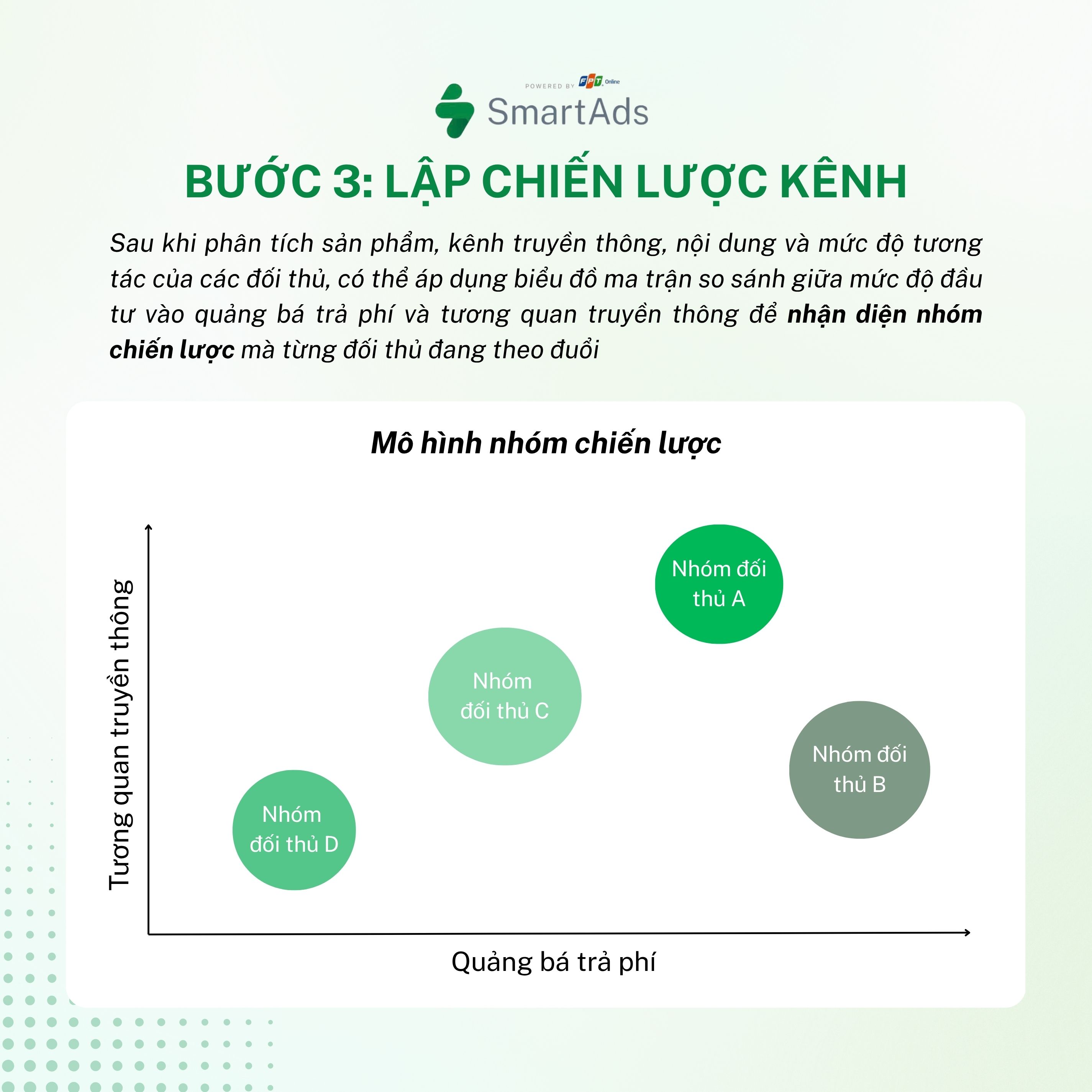
After analyzing competitors’ products, media channels, content strategies, and engagement levels, the next step is to systematize insights and identify the strategic groups competitors belong to. By applying a matrix that compares paid advertising investment against overall media presence, competitors can be classified into four main groups:
-
Group A – Comprehensive investors : Brands with strong media presence and heavy investment in paid advertising. These are direct competitors with significant influence on customer behavior. Competing with this group requires integrated media strategies and careful budget optimization.
-
Group B – Paid-media-focused players : Competitors heavily focused on paid search and advertising but with weaker brand communication. Their gaps can be leveraged through strong content marketing and earned media strategies to build organic awareness.
-
Group C – Content-driven, low-cost players : Despite limited ad spend, these competitors maintain visibility through content, community building, or influencer strategies. This organic-first approach is worth learning from when media budgets are constrained.
-
Group D – Low-visibility competitors : Brands with minimal media presence and limited investment. While not an immediate threat, they should still be monitored for future strategic shifts.
Based on this matrix, strategic recommendations may include:
-
Identifying where the business sits within the matrix to determine whether to increase media investment, prioritize content, or combine both.
-
Allocating resources to areas where competitors are weaker (e.g., building brand equity when competitors focus on short-term advertising).
-
Channel mapping: selecting the most relevant media channels to ensure marketing messages reach the right audience, informed by competitors’ strengths and weaknesses.
-
Regularly updating the competitor matrix to track strategic positioning changes and adapt the media plan accordingly.
-
Developing a creative approach: once strategic direction and channels are defined, the next step is crafting creative executions that transform insights into memorable brand experiences and differentiated communication.
Step 4: Setting the right objectives
Media Objective defines the goals of digital activities, guiding KPI allocation and budget distribution across media channels. Media objectives are established after aligning business, marketing, and communication objectives to ensure consistency with overall business goals.
To be effective, media objectives should follow the SMART framework: Specific, Measurable, Achievable, Relevant, and Time-bound.
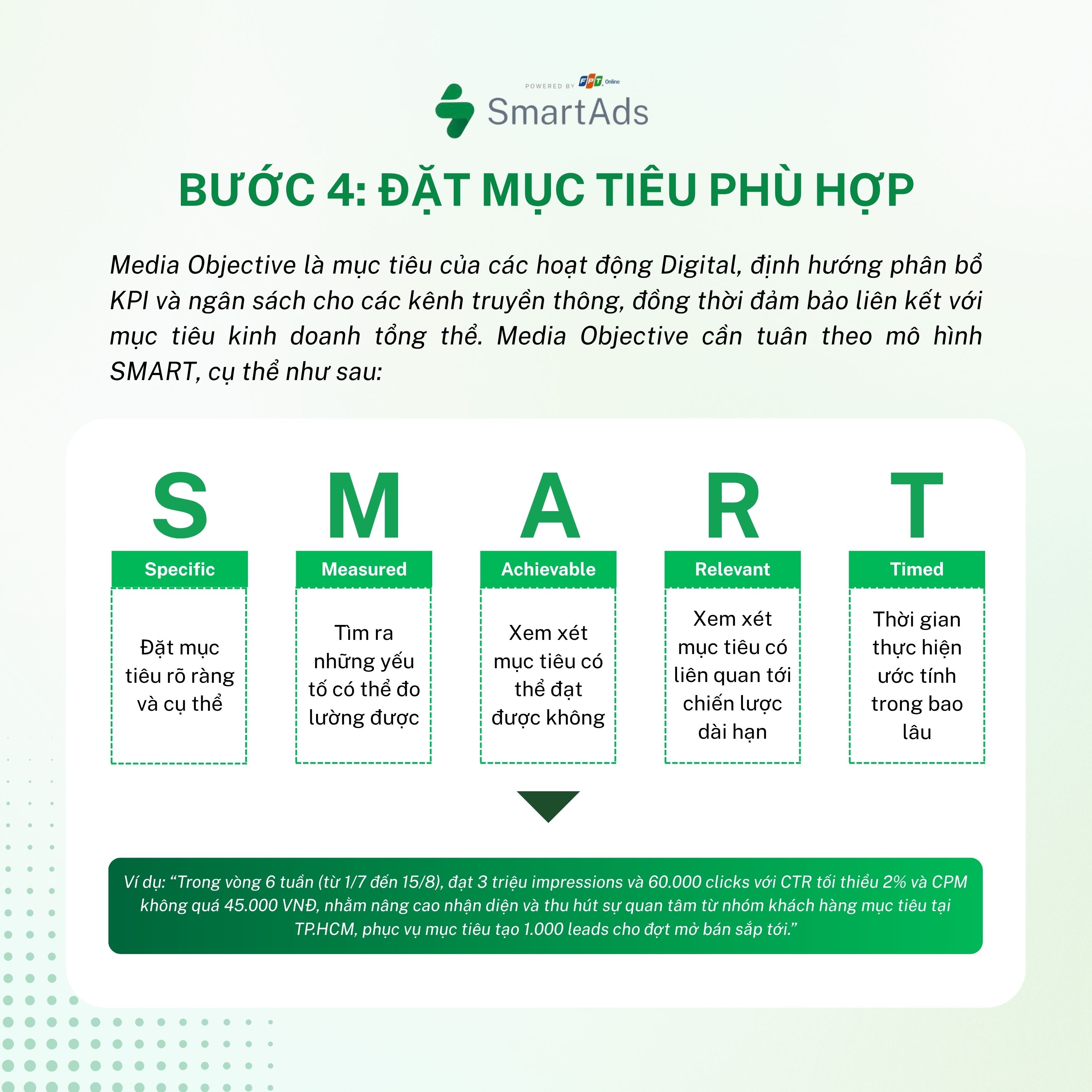
Example: Below is how the SMART framework can be applied to define the Media Objective for a new apartment advertising campaign by Real Estate Company X:
S – Specific
Increase brand awareness and consideration among the target audience (men and women aged 28–45, middle to upper-middle income, living in Ho Chi Minh City) for Apartment Project X (District 9) through digital media channels such as Facebook, Google Display Network, and online news publishers.
M – Measurable
Achieve 3 million impressions and 60,000 clicks to the landing page within 6 weeks, with a minimum CTR of 2% and CPM not exceeding VND 45,000 .
A – Achievable
Based on data from previous campaigns and the current budget (VND 500 million), this objective is considered achievable through an optimized media mix and accurate audience targeting.
R – Relevant
This media objective directly supports the overall marketing goal of generating 1,000 potential customers (leads) for the sales team prior to the first sales launch phase scheduled for next month.
T – Time-bound
The campaign will run for 6 weeks , from July 1 to August 15 , with performance metrics monitored and optimized on a weekly basis.
The overall Media Objective can therefore be defined as follows:
“Within 6 weeks (from July 1 to August 15), achieve 3 million impressions and 60,000 clicks with a minimum CTR of 2% and a CPM not exceeding VND 45,000, in order to increase brand awareness and generate interest among the target audience in Ho Chi Minh City, supporting the goal of generating 1,000 leads for the upcoming sales launch.”
Step 5: Budget Allocation
Once communication objectives and specific KPIs are defined, the next step in media planning is to allocate the budget across channels and campaign phases in a structured and efficient manner.
Currently, there are two commonly used approaches to building a media budget:
-
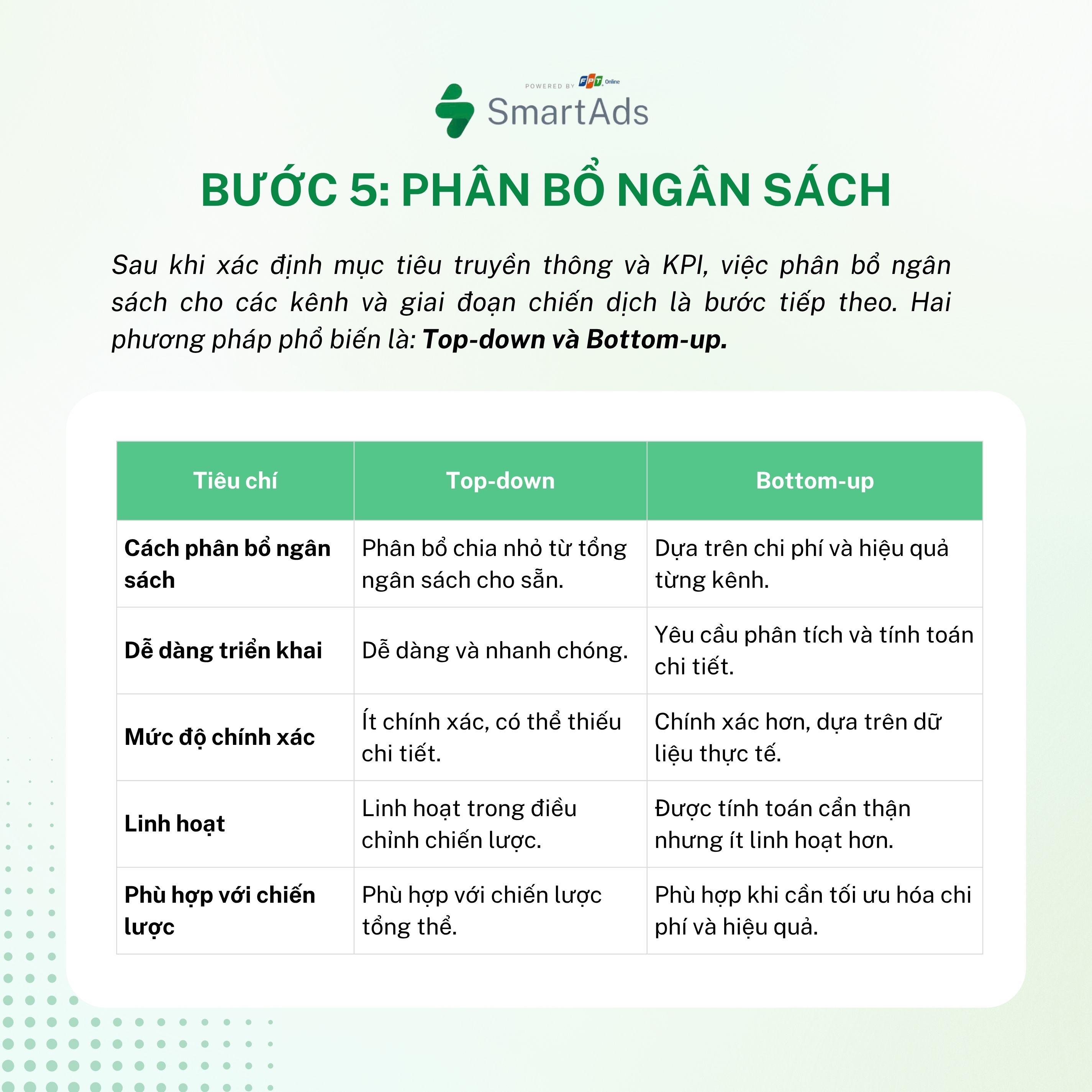
Top-down approach: The total budget is defined at the executive level and then distributed across specific activities or media channels.
-
Bottom-up approach: Specialized teams (media, digital, creative, etc.) estimate the required budget based on objectives, which is then consolidated and proposed to management as a total budget.
Comparison between top-down and bottom-up budget allocation approaches:
In practice, many businesses also apply commonly used budget allocation ratios . These ratios are not standalone budgeting methods, but are typically applied after the total budget has been determined to support decision-making when distributing budget across channels or campaign phases. Specifically:
-
4/4/2 : 40% allocated to the primary channel, 40% to supporting channels, and 20% reserved for testing or mid-campaign optimization.
-
7/3 : 70% of the budget focused on proven high-performing channels, and 30% allocated to testing new channels or expanding reach.
-
6/4 : 60% allocated to the launch phase for awareness building, and 40% to the mid and final phases to sustain engagement and drive conversions.
Step 6: Campaign Performance Measurement
After deployment, measuring campaign performance is a critical step to evaluate goal achievement and extract learnings for future media activities. Actual results should be compared against the defined Media Objectives and KPIs. Performance reviews should be conducted regularly (weekly or monthly) to enable timely optimization when necessary.
Some commonly applied methods for measuring media effectiveness include:
-
Quantitative analysis : Based on metrics such as clicks, impressions, conversion rate, cost per action (CPA), return on ad spend (ROAS), etc., to evaluate the effectiveness of each channel and content format.
-
Qualitative analysis : Collecting customer feedback through surveys, interviews, and social media comment analysis to gain deeper insights into sentiment, brand perception, and preference.
-
Pre- and post-campaign comparison : Assessing changes in key metrics such as website traffic, sales performance, and brand awareness to determine the campaign’s true impact.
Commonly used tools to support measurement include:
-
Google Analytics / GA4 : Tracking user behavior on websites, traffic sources, and conversion rates.
-
Meta Business Suite / TikTok Ads Manager / Google Ads : Analyzing advertising performance on each platform, from impressions to costs and conversions.
-
Hotjar / Microsoft Clarity : Recording user behavior (heatmaps, session recordings) to better understand real interaction patterns on landing pages.
-
Brandwatch / Talkwalker / Socialbakers : Monitoring brand mentions, sentiment, and engagement across social media platforms.
-
SurveyMonkey / Google Forms : Collecting customer feedback to assess satisfaction levels and campaign impact.
Building an effective media plan requires in-depth research, accurate channel selection, and continuous optimization throughout the campaign lifecycle. In particular, understanding the target audience and how they interact with media platforms is a critical factor in achieving desired outcomes. A strong media plan not only ensures efficient budget allocation but also remains flexible enough to adjust strategies when needed in order to maximize performance.
Currently, SmartAds is delivering the Brandformance solution – a strategic combination of brand building and performance optimization , directly integrated with premium publishers . This solution is designed to help businesses reach the right audience with optimized costs while increasing conversion rates, enabling them to effectively achieve their media plan objectives.
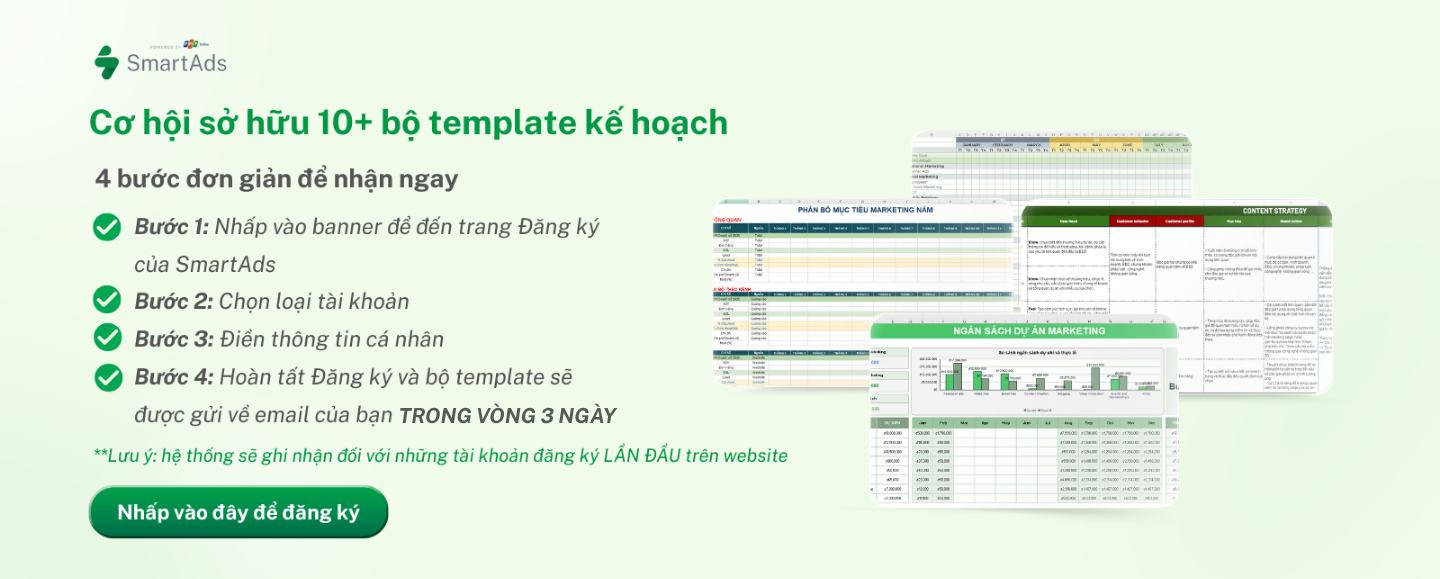
>>> To support more effective marketing planning, SmartAds is offering you a free media planning template with just a few simple steps below. NOTE: THE TEMPLATE WILL BE SENT VIA EMAIL TO ACCOUNTS REGISTERING FOR THE FIRST TIME ON THE SYSTEM.