What makes a high-converting advertising banner?
A high-converting advertising banner is designed to capture attention instantly amid the “digital advertising clutter” while motivating users to take a desired action such as clicking, filling out a form, or making a purchase. Campaigns backed by professionally designed banners with clearly defined objectives consistently achieve higher average CTRs than creatives that lack visual focus, brand identity, or a compelling call to action (CTA). More importantly, effective banner optimization helps reduce cost per acquisition (CPA) and directly improves ROI for businesses of all sizes.
Key elements of an eye-catching and professional advertising banner
Understanding that “one banner does not fit all,” marketers need to dive deep into the core elements that make each banner ad truly effective and goal-oriented. A banner should not only look good - it must be designed with clear conversion intent. A common mistake among marketers is investing heavily in visually appealing banner ads while overlooking their conversion role. Ideally, creative design should go hand in hand with strong brand identity and a clear CTA. Below are the essential elements that make an advertising banner both engaging and professional:
-
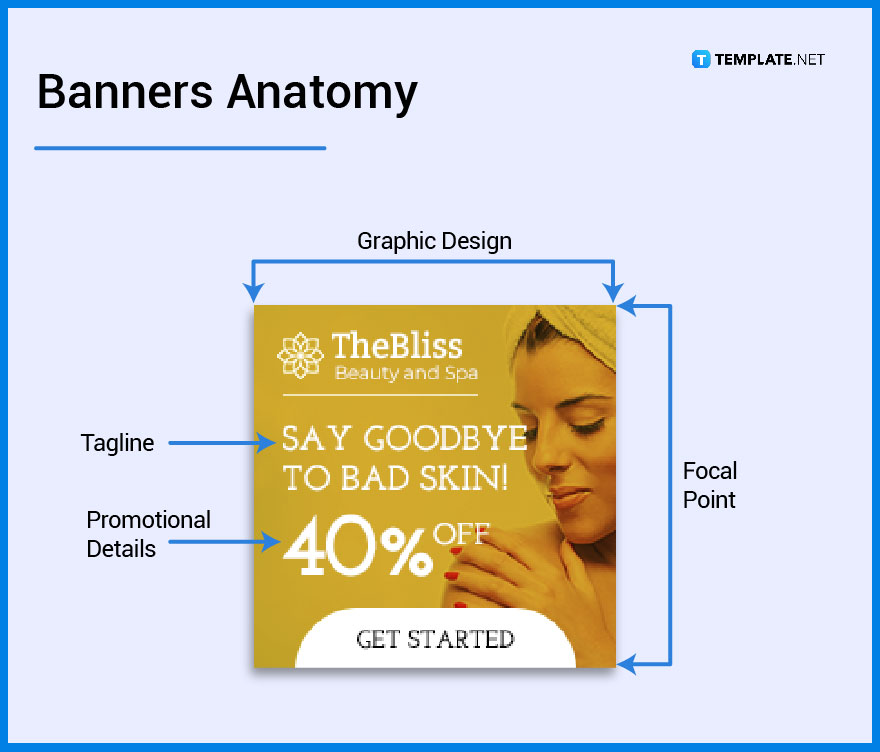
Graphic Design: This covers the entire visual presentation of the banner, including colors, imagery, concepts, typography, and layout—creating visual appeal and aesthetic balance. To ensure readability and visual flow, designers should apply F-pattern or Z-pattern layouts, allowing users to scan naturally and encounter the CTA at the end of their visual journey.
-
Tagline: The primary message designed to capture attention instantly. In the example shown, the tagline “Say goodbye to bad skin!” directly targets a core customer pain point, effectively triggering interest and action among users seeking skincare solutions.
-
Promotional Details: This element highlights the tangible value users receive. In this case, the message “40% OFF” provides a strong incentive, giving viewers a compelling reason to act immediately.
-
Focal Point: The area that attracts initial attention—illustrated here by the woman’s face—which helps establish emotional connection and guides visual focus.
-
Call to Action (CTA): Represented by the “Get Started” button, the CTA drives the next user action, such as visiting a website, signing up, or completing a purchase.
In addition, selecting the right banner size and platform is critical. According to the Google Ads Asset Guide 2025:
- Horizontal banners (Leaderboard – 728x90): ideal for desktop placements and brand awareness campaigns.
- Large rectangle banners (336x280 or 300x250): among the most effective formats across both mobile and desktop, especially when embedded within content.
- Vertical banners (Skyscraper – 160x600): well-suited for news sites and vertically structured forums.
- Responsive sizes (auto-adjusting designs): essential when targeting native advertising networks or social media platforms.
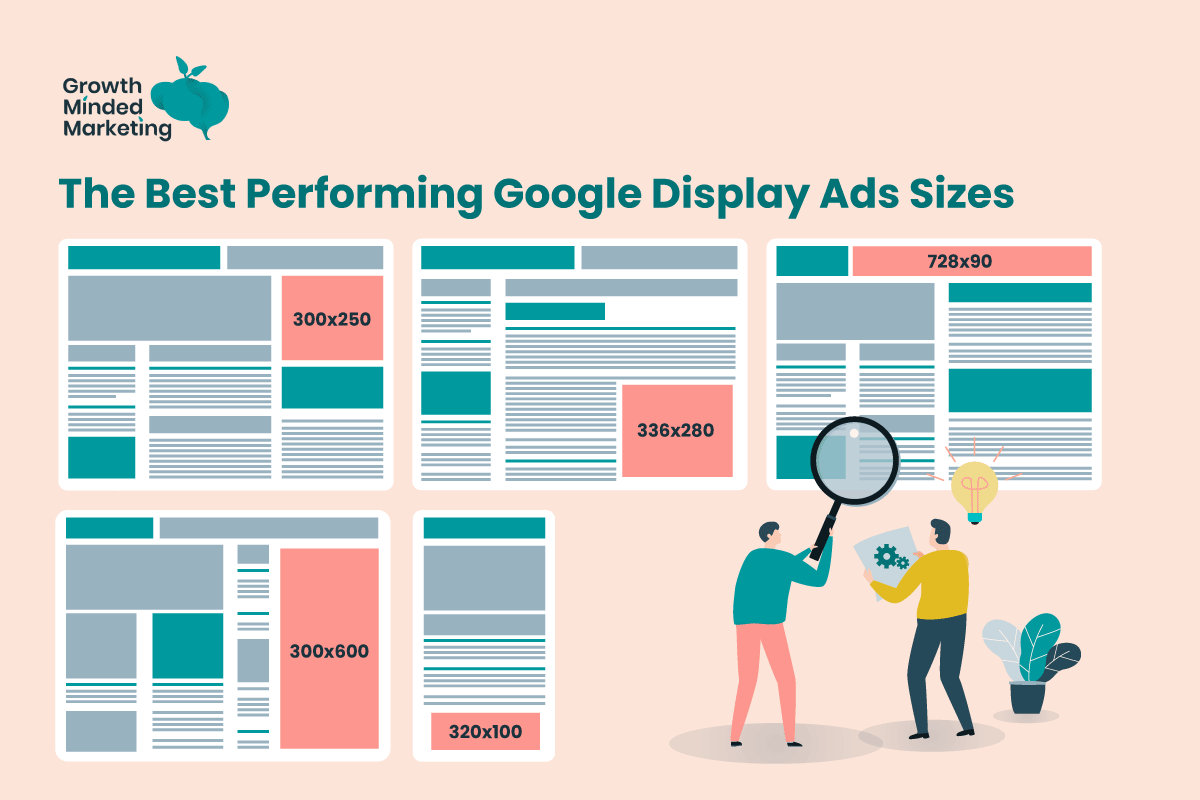
Each format has its own strengths: larger banners amplify messaging visibility, while smaller formats offer flexibility for remarketing. The key is choosing the right platform—where your target audience is most active.
Banner optimization strategies to increase conversions and reduce ad costs
Creating visually appealing banner ads is only the first step. To achieve strong conversions, marketers must continuously test, measure, and optimize using A/B testing for banner advertising.
A practical optimization workflow includes:
- Preparing 2–3 banner variations with differences in visuals, headlines, or CTAs
- Splitting the budget and running them simultaneously on the same platform and timeframe
- Monitoring key metrics (CTR, conversion rate) for at least 3–7 days
- Selecting the top-performing creative and continuing iterative optimization
Finally, do not hesitate to leverage advanced technology solutions like SmartAds to run large-scale A/B testing for banner advertising, optimize ad spend, and significantly improve real-world conversion performance. With a comprehensive platform, businesses can confidently compete and scale within the increasingly competitive digital advertising landscape in 2025.